• KGS/USD = 0.01144 0%
  • KZT/USD = 0.00206 0%
  • TJS/USD = 0.10760 0%
  • UZS/USD = 0.00008 0%
  • TMT/USD = 0.28571 0%
  • KGS/USD = 0.01144 0%
  • KZT/USD = 0.00206 0%
  • TJS/USD = 0.10760 0%
  • UZS/USD = 0.00008 0%
  • TMT/USD = 0.28571 0%
  • KGS/USD = 0.01144 0%
  • KZT/USD = 0.00206 0%
  • TJS/USD = 0.10760 0%
  • UZS/USD = 0.00008 0%
  • TMT/USD = 0.28571 0%
  • KGS/USD = 0.01144 0%
  • KZT/USD = 0.00206 0%
  • TJS/USD = 0.10760 0%
  • UZS/USD = 0.00008 0%
  • TMT/USD = 0.28571 0%
  • KGS/USD = 0.01144 0%
  • KZT/USD = 0.00206 0%
  • TJS/USD = 0.10760 0%
  • UZS/USD = 0.00008 0%
  • TMT/USD = 0.28571 0%
  • KGS/USD = 0.01144 0%
  • KZT/USD = 0.00206 0%
  • TJS/USD = 0.10760 0%
  • UZS/USD = 0.00008 0%
  • TMT/USD = 0.28571 0%
  • KGS/USD = 0.01144 0%
  • KZT/USD = 0.00206 0%
  • TJS/USD = 0.10760 0%
  • UZS/USD = 0.00008 0%
  • TMT/USD = 0.28571 0%
  • KGS/USD = 0.01144 0%
  • KZT/USD = 0.00206 0%
  • TJS/USD = 0.10760 0%
  • UZS/USD = 0.00008 0%
  • TMT/USD = 0.28571 0%

Viewing results 1 - 6 of 13

ADB Annual Meeting in Samarkand Unveils Major Energy, Climate, and Development Initiatives

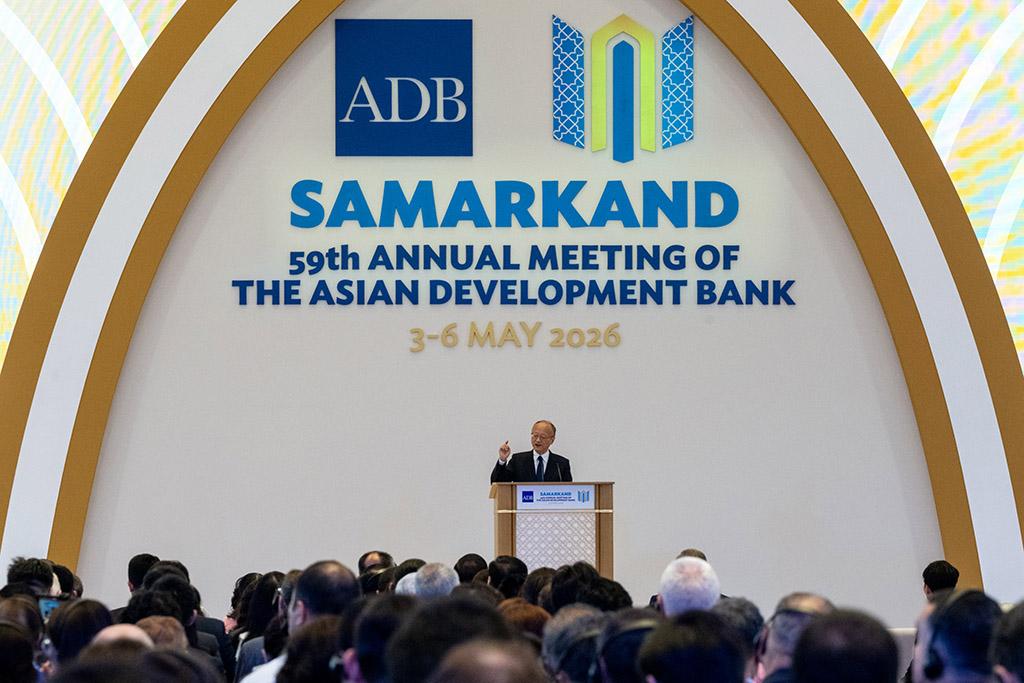
The Asian Development Bank’s (ADB) 59th Annual Meeting concluded in the historic Uzbek city of Samarkand after four days of discussions focused on energy connectivity, climate financing, and economic resilience across Asia and the Pacific. Held from May 3 to 6, the gathering brought together government officials, development institutions, economists, and private sector representatives at a time of growing geopolitical and economic uncertainty. It marked the second time Uzbekistan has hosted the ADB Annual Meeting, following the 43rd edition in Tashkent in 2010. A central announcement at the meeting was the unveiling of a broader $70 billion regional infrastructure program aimed at accelerating energy and digital connectivity across Asia and the Pacific. The initiative is structured around two major pillars: a $50 billion Pan-Asia Power Grid Initiative focused on cross-border electricity systems, and a $20 billion digital connectivity component aimed at strengthening broadband and data infrastructure across the region. Together, these programmes are intended to reduce energy costs, improve reliability, and deepen regional economic integration. The Pan-Asia Power Grid Initiative (PAGI) In his address to delegates, ADB President Masato Kanda noted that PAGI seeks to support more interconnected and resilient infrastructure systems. "To survive and thrive in this new era, we must build deeply connected and resilient systems," he said, adding that stronger regional grids and digital networks can help countries manage rising energy demand whilst also accelerating the transition to cleaner power sources. The initiative seeks to integrate around 20 gigawatts of renewable energy capacity and the develop enough transmission infrastructure to expand electricity access for up to 200 million people. ADB officials said the bank would use its role as a regional convener to bring together governments, regulators, and private investors to overcome barriers that often slow regional infrastructure projects. The bank pointed to earlier success stories, including the Bangladesh-India power grid interconnection and the Monsoon Wind Power Project in Laos, as examples of cross-border cooperation supported through blended finance mechanisms. [caption id="attachment_37211" align="aligncenter" width="1536"] Image: TCA, Stephen M. Bland[/caption] Climate and Food Security Concerns Climate and environmental financing also featured prominently during the Samarkand meetings. On May 5, the ADB announced that the German government had joined the bank’s Nature Solutions Finance Hub with €5.5 million ($6.5 million) in grant co-financing, some of which has been earmarked for sorely needed watershed rehabilitation in Uzbekistan. The discussions also reflected growing concern over global food security and supply chain vulnerabilities linked to the ongoing war in Iran. Qingfeng Zhang, Senior Director of ADB’s Agriculture, Food, Nature, and Rural Development Sector Office, warned that disruptions around the Strait of Hormuz were increasing the cost of everything from energy to insurance, freight to fertilizer – placing additional pressure on food systems across Asia and the Pacific, including Central Asia. Unlike the shock caused by Russia’s invasion of Ukraine, which directly disrupted grain and fertilizer exports, Zhang said the current crisis was affecting agriculture primarily through higher operating and transportation costs. The Strait of Hormuz handles roughly one-quarter of global seaborne oil...

AIIB Backs New Wind Power Project in Uzbekistan with $107 Million Loan

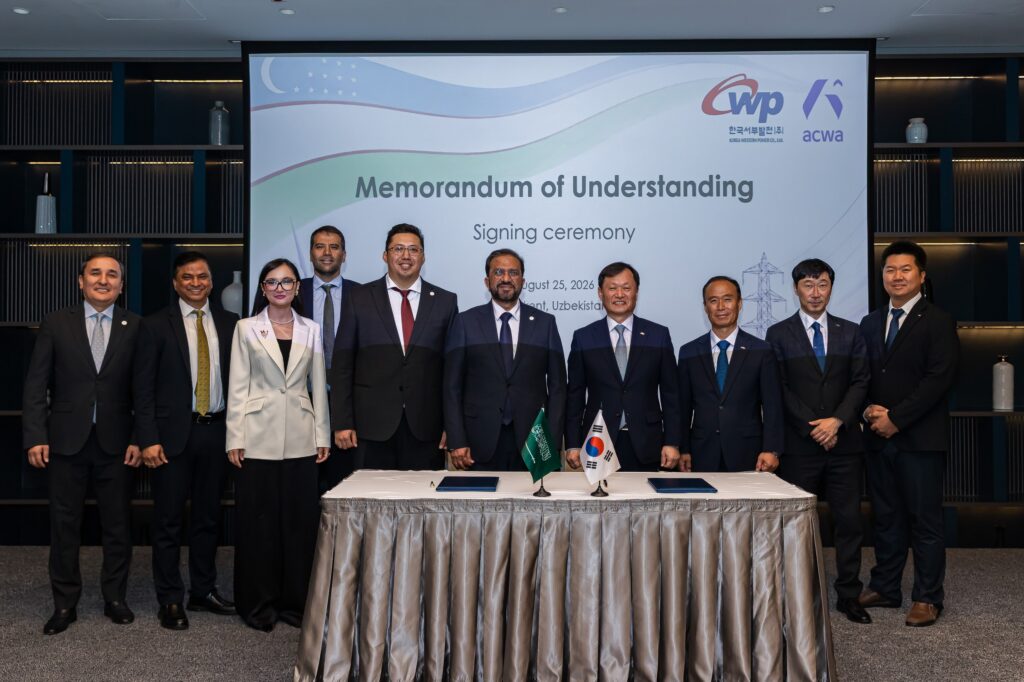
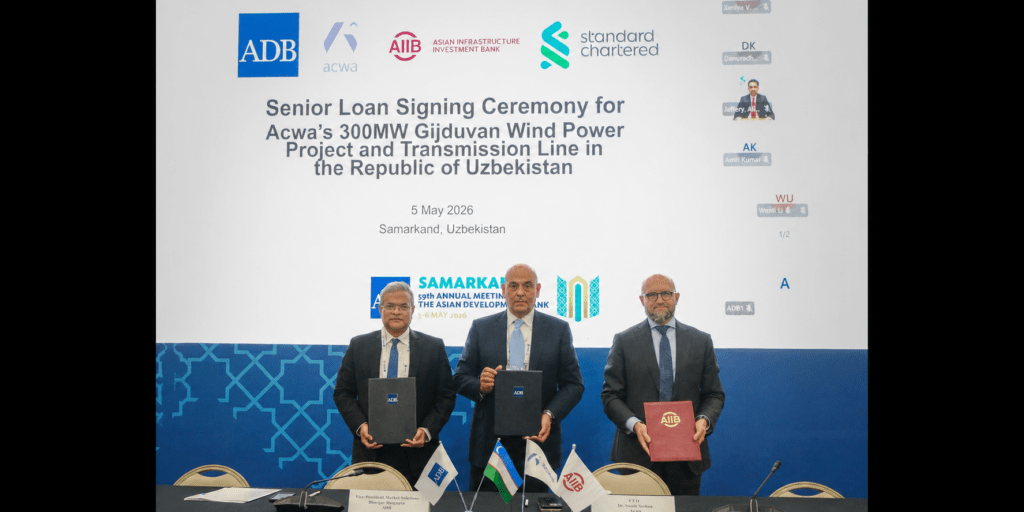
The Asian Infrastructure Investment Bank (AIIB) has signed a $107 million loan agreement with Saudi-based company ACWA Power to support the construction of the Bash 2 wind power plant in Uzbekistan. The project will be located in the Gijduvan district of the Bukhara region and is expected to have a capacity of 300 megawatts. Once completed, the facility will generate around 943 gigawatt-hours of electricity annually, enough to supply more than 336,000 households. It is also projected to reduce carbon dioxide emissions by approximately 475,000 tons per year. The Bash 2 project builds on the earlier Bash 1 wind development and forms part of a broader renewable energy cluster in the region. It aligns with Uzbekistan’s strategy to expand clean energy production and diversify its energy mix, with a national target of increasing the share of renewables to 40% by 2030. “AIIB’s investment in the Bash 2 wind power plant reflects our commitment to supporting Uzbekistan’s transition toward a more sustainable and diversified energy system,” said Konstantin Limitovskiy, Chief Investment Officer at AIIB. He noted that cooperation with private developers such as ACWA Power helps mobilize capital and strengthen energy security while delivering long-term environmental benefits. ACWA Power also emphasized the significance of the project within its growing partnership with Uzbekistan. “Bash 2 represents a meaningful step forward in ACWA’s expanding partnership with Uzbekistan and the delivery of its energy transition ambitions,” said Abdulhameed AlMuhaidib, the company’s Chief Financial Officer. He added that the project demonstrates the effectiveness of public-private partnerships in delivering large-scale clean energy solutions. The investment is supported by a long-term power purchase agreement with the National Electric Grid of Uzbekistan and is co-financed by the Asian Development Bank and Standard Chartered Bank. This financing structure highlights continued investor confidence in Uzbekistan’s renewable energy sector. Since 2019, AIIB and ACWA Power have jointly invested approximately $440 million in Uzbekistan’s energy sector, covering both renewable and conventional power generation projects. The latest agreement comes amid broader efforts by Uzbekistan to strengthen energy cooperation with international partners. As previously reported by The Times of Central Asia, the government has expanded collaboration with Saudi companies, including ACWA Power, through a series of joint projects. During a high-level meeting with Saudi investors, four wind power plants with a combined capacity of 752 megawatts were connected to the national grid, while construction began on additional projects totaling 2.3 gigawatts. At the same time, infrastructure development has continued, including work on a 1,790-kilometer high-voltage transmission line designed to improve electricity distribution across several regions of the country.

Uzbekistan Lifts Import Duties and Advances ACWA Power Projects

Uzbekistan will remove unilateral import duties for seven countries as part of a government initiative to develop its construction materials sector, according to a presidential decree published on Lex.uz. The countries included in the exemption are Morocco, Tunisia, Egypt, Algeria, Saudi Arabia, Qatar, and Mongolia. The Ministry of Investments, Industry and Trade, in coordination with the Chamber of Commerce and Industry, the Customs Committee, and the Ministry of Foreign Affairs, has been given two months to draft a program of measures through 2027. This program will focus on lifting import duties and establishing systems for mutual recognition of certificates of origin with the designated states. A separate plan for conducting intergovernmental negotiations with each of the seven countries will also be prepared. In parallel, the interagency commission on cooperation with the World Trade Organization has been tasked with approving, within two weeks, a list of raw materials and inputs for the construction materials industry that will be exempt from customs duties until January 1, 2028. According to the decree, Uzbekistan aims to increase domestic production of construction materials to UZS 62 trillion and boost exports to $1.5 billion. The government plans to promote the use of energy-efficient and environmentally friendly materials, while facilitating investment in the sector. Projects totaling $3.5 billion are expected to be launched. Deputy Prime Minister Jamshid Khodjaev will supervise the approval of project parameters in cooperation with regional authorities and the O’zsanoatqurilishmateriallari association. Border security services have been instructed to ensure the safe passage of Uzbek business representatives through the Termez border crossing into Afghanistan. The decree coincides with Uzbekistan’s deepening economic ties with key international partners. On November 5, President Shavkat Mirziyoyev met with a delegation of Saudi companies led by Mohammad Abunayyan, chairman of ACWA Power and co-chair of the Uzbek-Saudi Business Council. The sides reviewed ongoing joint projects and explored new areas for collaboration. During the visit, four wind power plants with a combined capacity of 752 megawatts were connected to the national grid. Construction also began on five additional wind plants with a total capacity of 2.3 gigawatts, along with 300 megawatts of energy storage systems in Karakalpakstan and the Bukhara region. Work has also commenced on a 500-kilovolt power line spanning 1,790 kilometers, intended to improve energy transmission across Samarkand, the Tashkent region, Karakalpakstan, and Bukhara. The talks also addressed cooperation in transport infrastructure, IT, healthcare, agriculture, and other sectors, highlighting the government’s broader push to strengthen partnerships and attract investment across the Uzbek economy.

UN Women and ACWA Power Partner to Advance Gender Equality in Uzbekistan

UN Women and ACWA Power Uzbekistan have signed a landmark agreement to promote women’s empowerment, marking the first-ever collaboration between a United Nations agency and a private company in Uzbekistan. As part of the 12-month partnership, ACWA Power will contribute $50,000 to support initiatives under UN Women’s Economic Empowerment (WEE) programme. The project seeks to strengthen women’s participation in education and the labor market through gender equality training, leadership development, and the launch of a pilot Gender Equality Curriculum at Shirin College. It also includes capacity-building in gender-based violence prevention and the organization of a national Women’s Empowerment Forum. [caption id="attachment_38684" align="aligncenter" width="1206"] Image: ACWA Power[/caption] UN Women, which officially began operations in Uzbekistan in May 2025, will provide technical expertise and training to support national gender equality goals. ACWA Power, Uzbekistan’s largest investor in renewable energy, will oversee project implementation and funding. The partnership aligns with Uzbekistan’s ongoing national reform agenda, particularly the Strategy for Achieving Gender Equality 2030 and the National Programme for Increasing the Activity of Women in Economic, Political, and Social Life (2022-2026). These initiatives aim to create equal opportunities and broaden women's participation in education, public service, and the economy. [caption id="attachment_38685" align="aligncenter" width="1206"] Image: ACWA Power[/caption] “Partnering with UN Women allows us to advance concrete initiatives that promote safer workplaces, fairer opportunities, and stronger representation of women in Uzbekistan,” said Dr. Jon Zaidi, Country General Manager of ACWA Power Uzbekistan. “By investing in training, curricula, and leadership development, we aim to help embed practices that benefit institutions, companies, and communities alike.” “This partnership demonstrates how private sector engagement can accelerate progress on gender equality,” added Ceren Guven Gures, Head of the UN Women Central Asia Liaison Office and Representative of the UN Women Kazakhstan Country Office. “With ACWA Power’s support, we will expand opportunities for women and strengthen protections in education and the workplace.”

Women’s Leadership Takes Center Stage at Tashkent Law Spring

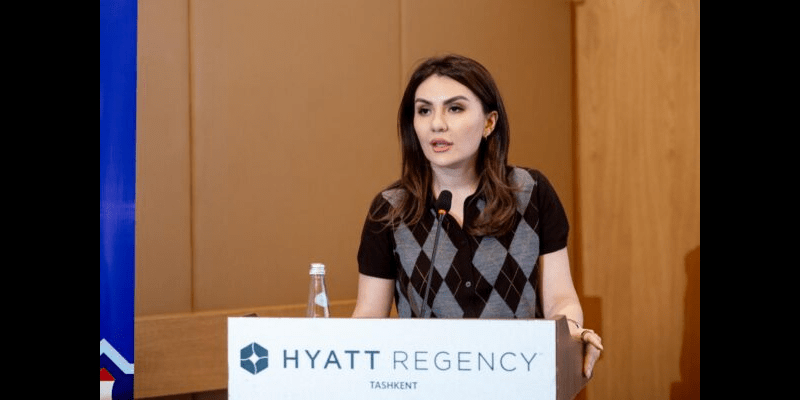
A standout panel session on women’s leadership took place during the IV International Legal Forum “Tashkent Law Spring” on May 30 at the InterContinental Tashkent Hotel. Hosted by ACWA Power, a major investor in Uzbekistan’s energy sector with $15 billion in local projects, the session explored practical approaches to empowering women in traditionally male-dominated industries, including law, energy, and public service. A Platform for Legal Reform and Gender Dialogue Now in its fourth year, Tashkent Law Spring has become a key event for legal professionals across Central Asia. The 2025 forum drew over 200 participants, including lawyers, judges, academics, and policy experts, with a focus on strengthening Uzbekistan’s legal landscape. Among the many sessions, the ACWA Power panel on women’s leadership stood out for its cross-sector insights and actionable recommendations. Saudi Vision 2030: Progress in Workforce Gender Inclusion Hager Altwegieri, Board Secretary at ACWA Power and an expert in governance and sustainability, shared Saudi Arabia’s progress under Vision 2030. “In 2016, women’s workforce participation stood at 22.8%. Today, it is at 36%,” she said. “We surpassed our original 30% target and are now aiming for 40% by 2030.” Altwegieri emphasized the importance of setting measurable goals and ensuring institutional accountability. She cited a government-backed childcare support program as an example of how targeted policies can reduce barriers for working mothers. Mentorship and Infrastructure as Enablers Altwegieri also highlighted the value of mentorship and career readiness support for women entering the workforce. “Women often need help with CV writing and interview preparation,” she said. “Mentorship plays a crucial role in this journey.” She underscored the importance of respecting cultural traditions, quoting an Arabic proverb: “A mother is a school. If you prepare her well, you prepare a nation for prosperity.” Digital Safety: A New Front in Gender Equality Kamola Alieva, PhD in Law and a gender equality expert at Tashkent State University of Law, addressed the risks posed by digital tools in professional environments. “Digitalization is changing how we work, but it also exposes women to new forms of harassment,” she warned. Inappropriate messages, digital exclusion, and misuse of personal data are increasingly common threats, especially in male-dominated workplaces. Alieva called for legal frameworks that define digital misconduct and protect employee data with gender-sensitive safeguards. The Investment Case for Inclusion Anar Nurbayeva, Gender Advisor and Principal at the European Bank for Reconstruction and Development (EBRD), discussed the bank’s inclusive investment strategies. “Gender and economic inclusion is one of our top three priorities,” she said, noting EBRD’s collaboration with ACWA Power and Schrodinger College to promote renewable energy careers among women. “It’s about both fair HR policies and building future-ready skills,” she added. Challenges in Intellectual Property for Women Entrepreneurs Madina Tursunova, Chair of the Association of Patent Representatives of Uzbekistan, outlined the hurdles women face in protecting intellectual property (IP). “IP enforcement is costly and complex,” she said, noting a societal bias that discourages women from innovating. Tursunova advocated for more training in business skills, arguing that support must go beyond...