• KZT/USD = 0.00223
  • TJS/USD = 0.10800
  • UZS/USD = 0.00009
  • TMT/USD = 0.29760
  • KZT/USD = 0.00223
  • TJS/USD = 0.10800
  • UZS/USD = 0.00009
  • TMT/USD = 0.29760
  • KZT/USD = 0.00223
  • TJS/USD = 0.10800
  • UZS/USD = 0.00009
  • TMT/USD = 0.29760
  • KZT/USD = 0.00223
  • TJS/USD = 0.10800
  • UZS/USD = 0.00009
  • TMT/USD = 0.29760
  • KZT/USD = 0.00223
  • TJS/USD = 0.10800
  • UZS/USD = 0.00009
  • TMT/USD = 0.29760
  • KZT/USD = 0.00223
  • TJS/USD = 0.10800
  • UZS/USD = 0.00009
  • TMT/USD = 0.29760
  • KZT/USD = 0.00223
  • TJS/USD = 0.10800
  • UZS/USD = 0.00009
  • TMT/USD = 0.29760
  • KZT/USD = 0.00223
  • TJS/USD = 0.10800
  • UZS/USD = 0.00009
  • TMT/USD = 0.29760
18 September 2026

Viewing results 1 - 6 of 436

Uzbekistan Energizes Growth with $7 Billion in New Energy Projects

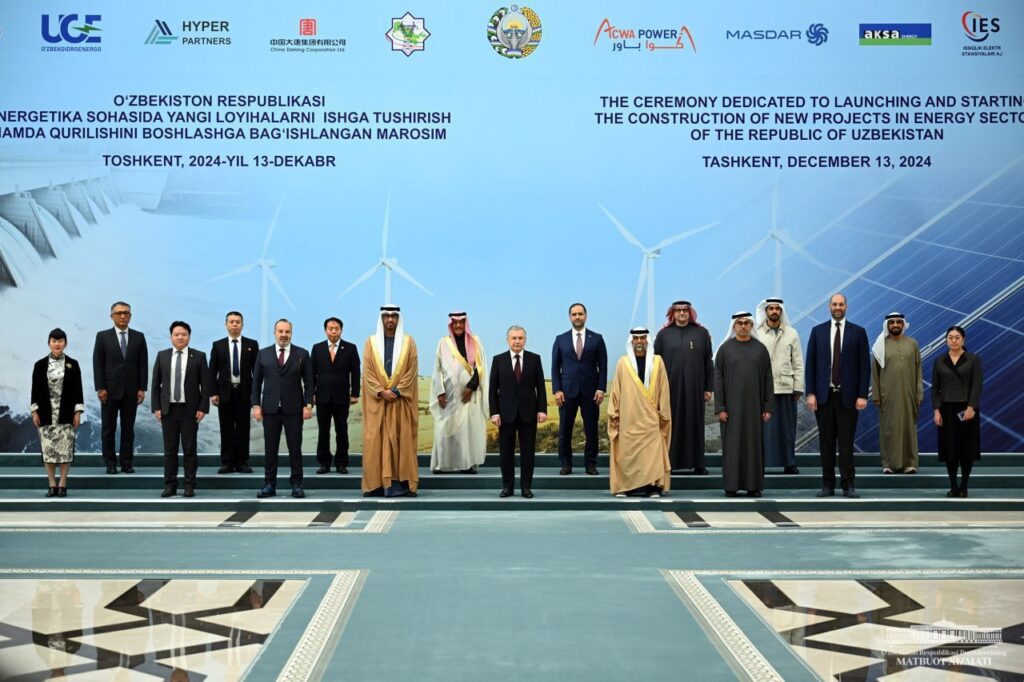
On December 13, Uzbekistan’s President Shavkat Mirziyoyev inaugurated operations for 18 new energy facilities and launched the construction of six additional projects. Together, the 24 initiatives represent an investment of over $7 billion. The ceremony marked a significant milestone for Uzbekistan’s energy sector, connecting the national power grid to five solar and wind power plants with a combined capacity of approximately 2,300 megawatts. Additionally, five high-voltage substations were commissioned in the Bukhara, Navoi, Namangan, and Tashkent regions. The country’s first energy storage system, with a capacity of 300 megawatts, began operations in the Andijan and Fergana regions. New power facilities launched include a 400-megawatt plant in Kashkadarya, a modern cogeneration plant in Tashkent, and four small hydroelectric power plants in Andijan, Surkhandarya, and Tashkent regions. Mirziyoyev also initiated construction on six power-generating facilities with a total capacity of 2.5 gigawatts in the Fergana, Samarkand, Navoi, and Tashkent regions, as well as in the city of Tashkent. These projects will collectively produce an additional 9.5 billion kilowatt-hours of electricity, sufficient to power more than 4 million households. They are also expected to save 2.5 billion cubic meters of natural gas and reduce emissions by 4.6 million tons annually. Foreign Investment Fuels Energy Transformation Mirziyoyev highlighted the pivotal role of foreign investment in these initiatives. Companies from the United Arab Emirates, Saudi Arabia, Turkey, China, and Germany are leading the projects, supported by international financial institutions such as the Asian Development Bank, the Islamic Development Bank, the European Bank for Reconstruction and Development, and the World Bank. Uzbekistan aims to produce 84 billion kilowatt-hours of electricity in 2025—an increase of 25 billion kilowatt-hours compared to 2016. Over the past five years, the energy sector has attracted $20 billion in foreign direct investment. Solar and wind power plants with a total capacity of 3,500 megawatts have already been launched, producing 10 billion kilowatt-hours annually and raising the share of "green" energy to 16% of the total energy mix. The country’s GDP reached a historic $100 billion last year, and plans are underway to double this to $200 billion by 2030. Such economic growth will drive a 1.5-fold increase in electricity demand over the next five years. Key Priorities for Uzbekistan’s Energy Sector Mirziyoyev outlined three strategic priorities for the energy sector: Expansion of Renewable Energy By 2030, Uzbekistan plans to add 19,000 megawatts of renewable energy capacity, increasing the share of "green" energy to 54%. In 2025, the country will commission 18 solar and wind power plants with a combined capacity of 3,400 megawatts, along with energy storage systems totaling 1,800 megawatts. This is expected to boost "green" energy production to 12 billion kilowatt-hours annually. Liberalization of the Electricity Market Uzbekistan will continue to liberalize its electricity market, with plans to establish a competitive wholesale electricity market by the end of 2025. Public-private partnerships will be introduced in energy distribution, and $4 billion will be invested to modernize power grids across the country. Expanding International Cooperation The government will enhance international collaboration in...
Hydropower Development in Kyrgyzstan Gets Boost from EDB

The Eurasian Development Bank (EDB), the Ministry of Economy and Commerce, and the Ministry of Energy of Kyrgyzstan have signed a trilateral Memorandum of Cooperation for the Suusamyr-Kokomeren Hydropower Plant (HPP) Cascade Project. The memorandum outlines the EDB’s commitment to providing financial support for the preparation of project documentation, including a pre-feasibility study. The agreement focuses on developing the financial and economic model for the project, estimating capital costs, evaluating social and environmental impacts, and determining technical solutions and government support measures needed for its success. The Suusamyr-Kokomeren HPP Cascade will be located on the Kokomeren River and is expected to play a pivotal role in Kyrgyzstan’s energy sector. The cascade will consist of three hydropower plants with a combined capacity of 1,305 MW, meeting the country’s increasing electricity demands. Sanjar Bolotov, Kyrgyzstan’s Deputy Minister of Economy and Commerce, emphasized the significance of the project, commenting: “This major project will not only meet the country’s domestic electricity needs but also position Kyrgyzstan as a leading exporter of clean energy in the region.” The EDB is a multilateral development bank that includes Armenia, Belarus, Kazakhstan, Kyrgyzstan, Russia, and Tajikistan as member states. It is dedicated to investing in regional development initiatives across Eurasia. The Suusamyr-Kokomeren HPP Cascade is part of the EDB’s flagship investment initiative, the Central Asian Water and Energy Complex. This mega-project aims to strengthen water and energy cooperation among Central Asian countries while addressing local socio-economic challenges.

At Start of Winter Freeze, Kyrgyzstan’s Electricity Demand Hits Record High

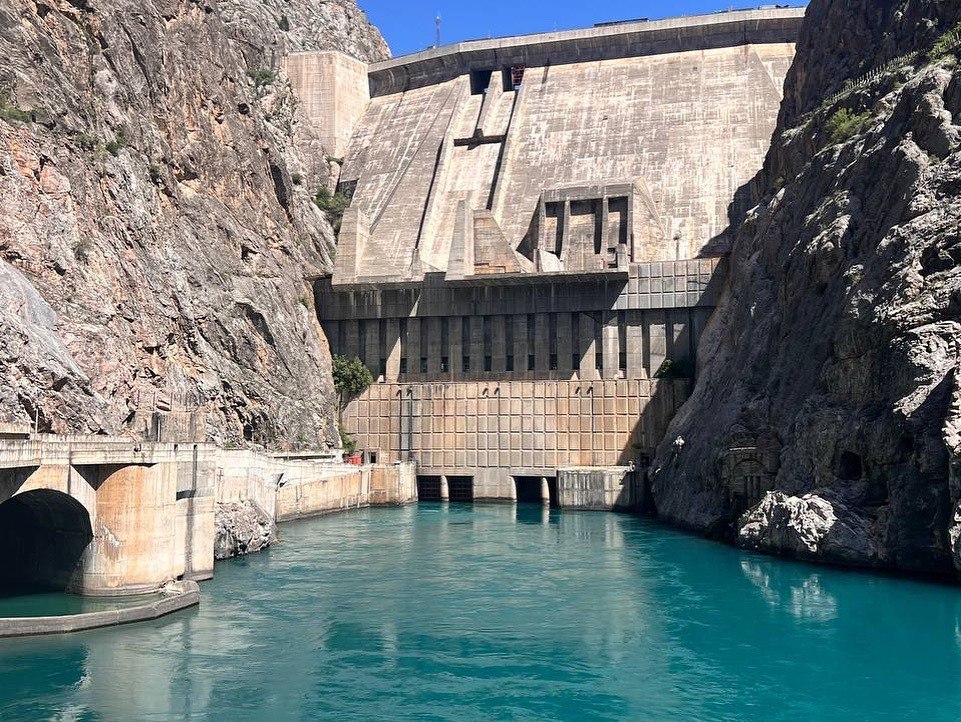
Kyrgyzstan’s Ministry of Energy reported a record-breaking electricity consumption of 3,612 MW on December 12, with daily usage reaching 78.931 million kWh, the highest in the country’s history. The rise in electricity usage is attributed to low temperatures across the country, as residents rely heavily on electric heating. This figure surpasses the previous record set on December 14, 2022, when electricity consumption reached 3,401 MW or 73.370 million kWh. According to the Ministry, the surge in consumption has overloaded grid equipment in certain areas. To prevent failures, power distribution companies are switching users to alternative feeders, causing temporary outages of one to two hours. Without such measures, critical equipment could fail. For example, a 220 kV transformer with a capacity of 250 MW costs $1.5 million and requires 150 days for manufacturing and delivery, followed by one to one and a half months for installation. To alleviate this strain, the Ministry has called on citizens to conserve electricity wherever possible. The Toktogul Hydroelectric Power Plant (HPP), Kyrgyzstan’s largest, is currently operating at its maximum generating capacity of 1,260 MW, with a daily output of 27.528 million kWh. Located on the Naryn River, the plant supplies approximately 40 percent of the country’s electricity. The Toktogul reservoir began the winter season with a water volume of 13.257 billion cubic meters, 1.5 billion more than the previous year. However, due to the recent surge in electricity usage, more than 1 billion cubic meters of this surplus have already been consumed. As of December 12, the reservoir held 12.234 billion cubic meters of water. The Ministry of Energy warns that if current consumption levels persist, the reservoir could drop to 6.2 billion cubic meters by April 1, 2025 — close to the critical or “dead” level of 5.5 billion cubic meters, at which point the plant would no longer be able to generate electricity. The Ministry continues to urge the public to use electricity sparingly to avoid this outcome.

Uzbekistan and IAEA Agree on Roadmap for Peaceful Nuclear Cooperation

Uzbekistan and the International Atomic Energy Agency (IAEA) have agreed on a comprehensive roadmap to expand cooperation in peaceful nuclear development. The agreement was reached during the meeting on December 4 between Uzbekistan’s President Shavkat Mirziyoyev and IAEA Director General Rafael Grossi, where they discussed broadening bilateral cooperation and exploring new areas of practical partnership. A History of Collaboration Uzbekistan has been a member state of the IAEA since 1994. Over the past three decades, more than 40 joint projects have been implemented with the technical assistance of the agency. Currently, five active projects focus on strengthening Uzbekistan’s legal framework and institutional capacity, as well as advancing nuclear science, healthcare, and related sectors. Mirziyoyev praised the productive results of the IAEA delegation’s meetings with Uzbekistan’s ministries, agencies, and scientific organizations. He also welcomed the upcoming International Conference on Nuclear Energy, which will be held in Samarkand on December 5 with the participation of leading experts in the field. Priority Areas for Cooperation The meeting outlined several key priorities for Uzbekistan-IAEA cooperation, including: • Enhancing the capacity and competence of national agencies. • Preparing high-skilled personnel for nuclear-related fields. • Developing nuclear energy, agriculture, water use, healthcare, and ecological programs under the IAEA’s guidance. Adoption of a Joint Roadmap As a result of the meeting, Uzbekistan and the IAEA agreed to adopt a joint roadmap to strengthen multidimensional cooperation in peaceful nuclear development. Nuclear Power Plant Construction In related developments, The Times of Central Asia has previously reported that Russia’s Atomstroyexport and Uzbekistan’s Directorate for NPP Construction have signed a contract to build a small-capacity nuclear power plant (SCNPP) in the Jizzakh region. The plant will feature a Russian-designed ASMP with a total capacity of 330 MW, consisting of six 55 MW reactors. Rosatom will serve as the primary contractor, with contributions from local Uzbek companies. The collaboration between Uzbekistan and the IAEA, along with the planned nuclear power plant, highlights the country’s commitment to advancing nuclear technology for peaceful purposes while addressing energy and sustainability challenges.

Kazakhstan’s Power Grid Revamp Secures €267 Million Backing from EBRD and Canada

The European Bank for Reconstruction and Development (EBRD) has announced a €267 million financing package for the Kazakhstan Electricity Grid Operating Company (KEGOC) to enhance the reliability of the country’s power supply system. The funding comprises a €252 million EBRD loan and a €15 million concessional loan from the Government of Canada. The financial support will enable KEGOC, which oversees more than 27,800 kilometers of overhead transmission lines, to construct approximately 600 kilometers of 500 kV transmission infrastructure. This will facilitate the integration of the West Kazakhstan Power System into the country’s Unified Power System. The initiative is part of the EBRD’s broader efforts to assist Kazakhstan in implementing its long-term decarbonization strategy, aimed at achieving carbon neutrality in the power sector by 2060. It will improve the electricity supply for residents in western Kazakhstan and enable the integration of up to 12 GW of renewable energy capacity nationwide by 2030. Currently, Kazakhstan’s power grid is divided into three separate systems. While the EBRD connected the northern and southern grids in 2004, the West Kazakhstan Power System remains isolated. The project includes the construction of the 500 kV Karabatan-Ulke power line along the Atyrau-Aktobe motorway, the 500 kV Karabatan substation, and the expansion of the switchyards at the Karabatan (220 kV) and Ulke (500 kV) substations. These upgrades will strengthen domestic interconnections and enhance power supply reliability in western Kazakhstan. In addition to infrastructure improvements, the project is expected to reduce annual CO2 emissions by over 200,000 tons. It is supported by grant funding from the Government of Japan. The EBRD will also provide KEGOC with technical assistance, including piloting digital technologies within the grid, bolstering the system’s resilience to potential cyberattacks, and introducing gender-responsive training programs.

On the Threshold of Cold Weather, Kyrgyz People Stockpile Coal

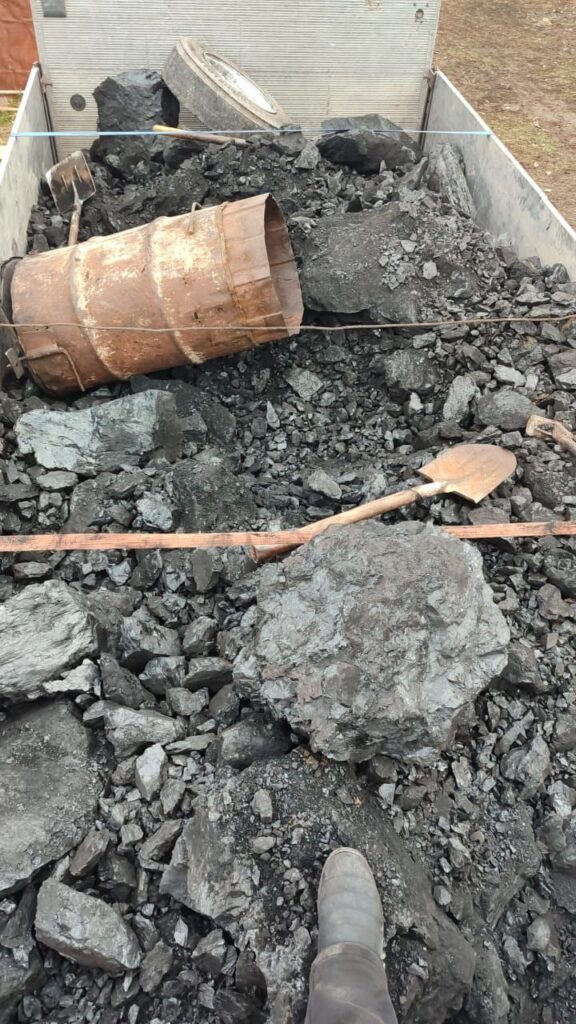
Kyrgyz authorities have extended a temporary ban on coal exports outside the Eurasian Economic Union (EAEU) customs territory. The decree, signed by the head of the Cabinet of Ministers, Akylbek Japarov, aims to prevent a sharp rise in coal prices amid growing demand and to mitigate potential public unrest caused by fuel shortages. The ban, which will remain in effect for six months, excludes coal exported by the state enterprise Kyrgyzkomur. This coal is sold to neighboring Uzbekistan. The Kyrgyz Ministry of Economy and Commerce has been tasked with notifying the World Trade Organization of this decision. As temperatures drop, coal outlets across Kyrgyzstan are experiencing a rush of purchases by residents anxious to prepare for the cold weather. This surge in demand has caused coal prices to rise. To address the issue, the Antimonopoly Service has begun conducting regular inspections of retail outlets to identify sellers inflating prices. “We visit trading outlets undercover and identify sellers who artificially increase prices. Citizens also report violations via our hotline. According to the law, individuals can be fined 3,000 KGS (around $35), and companies can face fines of up to 13,000 KGS (approximately $150),” explained Taalaibek Kenzheshev, a leading specialist in the Antimonopoly Regulation Service's department, during an interview with The Times of Central Asia. In response to rising prices, the government has opened state-run coal outlets to sell fuel directly to consumers without intermediaries, ensuring more affordable pricing. “At private markets, sellers often cheat by selling coal in bags with insufficient weight. State-run outlets sell coal by weight, making it more reliable and cost-effective,” shared Sanzhar Orozbekov, a resident of Chui Oblast, with The Times of Central Asia. The Antimonopoly Regulation Service has set maximum coal prices in each region, depending on logistics complexity and the distance from coal mines. The highest coal prices are in Karakol, located east of the Issyk-Kul region, while the cheapest coal is found in southern Kyrgyzstan. However, even in the south, prices are influenced by coal exports to Uzbekistan. Imported Kazakh coal remains popular among Kyrgyz residents despite its higher cost. Known for burning more efficiently and producing greater heat, it is a preferred choice for some. However, the government intends to phase out the use of Kazakh coal at the Bishkek combined heat and Power Plant (CHPP), planning instead to rely entirely on domestic coal sources. According to the Kyrgyz Ministry of Energy, the country will need 2.6 million tons of coal for the upcoming autumn-winter season, half of which is required by households. The Ministry has assessed preparations for winter as adequate and has assured citizens that there will be no power outages this year.