• KGS/USD = 0.01143 -0%
  • KZT/USD = 0.00198 -0%
  • TJS/USD = 0.10899 0.93%
  • UZS/USD = 0.00008 0%
  • TMT/USD = 0.28490 -0.28%
  • KGS/USD = 0.01143 -0%
  • KZT/USD = 0.00198 -0%
  • TJS/USD = 0.10899 0.93%
  • UZS/USD = 0.00008 0%
  • TMT/USD = 0.28490 -0.28%
  • KGS/USD = 0.01143 -0%
  • KZT/USD = 0.00198 -0%
  • TJS/USD = 0.10899 0.93%
  • UZS/USD = 0.00008 0%
  • TMT/USD = 0.28490 -0.28%
  • KGS/USD = 0.01143 -0%
  • KZT/USD = 0.00198 -0%
  • TJS/USD = 0.10899 0.93%
  • UZS/USD = 0.00008 0%
  • TMT/USD = 0.28490 -0.28%
  • KGS/USD = 0.01143 -0%
  • KZT/USD = 0.00198 -0%
  • TJS/USD = 0.10899 0.93%
  • UZS/USD = 0.00008 0%
  • TMT/USD = 0.28490 -0.28%
  • KGS/USD = 0.01143 -0%
  • KZT/USD = 0.00198 -0%
  • TJS/USD = 0.10899 0.93%
  • UZS/USD = 0.00008 0%
  • TMT/USD = 0.28490 -0.28%
  • KGS/USD = 0.01143 -0%
  • KZT/USD = 0.00198 -0%
  • TJS/USD = 0.10899 0.93%
  • UZS/USD = 0.00008 0%
  • TMT/USD = 0.28490 -0.28%
  • KGS/USD = 0.01143 -0%
  • KZT/USD = 0.00198 -0%
  • TJS/USD = 0.10899 0.93%
  • UZS/USD = 0.00008 0%
  • TMT/USD = 0.28490 -0.28%
06 December 2025

Viewing results 1 - 6 of 6

Uzbekistan Signs $78 Million Deal with Saudi and French Firms to Manage Hazardous Waste

Uzbekistan has signed a landmark $78 million agreement with Saudi Arabia’s Vision International Investment Company (VIIC) and France’s Suez International to improve hazardous industrial waste management and bolster environmental protection. The Ministry of Ecology announced the signing earlier this month. The agreement was formalized by Deputy Minister of Ecology Jusipbek Kazbekov, VIIC Director of Development Kapil Lalwani, and Paul Bourdillon, Regional Director for Europe and Central Asia at Suez. The project will be implemented in three phases. A Three-Phase Strategy The first phase will involve the construction of new waste stabilization facilities, landfills, and transfer stations to safely store and process hazardous industrial waste. The second phase will focus on developing engineering designs and piloting technologies to produce Refuse-Derived Fuel (RDF), a method that converts waste into usable energy. This phase will also test incineration and thermal treatment systems. In the third and final phase, the project will establish a full-scale RDF and waste-to-energy facility. Suez International, with over 160 years of experience, is a global leader in water and waste management, offering innovative solutions across Europe, Asia, the Americas, Africa, and the Middle East. Saudi-based VIIC, founded in 2002, manages nearly $96 billion in assets and is active in energy, infrastructure, and public-private partnership projects. The Ministry of Ecology views the agreement as a significant advancement for Uzbekistan’s environmental policy, aiming to reduce industrial pollution and support sustainable development. Broader Environmental Initiatives Uzbekistan’s Ministry of Ecology is also collaborating with the Food and Agriculture Organization of the United Nations (FAO) and the European Union to manage hazardous agricultural chemicals. A joint project launched in Tashkent last year aims to reduce pesticide use and improve waste handling in agriculture. Minister of Ecology Aziz Abdukhakimov emphasized the importance of these initiatives for public health and environmental safety. He also highlighted the need to update the national registry of contaminated areas, particularly former agricultural airfields, many of which have not been surveyed since the 1990s.
South Korea to Support Electric Transport Infrastructure Development in Bishkek

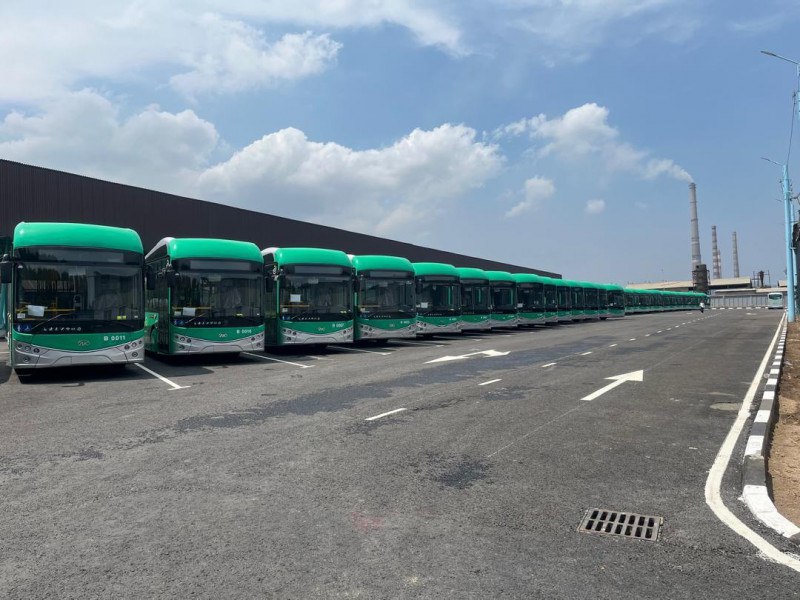
South Korean companies will assist Bishkek in building a modern charging infrastructure for electric public transport, following agreements reached between Kyrgyz Deputy Minister of Economy and Trade Sanzhar Bolotov and representatives of the Korea Environmental Transport Association, along with several private firms. The collaboration aims to jointly develop, implement, and operate a state-of-the-art network of charging stations for electric buses in the Kyrgyz capital. It also includes the introduction of improved environmental practices. “The South Korean side expressed its readiness not only to help with infrastructure, but also to transfer to Bishkek expert knowledge and technology in the field of eco-friendly transport, as well as to conduct extensive information campaigns to promote electric transport among the population,” the Kyrgyz Ministry of Economy and Trade stated. The agreement also encompasses a range of environmental initiatives. South Korean experts will assist Bishkek in improving air quality and reducing carbon emissions, critical objectives for a city frequently plagued by severe air pollution, particularly in the autumn and winter months. An important component of the agreement is the training of young specialists in South Korea. “Particular attention will be paid to the formation of a system of interaction between industry and the academic community, which will ensure the employment of trained specialists and the development of local expertise in the field of charging infrastructure operation,” the ministry added. Bishkek has pursued a consistent strategy of replacing traditional public transport with electric alternatives. Initially, the city phased out route taxis, replacing them with buses powered by gas and petrol. More recently, city authorities purchased 120 electric buses manufactured in China, with some units already delivered, through a project in collaboration with the Asian Development Bank. Concurrently, the city has begun phasing out its aging trolleybus fleet, a move that has sparked public debate. The infrastructure previously used for trolleybuses is being repurposed for the electric bus network. However, the process has faced delays, and several tenders for modifying the existing contact network have been cancelled. Starting in 2025, the popular Ala-Archa Nature Park will ban entry for vehicles with internal combustion engines. Tourists will be transported exclusively by municipal electric buses or allowed to use their own electric vehicles.

Biopesticide Trials in Kyrgyzstan Pave Way for Greener Locust Control

Between June 10 and 13, Kyrgyzstan conducted a national trial of biological pesticides in the northern Chuy region, marking a step forward in the country’s push toward environmentally responsible locust management. The trial was led by the Ministry of Water Resources, Agriculture and Processing Industry with support from the Food and Agriculture Organization of the United Nations (FAO), and funded by the Japan International Cooperation Agency (JICA) and FAO’s own resources. The initiative is part of the broader “Programme to Improve National and Regional Locust Management in the Caucasus and Central Asia (CCA),” which aims to shift countries away from reliance on chemical pesticides. According to the FAO, biopesticides, particularly those using the Metarhizium acridum fungus, are emerging as an effective, selective alternative to chemical treatments. These biological agents target locusts and grasshoppers without harming humans or non-target species such as pollinators, birds, and aquatic life. Kyrgyzstan regularly faces locust threats from two species: the Moroccan locust and the Italian locust. Both are capable of rapid reproduction and forming large swarms that can severely damage crops and pastures. “Biological pesticides offer a safer alternative for controlling locusts before they reach crisis levels,” said Oleg Guchgeldiyev, FAO Representative in Kyrgyzstan. “They are especially useful for fragile ecosystems. Continued testing will enhance scientific and technical capacity, paving the way for a more resilient agricultural sector.” Field trials are a critical step toward integrating biopesticides into national locust control strategies. The urgency of the initiative is underscored by recent government data. As previously reported by The Times of Central Asia, the Ministry of Agriculture surveyed 114,000 hectares earlier this month and found locusts present on nearly two-thirds of the land. More than 74,000 hectares have already been treated with pesticides. The infestation has been particularly severe in southern regions, where early harvest cycles and warm temperatures create ideal conditions for locust breeding. By embracing biopesticides, Kyrgyzstan hopes to reduce environmental risks while maintaining effective pest control, balancing agricultural productivity with ecological responsibility.

Turkmenistan Contains ‘Gate to Hell’ Fire After Decades of Inferno

The fiery spectacle of the Darvaza Gas Crater, feared and revered as the 'Gate to Hell,' has dimmed significantly after over fifty years of continuous burning. Turkmenistan’s government announced that the massive blaze, located in the heart of the Karakum Desert, is now largely under control, marking a historic milestone in environmental and resource management efforts for the country. A Fiery Origin The story of the Darvaza Gas Crater began in 1971 when Soviet scientists attempted to study and manage methane leaks in the desert. Digging into what they believed was a minor pocket of natural gas, they inadvertently pierced a massive underground gas field. When the drilling rig and associated equipment suddenly collapsed into the cavern below, toxic gases began escaping uncontrollably. To prevent the spread of noxious fumes, the team decided to ignite the methane, hoping it would burn out in a matter of days. They were wrong. Instead of a quick resolution, the crater transformed into the longest-burning man-made fire, its eerie yellow flames licking at the edges of the 200-meter-wide pit. Visible from miles away, the burning crater became a bizarre and otherworldly landmark, attracting adventurers, scientists, and tourists alike. From 'Gate to Hell' to 'Shining of Karakum' [caption id="attachment_32708" align="aligncenter" width="2560"] Image: TCA, Stephen M. Bland[/caption] Now officially named the 'Shining of Karakum,' the Darvaza Gas Crater has been both a source of national pride and a symbol of environmental mismanagement. The flames and the heat haze rising from the crater have drawn global attention, but they have also brought concerns. Methane seepage from the pit has been a major environmental issue, contributing to greenhouse gas emissions. Furthermore, some locals living in the harsh desert environment have long argued that the crater should be extinguished, citing health risks and economic losses due to the wastage of valuable natural gas. A Turning Point in Fire Containment The efforts to extinguish the 'Gate to Hell' reached a decisive turning point in January 2022, when then-President Gurbanguly Berdimuhamedov ordered action to put out the flames, emphasizing the detrimental effects of the blaze on the environment and the squandered financial potential of the escaping gas. However, earlier attempts over the decades failed to curtail the inferno. This time, Turkmengaz, the state energy company, launched a sustained effort involving drilling additional wells around the crater to capture and divert the methane. According to Irina Luryeva, a director at Turkmengaz, these operations have significantly reduced the volume and intensity of the fire. “Whereas before, a massive glow from the blaze was visible for miles, today only faint combustion remains,” Luryeva stated. Independent satellite data confirmed the success, showing a threefold reduction in methane emissions from the site. Global Collaboration and Environmental Initiatives The containment of the Darvaza blaze is a result not just of national initiative but also of international collaboration. In March 2024, Turkmenistan partnered with the United Nations Environment Programme (UNEP) to address methane emissions comprehensively. The project included advanced monitoring technologies and strategies to manage methane leaks across...

Uzbekistan Deploys Space Technology to Combat Environmental Violations

Uzbekistan’s Prosecutor General’s Office and the national space agency, Uzbekkosmos, have signed a memorandum of cooperation aimed at strengthening environmental protection through the use of space-based technologies. According to Uzbekkosmos, the agreement facilitates the exchange of information and the use of satellite tools to monitor environmental conditions and investigate violations. The initiative will integrate aerospace technologies into environmental inspections, preliminary investigations, and monitoring activities, leveraging the State Space Monitoring System to provide more accurate and transparent data. The partnership outlines joint actions to detect and prevent a range of ecological infractions, including the reduction of green spaces, illegal tree felling, unauthorized use of forest lands, and illicit construction activities. The agreement also targets illegal excavation, particularly in riverbeds and protected water zones. The authorities will monitor compliance with regulations on riverbed cleaning and bank reinforcement, identifying any unauthorized digging operations. Satellite data will further be used to assess the volume of materials extracted from mines, monitor compliance with waste storage regulations, and detect illegal dumping sites. The initiative also addresses post-harvest practices, such as the burning of crop residue, which negatively affects air quality and soil health. Officials believe the partnership will enhance environmental oversight, promote public awareness, and improve the efficiency of ecological inspections. It is also expected to foster a stronger culture of environmental responsibility across the country. This initiative follows President Shavkat Mirziyoyev’s 2024 ratification of Uzbekistan’s accession to the Outer Space Treaty, which governs the peaceful exploration and use of outer space, including the Moon and other celestial bodies. Originally signed in 1967 by the United Kingdom, Russia, and the United States, the treaty now includes 115 ratifying countries, with 22 additional signatories yet to ratify.

Kyrgyzstan Launches $52 Million Environmental Initiative to Combat Natural Disasters

Kyrgyzstan has officially launched RESILAND CA+, a $52 million environmental initiative aimed at restoring degraded landscapes, reducing natural disaster risks, and strengthening regional cooperation in sustainable land management. Funded primarily by the World Bank, the project targets key ecological threats across several regions, including Osh, Jalal-Abad, Naryn, and Issyk-Kul, with a particular focus on the Kara-Darya River Basin, an area highly vulnerable to mudflows. According to the Kyrgyz Ministry of Emergency Situations, RESILAND CA+ seeks to mitigate the impact of mudflows, restore forests and soils, and build climate resilience across borders. Kyrgyzstan has recorded more than 900 mudflows over the past 12 years, posing a constant threat to lives and livelihoods, particularly in mountainous and riverine communities. “This project opens a new chapter in combating land degradation and climate threats in Kyrgyzstan,” said Boobek Azhikeev, Minister of Emergency Situations. “We are not just restoring landscapes, we are protecting the future of our communities”. The RESILAND CA+ program is financed through a combination of grants and credits from international development partners: $45 million in credit from the International Development Association (IDA) $5 million grant from the PROGREEN global partnership $2.4 million grant from the Korea-World Bank Partnership Facility (KWPF) Tatiana Proskuryakova, the World Bank’s Regional Director for Central Asia, stressed the broader impact of the initiative: “RESILAND CA+ is not just about the environment, it’s an investment in people’s safety, in the economy, and in international partnerships. Restoring nature helps us prevent future disasters”. Set to run through 2029, the program is part of a larger Central Asian strategy to manage transboundary landscapes and natural resources collaboratively.