
• KGS/USD = 0.01144 0%
  • KZT/USD = 0.00208 0%
  • TJS/USD = 0.10440 0%
  • UZS/USD = 0.00008 0%
  • TMT/USD = 0.28571 0%
  • KGS/USD = 0.01144 0%
  • KZT/USD = 0.00208 0%
  • TJS/USD = 0.10440 0%
  • UZS/USD = 0.00008 0%
  • TMT/USD = 0.28571 0%
  • KGS/USD = 0.01144 0%
  • KZT/USD = 0.00208 0%
  • TJS/USD = 0.10440 0%
  • UZS/USD = 0.00008 0%
  • TMT/USD = 0.28571 0%
  • KGS/USD = 0.01144 0%
  • KZT/USD = 0.00208 0%
  • TJS/USD = 0.10440 0%
  • UZS/USD = 0.00008 0%
  • TMT/USD = 0.28571 0%
  • KGS/USD = 0.01144 0%
  • KZT/USD = 0.00208 0%
  • TJS/USD = 0.10440 0%
  • UZS/USD = 0.00008 0%
  • TMT/USD = 0.28571 0%
  • KGS/USD = 0.01144 0%
  • KZT/USD = 0.00208 0%
  • TJS/USD = 0.10440 0%
  • UZS/USD = 0.00008 0%
  • TMT/USD = 0.28571 0%
  • KGS/USD = 0.01144 0%
  • KZT/USD = 0.00208 0%
  • TJS/USD = 0.10440 0%
  • UZS/USD = 0.00008 0%
  • TMT/USD = 0.28571 0%
  • KGS/USD = 0.01144 0%
  • KZT/USD = 0.00208 0%
  • TJS/USD = 0.10440 0%
  • UZS/USD = 0.00008 0%
  • TMT/USD = 0.28571 0%

Viewing results 1 - 6 of 16

Inside the EU’s New Power Play in Eurasia

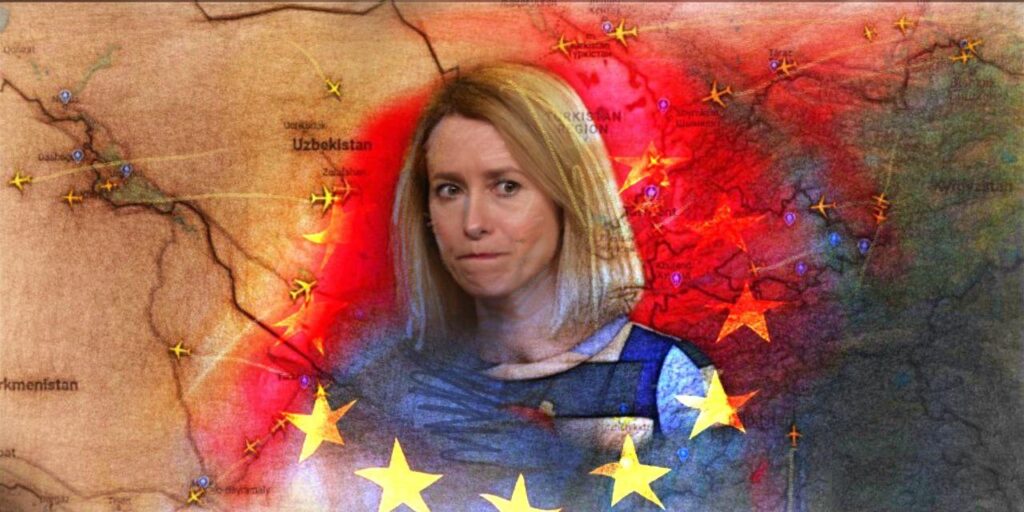
Kaja Kallas’s late-March 2025 tour of Central Asia, in her role as the European Union’s High Representative for Foreign Affairs and Security Policy, was a high-signal intervention in structural terms. It indicates a major re-evaluation of the EU’s posture toward a region historically treated as a far-flung, liminal borderland. As the inaugural EU–Central Asia Summit in Samarkand on April 3–4 approaches, her visible diplomatic activity was less about spectacle than about configuring a new field of co-adaptive engagement. Not only the European Union but also, separately, the United Kingdom are both seeking new regional footholds for building durable alignments. Central Asia, for decades considered through a lens of post-Soviet dependency or one of Chinese infrastructural absorption, is now increasingly recognized as a network node of emergent geopolitical agency. No longer just a space "between" other spaces, it is becoming a strategic space in its own right. Kallas’s mission and the UK’s parallel outreach signify a turn toward a negotiated interdependence that does not dissolve classical interest-based diplomacy but rather "complexifies" it by embedding it in a landscape of developmental trajectories and overlapping power centers. The arc of Kallas’s visit traced a deliberate sequence: Ashgabat, Tashkent, Almaty, Bishkek. In Ashgabat, she chaired the 20th EU–Central Asia Ministerial Meeting, a session nominally bureaucratic but substantively strategic. Discussions reaffirmed the 2023 EU–Central Asia Roadmap and activated the Global Gateway as an organizing frame for infrastructural, digital, and energy cooperation. Bilateral exchanges with officials in Turkmenistan brought the sensitive issue of sanctions circumvention into the open: Turkmenistan, though nominally neutral, remains enmeshed in logistics corridors proximate to Russian interest. From there, Kallas moved to Uzbekistan, where preparations for the April 3–4 Samarkand summit took clearer shape. Talks with President Shavkat Mirziyoyev and Foreign Minister Bakhtiyor Saidov in Tashkent widened the terrain of diplomatic discourse to include the energy transition, educational exchange, and regional transport integration. By hosting summits and fostering cooperation, Uzbekistan is seeking to establish for itself a profile as a key facilitator in Eurasian affairs. In Kazakhstan, her final significant stop, the meetings with President Kassym-Jomart Tokayev and Foreign Minister Murat Nurtleu emphasized macroeconomic diversification and critical raw material supply chains. These are areas in which the EU is not merely a partner but a principal stakeholder. And yet, it is not only the EU that has begun this strategic deepening. The United Kingdom, post-Brexit and still actively reconfiguring its global engagements, has moved in parallel. April 2025 marked the first anniversary of the UK–Kazakhstan Strategic Partnership and Cooperation Agreement. Foreign Office Minister Stephen Doughty’s recent hosting of the Kazakhstan–UK Strategic Dialogue marked 33 years of formal relations. These diplomatic celebrations, beyond their performativity, represent the UK’s recognition that Kazakhstan, and Central Asia more broadly, is a region where its strategic, commercial, and normative interests intersect. In this broader convergence, Kazakhstan plays a central structural role of a balancing nature. It shares long borders with both Russia and China; it hosts a significant Russian-speaking population; and it has maintained a political posture...
EU’s Kallas Tours Central Asia Ahead of Landmark Samarkand Summit

Last week, Kaja Kallas, the European Union's High Representative for Foreign Affairs and Security Policy and Vice-President of the European Commission, toured Central Asia in advance of the first-ever EU-Central Asia Summit. The notable meeting is set to take place in the ancient Uzbek city of Samarkand on April 3-4. EU-Central Asia Summit Samarkand, a city increasingly popular among international travelers, has hosted high-level gatherings before, including the Shanghai Cooperation Organization Summit in September 2022. However, the upcoming summit marks the first time the top leadership of all five post-Soviet Central Asian republics will convene with the EU at this level. Key topics on the agenda include energy cooperation, trade corridors, and climate change. The summit is expected to produce several agreements that will outline the progress of EU-Central Asia relations and establish strategic policy directions for the future. Visit to Turkmenistan Kallas began her tour in Ashgabat, where she chaired the 20th EU-Central Asia Foreign Ministers’ Meeting. There, she addressed the implications of EU sanctions on Russia. “The European Union has enacted 16 sanctions packages and is currently preparing the 17th. I understand these measures impact the region’s economies, but Russian companies must not be allowed to use Central Asia to circumvent them,” Kallas warned. The meeting also focused on the EU-Central Asia roadmap adopted in Luxembourg in October 2023. Discussions centered on deepening trade, economic, and transport ties, along with expanding digital connectivity as part of the EU's Global Gateway initiative. Kallas also met with Turkmen President Serdar Berdimuhamedov, praising Turkmenistan’s development and expressing appreciation for bilateral cooperation. Her remarks drew criticism from some observers. Belarusian political analyst Dzmitry Balkunets criticized Kallas on social media, accusing the EU of compromising its values by praising authoritarian regimes. Uzbekistan Visit In Tashkent, Kallas met with President Shavkat Mirziyoyev. Discussions highlighted the upcoming Samarkand summit and stressed the importance of deepening EU-Uzbek cooperation in trade, logistics, digitalization, green energy, and infrastructure. Both sides also explored steps toward a new enhanced partnership agreement and Uzbekistan’s accession to the World Trade Organization. Visit to Kazakhstan Kallas concluded her tour in Astana, where she met with President Kassym-Jomart Tokayev on March 28. A statement from Tokayev’s office underlined Kazakhstan’s cautious diplomatic approach to global tensions. "President Tokayev emphasized the importance of restraint and responsibility in evaluating complex global developments. Kazakhstan remains committed to resolving international conflicts through diplomacy," the statement read. Analysts suggest Kallas may have encouraged Tokayev to distance Astana from both Moscow and Washington, as Brussels often diverges from Washington on issues like the war in Ukraine. However, Tokayev reiterated Kazakhstan’s multi-vector foreign policy, which avoids aligning with any single global power. In a notable development, Tokayev met with Uzbek President Mirziyoyev last weekend in Almaty. Though unannounced, the working visit suggests that the two leaders were coordinating positions ahead of the Samarkand summit. Whether their joint stance aligns with Brussels' expectations remains to be seen.

EU-Central Asia Ministerial Meeting Highlights Enhanced Cooperation and Strategic Priorities

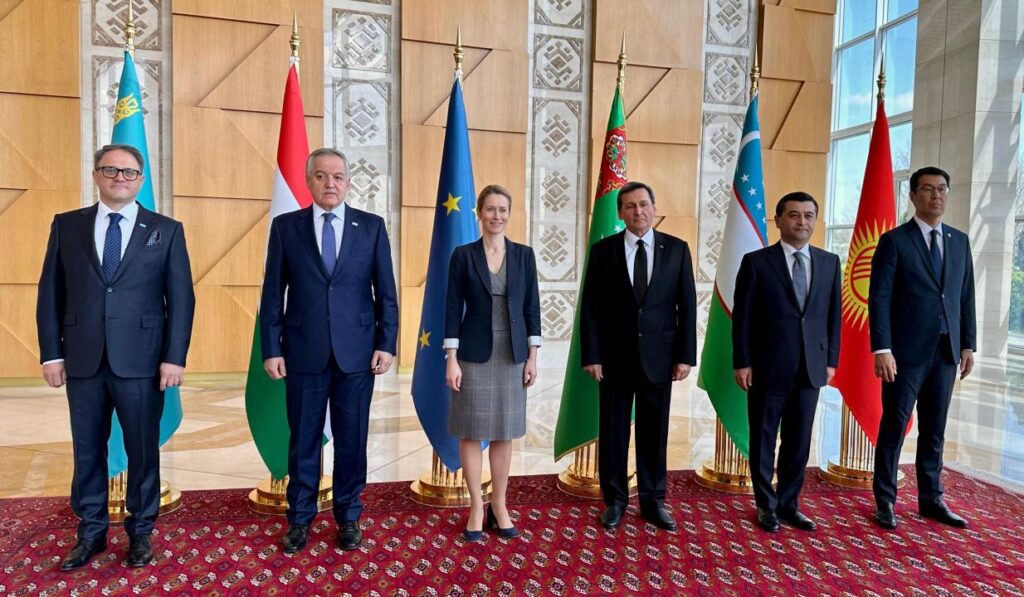
The 20th EU-Central Asia Ministerial Meeting took place on March 27 in Ashgabat, Turkmenistan, reaffirming the parties’ strong political will to deepen engagement and strengthen cooperation in strategically significant areas. The meeting brought together the EU High Representative for Foreign Affairs and Security Policy, Kaja Kallas, along with the foreign ministers of Tajikistan, Turkmenistan, and Uzbekistan, and the deputy foreign ministers of Kazakhstan and Kyrgyzstan. A key item on the agenda was preparation for the inaugural EU-Central Asia Summit, scheduled for April 4, 2025, in Samarkand, Uzbekistan. Advancing Strategic Cooperation Kallas and Central Asian ministers discussed a broad spectrum of mutual priorities under the EU’s Global Gateway Flagship Initiatives, including trade, transport, energy, water resource management, climate change, digitalization, and critical raw materials. Both sides also highlighted advancing cooperation in education, vocational training, research, and skills development to foster deeper people-to-people ties. In a joint communiqué adopted at the meeting, the EU and Central Asian states reaffirmed their shared commitment to further strengthening their comprehensive partnership, grounded in mutual interests and values. The discussions were guided by the “Joint Roadmap for Deepening Ties between the EU and Central Asia,” previously adopted in Luxembourg in October 2023. Focus on Connectivity and the Trans-Caspian Corridor Connectivity emerged as a central theme, with the participants stressing the need to expand sustainable connections between Central Asia and Europe. The EU’s Global Gateway Strategy was highlighted as a key vehicle for supporting regional infrastructure in trade, transport, water, and energy. The participants recalled the success of the Global Gateway Investors Forum on EU-Central Asia Transport Connectivity, held in Brussels in January 2024. They welcomed commitments by European and international financial institutions to invest €10 billion in the Trans-Caspian Transport Corridor (TCTC), aimed at significantly enhancing East-West transport links. Critical Raw Materials and Local Value Chains Another focal point was the growing strategic importance of critical raw materials (CRMs). Ministers reviewed progress following the signing of a Strategic Partnership Memorandum of Understanding between the EU and both Kazakhstan and Uzbekistan in the CRM sector. The meeting acknowledged EU support for strengthening local value chains in Central Asia. Discussions stressed alignment with international labor and environmental standards and the development of sustainable investment projects across the region. Sanctions Compliance The EU also briefed participants on its restrictive measures in the current geopolitical environment, underlining the need to prevent sanctions circumvention. Central Asian countries expressed readiness to continue cooperating with the EU to prevent re-exports of sensitive items, particularly those classified as “high priority.” Strategic Outlook The meeting reaffirmed the EU’s 2019 Strategy on Central Asia, which recognizes the region’s increasing strategic relevance to Europe. The Ashgabat gathering further solidified this recognition, highlighting Central Asia’s growing role in regional connectivity, resource security, and global diplomacy.

Eduards Stiprais Appointed New EU Special Representative for Central Asia

The Council of the European Union has appointed Eduards Stiprais as the new EU Special Representative for Central Asia. Stiprais will assume his duties on March 1, 2025, with an initial two-year mandate, succeeding Terhi Hakala. According to the European Council, Stiprais will be responsible for promoting EU-Central Asia relations based on shared values, strengthening regional stability and cooperation, and supporting democracy, the rule of law, good governance, and human rights. A seasoned Latvian diplomat, Stiprais previously served as Latvia’s Permanent Representative to the EU and as Deputy State Secretary - Political Director at the Latvian Ministry of Foreign Affairs. From 2016 to 2020, he was Head of the EU Delegation to Uzbekistan and has also served as Latvia’s ambassador to the United Kingdom and France. The European Council recently announced that the first-ever EU-Central Asia summit will be held in Uzbekistan on April 3-4. The summit will be attended by European Council President António Costa, European Commission President Ursula von der Leyen, and the presidents of Kazakhstan, Kyrgyzstan, Tajikistan, Turkmenistan, and Uzbekistan. As EU-Central Asia relations gain strategic significance, the upcoming summit presents a key opportunity for the EU to deepen its engagement in the region. The European Council stated that discussions will focus on enhancing cooperation in transport and digital connectivity, critical raw materials, economic and security collaboration, and energy transition. The EU adopted a new Strategy on Central Asia in 2019. The EU remains Central Asia’s second-largest trading partner and the leading investor, accounting for over 40% of foreign investment in the region.
