• KGS/USD = 0.01144 0%
  • KZT/USD = 0.00211 0%
  • TJS/USD = 0.10803 0.09%
  • UZS/USD = 0.00008 0%
  • TMT/USD = 0.28571 0%
  • KGS/USD = 0.01144 0%
  • KZT/USD = 0.00211 0%
  • TJS/USD = 0.10803 0.09%
  • UZS/USD = 0.00008 0%
  • TMT/USD = 0.28571 0%
  • KGS/USD = 0.01144 0%
  • KZT/USD = 0.00211 0%
  • TJS/USD = 0.10803 0.09%
  • UZS/USD = 0.00008 0%
  • TMT/USD = 0.28571 0%
  • KGS/USD = 0.01144 0%
  • KZT/USD = 0.00211 0%
  • TJS/USD = 0.10803 0.09%
  • UZS/USD = 0.00008 0%
  • TMT/USD = 0.28571 0%
  • KGS/USD = 0.01144 0%
  • KZT/USD = 0.00211 0%
  • TJS/USD = 0.10803 0.09%
  • UZS/USD = 0.00008 0%
  • TMT/USD = 0.28571 0%
  • KGS/USD = 0.01144 0%
  • KZT/USD = 0.00211 0%
  • TJS/USD = 0.10803 0.09%
  • UZS/USD = 0.00008 0%
  • TMT/USD = 0.28571 0%
  • KGS/USD = 0.01144 0%
  • KZT/USD = 0.00211 0%
  • TJS/USD = 0.10803 0.09%
  • UZS/USD = 0.00008 0%
  • TMT/USD = 0.28571 0%
  • KGS/USD = 0.01144 0%
  • KZT/USD = 0.00211 0%
  • TJS/USD = 0.10803 0.09%
  • UZS/USD = 0.00008 0%
  • TMT/USD = 0.28571 0%

Viewing results 1 - 6 of 6

Kazakhstan and Russia Launch Driverless Freight Transport Route

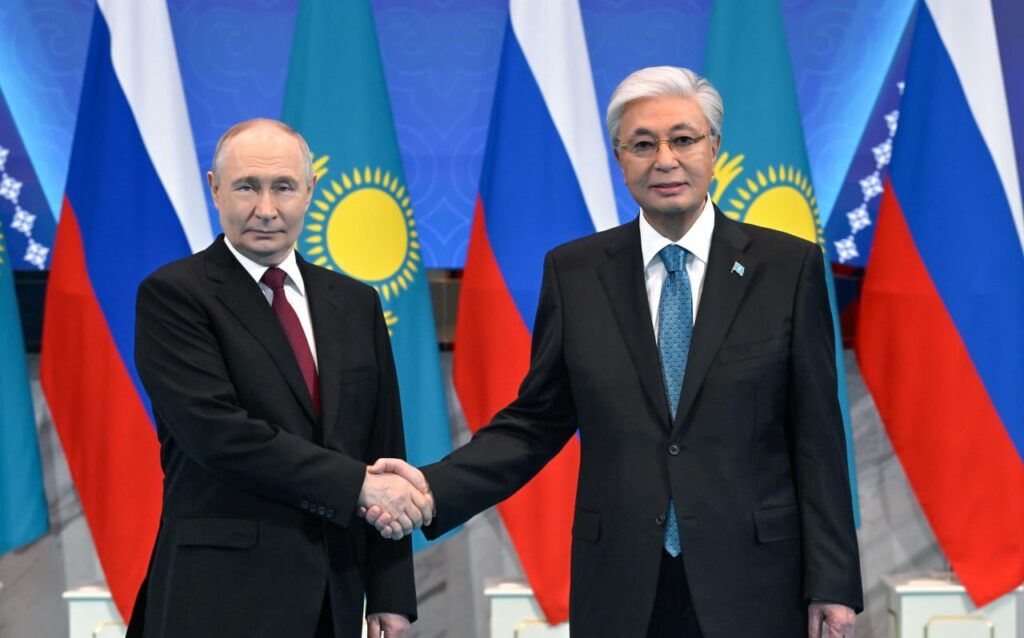
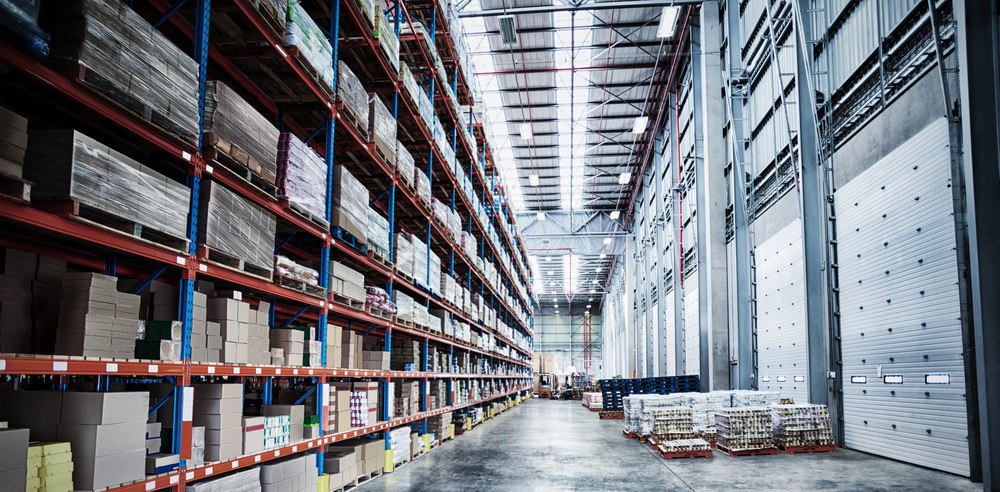
Kazakhstan and Russia have launched a pilot project for driverless freight transportation between the two countries, marking a new stage in the digitalization of Eurasian logistics and cross-border transport infrastructure. Kazakhstan's President Kassym-Jomart Tokayev announced the launch during a press conference following talks with Russian President Vladimir Putin. Commenting on the results of the negotiations, Tokayev said that transport connectivity plays a crucial role for both neighboring countries in delivering goods to domestic and international markets. He added that Kazakhstan and Russia are actively developing transcontinental transport corridors along both the North-South and East-West routes as part of wider efforts to strengthen Eurasian connectivity. “It is encouraging that systematic measures are being taken to optimize tariffs, simplify administrative procedures, and modernize border infrastructure, resulting in steady growth in cargo transportation volumes,” Tokayev said. He also said that freight volumes between the two countries reached approximately 92 million tons last year, an increase of nearly 3.5%. “We plan to continue increasing these indicators, including through the introduction of advanced digital solutions and artificial intelligence technologies. A clear example is today’s launch of driverless freight vehicles between our countries,” Tokayev added. Speaking on the sidelines of the Eurasian Economic Forum, Kazakhstan’s Vice Minister of Transport Damir Kozhakhmetov told the Russian news agency TASS that the first test routes are operating between Astana and Moscow. “As part of cooperation between our two countries, we are integrating our digital solutions in order to move from traditional systems into a new era of autonomous transportation,” Kozhakhmetov said. “Two trucks departed simultaneously from Moscow and Astana and crossed the border checkpoint. This demonstrated that we are already infrastructurally prepared to move to a new level of cooperation,” he added. Earlier, Kazakhstan’s Minister of Transport Nurlan Sauranbayev said Russia and Kazakhstan were prepared to establish permanent driverless freight routes as early as this year. Tokayev said the innovative transport initiative reflects the broader quality of bilateral relations between Kazakhstan and Russia. “In conditions of continuing turbulence in global politics, stable and predictable models of interstate partnership acquire special value,” the president said. “Relations between Kazakhstan and Russia have stood the test of time and are now successfully responding to the challenges of a new era.” According to Tokayev, bilateral cooperation is based on large-scale projects that provide practical benefits for both countries, while stable trade and economic ties continue to support growth across key sectors of their economies. He noted that bilateral trade turnover in the agricultural sector alone has increased by approximately $1 billion over the past five years. Investment cooperation has also continued to expand. Tokayev said Russia has become the largest source of foreign direct investment in Kazakhstan, with total Russian investments exceeding $29 billion. “At the same time, Kazakh investments in the Russian economy have reached $9 billion, which is also a strong indicator,” Tokayev said. According to the president, more than 20,000 companies with Russian participation currently operate in Kazakhstan. Tokayev also highlighted energy cooperation as another example of successful bilateral partnership,...

Opinion: Turkey’s Third Vector: How the Turkic States Are Expanding Central Asia’s Room for Maneuver

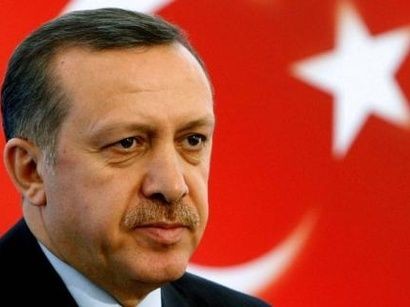
President Recep Tayyip Erdoğan’s May 13-14 state visit to Kazakhstan and the May 15 informal summit of the Organization of Turkic States in Turkistan should not be read as isolated diplomatic events. Together, they point to a larger shift in Central Asia’s geopolitical architecture. During Erdoğan’s visit to Astana, Kazakhstan and Turkey signed the Declaration on Eternal Friendship and Expanded Strategic Partnership, along with agreements covering trade, transport, energy, education, investment, defense cooperation, oil and gas, and financial-sector collaboration. The two sides also reaffirmed their goal of raising bilateral trade to $15 billion. Erdoğan was awarded the newly established Khoja Ahmed Yassawi Order, a symbolic gesture tied to the summit being hosted in Turkistan, the city most closely associated with Yassawi’s legacy. A day later, Turkistan hosted the informal summit of the Organization of Turkic States under the theme “Artificial Intelligence and Digital Development.” The timing matters. Central Asia is no longer operating inside a simple Russia-China framework. Russia remains deeply embedded in the region through security history, infrastructure, language, labor migration, and energy networks. China remains the region’s main infrastructure and trade heavyweight. The West is increasingly focused on sanctions, critical minerals, connectivity, and the Middle Corridor. But Turkey is becoming something different: not a replacement for Russia or China, but a useful third vector. Its influence is built on identity, logistics, defense technology, education, digital cooperation, and institutional networking through the Turkic States framework, rather than overwhelming capital or military dominance. Turkey as a Corridor Power Turkey cannot match China’s investment scale in Central Asia. It also cannot match Russia’s historical security depth. Ankara does not need to replace either power to matter. Its comparative advantage is different. Turkey connects Central Asia westward, to the South Caucasus, the Black Sea, the Mediterranean, and Europe. It also offers a language of partnership that is culturally familiar and politically less threatening than great-power patronage. Tokayev captured this dimension during the joint statements in Astana, describing Turkey as a “golden bridge” connecting Europe and Asia. The framing is telling: not a partner of equal weight, but a connector, exactly the function of a corridor power. A corridor power does not dominate a region directly. It expands the routes, partnerships, platforms, and strategic options available to states that do not want to be trapped between larger powers. That is why the Erdoğan-Tokayev meeting and the Turkistan summit matter. The issue goes beyond bilateral trade. It is the gradual construction of a Turkic corridor linking identity, transport, defense, digital governance, and markets. The OTS as Identity Infrastructure The Organization of Turkic States is often dismissed as symbolic: summits, speeches, flags, cultural rhetoric, and references to shared history. That reading is incomplete. Identity is not just emotion. In international politics, identity can become infrastructure. Shared language, educational networks, media links, cultural affinity, and repeated institutional contact reduce the cost of trust-building. They make it easier to sign agreements, build transport projects, expand student exchanges, coordinate business forums, and create political habits of consultation. The...