Central Asia is seeking a larger role in trade between China and Europe by offering alternative shipping routes that bypass Russia. However, growing interest in transit has not been matched by balanced development of warehouse infrastructure. Some transport hubs face shortages of modern facilities, while others have vacant space. For international freight operators and retailers, this means additional costs. For investors, it raises the risk of financing warehouses that may struggle to attract tenants.
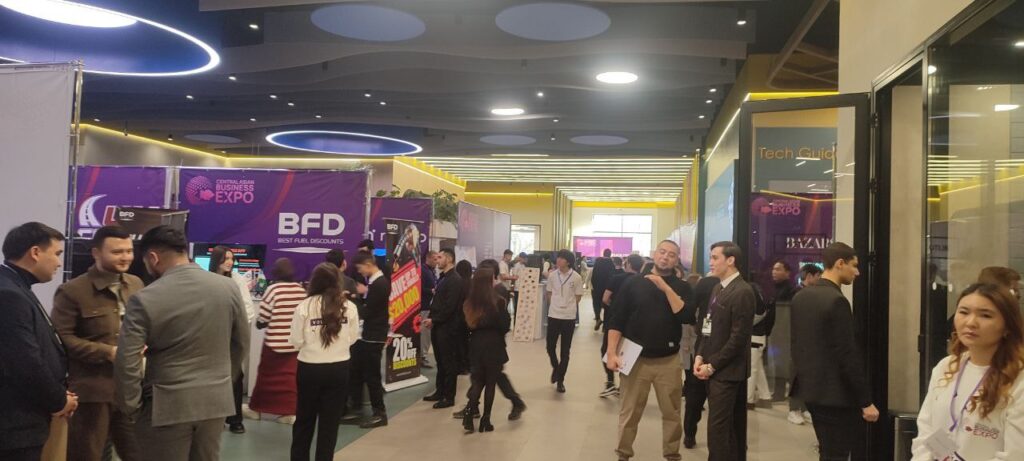
These contradictions were discussed on October 15 in Almaty at the Central Asia Warehouse Summit 2026, organized by consulting firm IBC Global. The summit brought together industry representatives and investors. Research presented at the event showed a growing disconnect between warehouse construction and actual demand.
Vacant Warehouses Exist, but Not Where They Are Needed
According to IBC Global, the vacancy rate for modern warehouse space in Kazakhstan is about 5%. This gives tenants more options when choosing facilities and negotiating rents. However, the national figure masks significant differences between cities and types of warehouse space.
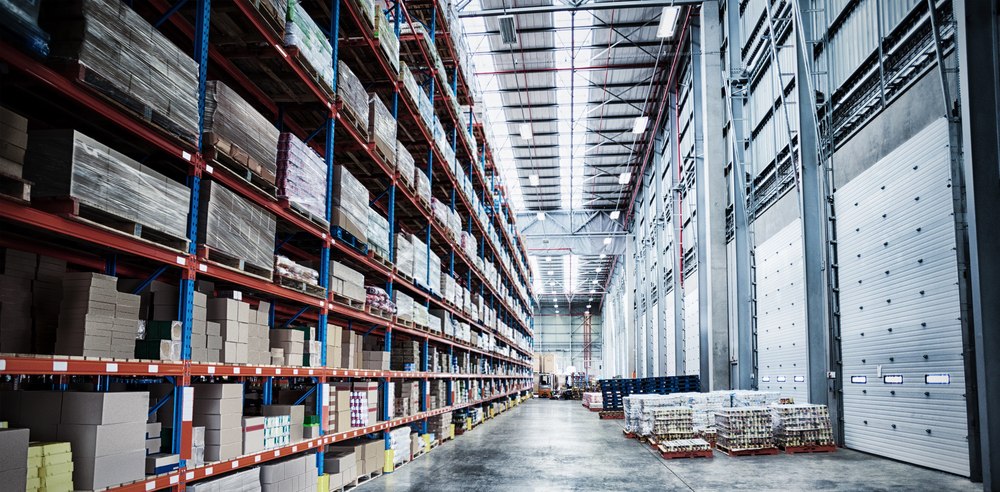
Industry estimates put Astana’s shortage of modern warehouse space at approximately 350,000–400,000 square meters. Separately, property consultancy Bright Rich reported that Almaty’s warehouse vacancy rate had reached 13.3% in May 2026. These estimates come from different periods and surveys, and should not be treated as directly comparable. Class A warehouses are modern facilities with high ceilings, loading docks, security systems, and infrastructure designed to handle large volumes of goods.
Kazakhstan’s warehouse market is nevertheless expanding rapidly. According to an IBC Global ranking presented at the summit, the total area of Class A warehouses covered by its research increased by 39% over the past year to 730,000 square meters. More than half of that space, approximately 400,000 square meters, is controlled by the five largest property owners. Their facilities are concentrated mainly in Almaty and Almaty Region, Astana, and Shymkent.
Developers Continue Building Despite Weaker Demand
A survey of more than 100 warehouse market participants across four Central Asian countries revealed a gap between developers’ plans and tenants’ expectations. According to IBC Global, 81% of developers intend to launch new projects or complete facilities already under construction within the next twelve months. Yet 62% of developers surveyed identified weak tenant demand as the main obstacle to market development, while 52% cited the high cost and limited availability of financing.
IBC Global’s market sentiment index for Kazakhstan stood at 48.1 points in the third quarter of 2026, below the neutral threshold of 50. However, 52% of respondents expect supply and demand to move closer to equilibrium over the next year.
The risks are particularly high for speculative developments launched without a tenant already under contract. Developers expect to secure customers after construction is completed, but by then business requirements and market rental rates may have changed.
One alternative is the build-to-suit model, in which a facility is constructed to meet the requirements of a specific tenant. Its location, size, equipment, and operating conditions are agreed upon in advance. This reduces vacancy risk for investors but requires securing a major customer before construction begins.
The Middle Corridor: Major Investments Do Not Guarantee Warehouse Demand
The warehouse market’s prospects are closely linked to the restructuring of Eurasian trade routes. Following disruptions to established supply chains between Russia and Europe, interest has grown in the Trans-Caspian International Transport Route, commonly known as the Middle Corridor, which connects China with European markets through Kazakhstan, the Caspian Sea, the South Caucasus, and Turkey.
In September 2026, the World Bank published a study projecting that development of the corridor could more than triple freight volumes by 2040. With additional transport and customs reforms, freight traffic could increase fourfold, while delivery times could fall by two-thirds compared with 2023.
The bank estimates that realizing this scenario would require more than $25 billion in infrastructure investment. Another approximately $30 billion would be needed for complementary projects, including access roads, rail connections, logistics centers, inland terminals, cargo-handling equipment, and digital systems. These are estimated investment needs through 2040, rather than funding commitments.
Even a fourfold increase in corridor freight volumes, however, would not necessarily produce a comparable rise in demand for warehouse space. A significant share of containerized cargo could pass through the region without being stored for extended periods. Transferring a container from a train to a ship requires a terminal, but not necessarily a large warehouse complex.
Warehouses become essential when goods need to be divided into smaller shipments, repackaged, labeled, refrigerated, or distributed to local buyers. These are the activities that will determine how much of the revenue generated by international trade Central Asian businesses can capture.
Demand Shifts Toward Cold Storage and Automated Warehouses
The growth of e-commerce, retail chains, and food logistics is changing the requirements for warehouse facilities. Conventional storage space for industrial goods is no longer sufficient.
Food companies and retailers need refrigerated terminals, multi-temperature storage facilities, and reliable electricity supplies. For fresh produce and pharmaceuticals, a breakdown in storage conditions can mean losing an entire shipment.
Speaking at an earlier warehouse summit in Tashkent in April, a Eurasian Development Bank representative identified refrigerated, pharmaceutical, and agricultural logistics centers as priority investment areas. The bank views such facilities as part of a future Eurasian goods distribution network linking producers, transport routes, and consumer markets.
For international online marketplaces and retail chains, warehouse size and location are not the only considerations. Facilities must provide accurate inventory tracking, rapid order fulfillment, and data integration with transport systems. Without these capabilities, expanding warehouse space will not necessarily make deliveries faster.
Who Will Benefit From the New Trade Routes?
The World Bank estimates that improved transport connectivity and lower logistics costs could raise GDP by 3.3% and create approximately two million additional jobs by 2040 across the nine countries covered by its study. These projections cover the wider corridor, including the South Caucasus and Turkey, as well as Central Asia.
For warehouse investors, those projections do not replace an assessment of local demand. New facilities need to match tenants’ preferred locations and operating requirements.