• KGS/USD = 0.01144 0%
  • KZT/USD = 0.00213 0%
  • TJS/USD = 0.10699 0%
  • UZS/USD = 0.00008 0%
  • TMT/USD = 0.28571 0%
  • KGS/USD = 0.01144 0%
  • KZT/USD = 0.00213 0%
  • TJS/USD = 0.10699 0%
  • UZS/USD = 0.00008 0%
  • TMT/USD = 0.28571 0%
  • KGS/USD = 0.01144 0%
  • KZT/USD = 0.00213 0%
  • TJS/USD = 0.10699 0%
  • UZS/USD = 0.00008 0%
  • TMT/USD = 0.28571 0%
  • KGS/USD = 0.01144 0%
  • KZT/USD = 0.00213 0%
  • TJS/USD = 0.10699 0%
  • UZS/USD = 0.00008 0%
  • TMT/USD = 0.28571 0%
  • KGS/USD = 0.01144 0%
  • KZT/USD = 0.00213 0%
  • TJS/USD = 0.10699 0%
  • UZS/USD = 0.00008 0%
  • TMT/USD = 0.28571 0%
  • KGS/USD = 0.01144 0%
  • KZT/USD = 0.00213 0%
  • TJS/USD = 0.10699 0%
  • UZS/USD = 0.00008 0%
  • TMT/USD = 0.28571 0%
  • KGS/USD = 0.01144 0%
  • KZT/USD = 0.00213 0%
  • TJS/USD = 0.10699 0%
  • UZS/USD = 0.00008 0%
  • TMT/USD = 0.28571 0%
  • KGS/USD = 0.01144 0%
  • KZT/USD = 0.00213 0%
  • TJS/USD = 0.10699 0%
  • UZS/USD = 0.00008 0%
  • TMT/USD = 0.28571 0%

Viewing results 1 - 6 of 578

Kara-Suu Crossing Reopens on Kyrgyz-Uzbek Border

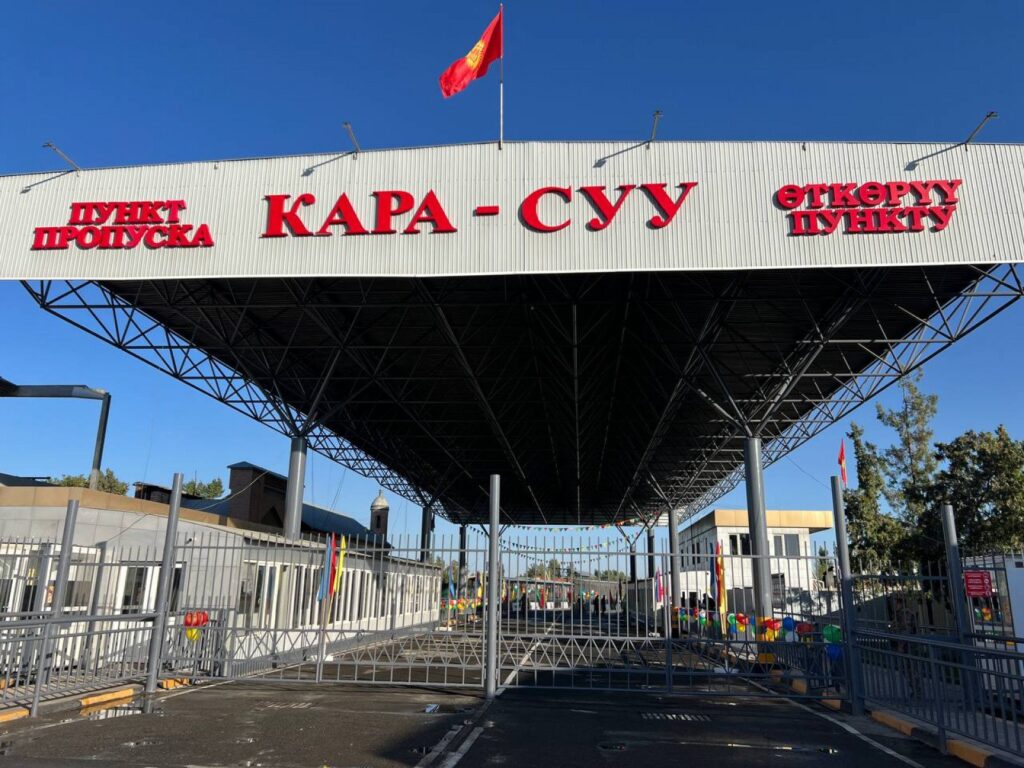
On September 12, the Kara-Suu checkpoint was reopened at the border between Kyrgyzstan and Uzbekistan. Located near the town of Kara-Suu in Kyrgyzstan’s southern Osh region, on the border with Uzbekistan’s Andijan region, the Kara-Suu crossing was closed 14 years ago. It has reopened amid the two neighboring states' improved political and economic relations. Speaking at the checkpoint's opening ceremony, Bakyt Torobaev, the Deputy Chairman of Kyrgyzstan’s Cabinet of Ministers, emphasized that its reopening will be beneficial to citizens of both countries. "Previously, many Kyrgyz and Uzbek citizens had to stand in lines at the Dostuk checkpoint to cross the border. The opening of Kara-Suu will solve the problem of queues when crossing the border. The opening of this checkpoint is an important step towards strengthening economic, social, and cultural ties between our countries and increasing tourist flows," Torobaev said. On the same day, the renovated Ken-Sai and Uch-Kurgan border checkpoints were opened between the Jalal-Abad region in Kyrgyzstan and the Namangan region of Uzbekistan. According to official statistics, more than 14 million people crossed the Kyrgyz-Uzbek border in 2023, and in the first eight months of 2024, this figure reached 11 million, 1.5 million more than in the same period last year. In 2023, trade between Kyrgyzstan and Uzbekistan amounted to $693.6 million. In the first seven months of 2024, it reached $428 million, a 6.7% increase compared to the same period in 2023. During a state visit to Uzbekistan back in July, Kyrgyzstan’s President Sadyr Japarov and Uzbek President Shavkat Mirziyoyev focused on measures to increase bilateral trade to $2 billion in the coming years and launch a “green-light corridor” for the transportation of agricultural produce between the two countries.
Uzbekistan and Bulgaria to Increase Middle Corridor Freight Transport

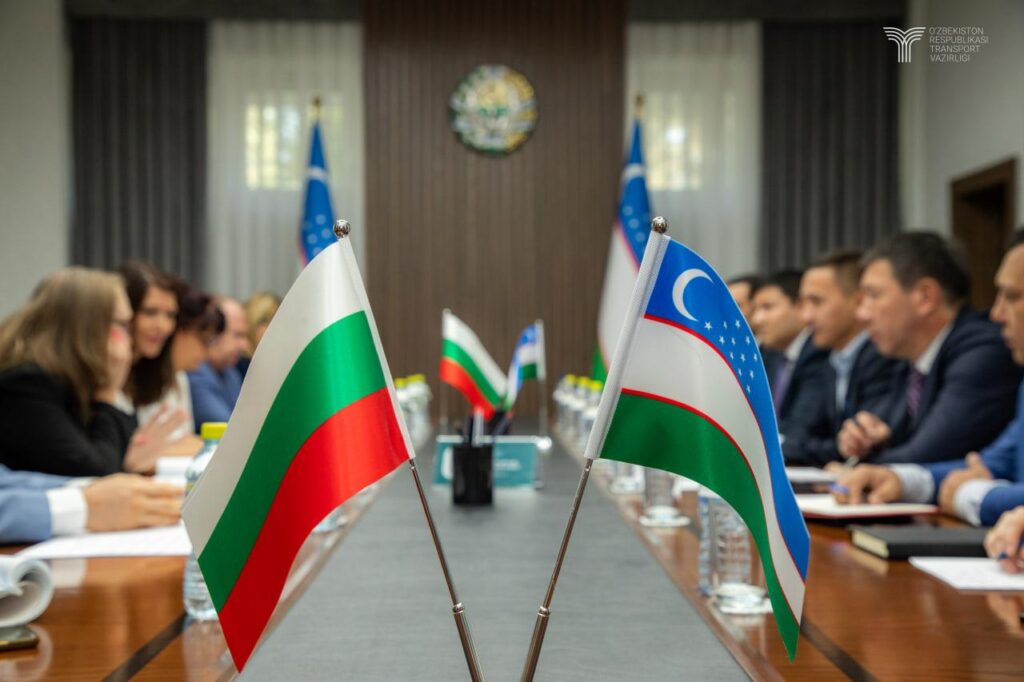
On 3-4 September, the Uzbek-Bulgarian Commission on International Road Transport met in Tashkent to discuss expanding bilateral cooperation in international freight transport by road and creating more favorable conditions for national carriers from both countries. As reported by the Uzbek Ministry of Transport, the agenda focused on increasing the volume of freight traffic to EU countries via Bulgaria, using the Trans-Caspian International Transport Route (TITR), also known as the Middle Corridor, which connects China and Europe via Central Asia and the Caucasus. After the meeting, the parties exchanged additional permit forms for trucks entering their countries for the remainder of 2024, and agreed to increase the issue of mutual permit forms 15-fold in 2025. The Uzbek Ministry added that to enhance cargo transportation to EU countries, an agreement had been made with Romania to waive the requirement of permits from April 1, 2024.

Azerbaijan and Uzbekistan Collaborate to Construct Ferries

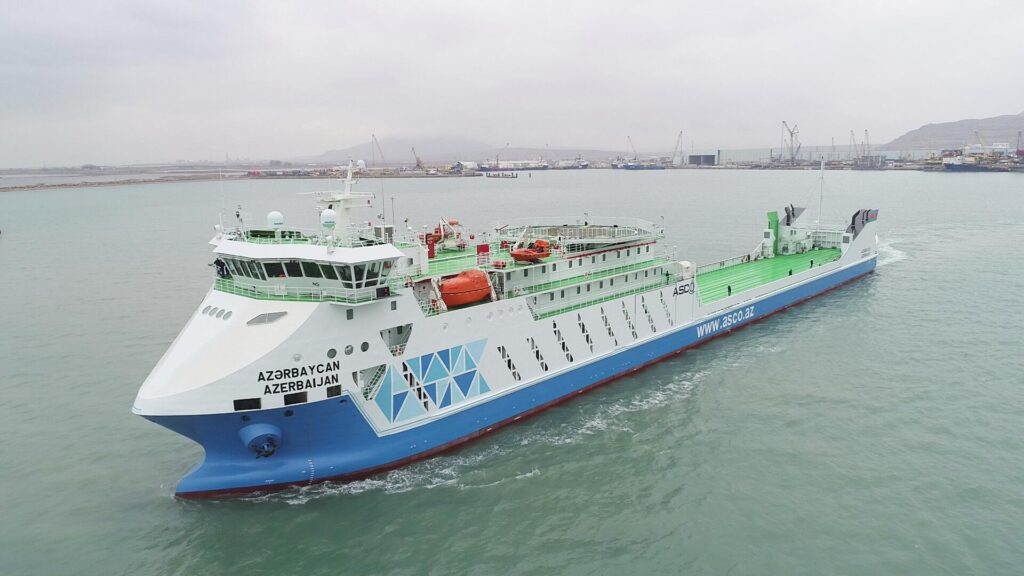
Azerbaijan and Uzbekistan plan to cooperate on the construction of ferries. These ferries will be provided for Uzbekistan's needs, and the project will cost $150 million. Several measures are being suggested to expand the countries' cooperation in the transport and transit sectors. The joint construction of warehouse infrastructure is being mooted, as well as the creation of a joint venture to further develop transportation along the Trans-Caspian route. The Times of Central Asia previously wrote about the Uzbekistan-Azerbaijan business forum that was held in Tashkent on August 22. As a result of the forum, a portfolio of projects worth $2 billion was formed in energy, chemistry, mining, textile, agriculture, urban development, and other areas. Also, on May 1 this year, the energy ministers of Azerbaijan, Kazakhstan, and Uzbekistan met in Tashkent and signed a memorandum of cooperation to connect their countries' energy networks. The initiative's main goal is to study the means of connecting energy systems through a high-voltage cable installed in the Caspian Sea to export green energy from Azerbaijan, Kazakhstan, and Uzbekistan to countries of the European Union.

Russia’s Gazprom Doubles Gas Supply to Central Asia

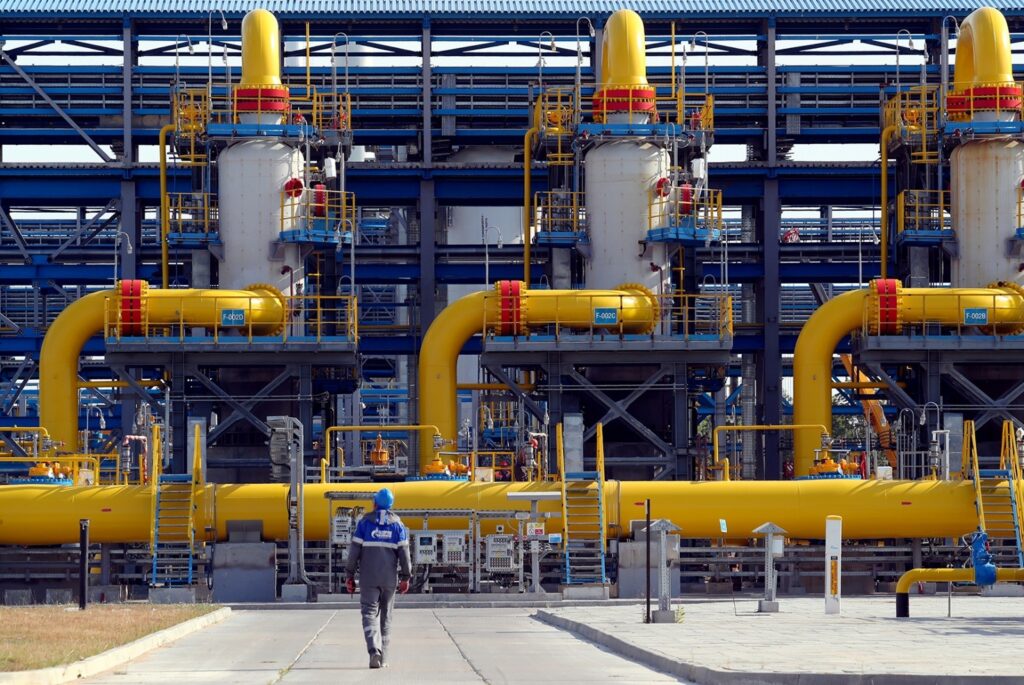
As reported by TASS, the head of Gazprom, Alexey Miller, announced that from January to August 2024, the company doubled its gas supply to Central Asia. According to Miller, the rapid economic and social development of the republics has opened up significant new opportunities for Gazprom, with gas supplies to Uzbekistan now at the highest possible level. "For example, the gas supply applications we submit for Uzbekistan are currently being fulfilled through the Central Asia Center gas pipeline at the maximum technical capacity, equivalent to the levels used during the winter season. This is the same level of supply we provided to Uzbekistan last winter when they experienced unusually cold weather,” stated Miller. Citing the fact that Kyrgyzstan’s gasification rate has doubled and continues to grow, he explained, “A lot of work has been done to reconstruct the gas transportation system of Kyrgyzstan. New gas transportation facilities have been built. But what is also important is Gazprom Kyrgyzstan has implemented socially significant projects in Kyrgyzstan, as is customary at Gazprom.” The Times of Central Asia previously reported that in June, Gazprom signed agreements for gas supplies to Kyrgyzstan and with Kazakhstan on the transit of Russian gas in the direction of Uzbekistan and Kyrgyzstan for the period 2025-2040. To ensure transit, a specially designated route based on the Central Asia–Center gas pipeline system will be expanded and implemented. In June 2023, Uzbekistan signed a two-year gas purchase agreement with Gazprom. Daily supplies amount to 9 million cubic meters, and annual supplies amount to almost 2.8 billion cubic meters. Supplies under this agreement began on October 7, 2023.

Kazakh-German Business Council Meets to Expand Economic Cooperation

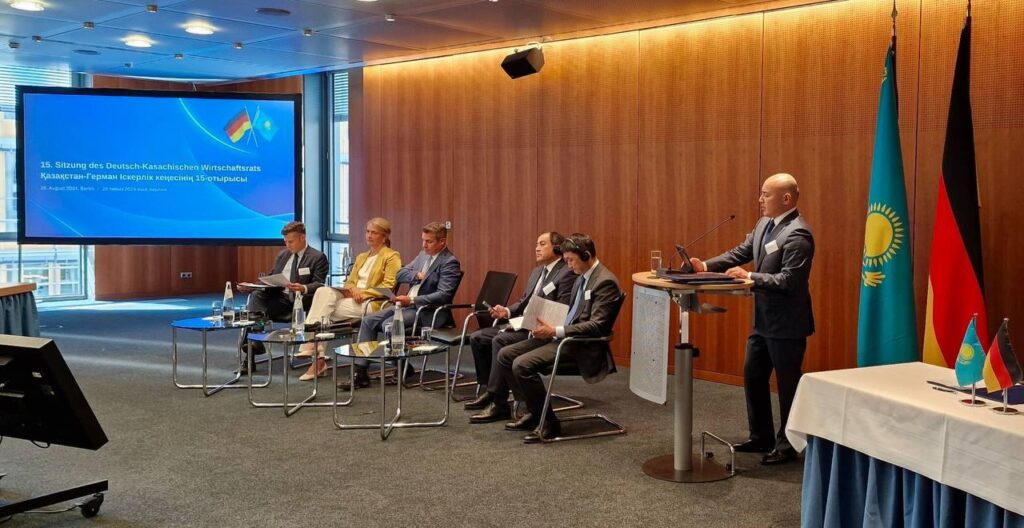
The 15th meeting of the Kazakh-German Business Council for Strategic Cooperation, co-chaired by First Deputy Prime Minister of Kazakhstan Roman Sklyar and Director of the Eastern Committee of the German Economy Michael Harms, was held in Berlin on August 28. The meeting gathered Kazakh government and business representatives and heads of leading German companies such as Siemens, Svevind Energy, CT Agro, CLAAS KGaA, Flight Design General Aviation, Deutsche Bahn, KfW Banken Gruppe, and Deutsche Bank. The co-chairs emphasized that the event was taking place ahead of Federal Chancellor of Germany Olaf Scholz's visit to Kazakhstan in September. The meeting focused on expanding Kazakh-German trade and economic cooperation, attracting investments, and implementing joint projects in the agro-industrial sector and processing industry. It was noted that Germany is Kazakhstan's largest trading partner in the European Union, and that Kazakhstan is among Germany's top 50 foreign trade partners. The lion's share of German investments in Kazakhstan go to the country’s non-raw materials sector — the processing industry, chemical industry, production of building materials, transport, and agro-industrial sector. Speaking on the sidelines of the event, Kazakhstan Deputy Minister of Foreign Affairs Alibek Kuantyrov urged further to intensify cooperation between the Kazakh and German business communities. Noting the critical role of German companies in Kazakhstan’s industrialization, Kuantyrov stated that German companies are implementing 66 projects in Kazakhstan for a total of $54 billion, creating about 15,000 jobs. Kuantyrov added that since 2005, German companies have invested about $7.8 billion in Kazakhstan’s economy, with a significant increase in the past year, reaching $770 million. He expressed confidence that the upcoming visit of Scholz to Kazakhstan will bring bilateral relations to a new level and give an additional impetus to strengthening existing and creating new economic ties. Kuantyrov emphasized the significance of cooperation in the context of the Trans-Caspian International Transport Route (TITR), also known as the Middle Corridor. He noted that cargo traffic through the Middle Corridor to Germany and the EU has increased almost threefold since the beginning of 2022 — to 1.5 million tons and 2.6 million tons, respectively, during the first seven months of this year, adding that the potential of TITR is estimated at 10 million tons of cargo a year. In this regard, Kuantyrov invited German partners to participate in developing Kazakhstan’s Caspian Sea ports of Aktau and Kuryk.

Kazakhstan Bans Apple Imports as Big Harvest Expected This Year

On August 27, the government of Kazakhstan imposed a temporary ban on importing apples into Kazakhstan by motor transport until the end of the year. The ban does not apply to imports from fellow members of the Eurasian Economic Union -- Armenia, Belarus, Kyrgyzstan, and Russia. The Kazakh Ministry of Agriculture explained that this year's total apple harvest is projected to be 300,000 tons. This higher than average volume was achieved thanks to government support measures provided in previous years to cultivate apple orchards. In 2024, new apple orchards will have reached full fruiting capacities, and yields will increase by 18%, which will fully meet the needs of the domestic market. Kazakhstan is the birthplace of apples — particularly the famous aport apples, which grow in the Almaty region. Translated from Kazakh, Almaty means “place of abundance of apples.” Aport apples are distinguished by their large size, distinct smell, and succulent nature. One of the prominent landmarks in Almaty, the first sight to greet visitors to the Kok-Tobe Mountain, which looms over the city, is a granite statue of an apple with water gushing from its core. In 1970, there were 3.8 million aport trees in Kazakhstan, but by 1984, only 1.4 million remained. In 2012, scientific research began on the revival and rejuvenation of the variety, including establishing an experimental garden of aport grafted onto Sievers apple trees. In 2023, Kazakh scholars harvested the first fruits weighing 400–500g.