• KGS/USD = 0.01144 0%
  • KZT/USD = 0.00213 0%
  • TJS/USD = 0.10714 0.09%
  • UZS/USD = 0.00008 0%
  • TMT/USD = 0.28571 0%
  • KGS/USD = 0.01144 0%
  • KZT/USD = 0.00213 0%
  • TJS/USD = 0.10714 0.09%
  • UZS/USD = 0.00008 0%
  • TMT/USD = 0.28571 0%
  • KGS/USD = 0.01144 0%
  • KZT/USD = 0.00213 0%
  • TJS/USD = 0.10714 0.09%
  • UZS/USD = 0.00008 0%
  • TMT/USD = 0.28571 0%
  • KGS/USD = 0.01144 0%
  • KZT/USD = 0.00213 0%
  • TJS/USD = 0.10714 0.09%
  • UZS/USD = 0.00008 0%
  • TMT/USD = 0.28571 0%
  • KGS/USD = 0.01144 0%
  • KZT/USD = 0.00213 0%
  • TJS/USD = 0.10714 0.09%
  • UZS/USD = 0.00008 0%
  • TMT/USD = 0.28571 0%
  • KGS/USD = 0.01144 0%
  • KZT/USD = 0.00213 0%
  • TJS/USD = 0.10714 0.09%
  • UZS/USD = 0.00008 0%
  • TMT/USD = 0.28571 0%
  • KGS/USD = 0.01144 0%
  • KZT/USD = 0.00213 0%
  • TJS/USD = 0.10714 0.09%
  • UZS/USD = 0.00008 0%
  • TMT/USD = 0.28571 0%
  • KGS/USD = 0.01144 0%
  • KZT/USD = 0.00213 0%
  • TJS/USD = 0.10714 0.09%
  • UZS/USD = 0.00008 0%
  • TMT/USD = 0.28571 0%

Viewing results 1 - 6 of 578

Kyrgyzstan Seeks to Increase Production and Export of Fish

On August 23, Bakyt Torobayev,  Minister of Water Resources, Agriculture, and Processing Industry of Kyrgyzstan, attended ceremonies to launch the construction of two fish processing plants in the country’s northern Chui region. The first plant, to be built in the village of Leninskoye at the cost of over $4.3 million, will have an annual capacity is up to 3,000 tons of processed fish products (mainly trout) and up to 8,000 kg of black sturgeon caviar. When operational, the second in the village of Ak-Jol, will create 45 new jobs and have an annual production capacity of 1,000 tons of chilled trout, 1,000 tons of frozen trout, 800 tons of smoked fish, and 400 tons of dried fish. Kyrgyzstan currently produces about 30,000 tons of fish annually, of which only  5,000 tons are exported. Citing the fact that the country had conditions to produce 105 thousand tons and export 50 thousand tons of fish,  Torobayev recommended that emphasis be placed on the construction of processing enterprises. According to official statistics, in 2023, Kyrgyzstan produced 33,600 tons of fish and exported 5,556 tons of fish and fish products, mainly to Russia, Kazakhstan, Uzbekistan, and Lithuania. Fish (mainly trout) are produced in Kyrgyzstan at artificial ponds and fishery farms at lakes Issyk-Kul and Son-Kul.
Kazakhstan and Tajikistan Sign Allied Relations Treaty

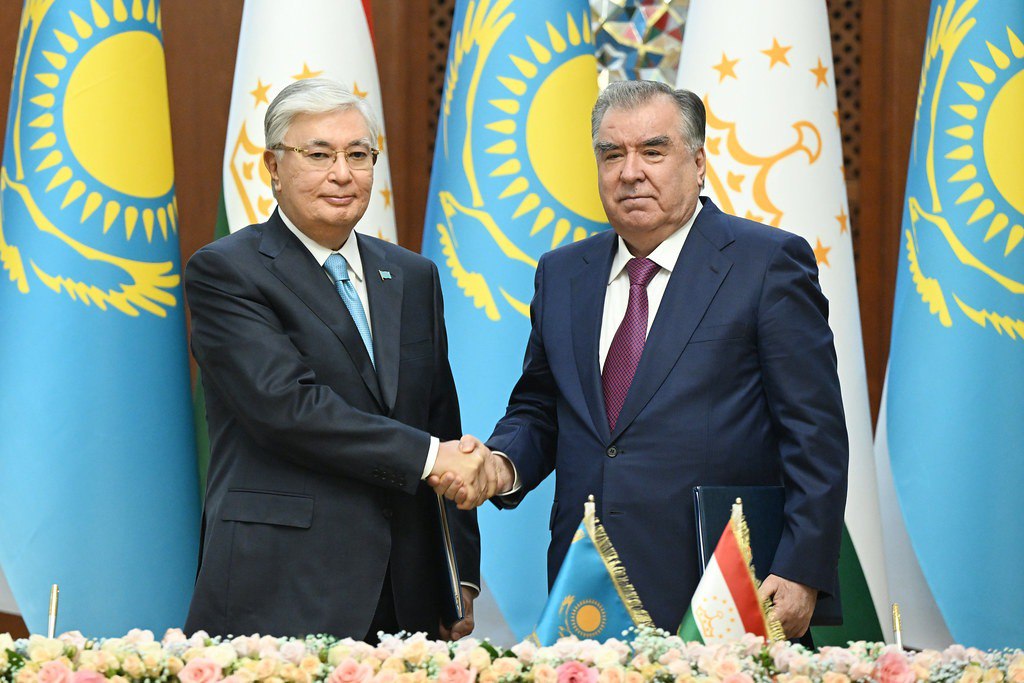
A treaty on allied relations between Kazakhstan and Tajikistan was signed on August 22 during Kazakh President Kassym-Jomart Tokayev's state visit to Tajikistan and talks with Tajik President Emomali Rahmon in Dushanbe. Noting its significance, Rahmon stated that the treaty opens a new page in the history of Kazakh-Tajik cooperation and will become a solid foundation for strategic partnership between the two nations. President Tokayev, in turn, emphasized that “there are no problematic issues between our countries” and announced plans to increase bilateral trade to $2 billion. Over the past five years, the annual trade volume between Kazakhstan and Tajikistan has more than doubled, exceeding $1 billion. Referencing Kazakhstan's readiness to increase supplies to Tajikistan of some 85 commodities valued at $200 million, Tokayev announced:  “We agreed to expand the range of goods supplied, systematically remove barriers that hinder trade and economic cooperation between our countries, and strengthen partnership in the transport and logistics sector. There is a serious potential for increasing bilateral trade in the agro-industrial sector. In the first six months of this year, agricultural trade between our countries increased by 12%, amounting to almost $300 million." Tokayev also emphasized the importance of cooperation in the water sector: “We agreed to continue the coordinated work on the rational use of resources of transboundary rivers of Central Asia. Kazakhstan is grateful to the Tajik side for timely decisions related to fulfilling obligations in the water and energy sector, particularly on [irrigation] water supplies to Kazakhstan.” During the talks, it was stated that over the past five years, Kazakhstan has invested $700 million in Tajikistan's economy. Today, more than 80 percent of Tajikistan's fruit and vegetable exports go to Kazakhstan, and Tajikistan imports large amounts Kazakh wheat, flour, and other grain products. On August 21, the eve of Tokayev’s visit, Dushanbe hosted a Kazakh-Tajik business forum, during which the parties signed 14 commercial contracts and cooperation agreements worth $1.2 billion.

Uzbekistan Releases Foreign Trade Data For 2024 So Far

The Statistics Agency of Uzbekistan has presented a report on the country’s foreign trade turnover in January-July 2024. According to the report, during this period, the country's foreign trade turnover (FTT) reached $36.8 billion and increased by $1.9 billion, or 5.3%, compared to January 2023. The volume of exports amounted to $14,786 million, which decreased by 1.1% compared to last year; imports increased by 10.1% and amounted to $22,049 million. Kazakhstan became one of Uzbekistan's largest foreign economic partners after China and Russia during this period. This may be due to a common border, trade in the CIS free trade area, and the recent liberalization of mutual economic relations. Uzbekistan has trade relations with 187 countries worldwide. A significant share of FTT was recorded in the PRC (18.6%), Russia (18.5%), Kazakhstan (6.2%), Turkey (4.6%), and South Korea (3.2%). From January to July 2024, the share of the CIS countries in the foreign trade turnover was 35.3%, which increased by 3.1% compared to the corresponding period of 2023. The total cost of FTT with these countries was $13,020.8 million. Exports reached $4,940.3 million, while imports amounted to $8,080.5 million. Uzbekistan's FTT with the Eurasian Economic Union member states amounted to $9,913.1 million. The export volume reached $3,230.5 million, and the import volume reached $6,682.5 million.

Uzbekistan to Start Industrial Production of Hydrogen

Sanoat Energetika Guruhi (Saneg), one of the largest private oil and gas companies in Uzbekistan, announced on August 21 that the Ferghana Oil Refinery is to produce industrial hydrogen by transferring its related assets to Air Products, a world-leading industrial gases company. The Ferghana Refinery is currently undergoing comprehensive modernization to both enhance its output and help the government of Uzbekistan diversify energy sources by industrializing hydrogen production. Saneg's operations at the refinery currently account for about 80% of the country’s oil production and 22% of its proven gas reserves and the acquisition its industrial hydrogen assets for $140 million by Air Products, promises to widen the commercial use of the product in Uzbekistan. Saneg's founder Bakhtiyor Fazilov commented: "This agreement with Air Products represents another significant step forward in our long-term modernization plans for the Ferghana Refinery with the world leader in hydrogen production… and contribute to one of the Uzbekistan government’s main priorities, strengthening our nation’s energy security by increasing domestic hydrogen supplies." Reporting on the transaction, Seifi Ghasemi, Chairman, President, and CEO at Air Products, stated: "As the world’s largest hydrogen supplier and a leader in hydrogen fueling infrastructure, Air Products’ solutions bring safe and reliable hydrogen to hydrogen-powered applications worldwide. Our advanced technology and expertise in hydrogen production will enhance the refinery's capabilities and support the growth of Central Asia's oil and gas industry. This will also aid Uzbekistan in achieving more sustainable and energy-independent operations, contributing to a cleaner future for the Republic."

New Container Transport Route Connects India and Uzbekistan

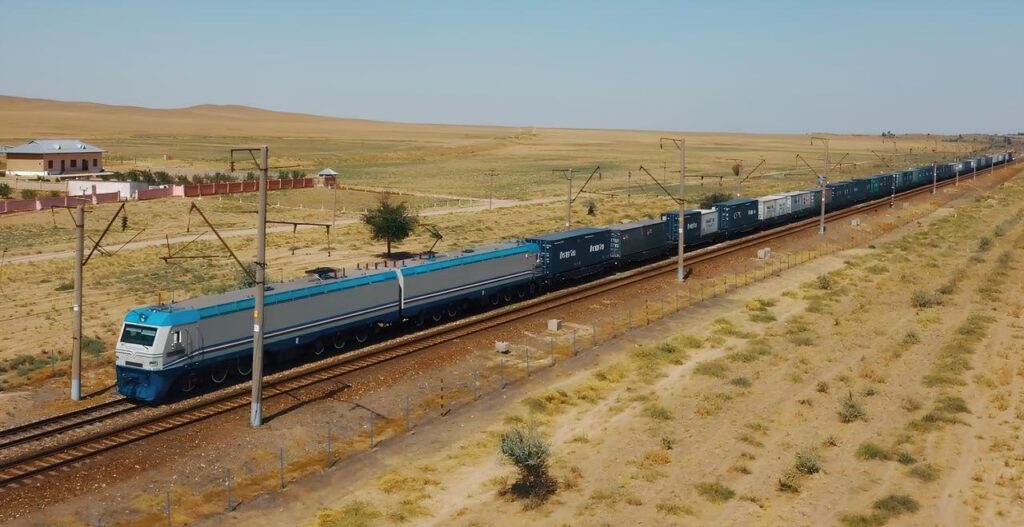
JSC “Uztemiryulkonteyner” reports on its Telegram channel that container transportation had been launched on a new multimodal route connecting India and Uzbekistan. It was reported that transportation from the Indian ports of Mundra, Nhava Sheva, and Chennai to Uzbekistan was successfully organized using a new multimodal route. The cargo was delivered by sea from India to the Iranian port of Bandar Abbas and then by rail to the Sergeli station in Uzbekistan. The containers are first transported from the Bandar Abbas port to the Sarakhs station on Iranian platforms, reloaded onto JSC “Uzbekistan Railways” platforms, and sent to Uzbekistan via Turkmenistan. According to JSC “Uztemiryulkonteyner”, a freight train consisting of 20 20-foot containers took 20 days to cover the distance. The total length of the railway is 2673 km. In the future, the transportation period is planned to be reduced to 15 days.

Kazakhstan Bans Wheat Import to Protect Domestic Market

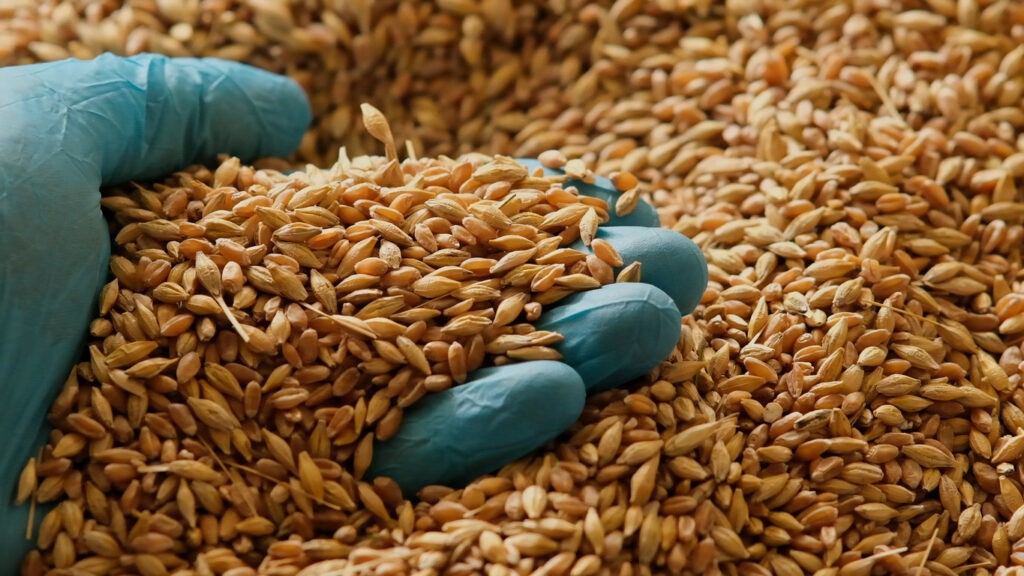
The Kazakh Ministry of Agriculture announced on August 20 a ban on importing wheat to Kazakhstan. This applies to all countries, including fellow members of the Eurasian Economic Union (Armenia, Belarus, Kyrgyzstan, and Russia). The ban applies from August 21 to December 31, 2024, and does not apply to the transit of wheat through Kazakhstan's territory. The ministry explained that the move was necessary to protect the domestic market. In the first half of this year, Kazakhstan imported 1.3 million tons of wheat, which is almost equal to the import volume for the entire 2023. The country's domestic market has sufficient wheat left over from last year's harvest. As of 1 July 2024, Kazakhstan had wheat reserves of 5.1 million tons, including 4 million tons for food. Due to favorable weather conditions during this year’s growing season, the ministry expects a good grain harvest, which would create an excess supply on the domestic grain market, considering the carryover stocks. Kazakhstan's total area under grain crops this year is 16.7 million hectares. Regarding wheat production, Kazakhstan is in 14th place in the world, with a production volume of more than 12 million tons per year. According to the Food and Agriculture Organization of the United Nations (FAO), Kazakhstan’s wheat production in 2023 stood at 12.1 million tons. Wheat exports in the 2023/24 marketing year (July/June) were estimated at 9 million tons.