• KGS/USD = 0.01144 0%
  • KZT/USD = 0.00205 0%
  • TJS/USD = 0.10778 0%
  • UZS/USD = 0.00008 0%
  • TMT/USD = 0.28490 -0.28%
  • KGS/USD = 0.01144 0%
  • KZT/USD = 0.00205 0%
  • TJS/USD = 0.10778 0%
  • UZS/USD = 0.00008 0%
  • TMT/USD = 0.28490 -0.28%
  • KGS/USD = 0.01144 0%
  • KZT/USD = 0.00205 0%
  • TJS/USD = 0.10778 0%
  • UZS/USD = 0.00008 0%
  • TMT/USD = 0.28490 -0.28%
  • KGS/USD = 0.01144 0%
  • KZT/USD = 0.00205 0%
  • TJS/USD = 0.10778 0%
  • UZS/USD = 0.00008 0%
  • TMT/USD = 0.28490 -0.28%
  • KGS/USD = 0.01144 0%
  • KZT/USD = 0.00205 0%
  • TJS/USD = 0.10778 0%
  • UZS/USD = 0.00008 0%
  • TMT/USD = 0.28490 -0.28%
  • KGS/USD = 0.01144 0%
  • KZT/USD = 0.00205 0%
  • TJS/USD = 0.10778 0%
  • UZS/USD = 0.00008 0%
  • TMT/USD = 0.28490 -0.28%
  • KGS/USD = 0.01144 0%
  • KZT/USD = 0.00205 0%
  • TJS/USD = 0.10778 0%
  • UZS/USD = 0.00008 0%
  • TMT/USD = 0.28490 -0.28%
  • KGS/USD = 0.01144 0%
  • KZT/USD = 0.00205 0%
  • TJS/USD = 0.10778 0%
  • UZS/USD = 0.00008 0%
  • TMT/USD = 0.28490 -0.28%

Viewing results 1 - 6 of 21

Russian Gas Exports to Uzbekistan Rise as Domestic Production Continues to Fall

Russian gas deliveries to Uzbekistan increased by 15% in 2025, reaching nearly 6.5 billion cubic meters, according to Gazprom’s annual report, as reported by TASS. The report shows that supplies rose from 5.64 billion cubic meters in 2024 to 6.48 billion cubic meters in 2025. Gas was delivered through Kazakhstan using the Central Asia-Center pipeline system in reverse-flow mode. Gazprom said exports to Uzbekistan increased throughout the year, with deliveries in the fourth quarter reaching the maximum technical capacity of the route. The company also reported a 22.2% increase in overall gas exports to Kazakhstan, Uzbekistan, and Kyrgyzstan in 2025. The growth in Russian supplies comes as Uzbekistan faces declining domestic gas production. Earlier this year, The Times of Central Asia reported that the country’s natural gas output fell by 15% in the first quarter of 2026. According to Uzbekistan’s National Statistics Committee, the country produced 9.6 billion cubic meters of natural gas between January and March, compared with 11.3 billion cubic meters during the same period a year earlier. Production declines were also recorded in other energy sectors, including oil, coal, and gas condensate. Uzbekistan began importing Russian gas under a contract signed with Gazprom in June 2023. Deliveries started in October of that year as the country sought additional supplies to meet growing domestic demand, particularly during the winter season. In October 2025, the Russian government said Gazprom was continuing to implement a contract providing for annual gas supplies of up to 7.7 billion cubic meters to Uzbekistan. Officials also noted the potential for further increases in export volumes. Energy cooperation between the two countries has expanded in recent years. In 2024, Gazprom signed agreements with Kazakhstan on the transit of Russian gas to Uzbekistan and Kyrgyzstan for the period from 2025 to 2040. The same year, Uzbekistan announced plans to modernize its gas transmission network and raise its capacity for Russian gas imports from 9 million cubic meters to 32 million cubic meters per day.
Turkmenistan Advances Galkynysh Gas Field Development to Increase Exports to China

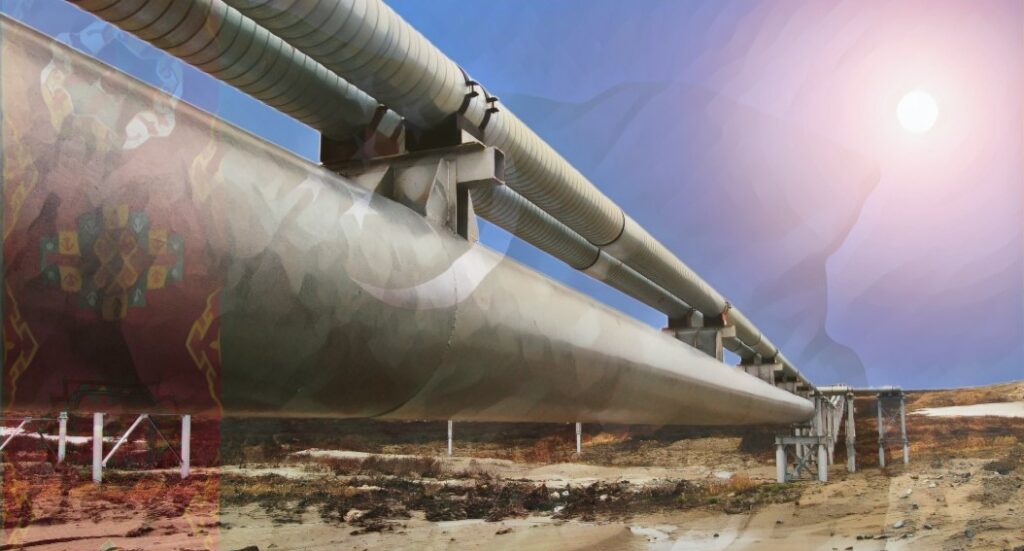
Chinese Vice Premier Ding Xuexiang and Gurbanguly Berdymuhamedov, Tukmenistan's former President and the current Chairman of its highest representative body, the Halk Maslahaty, have launched the fourth phase of industrial development of the Galkynysh gas field in Mary region. Located about 400 km southeast of Ashgabat, the Galkynysh field has been producing natural gas since 2013 and is considered one of the world’s largest in terms of reserves. The British consulting firm GaffneyCline estimates the reserves of Galkynysh, together with the neighboring fields Garakol and Yashlar, at 27.4 trillion cubic meters of natural gas. On April 16, the State Concern Turkmengas and China’s CNPC Amudarya Petroleum Company Ltd. signed a contract for the turnkey construction of the fourth phase of the field’s development. The project includes the drilling of production wells and the construction of a gas processing facility with a capacity of 10 billion cubic meters of commercial gas per year. According to industry publication Nebit-Gaz, the Galkynysh field is being developed in phases. The first phase, which included the construction of three gas processing plants with a total capacity of 30 billion cubic meters per year, is currently operational. The second, third, and fourth phases are planned for the near future. Upon full development, the field’s gross annual production could reach nearly 200 billion cubic meters of natural gas. The Galkynysh field serves as the main resource base for Turkmen gas exports to China. China remains the largest buyer of Turkmen natural gas. Three lines (A, B, and C) of the Turkmenistan-China gas pipeline system currently deliver approximately 40 billion cubic meters of gas annually. With the planned commissioning of a fourth line (Line D), export volumes are expected to increase to around 65 billion cubic meters per year. The resource base of Galkynysh is a key factor in the planned construction of Line D, which is expected to significantly increase gas supplies to China. According to Guvanch Agajanov, Vice-Chairman of Turkmenistan's Cabinet of Ministers, total Turkmen gas exports to China have exceeded 462 billion cubic meters over the past 20 years. The Galkynysh field has also been designated as the resource base for the Turkmenistan-Afghanistan-Pakistan-India (TAPI) gas pipeline, which is under construction and is expected to have a capacity of 33 billion cubic meters per year.

Turkmenistan’s Strategic Reentry into Gas Diplomacy

Turkmenistan holds the world’s fourth-largest proven gas reserves. And yet, its energy diplomacy has until quite recently remained inert. The paradox is systemic: it possesses more gas than infrastructural escape routes; yet as demand for non-Russian energy rises across Eurasia’s westward axis, Ashgabat’s relevance grows, not so much because it radically evolves but because the system around it does. Historically, 80–90% of Turkmen gas has flowed east through the Central Asia–China pipeline, sometimes called the Turkmenistan–China corridor. The dependency is acute, and the pricing asymmetrical. Previous efforts to increase flows in other directions — across Iran, via Azerbaijan, southward to South Asia, or across the Caspian Sea — have been dashed on the rocks of logistics and geopolitics. The early 2000s were especially pivotal, when Turkmenistan's delay in engaging with the EU’s Southern Gas Corridor initiative shaped a decade of missed leverage. What we are seeing now is not a late start but a late modulation of the country's energy vectors across weakly emerging paths. Geoeconomic Constraints as Strategic Catalysts Dependency on China as a monopsonist (sole purchaser) implies not just limited diversification but two deeper vulnerabilities. First, price-setting mechanisms remain inscrutably opaque. Second, the lack of alternative outlets structurally reinforces the asymmetry. Attempts to broaden options through Iran or Azerbaijan, though nominally ongoing, rely more on swaps than corridors, and even these are uneven. The Dauletabad–Sarakhs–Khangiran pipeline, completed in 2010, should have represented a minor second axis. However, it operates at a trickle, if at all, due to Iran's past failure to pay contracted sums in a timely fashion, requiring international arbitration. Another example is the Turkmenistan–Afghanistan–Pakistan–India (TAPI) pipeline, discussed since the 1990s, and in which India lost interest two decades ago. TAPI remains on hold, hampered by Afghanistan’s security volatility and a practical lack of commercial prospects that produce financing shortfalls. The Trans-Caspian Gas Pipeline (TCGP) was long stalled by legal uncertainties over Caspian Sea seabed rights and opposition from Russia and Iran. Even since the sea’s status under international law was settled by the Caspian Convention, signed in 2018, planning for this pipeline remains somnolent, despite its removal of many legal barriers to TCGP construction. Swap agreements are usually regarded as workaround tools, but for Turkmenistan, they have become more permanent structural mechanisms, allowing Ashgabat to insert itself into third‑party supply chains without transit risk. Iran’s infrastructure is unreliable but offers compression and metering; Azerbaijan’s network enables reverse flows and flexibility. A modest but symbolically important addition is the Dostluk field, a previously disputed offshore deposit between Azerbaijan and Turkmenistan in the Caspian Sea. A 2021 Memorandum of Understanding resolved maritime delimitation and designated the field for joint development. Even when summed all together, these vectors remain mainly null. Once seen as “backup” export routes, they have failed structurally. Turkmenistan, infrastructurally entangled yet geopolitically uncommitted, still lacks true backup and instead manages redundancy, maintaining multiple provisional export channels simultaneously. It must still respond adaptively to shifting constraints while balancing fragile options. Turkmenistan's Attempts to Rewire Its Client...

Uzbekistan and China Deepen Ties Across Strategic, Economic, and Soft-Power Fronts

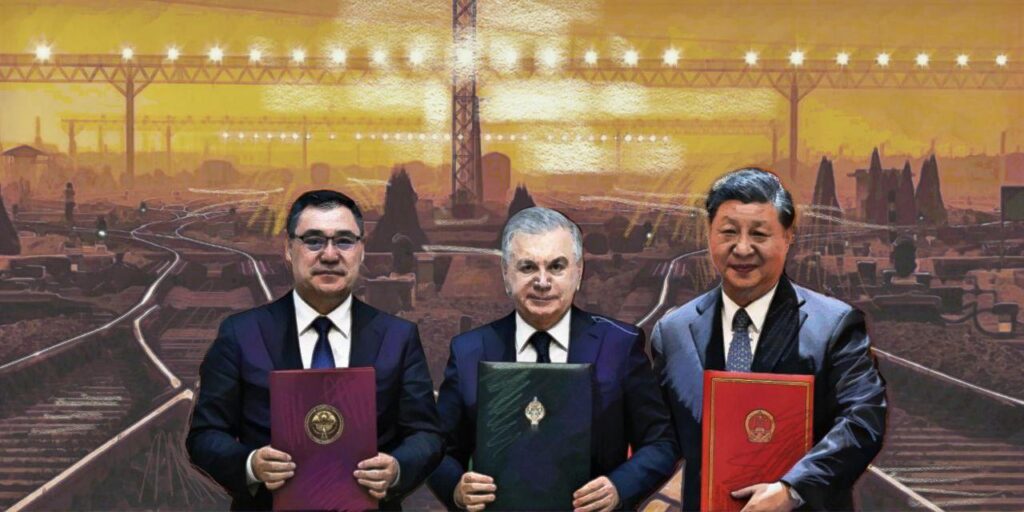
Uzbekistan and China have significantly expanded their bilateral relationship in the last month. The meeting between Presidents Shavkat Mirziyoyev and Xi Jinping on June 17, 2025, in Astana, during the second China–Central Asia Summit, formally endorsed what both states termed a “multi-dimensional strategic partnership.”  The occasion marked the conclusion of bilateral negotiations on Uzbekistan's accession to the World Trade Organization. This membership is both procedural and symbolic, as it signals Uzbekistan's intensifying participation in global economic architecture. In particular, it serves to legitimize the country's market-opening reforms in the eyes of international partners. Strategic Dialogue and the Evolution of Political Ties The June 2025 summit meeting built upon groundwork laid during Mirziyoyev's January 2024 state visit to China, when a suite of agreements were reached that catalyzed the creation of a Strategic Dialogue between the two countries' foreign ministries. A year later, in January 2025, this was formally upgraded to an “all-weather comprehensive strategic partnership”. This phrase signifies that the dialogue was acquiring operational substance in the form of diversified sectoral initiatives spanning infrastructure, innovation, security, and energy. For Uzbekistan, this initiative marks a sustained effort to define itself not only as a recipient of foreign capital but as a co-architect of regionally significant configurations. Trade and investment data point to a structurally intensifying relationship. Bilateral trade stood at $14 billion in 2024, up from $13 billion the previous year, with both sides aiming for $20 billion in the near term. As of February 2025, 3,467 Chinese firms were active in Uzbekistan, an increase of over 1,000 from the prior year. However, the $9.8 billion trade deficit in China's favor remains politically sensitive, highlighting asymmetries even as cooperation deepens. Sectoral Investment and Institutional Coordination A joint investment portfolio exceeding $60 billion undergirds this integration. Key projects include special economic zones, technoparks, and localized production of BYD electric vehicles. The sectoral spread extends to renewable energy, mining, logistics, metallurgy, pharmaceuticals, and smart agriculture. Financial institutions such as the Silk Road Fund and China Eximbank are underwriting emblematic initiatives, including the Olympic Village in Tashkent. On June 28, 2025, Uzbekistan's Deputy Minister of Investments, Industry and Trade met with Chinese leather industry representatives to coordinate manufacturing projects in Andijan and Ohangaron. These dynamics were further institutionalized at the Uzbekistan–China Interregional Forum held June 1–2, 2025, in Samarkand, where Uzbekistan's Deputy Prime Minister Jamshid Khodjaev emphasized that Chinese investment has increased fivefold since 2017. Although this was technically a regional event, it reinforced — as a public-facing moment of alignment between central planning and international economic engagement — a national-level policy architecture receptive to external capital, particularly from China. Infrastructure and Energy At the infrastructural core of bilateral cooperation stands the China–Kyrgyzstan–Uzbekistan (CKU) railway. Both presidents re-emphasized the project's strategic relevance, identifying it as essential to transcontinental logistical continuity from East Asia to Europe. The project has not only economic but also geopolitical significance, situating Uzbekistan as a connective node rather than a peripheral conduit. If completed on time, it may also reduce...

Afghanistan Advances TAPI Gas Pipeline Construction as Kazakhstan Explores Participation

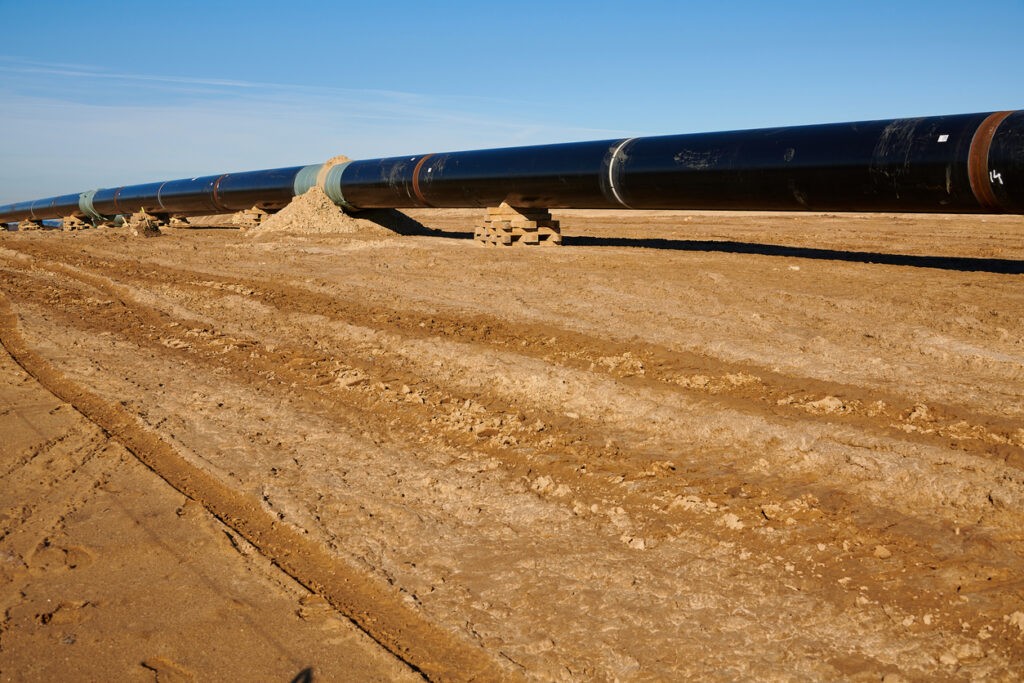
Afghanistan has made significant progress in constructing the Turkmenistan-Afghanistan-Pakistan-India (TAPI) gas pipeline. According to Ariana News, citing the Herat provincial governor’s office, approximately six kilometers of pipeline have already been laid since work began last month. Herat Governor Maulana Islam Jar assured project representatives of his full support, stating that TAPI will play a crucial role in strengthening the economy and promoting regional stability. Afghanistan's section of the pipeline is expected to take approximately two years to complete and represents a significant milestone for the broader project. TAPI is designed to connect Central Asia’s vast gas reserves with the rapidly growing energy markets of South Asia. During a recent meeting, TAPI’s general director in Afghanistan, Abdullah Yoof, updated Governor Jar on construction progress and outlined further plans for the project, including job creation and infrastructure development in Herat province. Meanwhile, Kazakhstan is actively exploring the possibility of joining the TAPI pipeline. The country’s Ministry of Energy has confirmed ongoing negotiations between the national gas company, QazaqGaz, and Turkmengaz, which owns an 85% stake in TAPI Pipeline Company Limited. However, officials have refrained from disclosing details, citing the confidentiality of the discussions. Kazakhstan’s interest in the project was first officially announced by Deputy Energy Minister Yerlan Akkenzhanov. Speaking at the Kazakhstan-Afghanistan Business Forum in October 2024, he highlighted that participation in TAPI could provide Kazakhstan with access to new markets, including Pakistan and India while attracting additional investment to the country’s gas sector. The TAPI pipeline, spanning over 1,800 kilometers, will traverse: Turkmenistan – 214 kilometers Afghanistan – 774 kilometers Pakistan – 826 kilometers The pipeline will terminate in India, providing a crucial energy link between Central and South Asia.

First Kilometers of TAPI Gas Pipeline Completed in Afghanistan

The first three kilometers of the Turkmenistan-Afghanistan-Pakistan-India (TAPI) gas pipeline have been successfully laid in Afghanistan, according to Mohammed Murad Amanov, the executive director of TAPI Pipeline Company Ltd. Amanov stated that the construction is progressing rapidly, raising hopes for the timely completion of the project. Deputy Governor of Herat Province, Nakibullah Ayub, visited the construction site and confirmed that local authorities are fully prepared to support the project's swift advancement. So far, 3.4 kilometers of the pipeline route in Afghanistan have been prepared, aligning with the established schedule. The Afghan section of the TAPI pipeline, which spans 821 kilometers, officially began construction in September 2024. To date, technical surveys have been completed on 153 kilometers of the route, and the initial three kilometers of pipeline were laid within four months. TAPI is a landmark regional energy project that aims to transport natural gas from Turkmenistan’s Galkynysh gas fields to consumers in Pakistan and India, passing through Afghanistan. The project is expected to enhance economic stability in the region and attract significant foreign investment. Economic experts have highlighted the strategic importance of the TAPI pipeline for Afghanistan. Analyst Mohammad Asif Stanekzai remarked that the project could boost Afghanistan’s economic credibility and pave the way for increased foreign capital inflows. Additionally, Afghanistan is projected to earn approximately $400 million annually in transit fees. Last week, Afghanistan’s Acting Minister of Mines and Petroleum, Hidayatullah Badri, held discussions in Kabul with Mohammed Murad Amanov about the progress of the TAPI pipeline and strategies to expedite the remaining work.