• KGS/USD = 0.01144 0%
  • KZT/USD = 0.00206 0%
  • TJS/USD = 0.10760 0%
  • UZS/USD = 0.00008 0%
  • TMT/USD = 0.28571 0%
  • KGS/USD = 0.01144 0%
  • KZT/USD = 0.00206 0%
  • TJS/USD = 0.10760 0%
  • UZS/USD = 0.00008 0%
  • TMT/USD = 0.28571 0%
  • KGS/USD = 0.01144 0%
  • KZT/USD = 0.00206 0%
  • TJS/USD = 0.10760 0%
  • UZS/USD = 0.00008 0%
  • TMT/USD = 0.28571 0%
  • KGS/USD = 0.01144 0%
  • KZT/USD = 0.00206 0%
  • TJS/USD = 0.10760 0%
  • UZS/USD = 0.00008 0%
  • TMT/USD = 0.28571 0%
  • KGS/USD = 0.01144 0%
  • KZT/USD = 0.00206 0%
  • TJS/USD = 0.10760 0%
  • UZS/USD = 0.00008 0%
  • TMT/USD = 0.28571 0%
  • KGS/USD = 0.01144 0%
  • KZT/USD = 0.00206 0%
  • TJS/USD = 0.10760 0%
  • UZS/USD = 0.00008 0%
  • TMT/USD = 0.28571 0%
  • KGS/USD = 0.01144 0%
  • KZT/USD = 0.00206 0%
  • TJS/USD = 0.10760 0%
  • UZS/USD = 0.00008 0%
  • TMT/USD = 0.28571 0%
  • KGS/USD = 0.01144 0%
  • KZT/USD = 0.00206 0%
  • TJS/USD = 0.10760 0%
  • UZS/USD = 0.00008 0%
  • TMT/USD = 0.28571 0%

Viewing results 1 - 6 of 10

El Niño Could Bring Unusually Heavy Summer Rains to Central Asia, WMO Warns

Central Asia could face unusually heavy rainfall during the summer of 2026 as the climate phenomenon known as El Niño is expected to return in the coming months, according to forecasts from the United Nations’ World Meteorological Organization (WMO). The WMO estimates there is an 80% chance that El Niño conditions will develop between June and August and a near or above 90% chance that they will persist until at least November. The organization says the event could contribute to a rise in extreme weather around the world, including heatwaves, droughts, and intense rainfall. According to the WMO, temperatures in the tropical Pacific Ocean have been steadily increasing and are approaching the thresholds typically associated with El Niño. Scientists have also detected a large reservoir of unusually warm water below the ocean’s surface, with temperatures more than six degrees Celsius above normal in some areas, providing additional energy for the phenomenon to intensify. For Central Asia, El Niño is often associated with higher-than-average precipitation. While the region is better known for its arid and semi-arid climate, past El Niño events have brought increased rainfall to parts of Kazakhstan, Kyrgyzstan, Tajikistan, Turkmenistan, and Uzbekistan. WMO Secretary-General Celeste Saulo said countries should prepare for the possibility of stronger droughts and heavy rains, as well as elevated risks of heatwaves on land and in the oceans. “We need to prepare for a potentially strong El Niño event, which will exacerbate drought and heavy rainfall and increase the risk of heatwaves both on land and in the ocean,” Saulo said. UN Secretary-General António Guterres described the developing conditions as an urgent climate warning, saying El Niño would “pour fuel on the fire” of global warming and could accelerate the impacts of extreme weather worldwide. Seasonal forecasts released by the WMO also indicate that temperatures from June through August are likely to remain above normal across most regions of the world. Scientists note that while there is no evidence that climate change is making El Niño more frequent, a warmer atmosphere and warmer oceans can amplify its effects. The previous major El Niño episode, in 2023-2024, ranked among the five strongest on record and contributed to record global temperatures in 2024. The WMO says improved seasonal forecasting gives governments time to prepare for potential disruptions to agriculture, water resources, and disaster response systems before severe weather develops.

Storms and Abnormal Heat: Turkmenistan Experiences Severe Weather

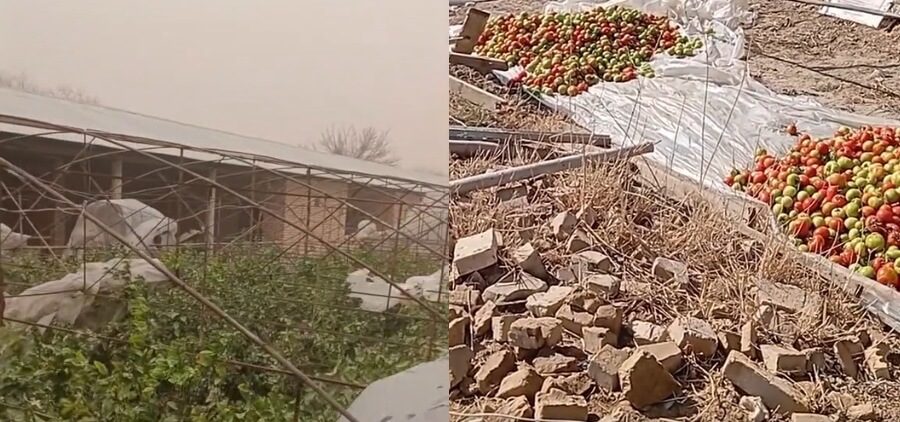
From February 20 to 22, dust storms with storm-force winds swept across Turkmenistan. The storm damaged greenhouses and crops in a number of regions, and the week was memorable not only for the destruction it caused but also for the historic temperature records it set. Strong winds hit the country on February 20. In the Akhal region, gusts reached 18-23 m/s, and in the Mary region, 17-22 m/s. On the Beaufort scale, these readings are classified as storm force. In other regions, the wind was also very strong. Dust storms broke out in the east of the country and in some parts of the Ahal region. In the town of Turkmenabat, wind speeds reached 23 m/s, and visibility was reduced to 500 meters. Similar readings were recorded in the towns of Serkhetabat and Bayramali. In the town of Mary, visibility dropped to 300 meters, and in the village of Tagta-Bazar to only 200 meters. The storm knocked down trees, damaged road signs, and affected some buildings. The most significant damage occurred in rural areas. In the Mary and Lebap region, private farms and plots were affected. The wind blew away greenhouses, and their frames collapsed directly onto the beds, destroying cucumbers, tomatoes, and other crops. Flower growers also suffered serious losses. Many had expanded their acreage and hired additional workers to prepare for the peak sales period around March 8, but the storm deprived them of their harvest and any chance of compensating for months of low demand. The region has previously faced the devastating effects of natural disasters. In 2020, a hurricane caused extensive damage in the Mary and Lebap regions, knocking down buildings and trees and claiming dozens of lives. Some families have still not recovered from those events. At the same time, despite the regular occurrence of strong winds, no effective system has been created to protect farms and the population from such phenomena. As noted by Meteozhurnal, the current weather situation is due to the northwestern intrusion of air masses. High wind speeds continued on February 23, prolonging the period of adverse conditions. The week was marked not only by storms but also by unprecedented heat. For several days, temperatures were more typical of April or May. The peak occurred on February 19, 2026.  In the city of Esenguly in the Balkan region, located in the southwest of the country on the coast of the Caspian Sea, the temperature reached 36.2°C. This is the absolute maximum in the history of meteorological observations in Turkmenistan. The previous record of 32.9°C was set in 1946 in Serakhs, Akhal region. On the same day, temperatures above 30°C were recorded in several regions. In the Balkan region, the thermometer rose to 33.4°C in the town of Etrek and 30.6°C in Makhtumkuli. In Baharden, Akhal region, it reached 33°C. Records were also broken in other cities, albeit with lower values.

World Bank Report: Central Asia Faces Rising Risks from Extreme Heat

Cities across Central Asia are becoming increasingly vulnerable to extreme heat, posing significant risks to public health, economic productivity, and infrastructure, according to a new report by the World Bank. The study, which covers 70 urban areas in Europe and Central Asia, including Astana, Bishkek, Ashgabat, Tashkent, and several smaller cities in Tajikistan and Turkmenistan, highlights the urgent need for heat adaptation strategies. Rising Mortality and Economic Losses The report finds that heat-related mortality is already a serious concern. In Ashgabat, an estimated 25-28 people per 100,000 die annually due to extreme heat. In Astana, Bishkek, and Tashkent, the toll is slightly lower, at approximately 19-21 deaths per 100,000. Without intervention, annual heat-related deaths in cities like Astana and Tashkent could rise dramatically, reaching between 10,000 and 23,000 by 2090. Economic impacts are also mounting. In 2023, higher temperatures resulted in the loss of over 87,000 full-time jobs across the region. Uzbekistan alone saw more than 22,000 job losses, while nearly 18,000 were reported in Azerbaijan. By 2050, heat-related economic losses could exceed 2% of GDP in some urban centers, such as Ashgabat. Infrastructure Under Strain Rising temperatures are damaging infrastructure across Central Asia. In Kyrgyzstan, extreme heat causes deterioration to nearly 200 kilometers of road annually, driving up repair costs and disrupting transportation. Kazakhstan is facing similar challenges: recent heatwaves have warped asphalt and concrete surfaces in the southern and northeastern regions of the country. Adaptation Measures and Challenges Despite these threats, the report outlines viable solutions. Urban greening, such as planting trees and creating shaded areas, can help cool city streets. Retrofitting buildings to improve thermal insulation without increasing energy use, establishing early warning systems, and creating cooling centers are also recommended. Urban planning strategies should incorporate climate resilience by using heat-tolerant materials and factoring climate risks into infrastructure design. Investment in parks and green spaces, alongside the use of heat vulnerability maps, can guide targeted interventions. However, the report warns that a lack of funding may hinder progress. Without innovative financing mechanisms, many adaptation plans could be stalled despite their potential to mitigate long-term risks. The World Bank concludes that while the impacts of rising temperatures are already being felt across Central Asia, timely action can prevent far more serious consequences. Policymakers are urged to prioritize heat adaptation to safeguard lives, livelihoods, and infrastructure in an increasingly warming world.

Heavy Rains Flood Newly Renovated Streets and Market in Southern Kyrgyzstan

A sudden downpour on July 10 inundated parts of Osh, southern Kyrgyzstan’s largest city, flooding recently renovated streets, a newly opened municipal market, and multiple residential and public buildings. According to the Ministry of Emergency Situations (MES), the city’s drainage system overflowed after several hours of heavy rainfall. Three private homes and the basement of an apartment block were submerged, along with the Family Medicine Center and the State Archive. Emergency services evacuated nine residents to safety, while 80 personnel, including firefighters and rescue teams, were deployed to respond to the crisis. Authorities blamed the flooding on clogged drainage canals and irrigation ditches. “The primary cause of the flooding was the failure to properly clean drainage systems in several districts,” the MES reported. “Accumulated garbage and debris blocked water flow, leading to road flooding and hindering pedestrian movement.” Despite earlier instructions from Emergency Situations Minister Boobek Azhikeev to clear stormwater infrastructure in anticipation of the rainy season, the preparation appears to have been incomplete or ineffective. Osh Mayor Jenishbek Toktorbaev toured the affected areas, met with residents and business owners, and ordered an expedited cleanup operation. Videos released by city authorities show the mayor wading through flooded streets and assessing damage. [caption id="attachment_33891" align="aligncenter" width="1080"] @mchs.gov.kg[/caption] The timing of the flooding was particularly ironic. Just days earlier, Deputy Chairman of the Cabinet of Ministers Kamchybek Tashiev had visited Osh, praising Toktorbaev’s urban development initiatives and presenting him with a ceremonial car. Under Toktorbaev’s leadership, the city has invested in infrastructure upgrades, including road reconstruction and the demolition of illegal structures. However, traders at the newly inaugurated municipal market voiced frustration over poor planning. Speaking to local media, they said the site lacked adequate drainage and roofing, leaving commercial aisles waterlogged. “They rushed the relocation,” one vendor said. “The market should have been completed before moving us from the old site.” Residents noted that such flooding has become a recurring issue during Osh’s rainy season, with stormwater systems consistently overwhelmed by downpours.

Extreme Heat Warps Roads Across Kazakhstan

Kazakhstan is experiencing widespread road damage due to an intense heatwave, with asphalt and cement concrete surfaces warping in both southern and northeastern regions of the country. The national road operator KazAutoZhol has stated that such deformation is a normal response to extreme heat conditions. Air temperatures have soared above 35°C across most regions, prompting meteorologists to advise residents to avoid going outdoors during peak daylight hours. The most affected areas are inter-city highways, where the heat has caused significant stress on infrastructure. The first reports of road warping emerged from the Pavlodar Region in northeastern Kazakhstan. On June 13, local authorities conducted emergency repairs at kilometer 1,265 of the Astana-Shiderty-Pavlodar-Uspenka-Russian border highway. Concrete slabs had buckled following a sharp temperature increase to 33-35°C. Notably, this highway is a toll road, and the damage drew criticism from motorists. Shortly thereafter, similar issues were reported in the south. On June 19, KazAutoZhol announced repairs on the Shymkent, Uzbekistan border highway, specifically at kilometer 763, another toll section. The pavement there had deformed due to air temperatures reaching 40-45°C. On the same day, further damage was reported on the Astana-Pavlodar highway in central Kazakhstan, where several consecutive days of temperatures between 32-35°C contributed to the melting and lifting of concrete slabs. "Cement concrete pavements are particularly sensitive to sudden temperature changes," experts from KazAutoZhol explained. "In hot conditions, the slabs expand. If gaps between them are insufficient or joints are compromised, internal stress can cause the slabs to suddenly lift, a phenomenon commonly referred to as a 'blow-up.' This is typical in regions where daytime temperatures exceed 35°C, which includes much of southern and central Kazakhstan." KazAutoZhol also cited similar challenges in other countries, noting that in the United States, states like Minnesota, Wisconsin, and Illinois report comparable incidents nearly every summer. The organization operates under the Ministry of Transport of Kazakhstan, which recently saw a leadership shake-up. In mid-May, President Kassym-Jomart Tokayev reprimanded then-Minister Marat Karabayev for multiple failings within the transport sector. Karabayev was dismissed in early June, and his deputy, Maksat Kaliakparov, was appointed acting minister. As previously reported by The Times of Central Asia, construction began this month on the strategic Center-West highway corridor, part of the Trans-Caspian International Transport Route (TITR), a key freight link connecting China and Europe via Kazakhstan.

Uzbekistan Sends Aid to Kyrgyzstan After Osh Region Floods

Following heavy flooding in Kyrgyzstan's Osh region on July 14, people in Uzbekistan's nearby Andijan region have sent 200 tons humanitarian aid to the people affected. The aid received in Osh includes household goods, construction materials, clothes and food. The flood resulted from torrential rains in the surrounding mountains and hills. Kyrgyzstan has suffered more than usual from extreme weather this summer. Last month nine people were killed by another flood in the Osh region.