
• KGS/USD = 0.01143 0%
  • KZT/USD = 0.00205 0%
  • TJS/USD = 0.10433 0.1%
  • UZS/USD = 0.00008 0%
  • TMT/USD = 0.28577 0%
  • KGS/USD = 0.01143 0%
  • KZT/USD = 0.00205 0%
  • TJS/USD = 0.10433 0.1%
  • UZS/USD = 0.00008 0%
  • TMT/USD = 0.28577 0%
  • KGS/USD = 0.01143 0%
  • KZT/USD = 0.00205 0%
  • TJS/USD = 0.10433 0.1%
  • UZS/USD = 0.00008 0%
  • TMT/USD = 0.28577 0%
  • KGS/USD = 0.01143 0%
  • KZT/USD = 0.00205 0%
  • TJS/USD = 0.10433 0.1%
  • UZS/USD = 0.00008 0%
  • TMT/USD = 0.28577 0%
  • KGS/USD = 0.01143 0%
  • KZT/USD = 0.00205 0%
  • TJS/USD = 0.10433 0.1%
  • UZS/USD = 0.00008 0%
  • TMT/USD = 0.28577 0%
  • KGS/USD = 0.01143 0%
  • KZT/USD = 0.00205 0%
  • TJS/USD = 0.10433 0.1%
  • UZS/USD = 0.00008 0%
  • TMT/USD = 0.28577 0%
  • KGS/USD = 0.01143 0%
  • KZT/USD = 0.00205 0%
  • TJS/USD = 0.10433 0.1%
  • UZS/USD = 0.00008 0%
  • TMT/USD = 0.28577 0%
  • KGS/USD = 0.01143 0%
  • KZT/USD = 0.00205 0%
  • TJS/USD = 0.10433 0.1%
  • UZS/USD = 0.00008 0%
  • TMT/USD = 0.28577 0%

Viewing results 1 - 6 of 10

“Acid clouds” from Iran? Kazakhstan and Uzbekistan Weather Agencies Say There is No Threat to Central Asia

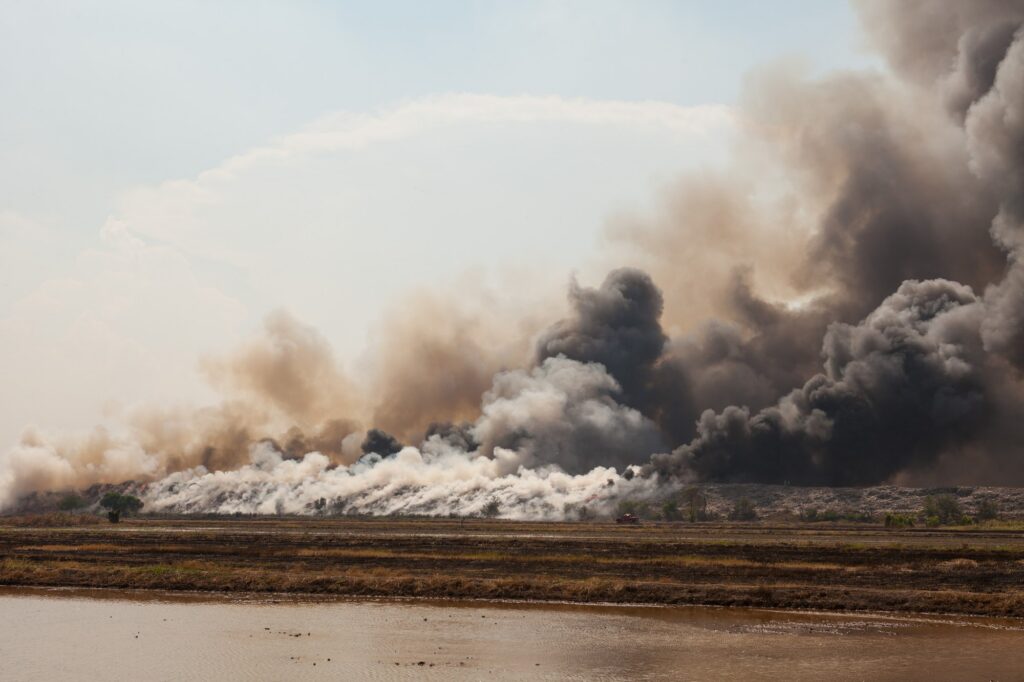
Social media has been flooded with claims that a toxic cloud could drift from Iran toward Central Asia following strikes on oil facilities. However, the meteorological services of Kazakhstan and Uzbekistan say those fears are not supported by scientific data. In recent days, posts online have warned of so-called “acid clouds” allegedly forming over Iran after attacks on oil depots and other energy infrastructure. Some of these posts claimed the pollution could be carried by atmospheric currents toward Turkmenistan, Uzbekistan, Kazakhstan, and China. Others cited reports of “black rain” in Tehran and elevated concentrations of sulphur dioxide, nitrogen oxides, and soot. Iranian authorities and international reporting have documented severe local air pollution risks in and around Tehran after the strikes. The Iranian Red Crescent Society warned residents that rainfall following the explosions could be acidic and hazardous to health. Experts said the pollution could irritate the skin, eyes, and lungs and contaminate soil and water near the affected areas. Kazhydromet, Kazakhstan’s national weather service, said reports that “acid clouds” from Iran could reach Central Asia are not confirmed by scientific data or observation results. The agency explained that acid precipitation typically forms near the source of emissions and that the concentration of pollutants decreases significantly over long distances due to natural atmospheric processes. Monitoring data, it said, show no signs of such pollution moving toward Kazakhstan or other Central Asian countries. Uzbekistan’s hydrometeorological service, Uzhydromet, expressed a similar position. It said information circulating on social media about “acid clouds” reaching Central Asian countries has no scientific basis. According to the agency, dangerous concentrations of acid precipitation thousands of kilometres from the source are practically impossible, and current observations show no threat to Uzbekistan or neighbouring states. Experts note that large fires at oil facilities can release substantial amounts of harmful pollutants into the atmosphere. However, such risks are primarily local or regional near the source. By the time emissions travel very long distances, atmospheric dispersion and deposition typically reduce concentrations sharply. As a result, the health concerns reported in Tehran do not support claims of a toxic cloud threatening Central Asia. Both Kazhydromet and Uzhydromet urged the public and media outlets to rely on official information and avoid spreading unverified reports.

Storms and Abnormal Heat: Turkmenistan Experiences Severe Weather

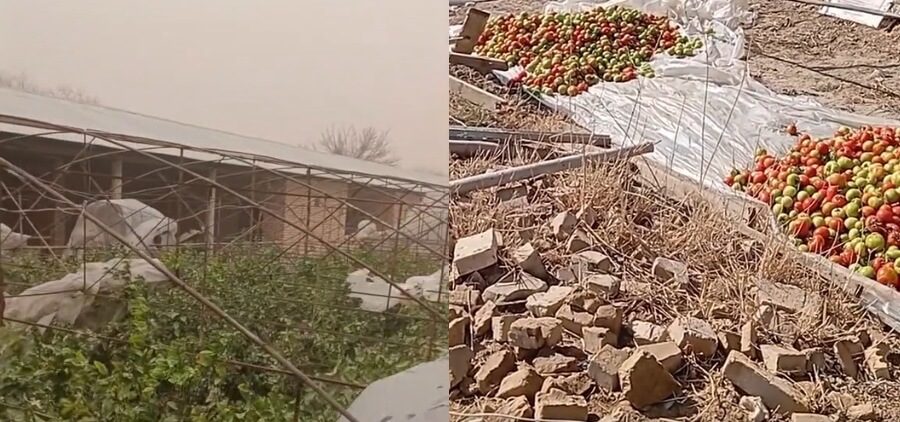
From February 20 to 22, dust storms with storm-force winds swept across Turkmenistan. The storm damaged greenhouses and crops in a number of regions, and the week was memorable not only for the destruction it caused but also for the historic temperature records it set. Strong winds hit the country on February 20. In the Akhal region, gusts reached 18-23 m/s, and in the Mary region, 17-22 m/s. On the Beaufort scale, these readings are classified as storm force. In other regions, the wind was also very strong. Dust storms broke out in the east of the country and in some parts of the Ahal region. In the town of Turkmenabat, wind speeds reached 23 m/s, and visibility was reduced to 500 meters. Similar readings were recorded in the towns of Serkhetabat and Bayramali. In the town of Mary, visibility dropped to 300 meters, and in the village of Tagta-Bazar to only 200 meters. The storm knocked down trees, damaged road signs, and affected some buildings. The most significant damage occurred in rural areas. In the Mary and Lebap region, private farms and plots were affected. The wind blew away greenhouses, and their frames collapsed directly onto the beds, destroying cucumbers, tomatoes, and other crops. Flower growers also suffered serious losses. Many had expanded their acreage and hired additional workers to prepare for the peak sales period around March 8, but the storm deprived them of their harvest and any chance of compensating for months of low demand. The region has previously faced the devastating effects of natural disasters. In 2020, a hurricane caused extensive damage in the Mary and Lebap regions, knocking down buildings and trees and claiming dozens of lives. Some families have still not recovered from those events. At the same time, despite the regular occurrence of strong winds, no effective system has been created to protect farms and the population from such phenomena. As noted by Meteozhurnal, the current weather situation is due to the northwestern intrusion of air masses. High wind speeds continued on February 23, prolonging the period of adverse conditions. The week was marked not only by storms but also by unprecedented heat. For several days, temperatures were more typical of April or May. The peak occurred on February 19, 2026.  In the city of Esenguly in the Balkan region, located in the southwest of the country on the coast of the Caspian Sea, the temperature reached 36.2°C. This is the absolute maximum in the history of meteorological observations in Turkmenistan. The previous record of 32.9°C was set in 1946 in Serakhs, Akhal region. On the same day, temperatures above 30°C were recorded in several regions. In the Balkan region, the thermometer rose to 33.4°C in the town of Etrek and 30.6°C in Makhtumkuli. In Baharden, Akhal region, it reached 33°C. Records were also broken in other cities, albeit with lower values.

Kazakhstan Launches High-Resolution Weather Forecast Powered by Supercomputer

Kazakhstan has introduced a new high-resolution digital weather forecasting system powered by the country’s most powerful supercomputer, marking a significant step toward strengthening national hydrometeorological security. The National Hydrometeorological Service, Kazhydromet, has deployed the Weather Research and Forecasting (WRF) model across the entire territory of the country. The system provides forecasts with a spatial resolution of 2 kilometers, significantly enhancing the accuracy and detail of weather predictions. All computations are carried out on Central Asia’s most powerful supercomputer at the Farabi Supercomputer Center, located at Al-Farabi Kazakh National University in Almaty. According to Amirkhan Temirbayev, Director of the Farabi Supercomputer Center, the new model strengthens Kazakhstan’s ability to anticipate hazardous natural phenomena and respond more effectively to climate-related risks. “The new system improves early warnings of dangerous weather events, particularly in the mountainous regions of Almaty and southeastern Kazakhstan and enhances the country’s hydrometeorological security. Accurately modeling atmospheric processes requires millions of calculations that conventional servers cannot handle. A supercomputer is no longer just a scientific instrument, it is infrastructure of national importance,” Temirbayev said. He added that the initiative demonstrates how university-based high-performance computing resources are increasingly being used to address applied government needs. While the supercomputer is currently dedicated to weather forecasting, potential future applications include flood and mudflow modeling, climate analysis, air quality monitoring, and digital urban simulations. Kazhydromet plans to publish outputs from the new WRF model on its official website, where users will have access to interactive weather maps and detailed forecasts for all regions of Kazakhstan.

Central Asia Endures Record-Breaking March Heatwave Attributed to Climate Change

Central Asia experienced an unprecedented heatwave in March 2025, with temperatures soaring to levels typically seen in late spring or summer. According to a new study by World Weather Attribution (WWA), cities across Uzbekistan, Kazakhstan, Kyrgyzstan, and Turkmenistan recorded daytime highs near or above 30°C, far above the seasonal norm. In Kyrgyzstan's Jalalabad, the temperature peaked at 30.8°C, while Uzbekistan's Namangan and Fergana registered 29.4°C and 29.1°C, respectively. Kazakhstan’s Shahdara witnessed a nighttime low of 18.3°C, the hottest March night ever recorded in the country. Researchers from the Netherlands, Sweden, Denmark, the United States, and the United Kingdom examined the five hottest days and nights in March across the region. Their findings indicate that human-induced climate change made the heatwave approximately 4°C hotter and nearly three times more likely. They also noted that climate models tend to underestimate early-season heat, particularly in March. Economic and Agricultural Risks The timing of the heatwave posed serious challenges for agriculture. In Kazakhstan, the spike in temperatures coincided with the start of spring wheat planting, while in neighboring countries, fruit trees were already in bloom, raising concerns about yield losses. Agriculture remains a critical sector in the region, employing up to 50% of the workforce in some countries and contributing between 5% and 24% to GDP. The region also depends heavily on glacier-fed irrigation systems. Unseasonably warm weather can accelerate snowmelt, depleting water reserves needed during peak agricultural demand later in the season. In response to declining glacier volumes, seven artificial glaciers were built in southern Kyrgyzstan's Batken region in late autumn 2024 to support future water needs. A Warming Future The WWA study warns that without significant emissions reductions, such heatwaves will become increasingly frequent and intense. If global warming reaches 2.6°C, events like March 2025 could become far more common. Governments in Central Asia are beginning to take action. Kazakhstan and Tajikistan, for example, have integrated heat-related risks into their national climate adaptation plans. Still, experts urge a broader, more coordinated regional response, calling for the use of heat-tolerant crops, enhanced early warning systems, and climate-conscious urban planning.
