
• KGS/USD = 0.01144 0%
  • KZT/USD = 0.00203 0%
  • TJS/USD = 0.10659 -0.28%
  • UZS/USD = 0.00008 0%
  • TMT/USD = 0.28571 0%
  • KGS/USD = 0.01144 0%
  • KZT/USD = 0.00203 0%
  • TJS/USD = 0.10659 -0.28%
  • UZS/USD = 0.00008 0%
  • TMT/USD = 0.28571 0%
  • KGS/USD = 0.01144 0%
  • KZT/USD = 0.00203 0%
  • TJS/USD = 0.10659 -0.28%
  • UZS/USD = 0.00008 0%
  • TMT/USD = 0.28571 0%
  • KGS/USD = 0.01144 0%
  • KZT/USD = 0.00203 0%
  • TJS/USD = 0.10659 -0.28%
  • UZS/USD = 0.00008 0%
  • TMT/USD = 0.28571 0%
  • KGS/USD = 0.01144 0%
  • KZT/USD = 0.00203 0%
  • TJS/USD = 0.10659 -0.28%
  • UZS/USD = 0.00008 0%
  • TMT/USD = 0.28571 0%
  • KGS/USD = 0.01144 0%
  • KZT/USD = 0.00203 0%
  • TJS/USD = 0.10659 -0.28%
  • UZS/USD = 0.00008 0%
  • TMT/USD = 0.28571 0%
  • KGS/USD = 0.01144 0%
  • KZT/USD = 0.00203 0%
  • TJS/USD = 0.10659 -0.28%
  • UZS/USD = 0.00008 0%
  • TMT/USD = 0.28571 0%
  • KGS/USD = 0.01144 0%
  • KZT/USD = 0.00203 0%
  • TJS/USD = 0.10659 -0.28%
  • UZS/USD = 0.00008 0%
  • TMT/USD = 0.28571 0%
10 February 2026

Viewing results 1 - 6 of 7

Chinese Uzbek Archaeologists Uncover Ancient City Walls at Kuva Silk Road Site

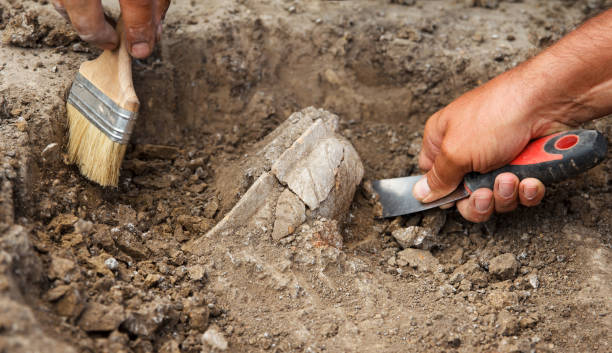
A team of Chinese and Uzbek archaeologists has uncovered a well-preserved section of city walls at the ancient settlement of Kuva in eastern Uzbekistan, dating from the 3rd century BCE to the 10th century CE, according to a report published by Xinhua. The discovery was made by the joint Luoyang-Ferghana archaeological expedition. Researchers say the find offers critical physical evidence for understanding the historical development of a Silk Road city and the enduring cultural exchange between East and West. The team also hailed the excavation as a key achievement of international cooperation under the Belt and Road Initiative. Located in the Ferghana Valley, a historic hub along the ancient Silk Road, the ruins of Kuva cover an area of approximately 110,000 square meters. Xinhua noted that the valley has maintained close ties with China for over 2,000 years. Preliminary findings indicate that the city’s fortifications were rebuilt multiple times and remained in use across several historical eras from the Parthian Kingdom and the states of Dayuan and Sogdiana to the Samanid dynasty. Liu Bin, head of the Chinese delegation to the joint expedition, said the evolving construction techniques used in the walls provide valuable insights into the architectural practices, building materials, and cultural influences of different periods. He added that such features help trace the diffusion of cultural traditions along major trade routes. The Luoyang-Ferghana team was established in 2023 as a collaboration between the Luoyang Archaeological Institute in China’s Henan Province and Ferghana State University in Uzbekistan. Since then, archaeologists have identified palaces, city gates, fortifications, residential structures, streets, and craft workshops at the site. Liu Bin noted that systematic excavations of the palace areas are planned for next year, which will further clarify the city’s layout and functional zones. As previously reported by The Times of Central Asia, similar Chinese-Uzbek archaeological partnerships are underway in Surkhandarya, Samarkand, Ferghana, and Khorezm. These projects have led to discoveries of ancient settlements, urban infrastructure, and even an Iron Age city-state, underscoring the growing scope of bilateral archaeological cooperation in Uzbekistan.

How the Ferghana Valley Might Become Central Asia’s Laboratory of Peace

On October 15-16, in the heart of the Ferghana valley, which for decades has been associated with border conflicts, mistrust, and unresolved issues, the heads of Ferghana (Uzbekistan), Batken (Kyrgyzstan), and Sughd (Tajikistan) gathered to discuss the further peaceful development of the region. The forum brought together not just officials but also experts, diplomats, civil society, and international organization representatives from Central Asia, Europe, and other regions. The first Ferghana Peace Forum, entitled “Ferghana Valley: Joining Forces for Peace and Progress”, was not simply another gathering behind closed doors but a table where everyone was offered a seat. The valley, with territory of roughly 20,000-22,000 km² shared by three countries, was one of the main routes for the ancient Silk Road. It embodies diverse cultures and fertile lands, but also, until recently, the unresolved problems and deep contradictions of Central Asia. Complex issues, including water management, border demarcation, and conflicting national narratives. People's connections were severed by visa regimes and land mines. It was, until recently, impossible to imagine today's reality where people are crossing borders without long lines or bureaucratic barriers. The Khujand Declaration, signed in early 2025 by the presidents of Kyrgyzstan, Tajikistan, and Uzbekistan, paved the way for the forum. The document marked a historic shift, reflecting the countries' desire for dialogue, open borders, economic cooperation, and cultural exchange. However, it remained only a vision without an implementation mechanism that would turn the declaration into sustainable interaction. The Ferghana Peace Forum promises to fill this gap by becoming the first peacebuilding platform designed specifically for the territory, and managed by the three countries themselves with support from external organisations, rather than by external intermediaries or actors. The Forum's founding communiqué defines its goal as creating a permanent platform for building trust, developing a common development strategy, attracting investment, and forming a new political climate in Central Asia. It is a rare occasion when Central Asian countries organize inclusive platforms for open discussions and the participation of civil society, academia, and business. With more than  300 participants, including officials from the UN, EU, and OSCE, as well as leading international NGOs, the forum promises to become a truly historical event. As one of the Forum participants noted, “If peace is possible in Ferghana, it is possible anywhere in Central Asia, and perhaps anywhere in the world.” Discussions were focused on the practical implementation of regional cooperation. Participants addressed issues that have long fueled tensions in the valley: border procedures, joint water management, trade facilitation, labor migration, and crisis prevention. At the same time, the platform created a space for exploring new areas of cooperation, such as digitalization, education, renewable energy, and tourism. There was a shared understanding that peace cannot be sustainable without economic opportunities and social integration. The timing of the forum could not have been better. With the flow of current geopolitical events, Central Asian countries have a narrow window of opportunity to strengthen the internal cooperation and to institutionalize it, while Russia is distracted by...

Heads of Kyrgyz, Tajik, and Uzbek Governments Meet… Finally

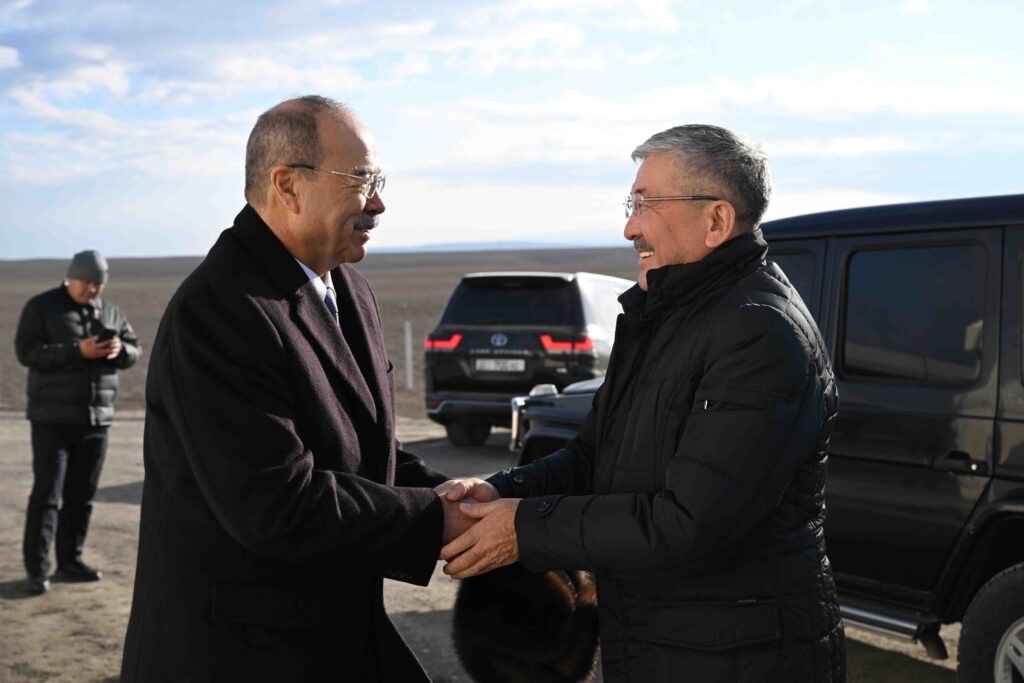
It took more than 30 years, but the prime ministers of the three Central Asian countries that share the Ferghana Valley finally met to discuss a range of important issues that concern all three states. Tajik Prime Minister Kohir Rasulzoda, Uzbek Prime Minister Abdulla Aripov, and Chairman of Kyrgyzstan’s Cabinet of Ministers (Kyrgyzstan does not have a post of prime minister) Adylbek Kasymaliyev met on January 8 at a desolate area where the borders of the three countries meet. [caption id="attachment_27412" align="aligncenter" width="8256"] Image: gov.kg[/caption] The group touted agreements on the completion of the delimitation process along the Uzbek-Kyrgyz border and the early December 2024 agreement on the Kyrgyz-Tajik border. Since 1991, unmarked areas of the borders in the Ferghana Valley were often the scenes of conflicts between communities on either side of the frontier. Border guards sometimes fired on trespassers and dozens of people were killed or wounded, sometimes simply because they inadvertently strayed over unmarked territory into the neighboring country. The Ferghana Valley is the most densely populated region in Central Asia. This is due to the rich agricultural land which makes the region to this day the breadbasket of Central Asia. Soviet mapmakers drew lines to create Soviet republics in the region, though these borders mattered little since they were internal administrative boundaries inside one country. [caption id="attachment_27413" align="aligncenter" width="8256"] Image: gov.kg[/caption] After the USSR collapsed, these often-arbitrary, zigzagging borders took on meaning, and disputes quickly broke out about what land historically belonged to which nation and who had rights to water use. These issues were greatly complicated by the existence of enclaves created during the Soviet period such as Uzbekistan’s Soh and Shahimardon and Tajikistan’s Vorukh, all three of which are surrounded by Kyrgyzstan.   Looking Ahead The three prime ministers discussed hydropower plants (HPP), an important topic for all three countries, especially as key HPPs are located in the mountains ringing the Ferghana Valley and more are currently under construction. Central Asia is one the regions most affected by climate change, so HPPs and water use in general are crucial issues, especially given that agriculture in the Ferghana Valley is vital to all three countries. All three countries face electricity shortages and hydropower is seen as a means of alleviating or even totally resolving this dilemma, but at the same time waters flowing from the mountains of Kyrgyzstan are important for agriculture in every Central Asian state. Uzbek media noted Uzbek Energy Minister Jurabek Mirzamahmudov was part of the delegation attending the January 8 talks. Reports did not mention if energy ministers from Kyrgyzstan and Tajikistan were also present. [caption id="attachment_27414" align="aligncenter" width="8256"] Image: gov.kg[/caption] Central Asia is also taking on a new importance as a trade corridor between Europe and China, and from Europe and China into Afghanistan and on further to Pakistan. Reports noted logistics were high on the agenda at the meeting of the three prime ministers. Trade between the three countries, specifically in the Ferghana Valley, was also discussed not only...
