• KGS/USD = 0.01144 0%
  • KZT/USD = 0.00205 0%
  • TJS/USD = 0.10761 0%
  • UZS/USD = 0.00008 0%
  • TMT/USD = 0.28490 0%
  • KGS/USD = 0.01144 0%
  • KZT/USD = 0.00205 0%
  • TJS/USD = 0.10761 0%
  • UZS/USD = 0.00008 0%
  • TMT/USD = 0.28490 0%
  • KGS/USD = 0.01144 0%
  • KZT/USD = 0.00205 0%
  • TJS/USD = 0.10761 0%
  • UZS/USD = 0.00008 0%
  • TMT/USD = 0.28490 0%
  • KGS/USD = 0.01144 0%
  • KZT/USD = 0.00205 0%
  • TJS/USD = 0.10761 0%
  • UZS/USD = 0.00008 0%
  • TMT/USD = 0.28490 0%
  • KGS/USD = 0.01144 0%
  • KZT/USD = 0.00205 0%
  • TJS/USD = 0.10761 0%
  • UZS/USD = 0.00008 0%
  • TMT/USD = 0.28490 0%
  • KGS/USD = 0.01144 0%
  • KZT/USD = 0.00205 0%
  • TJS/USD = 0.10761 0%
  • UZS/USD = 0.00008 0%
  • TMT/USD = 0.28490 0%
  • KGS/USD = 0.01144 0%
  • KZT/USD = 0.00205 0%
  • TJS/USD = 0.10761 0%
  • UZS/USD = 0.00008 0%
  • TMT/USD = 0.28490 0%
  • KGS/USD = 0.01144 0%
  • KZT/USD = 0.00205 0%
  • TJS/USD = 0.10761 0%
  • UZS/USD = 0.00008 0%
  • TMT/USD = 0.28490 0%

Viewing results 1 - 6 of 10

Bishkek Film Festival Positions Itself as Central Asia’s New Cinema Hub

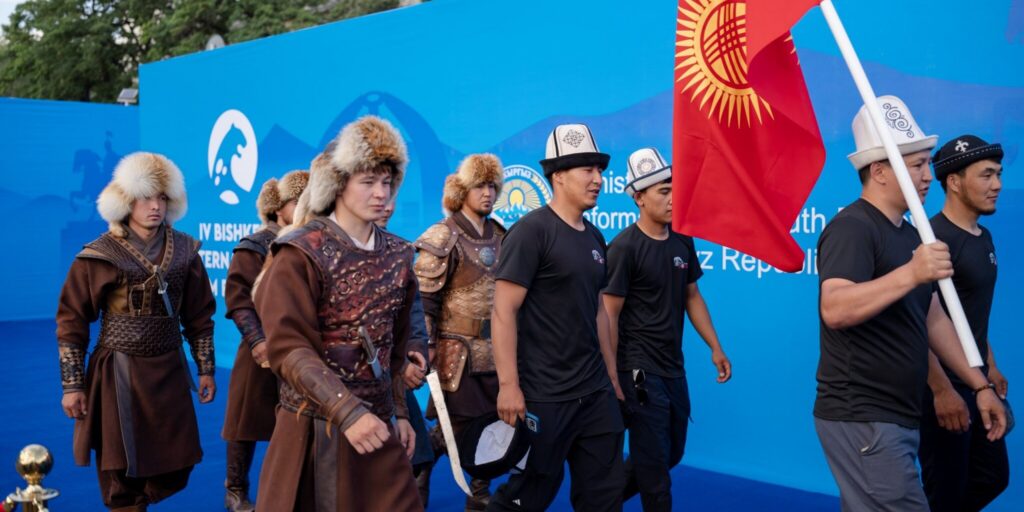
In only four editions, the Bishkek International Film Festival has begun to look less like a young local event and more like one of Central Asia’s key meeting points for cinema. This year’s edition, held in the Kyrgyz capital, brought guests from more than 30 countries, and saw nine world premieres and a competition slate that revealed how closely filmmakers across Asia and Europe are now speaking to one another. Alongside its three competition strands — International, Central Asian and the national KyrgyzBox section, which featured some of the country’s highest-grossing projects — the festival hosted industry events, pitching sessions and the Bars in Progress section for films at various stages of post-production. Kyrgyz audiences were also introduced to Mongolian cinema through the festival’s annual country focus. The opening ceremony took place under open skies in Bishkek’s main square, where guests were welcomed on a sky-blue carpet. The event’s growing profile has been backed by state support, with the authorities recognizing that such an event can give the local film industry a major boost. At the opening, Kyrgyzstan’s Minister of Culture, Information and Youth Policy, Mirbek Mambetaliev, said state support for national cinema had increased almost tenfold: while four years ago around $915,000 was allocated for film production, today that figure has reached $10.6 million. [caption id="attachment_50456" align="aligncenter" width="2560"] Image: bishkekfilmfest[/caption] Guest Program: Audrey Tautou and a Bollywood Masterclass This year, the festival placed its bets not only on films, but also on high-profile international guests. The main highlight was Audrey Tautou, who rarely appears at events of this kind. The French actress said she is now more interested in working on the other side of the camera, and is producing an animated project. Tautou seemed deeply moved by the reception. As she said goodbye to the audience, she singled out and thanked a small child who had sat quietly in the hall the entire time without crying. Only then did it emerge that the little girl’s name was Audrey Bermet: her parents, an American father and a Kyrgyz mother, had named her after the actress. This almost accidental episode unexpectedly became a symbol of the festival itself: a major international event that, despite its growing scale, has not yet lost its remarkable intimacy and human warmth. Another highlight was a masterclass by Sandip Soparrkar, a Bollywood choreographer who has worked with some of the biggest stars of both Bollywood and Hollywood. He turned an ordinary lecture into a full-scale show, explaining why dance became the main language of Indian cinema and how it had been shaped by a variety of influences, from classical traditions to jazz, disco and modern hip-hop. Soparrkar also lifted the curtain on Bollywood itself: the cost of the biggest musical sequences, he said, can reach about $700,000. Famous scenes flashed on the screen one after another, and by the end of the session, the audience had become part of a Bollywood musical number, with the entire square dancing alongside Soparrkar to an Indian interpretation of...

Eurasian Film Festival in London Showcases Cinema from Central Asia and Beyond

The ninth edition of the ECG Eurasian Film Festival has concluded in London, bringing together films from Central Asia, the Caucasus, and the wider post-Soviet space. The festival, held in partnership with the Romford Film Festival, was created to promote Eurasian cinema in the English-speaking world and connect filmmakers from the region with international audiences and industry professionals. It is also listed by FestivalFinder, the European Festivals Association’s platform for film festivals. The festival still gives filmmakers from smaller Eurasian film industries access to London audiences and industry professionals. Too often, movies from across Eurasia are framed through a narrow lens as “regional,” “political,” or useful mainly for their cultural differences. The London program suggests something broader. Its strongest entries were not simply statements about places, but stories about youth, memory, technology, art, identity, and imagination. This year, the top prize went to K-Poper by Iranian director Ebrahim Amini. The film follows a teenage girl who becomes fascinated by a Korean pop star and dreams of traveling to Seoul, despite her mother’s opposition. It is a story rooted in Iran, but its subject is immediately recognizable: pop culture, generational tension, and the private worlds young people build for themselves. Other winners showcased the range of the program. The animation prize went to Swiss photographer Bellopropello for a film about the way smartphones are reshaping human behavior. Best Documentary was awarded to Russian director Vladimir Sumashedov for a film about an artist who tries to confront the violence of World War II through art. The Best Book Trailer award went to Armenian writer Elena Aslanyan’s The Gold of the Aryans. Central Asian works also formed a key part of the selection. The Uzbek film Batyr Zakirov & Frank Sinatra: The Meeting That Could Have Happened... won the Audience Choice Award, imagining a cultural encounter between the Soviet East and American popular music. Kazakhstan was represented by Saule Rysbaeva’s Children, the Seeds of the Future, while Uzbekistan’s Legends of the Great Silk Road revisited the region’s cultural inheritance through animation. The value of festivals like ECG is not only in the awards. It is in giving audiences a chance to see Eurasian cinema as cinema first: varied, ambitious, and fully part of the global film conversation.

Kazakh Producer Yulia Kim: “We Are Closing the Gap Between Central Asia and World Cinema”

Central Asia is increasingly being recognized as a bright new spot on the global cinema map. Films by regional directors are now regularly featured in major festival programs, and international curators are paying closer attention to the area’s filmmaking talent. One of the key platforms fostering these connections is the Post Space film camp in Kyrgyzstan, a space where emerging directors present their work directly to global festival decision-makers. The Times of Central Asia spoke with Post Space co-founder and Kazakh producer Yulia Kim about how this format works, why bridging the gap between the region and the global film industry is vital, and how campfire songs can forge creative collaborations. [caption id="attachment_42621" align="aligncenter" width="1060"] @PostSpace[/caption] TCA: Yulia, you’re one of the founders of Post Space, widely considered the most influential film camp in Central Asia. You’ve been organizing it for four years now. Has it yielded results? Yulia: Many. In 2024, the Locarno Film Festival invited two Kazakh directors, including Aruan Anartay, a Post Space participant. Last year, we had another Kazakh participant. The Lisbon Film Festival even curated a program specifically dedicated to Central Asian cinema. Its director, Portuguese producer Paulo Branco, visited Post Space for the first time in 2024 and fell in love with our filmmakers. I believe that for the festival curators we invited, Central Asia has opened up in new ways. They now approach our films with a deeper understanding and, hopefully, greater interest. TCA: Would you say international interest is growing? Yulia: Yes, but Post Space aims for more than just professional development. We also strive to create a friendly, supportive atmosphere. The connections formed here often become lasting collaborations. For instance, we ran a screenwriting lab, and soon several films developed during that project will be released. One participant, Diaz Bertis, refined his script with the help of an international mentor we brought in. These are vital steps for our industry. TCA: Many local initiatives fizzle out quickly. Are you planning for the long term? Yulia: Absolutely. Our project is just gaining momentum. But we’re working with a minimal budget and little external support, which limits what we can do. We'd like to offer more grants and long-term support to the projects emerging from Post Space, but for now, it’s mostly moral support. Still, we’re pushing forward, and young filmmakers are eager to grow with us. We focus on giving a voice to emerging artists who aren’t even recognized at local festivals, let alone international ones. TCA: So Post Space is a launchpad for debut filmmakers? Yulia: For many, yes. There’s so much talent in the region, but a lot of it has no connection to the film industry. We want to be the space where they gain confidence, present their work, and receive feedback. Many participants hadn’t shown their films anywhere before Post Space, often due to fear or inexperience. They were thrilled to screen their work here. TCA: What stood out about Post Space 2025? Yulia: Each year has its...

Kazakh-Spanish Film La Tregua to Premiere on Netflix

Following its premiere at the San Sebastian International Film Festival this fall, where it received a special award, the Kazakh-Spanish film La Tregua (The Truce) has been released in cinemas in Spain and Kazakhstan. It is now set to become the first Spanish-language film featuring Kazakhstan to appear on Netflix. “Although critics say the film is not for popcorn viewing, given its focus on little-known and tragic chapters in the histories of Kazakhstan and Spain, its release has generated strong emotional responses in both countries,” said Yerlan Bekhozhin, a prominent Kazakh journalist and co-producer of the film, in an interview with The Times of Central Asia. “It speaks to the timeless struggle of human confrontation.” The film presents a Kazakh narrative about Spaniards caught on opposing sides of ideological conflict. “It is a story from the last century, yet it addresses the present day,” Bekhozhin said. “When we look at today’s world, it’s clear that people lack the ability to engage in dialogue. The main message of the film is: There is always a way to negotiate.” Netflix is expected to stream the film in 2026. Distribution discussions are also underway for theatrical releases in Mexico and other Spanish-speaking countries in Latin America. [caption id="attachment_41648" align="aligncenter" width="2560"] Still from La Tregua[/caption] From Karaganda to the Screen The story is rooted in the history of Karlag, the Karaganda labor camp that operated in Kazakhstan from 1937 to 1959. Victims of Stalinist repression from across the Soviet Union, including foreign nationals, were imprisoned there for dissent, free expression, or as victims of denunciations. The idea for the film came from Spanish producer César Benítez, inspired by an event from over 30 years ago. During the Soviet era, the identities of Spanish citizens imprisoned in Karlag were kept secret. After Kazakhstan gained independence, its government handed the list of repressed Spaniards to the King of Spain, a gesture that sparked widespread attention in Spain, allowing many families to finally discover the fate of their relatives. Years earlier, the Spanish documentary, The Forgotten in Karaganda, had drawn significant attention to the subject. Now, Benítez has transformed the story into a feature film. “The title The Truce is deeply relevant today, at a time when peace requires people to sit at the same table,” said Bekhozhin. [caption id="attachment_41650" align="aligncenter" width="2560"] Still from La Tregua[/caption] Kazakh Identity on a Global Stage Bekhozhin also emphasized the film’s role in portraying Kazakh identity. “Its global release will introduce the world to the law of the steppe, the law of hospitality,” he said. “Kazakhs have long demonstrated empathy forged under harsh conditions. It’s part of our national character to welcome others, regardless of nationality or faith.” One scene in the film shows a Kazakh family near the camp inviting Spanish prisoners into their home and setting a traditional dastarkhan, a generous table of lamb-based dishes. The prisoners are seated in the place of honor, or torge, in keeping with Kazakh custom. “In the film, the hostess explains that when...

Kazakh Film Brings History and Culture to the 2nd Golden Panda Awards

Chengdu, famed for its pandas and fiery cuisine, takes the spotlight from September 12–13 as it hosts the 2nd Golden Panda Awards, drawing filmmakers and cinephiles from around the world to celebrate storytelling in all its forms. The Golden Panda Awards use China’s favorite furry ambassador as a symbol of friendship and cross-cultural connection. Around 65 works have been shortlisted, with 27 awards to be presented across four categories: Film, TV Series, Documentary, and Animation. Notably, 54.5% of the finalists are international productions, selected from 5,343 entries submitted from 126 countries and regions. One of the standout contenders this year is Qash (Run), nominated for Best Actor in a Leading Role, Best Actor in a Supporting Role, Best Cinematography, and Best Original Score. Starring Yerkebulan Daiyrov and Ondassyn Bessikbassov, the Kazakh film is set against the backdrop of the mass famine of 1931–1933, which wiped out nearly a third of the population. Directed by Aisultan Seitov, the film follows Isatai, a gravedigger tasked by his village head with delivering a message to the nearest city in hopes of saving the starving villagers. Crossing the vast steppe, Isatai faces harrowing trials, including surreal hallucinations driven by hunger and despair. Also known as Asharshylyk, the tragedy was the result of forced collectivization and sedentarization imposed by the Soviet regime. In his drive for rapid industrialization, Stalin ordered the transformation of Kazakhstan’s traditional nomadic, clan-based society into collective farms, where individuals were compelled to meet strict state quotas for meat and grain. The abrupt policy shift, coupled with reckless implementation, led many herders to slaughter their livestock either for immediate food or to sell in hopes of meeting grain requirements. Ultimately, this devastated the pastoral economy and fueled mass famine. [caption id="attachment_36103" align="aligncenter" width="1024"] Director Aisultan Seitov (center) meets fans of Qash in Shanghai, June 14, 2023; image: VCG[/caption] Qash marks the feature-film debut of director Aisultan Seitov, who first gained recognition as a music video producer. Inspired by the growing presence of culturally distinctive films on international screens, Seitov was drawn to make a full-length film. The narrative took shape after a close friend shared a childhood story of his grandfather fleeing his village with his older brother. In interviews, Seitov has said he hopes to showcase Kazakh culture to the world while crafting a story that resonates universally. That aligns neatly with the festival’s own motto: celebrate diversity, spark dialogue, and remind us that stories, whether about pandas, people, or epic journeys, are what bring civilizations together. Beyond celebrating award winners, the Golden Panda Awards serve as a dynamic hub for international film professionals to exchange ideas and explore potential collaborations. Judges, creators of nominated works, and influential directors, producers, actors, and experts from home and abroad come together for in-depth discussions on topics ranging from digital-intelligence empowerment to the art of light and shadow. Collaborative dialogues, exhibitions, and new project launches further expand opportunities for creative partnerships. This September, Sichuan Province transforms into a cinematic playground with events called “Let’s...

Kyrgyzstan: Film Festival Showcases Central Asian Talent, New and Old

An international film festival in Kyrgyzstan this week is celebrating the past, present, and future of Central Asian cinema. The Bishkek International Film Festival features a retrospective of the work of Kyrgyz director Tolomush Okeev, whose films include The Ferocious One, The Red Apple, and The Descendant of the Snow Leopard; a presentation of ten film projects by emerging directors in Central Asia; and a competition among nine films whose directors are from Kyrgyzstan, Kazakhstan, Uzbekistan, and Tajikistan. The June 11-15 festival also has master classes for those who really want to dig into the craft of making films. Hosts of some of the classes include actor and educator Olesya Gribok, who will talk about working with emotions, self-presentation, and other core actor values; designer Alex Rosno, who will discuss using AI tools to create scenes and build storyboards; and Andrzej Bartkowiak, a cinematographer and director with decades of experience with lighting, movement, and composition. Films from India, Mongolia, Germany and other countries will vie for an international prize. A separate contest involves nine films from Central Asia, seeking to highlight the region’s movie-making talent. There’s also “KyrgyzBox” - a competition just for movies, including box office standouts, from Kyrgyzstan. In another contest, film project contenders are “accepted only from citizens from Central Asian countries – Kyrgyzstan, Kazakhstan, Uzbekistan, Turkmenistan and Tajikistan - with strong potential for international distribution,” according to the film festival. The project must be a feature film that is at least 75 minutes long and filming must be planned in Central Asia or have a “close connection” to the region. The retrospective of Okeev, who died in 2001 at age 66, showcases a screenwriter and director who made films over several decades of the Soviet era and was known for filming in the majestic mountains and deserts of Kyrgyzstan. The Bishkek festival, the third edition of the event, will screen several of Okeev’s films, including The Descendant of the Snow Leopard, a 1984 film that draws inspiration from Kyrgyz tales about hunters who follow ancient laws. “When a young chief, Kojozhash, breaks a sacred ancestral taboo, it leads to tragic consequences for the entire tribe,” the festival says in a description of the film. The snow leopard is a national symbol of Kyrgyzstan, which is taking steps to protect the vulnerable species.