• KGS/USD = 0.01144 0%
  • KZT/USD = 0.00209 0%
  • TJS/USD = 0.10429 0.1%
  • UZS/USD = 0.00008 0%
  • TMT/USD = 0.28530 0%
  • KGS/USD = 0.01144 0%
  • KZT/USD = 0.00209 0%
  • TJS/USD = 0.10429 0.1%
  • UZS/USD = 0.00008 0%
  • TMT/USD = 0.28530 0%
  • KGS/USD = 0.01144 0%
  • KZT/USD = 0.00209 0%
  • TJS/USD = 0.10429 0.1%
  • UZS/USD = 0.00008 0%
  • TMT/USD = 0.28530 0%
  • KGS/USD = 0.01144 0%
  • KZT/USD = 0.00209 0%
  • TJS/USD = 0.10429 0.1%
  • UZS/USD = 0.00008 0%
  • TMT/USD = 0.28530 0%
  • KGS/USD = 0.01144 0%
  • KZT/USD = 0.00209 0%
  • TJS/USD = 0.10429 0.1%
  • UZS/USD = 0.00008 0%
  • TMT/USD = 0.28530 0%
  • KGS/USD = 0.01144 0%
  • KZT/USD = 0.00209 0%
  • TJS/USD = 0.10429 0.1%
  • UZS/USD = 0.00008 0%
  • TMT/USD = 0.28530 0%
  • KGS/USD = 0.01144 0%
  • KZT/USD = 0.00209 0%
  • TJS/USD = 0.10429 0.1%
  • UZS/USD = 0.00008 0%
  • TMT/USD = 0.28530 0%
  • KGS/USD = 0.01144 0%
  • KZT/USD = 0.00209 0%
  • TJS/USD = 0.10429 0.1%
  • UZS/USD = 0.00008 0%
  • TMT/USD = 0.28530 0%

Viewing results 1 - 6 of 21

Kazakhstan-Based Actor Nyshanbek Zhubanaev on His Journey, Faith, and the Future of Cinema

Nyshanbek Zhubanaev is a professional actor, a graduate of the T.K. Zhurgenov Kazakh National Academy of Arts, and a rising star of series such as Sheker, 1286, and Munai. His path into acting, however, did not begin with red carpets or casting calls, but at a phosphorus plant. Taking a leap of faith to escape a life he describes as scripted by others, Zhubanaev pursued his childhood dream with persistence and conviction. In an interview with The Times of Central Asia, he reflects on his first steps in cinema, the role of faith, inner conflict, and why, for him, humanity matters more than talent. TCA: Your popularity came with the web series Sheker 2, 1286, and Munai. Two of them are set in the 1990s. Why do you think this decade continues to fascinate directors? Zhubanaev: It was a time of contrasts and complexity. When people say Munai romanticizes crime, I feel they’ve missed the point. It’s not about crime, it’s about the clash of personalities and how the oil business emerged in our country. The 90s serve as a backdrop. And in cinema, atmosphere is half the battle. As an actor, I want to be part of projects where that atmosphere is palpable. Whether it’s the 90s or another era doesn't matter. What matters is telling strong, vivid stories. TCA: What themes do you feel are missing in Kazakh cinema today? Zhubanaev: Our cinema is still developing, and there’s so much left to explore. People often say we lack films about love and relationships. We do have them, but not the kind you want to talk about seriously. And love is one of the hardest topics to portray, it leaves you no room to hide behind genre, action, or style. It demands talent. I read a lot, and I’m constantly amazed by the richness of Kazakh literature and history, and how little of it we bring to the screen. Take Mukhtar Auezov’s Karash Okigas, it’s a ready-made screenplay. During Soviet times, Kyrgyz director Bolotbek Shamshiyev adapted it, but today it deserves a modern retelling. TCA: You often cite literature as a source of cinematic inspiration. Zhubanaev: Absolutely. Look at Remarque’s All Quiet on the Western Front. Its recent film adaptation won an Oscar, though I found the film debatable. We have our own counterpart, Kazakh Soldier by Gabit Musrepov. Why not adapt that with a modern cinematic language? I also love the works of Beimbet Mailin. He’s an incredibly cinematic writer who remains relevant today. His Shuganyn Belgisi, written nearly a century ago, still speaks to issues like equality and the role of women in traditional society. As far as I know, Akan Satayev is currently preparing a film adaptation of Mailin’s Kulpash, the story of a woman who takes a desperate step to save her family during a famine. It’s powerful, dramatic material. The problem isn’t a lack of themes, it’s about who tells the story and how. You can create a visually perfect film and still fail...
Kazakh Producer Yulia Kim: “We Are Closing the Gap Between Central Asia and World Cinema”

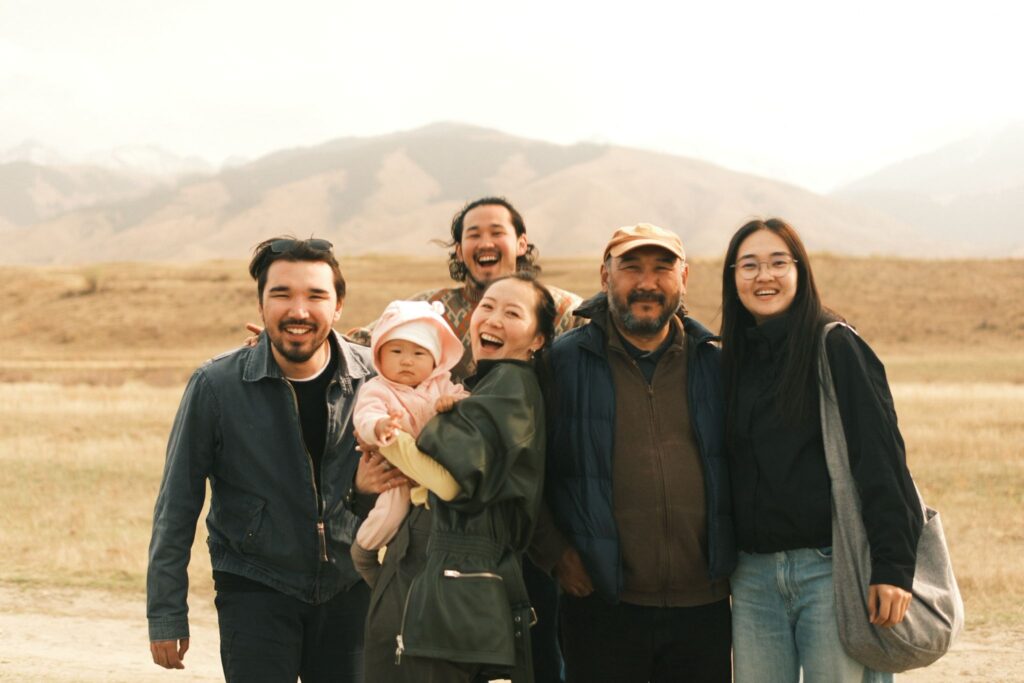
Central Asia is increasingly being recognized as a bright new spot on the global cinema map. Films by regional directors are now regularly featured in major festival programs, and international curators are paying closer attention to the area’s filmmaking talent. One of the key platforms fostering these connections is the Post Space film camp in Kyrgyzstan, a space where emerging directors present their work directly to global festival decision-makers. The Times of Central Asia spoke with Post Space co-founder and Kazakh producer Yulia Kim about how this format works, why bridging the gap between the region and the global film industry is vital, and how campfire songs can forge creative collaborations. [caption id="attachment_42621" align="aligncenter" width="1060"] @PostSpace[/caption] TCA: Yulia, you’re one of the founders of Post Space, widely considered the most influential film camp in Central Asia. You’ve been organizing it for four years now. Has it yielded results? Yulia: Many. In 2024, the Locarno Film Festival invited two Kazakh directors, including Aruan Anartay, a Post Space participant. Last year, we had another Kazakh participant. The Lisbon Film Festival even curated a program specifically dedicated to Central Asian cinema. Its director, Portuguese producer Paulo Branco, visited Post Space for the first time in 2024 and fell in love with our filmmakers. I believe that for the festival curators we invited, Central Asia has opened up in new ways. They now approach our films with a deeper understanding and, hopefully, greater interest. TCA: Would you say international interest is growing? Yulia: Yes, but Post Space aims for more than just professional development. We also strive to create a friendly, supportive atmosphere. The connections formed here often become lasting collaborations. For instance, we ran a screenwriting lab, and soon several films developed during that project will be released. One participant, Diaz Bertis, refined his script with the help of an international mentor we brought in. These are vital steps for our industry. TCA: Many local initiatives fizzle out quickly. Are you planning for the long term? Yulia: Absolutely. Our project is just gaining momentum. But we’re working with a minimal budget and little external support, which limits what we can do. We'd like to offer more grants and long-term support to the projects emerging from Post Space, but for now, it’s mostly moral support. Still, we’re pushing forward, and young filmmakers are eager to grow with us. We focus on giving a voice to emerging artists who aren’t even recognized at local festivals, let alone international ones. TCA: So Post Space is a launchpad for debut filmmakers? Yulia: For many, yes. There’s so much talent in the region, but a lot of it has no connection to the film industry. We want to be the space where they gain confidence, present their work, and receive feedback. Many participants hadn’t shown their films anywhere before Post Space, often due to fear or inexperience. They were thrilled to screen their work here. TCA: What stood out about Post Space 2025? Yulia: Each year has its...

Kazakh-Spanish Film La Tregua to Premiere on Netflix

Following its premiere at the San Sebastian International Film Festival this fall, where it received a special award, the Kazakh-Spanish film La Tregua (The Truce) has been released in cinemas in Spain and Kazakhstan. It is now set to become the first Spanish-language film featuring Kazakhstan to appear on Netflix. “Although critics say the film is not for popcorn viewing, given its focus on little-known and tragic chapters in the histories of Kazakhstan and Spain, its release has generated strong emotional responses in both countries,” said Yerlan Bekhozhin, a prominent Kazakh journalist and co-producer of the film, in an interview with The Times of Central Asia. “It speaks to the timeless struggle of human confrontation.” The film presents a Kazakh narrative about Spaniards caught on opposing sides of ideological conflict. “It is a story from the last century, yet it addresses the present day,” Bekhozhin said. “When we look at today’s world, it’s clear that people lack the ability to engage in dialogue. The main message of the film is: There is always a way to negotiate.” Netflix is expected to stream the film in 2026. Distribution discussions are also underway for theatrical releases in Mexico and other Spanish-speaking countries in Latin America. [caption id="attachment_41648" align="aligncenter" width="2560"] Still from La Tregua[/caption] From Karaganda to the Screen The story is rooted in the history of Karlag, the Karaganda labor camp that operated in Kazakhstan from 1937 to 1959. Victims of Stalinist repression from across the Soviet Union, including foreign nationals, were imprisoned there for dissent, free expression, or as victims of denunciations. The idea for the film came from Spanish producer César Benítez, inspired by an event from over 30 years ago. During the Soviet era, the identities of Spanish citizens imprisoned in Karlag were kept secret. After Kazakhstan gained independence, its government handed the list of repressed Spaniards to the King of Spain, a gesture that sparked widespread attention in Spain, allowing many families to finally discover the fate of their relatives. Years earlier, the Spanish documentary, The Forgotten in Karaganda, had drawn significant attention to the subject. Now, Benítez has transformed the story into a feature film. “The title The Truce is deeply relevant today, at a time when peace requires people to sit at the same table,” said Bekhozhin. [caption id="attachment_41650" align="aligncenter" width="2560"] Still from La Tregua[/caption] Kazakh Identity on a Global Stage Bekhozhin also emphasized the film’s role in portraying Kazakh identity. “Its global release will introduce the world to the law of the steppe, the law of hospitality,” he said. “Kazakhs have long demonstrated empathy forged under harsh conditions. It’s part of our national character to welcome others, regardless of nationality or faith.” One scene in the film shows a Kazakh family near the camp inviting Spanish prisoners into their home and setting a traditional dastarkhan, a generous table of lamb-based dishes. The prisoners are seated in the place of honor, or torge, in keeping with Kazakh custom. “In the film, the hostess explains that when...

TCA Interview: Director Yernar Nurgaliyev: “It’s Time for Kazakh Cinema to Make Its Mark on the World”

Yernar Nurgaliyev still describes painting as his first love. Only now, instead of a brush, he uses a camera, and instead of a canvas, a screen. Today he shoots comedies, and dreams of a Kazakh multiverse where heroes never die. He is certain of one thing: Kazakh culture will be eternal, and he is doing everything possible to make it so. The Times of Central Asia spoke with the director about how he entered film, what he plans to shoot next, and why he believes it is time for Kazakhstan to make itself known to the world. TCA: Your films are always visually striking. Is this because you were originally trained as an artist? Nurgaliyev: Yes. I graduated from art college, then enrolled at the Zhurgenov Academy of Arts to study set design. I thought I would deepen my craft, but the first courses turned out to be a repeat of the college programme. I was very bored, so I decided to go to work. I didn’t start with music videos, but as an assistant propmaster. At that time, senior students recruited assistants from among firstyear students. An energetic girl, a production designer, asked me to help her with her diploma. Before that, I wasn’t interested in cinema at all, I lived for painting: I painted from life and did portraits. But when I saw the filmset, it was “wow.” I realised I wanted to work there. And I stopped going to the academy. I wanted to quit, but they wouldn’t let me. TCA: But you still got your diploma? Nurgaliyev: Yes, although it was difficult. I had nothing to do at the academy, still life, portraits, I had already done all that in college. There, they didn’t break us but helped us find our own style. At the academy, it was the opposite: the teacher said, “Draw like me.” But I can’t draw like someone else. I can only draw in my own way. TCA: Do you paint now? Nurgaliyev: I hardly have any time, but I recently picked up a brush again, and my hand remembers everything. Oil, watercolour, gouache, it’s as if there was no break. I am grateful to my hand; it remembers everything it was taught. TCA: Which is more important, talent or perseverance? Nurgaliyev: There are people who are gifted by God. But a gift is only the beginning. If you slack off and don’t develop, nothing will come of it. The worst thing is when a person is gifted but does nothing with it. I don’t sit still. If I have one day without work, it feels like I haven’t filmed for a year. I always need to be on the move. If the pause drags on, I start calling my friends myself: “Let’s come up with something.” [caption id="attachment_39639" align="aligncenter" width="300"] @Galiya Baizhanova[/caption] TCA: This year, you turned down many projects, choosing instead to focus on another film. Is this a new stage? Nurgaliyev: I’ve matured. Next year, I plan to shoot three of...

TCA Interview: Kazakh Director Venera Kairzhanova on the Bravery of Children with Special Needs

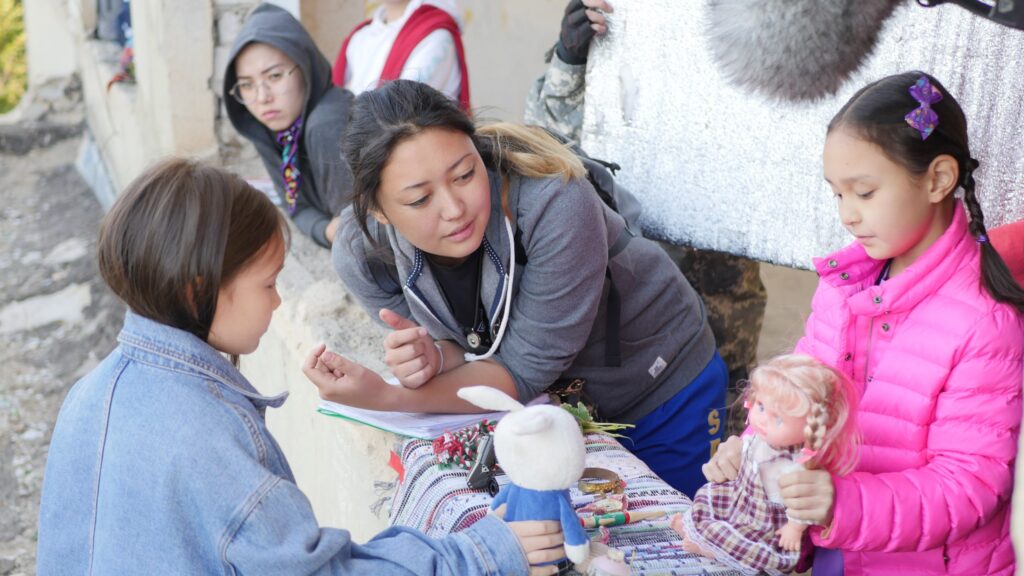
November saw the premiere of Venera Kairzhanova’s debut feature film, Second Mother. The documentary centers on the Meyirim rehabilitation center for children with developmental disabilities. But the film is more than a social chronicle; it’s a warm and luminous portrait of people who help children explore the world every day. Step by step, movement by movement. Kairzhanova spoke with The Times of Central Asia about the making of the film. TCA: Venera, congratulations on the premiere. How did you feel seeing your work on the big screen? Kairzhanova: It was very exciting, but everything went smoothly in a warm, friendly atmosphere. The film was well received, and the theater was full. The audience included employees of the Meyirim center, parents, media representatives, and industry colleagues. The first private screening was back in September, but it was in a small theater with limited guests. This time, it was a huge hall with lots of people, a completely different experience. What’s interesting is that when the project is finished and you watch it with the audience, you see it not just as a director, but also as a viewer. TCA: The audience cried. Did you? Kairzhanova: Yes. At the first screening, very much so. At the second, the emotions were a bit less intense, but the material still moves me: stories about the children, their teachers, their victories. After the screening, people came up to me to share their impressions and that was incredibly valuable. It’s important when a film is not just watched but really touches people’s hearts. [caption id="attachment_39501" align="aligncenter" width="300"] @Galiya Baizhanova[/caption] TCA: Working with children is always a special process. How did you prepare? Kairzhanova: Honestly, I didn’t prepare specifically. I arrived early, observed the classes and that was it. I was nervous, of course, because I didn’t know how the children would react to the cameras, lights, and equipment. But everything went surprisingly well. The children turned out to be incredibly open and sociable. They weren’t shy about the cameras; on the contrary, they played around and looked straight into the lens. Everything was so natural that we hardly interfered. We didn’t ask them to repeat anything or stage any shots. We just captured moments: in the dining room, during classes, and in their interactions. This project made me fall even more in love with documentary filmmaking, even though this is already my fifth documentary. TCA: Which episode was the most emotional for you? Kairzhanova: The film mainly focuses on the rehabilitation center’s educators. We filmed their daily routines: classes, meetings, celebrations. By the third day, everyone had gotten used to each other, and the atmosphere became very warm. One day, we filmed an individual session between instructor Anna Kosenko and a girl named Aisha. She was learning to walk with the help of an exoskeleton. Aisha, fragile, small, beautiful, was taking steps, and Anna was helping her. At one point, Anna asked, “Are you okay?” Aisha smiled and said, “Yes, I’m fine.” TCA: And you couldn’t...

Jackie Chan to Film New “Armour of God” Sequel in Kazakhstan

Legendary actor and filmmaker Jackie Chan is set to return to Kazakhstan to work on the latest installment of his iconic action franchise, Armour of God: Ultimatum. The project will be produced in partnership with Kazakhstan’s Salem Entertainment, which officially confirmed its involvement. “We can now officially reveal details of Jackie Chan’s visit to Almaty. He will be working on the new film Armour of God: Ultimatum. The fourth installment of this legendary saga will be filmed here in Kazakhstan,” the studio said in a statement. Chan visited Almaty in late September, prompting speculation in local media, including rumors he might attend a football match between Real Madrid and FC Kairat. However, the visit turned out to be professional: he was scouting filming locations with the Kazakh production team. “During his stay in Almaty, Jackie Chan joined our team in selecting filming sites. Most of the production will take place in Kazakhstan. We can’t reveal details yet, but it’s going to be something truly spectacular,” Salem Entertainment added. The original Armour of God premiered in 1986 and became an international box office success, cementing Chan’s status as a global star. A sequel followed in 1991, and the franchise was revived two decades later with Armour of God 3: Chinese Zodiac. For Kazakhstan, the production presents a rare opportunity to showcase its cinematic potential and diverse filming locations to a global audience. Chan remains famous for performing all his own stunts. In an interview with Haute Living, he confirmed that this principle still guides his work, even after six decades in the industry. “I always do my own stunts. It’s part of who I am, part of my profession and my identity. That won’t change until I retire. And retirement doesn’t interest me,” Chan said. He added that staying in peak physical condition has become instinctive: “I don’t need special preparation anymore. It’s already inside, in my heart, my mind, and my muscles. It’s just a habit I’ve never lost.”