• KZT/USD = 0.00226
  • TJS/USD = 0.10830
  • UZS/USD = 0.00009
  • TMT/USD = 0.29760
  • KZT/USD = 0.00226
  • TJS/USD = 0.10830
  • UZS/USD = 0.00009
  • TMT/USD = 0.29760
  • KZT/USD = 0.00226
  • TJS/USD = 0.10830
  • UZS/USD = 0.00009
  • TMT/USD = 0.29760
  • KZT/USD = 0.00226
  • TJS/USD = 0.10830
  • UZS/USD = 0.00009
  • TMT/USD = 0.29760
  • KZT/USD = 0.00226
  • TJS/USD = 0.10830
  • UZS/USD = 0.00009
  • TMT/USD = 0.29760
  • KZT/USD = 0.00226
  • TJS/USD = 0.10830
  • UZS/USD = 0.00009
  • TMT/USD = 0.29760
  • KZT/USD = 0.00226
  • TJS/USD = 0.10830
  • UZS/USD = 0.00009
  • TMT/USD = 0.29760
  • KZT/USD = 0.00226
  • TJS/USD = 0.10830
  • UZS/USD = 0.00009
  • TMT/USD = 0.29760
27 September 2026

Viewing results 1 - 6 of 856

The National Bank of Kyrgyzstan Seeks Greater Control Over Commercial Banks

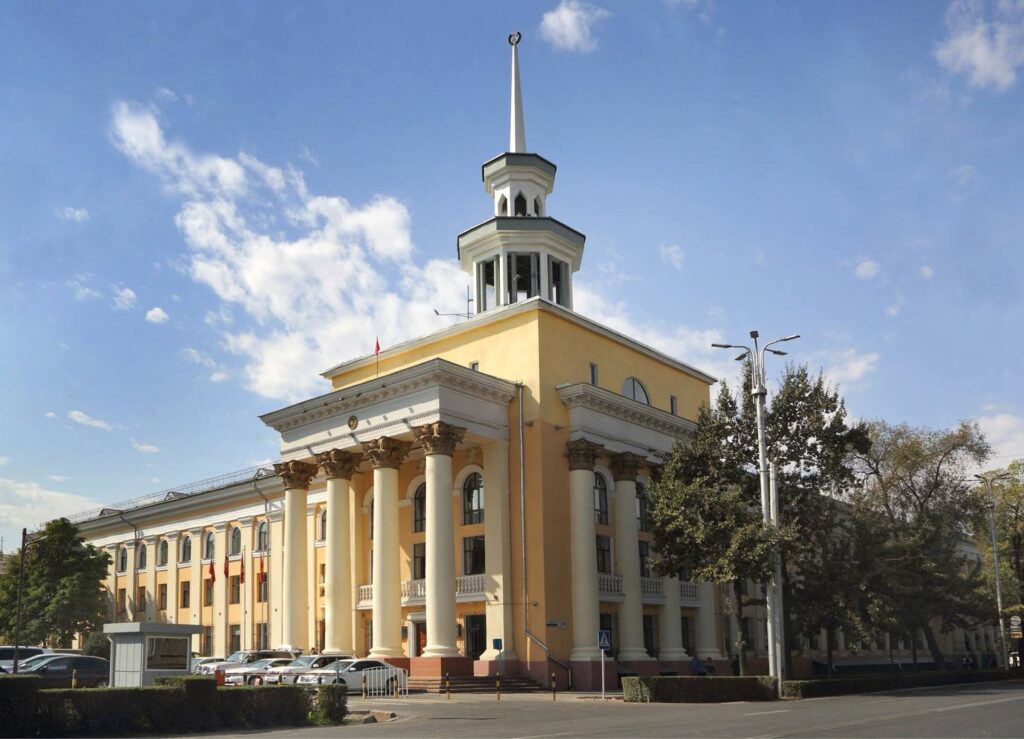
The National Bank of the Kyrgyz Republic (NBKR) has proposed a draft law aimed at regulating tariffs and commissions for banking and payment services provided by commercial banks. The proposal has been published for public discussion on the official government portal Koomtalkuu. The NBKR argues that the regulation is necessary to improve the accessibility of banking services for Kyrgyz citizens. While the current system of free pricing for banking services fosters competition, encourages better customer service and allows for economic flexibility, the regulator is concerned that it also creates barriers for certain segments of the population. “Under competition, some financial organizations may use hidden fees or complex tariff structures, which make it difficult for customers to understand the true cost of services. This also complicates the ability to compare offers and select the most favorable option,” the bill’s background brief states. The National Bank told The Times of Central Asia that interest rates on loans from banks and microfinance institutions in Kyrgyzstan can reach 33–34% per annum. Such high rates significantly increase the financial strain on citizens, reducing the availability of credit. “High tariffs also increase financial burdens on businesses, driving up operational costs. This can lead to higher prices for goods and services, dampened business activity, and reduced consumer demand. In turn, this creates additional risks for banks and the economy as a whole,” the NBKR explained. The central bank also expressed concerns about the potential for market abuse by large financial players. It noted that dominant institutions could inflate fees to suppress competition, discouraging innovation and slowing the development of more affordable financial products. The NBKR argues that Kyrgyzstan needs fair, transparent, and economically justified tariffs for banking services to mitigate these issues. The regulator believes such measures would reduce financial strain on consumers and businesses while fostering a more competitive and innovative banking sector. As of October 1, 2024, Kyrgyzstan's financial sector comprised: 21 banks; 194 non-bank financial and credit institutions; 3 credit bureaus; 1 guarantee fund; 41 payment organizations; and 40 payment system operators. This diverse and growing financial ecosystem underscores the importance of effective regulation to ensure broad accessibility and equitable practices in the banking sector.
AIIB Commits $500 Million to Tajikistan’s Rogun Hydropower Project

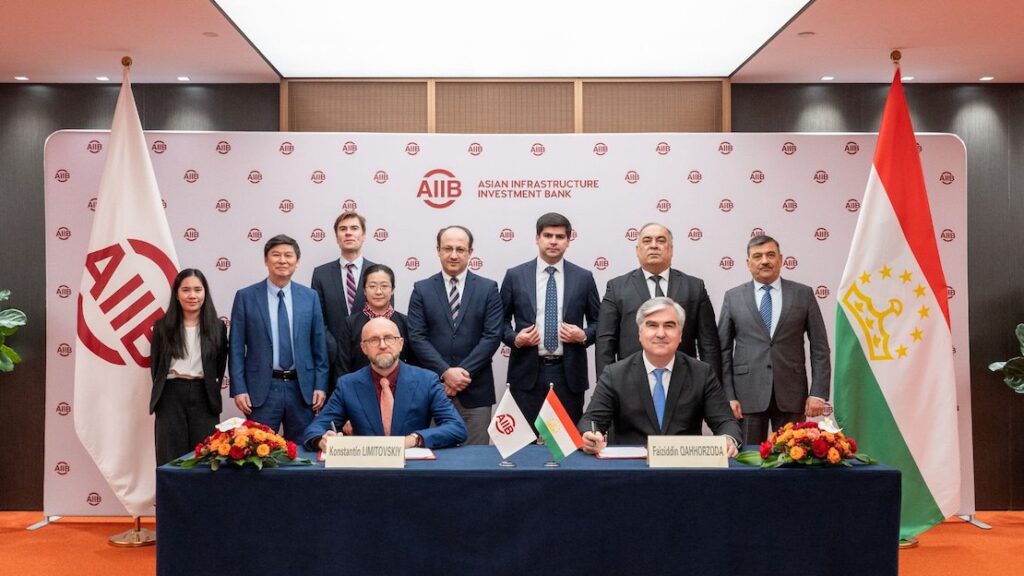
The Beijing-based Asian Infrastructure Investment Bank (AIIB) has approved a multiphase program totaling $500 million, including an initial Phase 1 loan of $270 million, to support Tajikistan’s flagship Rogun Hydropower Plant (HPP) project. The announcement was made on January 6, following the financing approval on December 19, 2024. The Rogun HPP, located on the Vakhsh River — a tributary of the Amu Darya River — lies 110 kilometers from Dushanbe, Tajikistan’s capital. With a designed generation capacity of 3,780 MW, a 335-meter-high dam, and a reservoir spanning 170 square kilometers, the Rogun HPP is expected to deliver improved electricity access to around 10 million people. It aims to address Tajikistan’s chronic winter power shortages and position the country as a key regional energy supplier. The project is co-financed with the World Bank, with potential contributions from a global consortium of donors. It seeks to enhance the supply of clean, affordable, and climate-resilient hydropower, with the potential to export electricity to neighboring Central Asian countries. As Central Asia’s energy demand is projected to grow by 40% by 2030 and triple by 2050, the Rogun HPP will play a pivotal role in increasing reliability and reducing the cost of electricity supply across the region. Konstantin Limitovskiy, AIIB Chief Investment Officer, commented on the significance of the project, stating: "This project will significantly contribute to the green energy transition and energy security of Central Asia. Investing in sustainable energy infrastructure is not merely about meeting today’s demands, but about empowering future generations with clean, reliable power that drives transformative growth, strengthens resilience, and unlocks the full potential of the region." Tajikistan ranks eighth globally in hydropower potential, yet only about 4% of this capacity is currently utilized. The Rogun HPP is set to play a critical role in decarbonizing electricity grids across Central Asia, supporting the region’s ambitious Nationally Determined Contributions (NDCs) under the Paris Agreement.

Kyrgyz Journalists Reject Japarov Criticism of Foreign Funding in the Media

Kyrgyzstan's President Sadyr Japarov has criticized the country's media for its willingness to accept foreign funding. American diplomats disagree with the government’s “accusations,” while local journalists pointed out that Kyrgyz media operates with the help of advertising and grants. Speaking at the recent People's Kurultai (Congress) in Bishkek, Japarov criticized several Kyrgyz media outlets for receiving foreign funding, accusing journalists of spreading false information. According to him, most Kyrgyz publications have foreign sponsors. Japarov claimed that journalists obey their "masters" and are therefore deprived of freedom of speech. The president also shared data on foreign funding received by some opposition media outlets and NGOs. “These funds are accounted for in reports only superficially. Their foreign sponsors say, ‘Yes, they are doing a good job.’ But what’s really happening? Here, they spread false information, look for negativity, and undermine the reputation of others. And when lawsuits are filed against them, they immediately claim it’s an attack on freedom of speech,” Japarov said. The president addressed the leadership of the U.S. State Department, stating that funds should be directed directly to Kyrgyz authorities. “We will ensure their effective use. Do you want to raise the level of journalism? We can do it. Do you want complete freedom of speech? We guarantee it,” Japarov emphasized. A few days later, the U.S. Embassy in Bishkek responded to the criticism. “In the field of journalism, our assistance is aimed at funding fact-checking programs, supporting Kyrgyz-language journalism, and assisting investigative journalists in uncovering violations, including corruption,” the diplomats said in a statement. The embassy emphasized its belief that independent media, which performs a watchdog role in society, is crucial for any government. In an interview with The Times of Central Asia, journalist Chynara Sydykova shared that grant support enabled her to implement several socio-cultural projects. “These projects helped us grow and become independent professionals in directing, producing, and project management. Finally, it allowed us to simply become journalists capable of working honestly, objectively, and professionally, covering topics of public interest,” Sydykova said. The investigative journalist noted that none of the grant providers interfered with the work process. However, Sydykova admitted that manipulations could occasionally occur. “Journalists shouldn’t cling to every visible opportunity to get funding. They need to build a reputation so that no one would even think of using them as an agent of influence. Thanks to my television projects, I provided real help to respondents in the areas of health and social injustice,” Sydykova added. Public figure and journalist Alisher Tashmatov told The Times of Central Asia that he takes a neutral stance on grants. According to him, the most important thing is that grants allocated by foreign institutions should not threaten Kyrgyzstan’s national security. “In Kyrgyzstan, media survives through advertising and grants. Only a few receive funding from the state. Moreover, even state-owned media occasionally receives financial assistance from foreign institutions and companies,” he noted, adding that criticism of the authorities should be well-founded.

Uzbekistan Moves to Penalize Financing of Mass Disturbances

Uzbekistan’s Parliament, the Oliy Majlis, is taking decisive steps to address the organization and financing of public disturbances. On December 11, the Legislative Chamber approved a draft law amending Article 244 of the Criminal Code. Passed in its first reading, the amendments aim to strengthen the country’s legal framework for tackling mass disturbances. During a parliamentary session on December 24, the draft law advanced further, reaching its third reading and gaining adoption. The updated Article 244 introduces several significant changes: A new third section establishes specific liability for individuals undergoing training with the intent to participate in mass disturbances. A fourth section introduces fines for financing such activities. A fifth section provides an exemption from criminal liability for individuals who voluntarily report to law enforcement after undergoing such training. These amendments are designed to deter organized disturbances while promoting cooperation with authorities.

Uzbekistan Set to Join the Eurasian Development Bank in 2025

Uzbekistan is set to complete the procedures for joining the Eurasian Development Bank (EDB) by early 2025. The announcement was made during an expanded meeting of the Supreme Eurasian Economic Council (EAEC). Uzbekistan has held observer status in the Eurasian Economic Union (EAEU) since 2020, and is preparing to deepen its engagement in regional economic projects. The country is already participating in several sectoral programs between the EAEU member states. These programs focus on areas such as the digitalization of trade, cargo transportation, e-commerce development, and combating climate change. The Eurasian Development Bank was founded in 2006 by Russia and Kazakhstan. Its current members are Armenia, Belarus, Kyrgyzstan, and Tajikistan. The EDB's primary mission is to promote economic growth and strengthen integration among its member states by financing major investment projects across various sectors. As of June 30, 2024, the EDB's investment portfolio stood at USD 4.8 billion, comprising 78 projects throughout the member states. The Bank prioritizes projects with integration effects, including cross-country infrastructure development, enhanced trade and economic ties, and the creation of common markets. It also supports "green" financing initiatives to promote sustainable development and environmental safety across the region. Experts view Uzbekistan's plans to join the EDB as a strategic move to bolster its economic cooperation with neighboring countries. Membership in the Bank would provide Tashkent with access to new financial opportunities, facilitating the implementation of joint initiatives and strengthening its role in regional economic integration.

Kazakhstan Leads Central Asia in Anti-Money Laundering Efforts

The Basel Anti-Money Laundering Index (AML) has been released. It offers a comprehensive assessment of global efforts to combat money laundering. The index evaluates the risk of money laundering and financial crime across countries and regions, using 17 indicators across five domains to identify key factors that can heighten vulnerability. The indicators are updated annually and reviewed by an independent panel of experts to ensure relevance, methodology integrity, and access to current data. The Index does not measure the actual volume of money laundering activity. Instead, it focuses on the risk factors, scoring countries on a scale from 0 to 10 where 10 represents the highest risk and 0 the lowest. The Times of Central Asia examined this year’s ratings, focusing on the performance of Central Asian nations: Kazakhstan achieved a notable ranking of 111th out of 164 countries, with a score of 4.65. Uzbekistan followed, ranking 81st with a score of 5.27, while Kyrgyzstan placed 45th with 5.95 points. Tajikistan ranked 30th, scoring 6.45, and Turkmenistan recorded the region’s worst result, ranking 23rd with 6.71 points. Globally, the best results were observed in San Marino (2.96), Iceland (3.00), and Finland (3.07).