• KZT/USD = 0.00215
  • TJS/USD = 0.10810
  • UZS/USD = 0.00009
  • TMT/USD = 0.29760
  • KZT/USD = 0.00215
  • TJS/USD = 0.10810
  • UZS/USD = 0.00009
  • TMT/USD = 0.29760
  • KZT/USD = 0.00215
  • TJS/USD = 0.10810
  • UZS/USD = 0.00009
  • TMT/USD = 0.29760
  • KZT/USD = 0.00215
  • TJS/USD = 0.10810
  • UZS/USD = 0.00009
  • TMT/USD = 0.29760
  • KZT/USD = 0.00215
  • TJS/USD = 0.10810
  • UZS/USD = 0.00009
  • TMT/USD = 0.29760
  • KZT/USD = 0.00215
  • TJS/USD = 0.10810
  • UZS/USD = 0.00009
  • TMT/USD = 0.29760
  • KZT/USD = 0.00215
  • TJS/USD = 0.10810
  • UZS/USD = 0.00009
  • TMT/USD = 0.29760
  • KZT/USD = 0.00215
  • TJS/USD = 0.10810
  • UZS/USD = 0.00009
  • TMT/USD = 0.29760
30 August 2026

Viewing results 1 - 6 of 5

Tajikistan Creates Tourism Fund as Visitor Numbers Rise

Tajikistan has created a dedicated fund to reinvest money collected from tourists and travel companies in the country’s tourism industry. The move comes amid rising visitor numbers, with nearly 890,000 foreign tourists visiting the country in the first half of 2026, up 16.7% from a year earlier. The tourist fee predates the fund, which the government formally established by a resolution adopted on July 1. The fund will be used to improve tourism infrastructure and service standards. The money will be kept in a separate account at the Ministry of Finance’s Central Treasury, while the Tourism Development Committee is required to report to the government every six months on how the funds are used. Tourism permit fees and fines for nonpayment will provide additional revenue. The fund will also receive 5% of the value of outbound tour packages sold to citizens of Tajikistan, channeling money from trips abroad into tourism development at home. For foreign travelers, the fee depends on the type of accommodation and is based on Tajikistan’s “calculation indicator,” a government-set benchmark used for official charges. In 2026, one calculation indicator is set at 78 somoni, or about $8.40. Under the current rates, the fee is 0.2 of the indicator per day at hotels and similar accommodation, and 0.15 at guesthouses and hostels. That works out to 15.6 somoni a day in the first category and 11.7 somoni in the second, roughly $1.70 and $1.30 respectively. The charge is small relative to the overall cost of a trip to destinations such as the Pamirs. The government resolution does not state how much revenue the fund is expected to collect. Uzbekistan was the largest source market, accounting for more than half of the total, or 510,400 tourists. Russia accounted for 175,800 and Kyrgyzstan for 89,000. Another 23,100 came from Kazakhstan and 22,700 from China. The committee expects Tajikistan to receive more than 2 million foreign tourists in 2026. Russia remains one of the country’s main source markets. Russian tour operators report growing demand for the Pamir Highway and the Wakhan Corridor. The Fann Mountains and combined trips through Tajikistan and Uzbekistan are also popular. Operators cite expensive airfares and insufficient tourist infrastructure as obstacles familiar to independent travelers. Tajikistan has difficulty competing with Uzbekistan for travelers drawn primarily by the architecture of its Silk Road cities. Its appeal lies elsewhere, particularly in trekking and road trips through the mountains. Some infrastructure problems have eased in recent years as electronic visas and eSIM services have become available and more hotels and restaurants are operating. Tourist information centers have opened, and sections of the Pamir Highway are being repaired. Service quality outside Dushanbe and Khujand, however, remains uneven. There are also security concerns for travelers heading toward the Afghan border. Some of the country’s most spectacular routes pass through the Gorno-Badakhshan Autonomous Region. After attacks from Afghan territory killed Chinese citizens in late 2025, Dushanbe increased security in border areas. The fund’s effectiveness will depend on how much it raises and...
Turkmenistan Eases Restrictions for Foreign Tourists

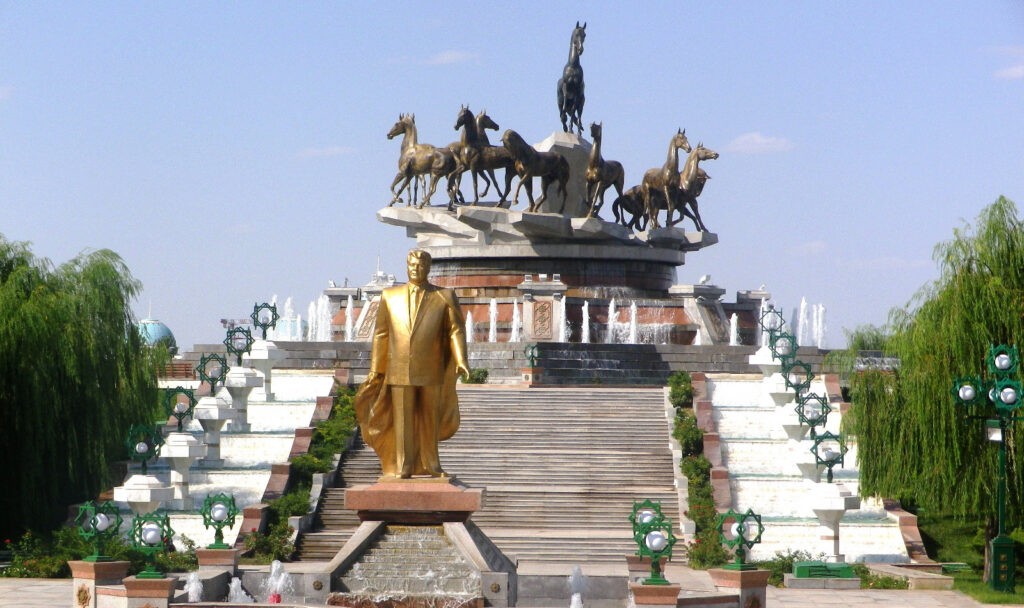
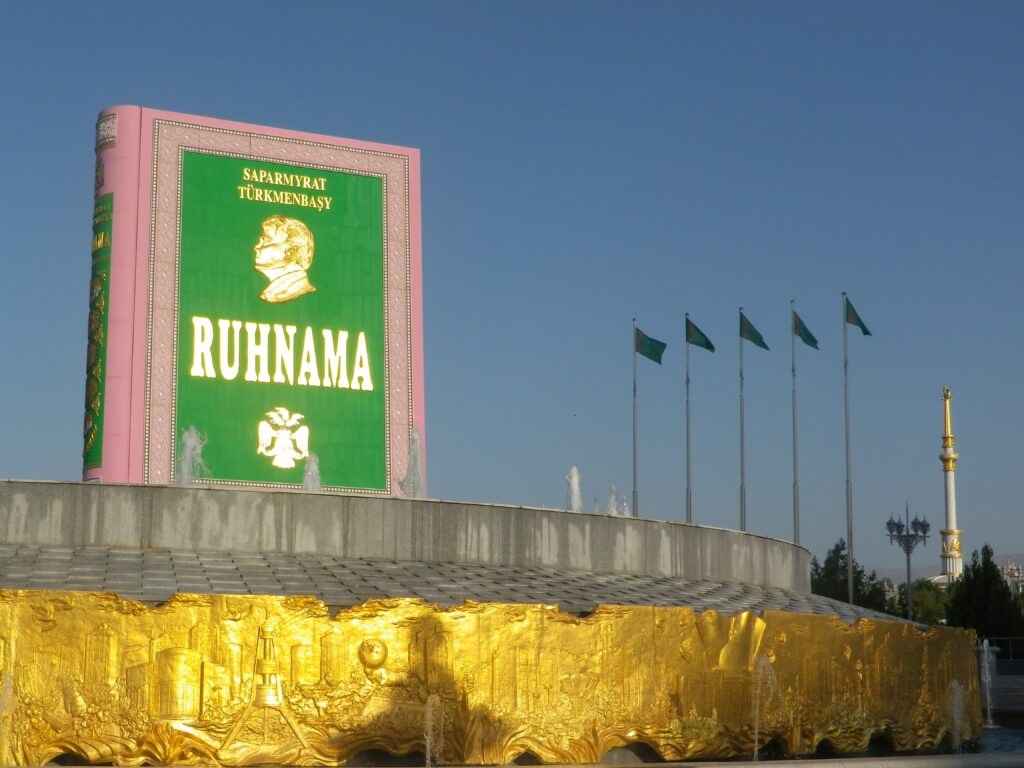
Turkmenistan has begun gradually easing restrictions on foreign visitors and tourists, though local residents and human rights advocates say the changes have had little impact on the daily lives of the country’s citizens. Reports of a more accommodating approach toward foreign travelers have emerged from both tourists and representatives of the international tourism industry. Canadian traveler Elise Williams said that before visiting Turkmenistan in early 2026, her tour operator advised her not to stray far from her hotel and to avoid taking photographs independently in public places. Upon arrival, however, she found the situation less restrictive than expected. “I felt fairly free and was able to take many photographs in different locations,” Williams said. Tourism industry representatives have also noted signs of change. Dylan Harris, head of the British travel company Lupine Travel, said visas for Turkmenistan are now being issued more quickly and that his company has not experienced a single visa refusal over the past year. According to Harris, the application process has become significantly easier following the introduction of an electronic visa system. He believes the authorities are seeking to make the country more accessible to the outside world. Following the collapse of the Soviet Union, Turkmenistan developed a reputation as one of the most closed countries in the post-Soviet region. Foreign visitors frequently encountered visa denials, travel restrictions, and limitations on photography. A new phase of liberalization began in 2025 with the launch of the electronic visa system, which tourism operators say has reduced bureaucratic barriers and made travel planning more predictable. However, residents interviewed by independent media outlets argue that the recent changes primarily benefit foreigners rather than Turkmen citizens themselves. While international visitors may face fewer restrictions, locals say longstanding controls affecting domestic travel, access to information, and everyday freedoms remain largely unchanged. The contrast highlights the limited nature of Turkmenistan’s opening. While the government appears to be taking cautious steps to attract more foreign visitors, the country remains one of the most tightly controlled societies in the region. For now, the easing of tourist restrictions appears to be aimed more at improving Turkmenistan’s international accessibility than at broader domestic liberalization.

Turkmenistan Promotes Tourism Abroad — While Keeping Its Borders Closed

Turkmen authorities are preparing to host an international tourism forum, once again emphasizing the sector’s potential. However, the reality appears less optimistic. The number of foreign visitors remains extremely low, while a strict visa regime continues to deter not only tourists but also business travellers. The Turkmen Travel international forum and exhibition is scheduled to take place in Ashgabat from April 14 to 16. Preparations are reportedly being carried out at a high level. Deputy Prime Minister for Culture, Bahar Seydova, briefed officials on the event, and President Serdar Berdimuhamedov has instructed organizers to present the country’s tourism potential in a dignified manner. At the same time, a paradoxical situation has emerged. Despite the construction of modern hotels in Ashgabat and the Avaza tourist zone, the opening of new airports, and the hosting of international events, foreign tourists visit Turkmenistan extremely rarely. Even travellers with a genuine interest in the country frequently encounter significant visa restrictions. According to sources, these challenges affect not only tourists. Representatives of international companies also face lengthy and complicated entry procedures. Market participants note that interest in Turkmenistan does exist. A representative of a travel agency in Ashgabat said that combined tours of Central Asia remain popular among tourists from China, the U.S., European countries, Australia, South America, and Russia. By 2024, demand for trips to Turkmenistan had increased by about 50% compared with the 2018-2020 period. Nevertheless, actual visitor numbers remain very low. Strict entry rules are also affecting business activity. For example, in February 2024, specialists from South Korea’s Hyundai Engineering were unable to arrive in Turkmenistan on time to carry out restoration work at the polymer plant in Kiyanly following an accident. Their visas were delayed due to bureaucratic procedures. Such cases are reported to occur regularly. While the state is seeking to attract foreign companies to major projects, it often fails to provide basic conditions for their operations. Against this backdrop, calls to reconsider current policies are becoming more frequent. Without a more open approach, Turkmenistan may struggle not only to increase tourist arrivals but also to support broader economic development.

Kazakhstan Expects to Double Influx of Foreign Gambling Tourists

Kazakhstan’s Ministry of Tourism and Sports expects the number of foreign gambling tourists to double following the planned opening of new casinos in four regions of the country. Gambling tourists are foreign nationals who travel specifically to visit casinos and other gambling establishments. Currently, gambling is legally permitted only in two designated zones: the city of Konaev in the Almaty region and the Shchuchinsk-Burabay resort area in the Akmola Region. These facilities are open to both Kazakh and foreign citizens. The government is considering a significant expansion of the gambling sector’s footprint. Plans are underway to open new casinos that will be accessible exclusively to foreign tourists. Deputy Minister of Tourism and Sports Baurzhan Rapikov said the proposed locations for the new facilities include the East Kazakhstan, Almaty, Mangistau, and Zhetysu regions. He added that the expected economic impact includes about 500 jobs per casino, annual tax revenues of $4 million to $8 million, and an increase in gambling tourists from 100,000 to 200,000 per year. In parallel, Kazakhstan is prioritizing the digitalization of its tourism sector. Beginning in February, the ministry will launch the development of a unified digital tourism ecosystem based on the Kazakhstan.Travel platform.  The upgraded system will feature an intelligent, AI-powered route planner, online booking tools, and optimal travel date suggestions. A new feature, KazTuristBot, will provide personalized recommendations and 24/7 support for travelers. For businesses, the platform will offer a showcase of tourism products, demand analytics, and digital tools for accessing government support. Authorities will also gain access to real-time data on tourist flows, enabling targeted infrastructure development in high-demand regions. As previously reported by The Times of Central Asia, Kazakhstan emerged in 2025 as one of the fastest-growing destinations in Central Asia for South Korean tourists. Data from the Agoda platform showed a 295% increase in travel interest between January and October.

Kyrgyzstan to Launch Unified Digital Tourism Platform to Attract Foreign Visitors

Kyrgyzstan is preparing to launch a unified Digital Tourism Platform designed to simplify travel procedures and strengthen the country’s appeal to foreign tourists. At a government meeting on January 26, Chairman of the Cabinet of Ministers Adylbek Kasymaliev pointed to long-standing structural challenges in the tourism sector, including fragmented services for visas, logistics, and insurance, as well as the absence of a centralized coordination mechanism. “Tourists should not face bureaucracy and language barriers at every stage. A single-window platform must integrate government services, private-sector offerings, and payment instruments from entry to exit,” Kasymaliev stated. He directed the Department of Tourism, the Ministry of Digital Development, and the Ministry of Finance, in coordination with the Tunduk State Portal of Electronic Services, to secure funding and oversee the platform’s technical implementation. Tourism’s economic contribution is steadily increasing. In 2025, the sector accounted for 4.3% of Kyrgyzstan’s GDP, with nearly 10 million tourist arrivals, according to Adilet Januzakov, Director of the Tourism Support and Development Fund, speaking on Sputnik Radio. Januzakov noted a shift in government policy from maximizing tourist numbers to improving infrastructure and service standards. The aim is to create comfortable conditions for a wide range of travel experiences, from ecotourism and camping to premium hospitality. Key initiatives include the construction of an Olympic village on Lake Issyk-Kul, the development of ski resorts and amusement parks, and the continued digitalization of tourist routes, such as integrating eco-trails into the 2GIS navigation system. Authorities also plan to implement a national classification system for hotels and guesthouses, designed to increase market transparency and provide consistent service quality for visitors. According to the National Statistical Committee, revenue from foreign tourists exceeded $813 million between January and September 2025, making tourism one of Kyrgyzstan’s key non-resource sectors.