• KGS/USD = 0.01144 0%
  • KZT/USD = 0.00204 0%
  • TJS/USD = 0.10422 -0.1%
  • UZS/USD = 0.00008 0%
  • TMT/USD = 0.28571 0%
  • KGS/USD = 0.01144 0%
  • KZT/USD = 0.00204 0%
  • TJS/USD = 0.10422 -0.1%
  • UZS/USD = 0.00008 0%
  • TMT/USD = 0.28571 0%
  • KGS/USD = 0.01144 0%
  • KZT/USD = 0.00204 0%
  • TJS/USD = 0.10422 -0.1%
  • UZS/USD = 0.00008 0%
  • TMT/USD = 0.28571 0%
  • KGS/USD = 0.01144 0%
  • KZT/USD = 0.00204 0%
  • TJS/USD = 0.10422 -0.1%
  • UZS/USD = 0.00008 0%
  • TMT/USD = 0.28571 0%
  • KGS/USD = 0.01144 0%
  • KZT/USD = 0.00204 0%
  • TJS/USD = 0.10422 -0.1%
  • UZS/USD = 0.00008 0%
  • TMT/USD = 0.28571 0%
  • KGS/USD = 0.01144 0%
  • KZT/USD = 0.00204 0%
  • TJS/USD = 0.10422 -0.1%
  • UZS/USD = 0.00008 0%
  • TMT/USD = 0.28571 0%
  • KGS/USD = 0.01144 0%
  • KZT/USD = 0.00204 0%
  • TJS/USD = 0.10422 -0.1%
  • UZS/USD = 0.00008 0%
  • TMT/USD = 0.28571 0%
  • KGS/USD = 0.01144 0%
  • KZT/USD = 0.00204 0%
  • TJS/USD = 0.10422 -0.1%
  • UZS/USD = 0.00008 0%
  • TMT/USD = 0.28571 0%

Viewing results 1 - 6 of 12

Freight Volumes on Middle Corridor Through Kazakhstan Rise Fivefold in Seven Years

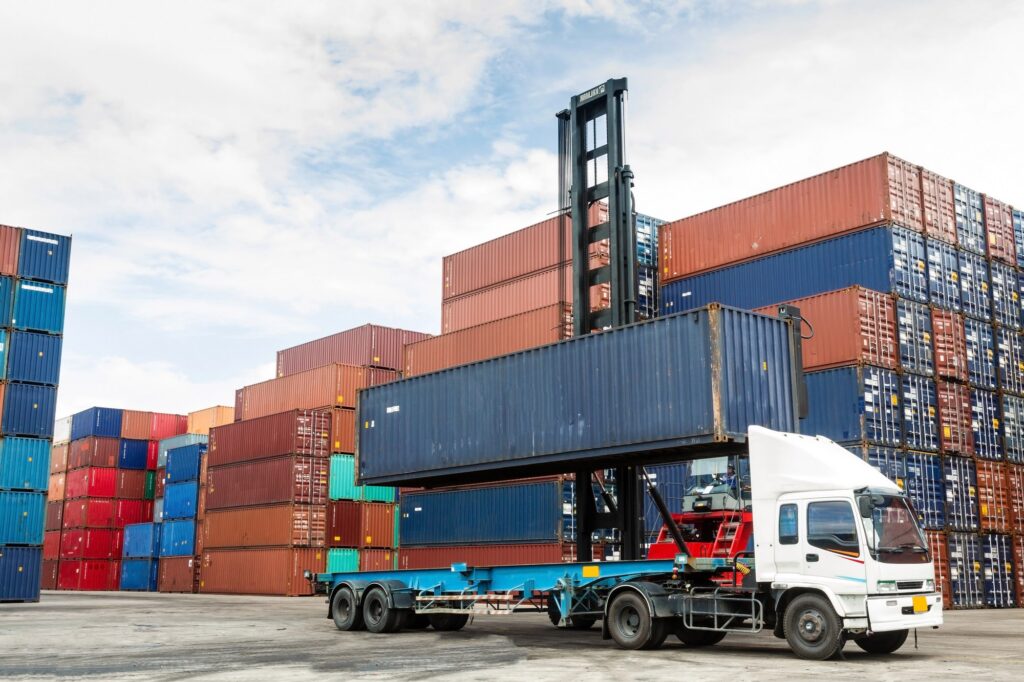
Freight volumes transported along the Trans-Caspian International Transport Route (TITR) through Kazakhstan have increased more than fivefold over the past seven years, highlighting the growing importance of the corridor as companies seek alternatives to routes passing through Russia. According to Kazakhstan’s Ministry of Transport, volumes have risen from 0.8 million tons to 4.5 million tons annually. Also known as the Middle Corridor, the TITR is a multimodal transport route linking China and Europe via Central Asia and the South Caucasus. The rapid growth of the route reflects wider shifts in Eurasian logistics since Russia’s full-scale invasion of Ukraine in 2022. With many Western companies seeking alternatives to traditional northern routes through Russia, governments and logistics operators across Central Asia and the South Caucasus have accelerated investment in the Trans-Caspian corridor, hoping to position it as a key artery linking Asian manufacturing hubs with European markets. Container transportation has been one of the fastest-growing segments of the corridor. In 2025, approximately 77,000 TEUs were transported along the TITR. Authorities aim to increase this figure to 300,000 TEUs by 2029. Despite rapid growth, the corridor still carries far less cargo than traditional northern routes through Russia, underscoring both its potential and the scale of investment still required. The expansion reflects ongoing infrastructure development and growing cooperation among participating countries and logistics operators. Key contributing factors include improved conditions for international freight transport, such as simplified customs procedures, as well as significantly shorter delivery times, reduced from roughly 28-32 days to 13-17 days. Demand has also risen for integrated “single-window” logistics services designed to enhance transparency and reliability. Kazakhstan, Azerbaijan, and Georgia continue to coordinate efforts under joint roadmaps to eliminate remaining bottlenecks along the corridor. To ensure year-round navigation and strengthen competitiveness, Kazakhstan is investing in infrastructure on the Caspian Sea coast. Dredging has already been completed at Kuryk Port, while similar work is planned at Aktau Port this year to increase depth and improve vessel access. Construction is also underway at Kuryk on the Sarzha multifunctional terminal, a project being implemented in cooperation with Abu Dhabi Ports Group from the United Arab Emirates. The terminal is expected to have an annual capacity of five million tons. Meanwhile, a container hub has been launched at Aktau Port, further enhancing maritime logistics capacity along the corridor. Kazakhstan has also expanded its transport infrastructure abroad. A Kazakh-operated terminal with a capacity of 120,000 TEUs has been launched at the Georgian port of Poti, improving cargo handling efficiency along the TITR. The European Union is also supporting the corridor’s development. A grant has been allocated for the reconstruction of Berths No. 3 and No. 12 at Aktau Port. The funding will be used to purchase wind-resistant ship-to-shore cranes to ensure stable operations during adverse weather conditions. On the railway side, Kazakhstan is upgrading more than 2,000 kilometres of rail infrastructure connected to the corridor. In 2025, construction and modernisation work were completed on 911 kilometres of railway lines. Key projects include the construction of second...

Kazakhstan and Uzbekistan Boost Rail Freight to 32.3 Million Tons

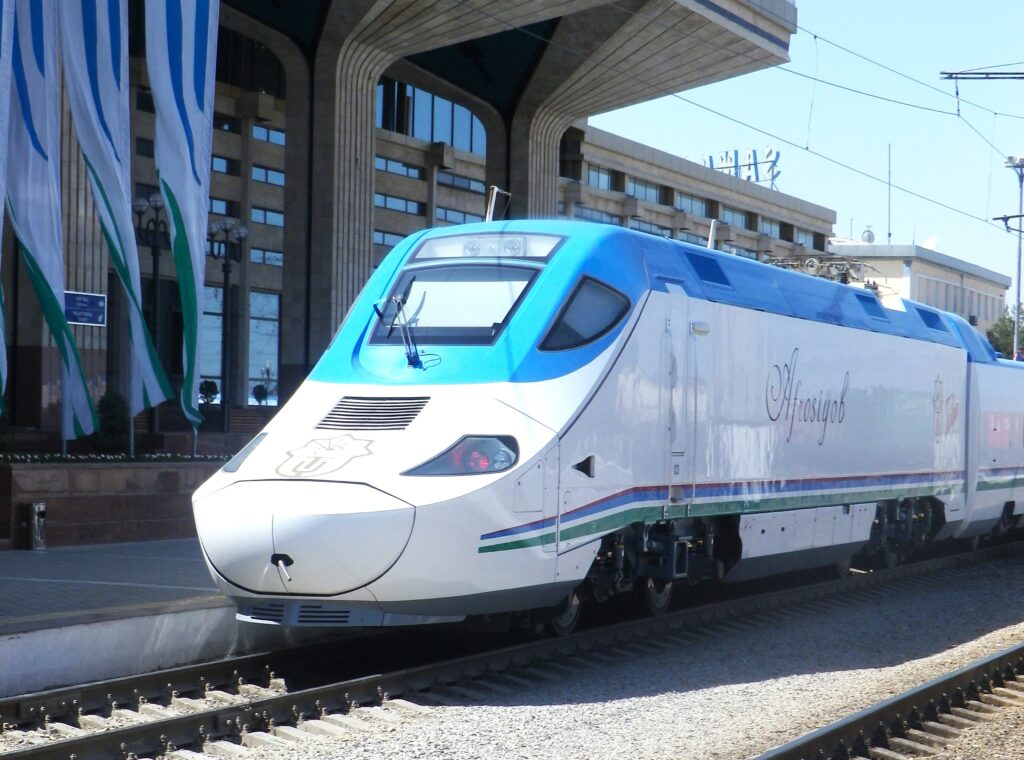
Kazakhstan and Uzbekistan have agreed on new measures to expand rail freight capacity as Astana works toward increasing overall transit volumes to 55 million tons. According to Kazakhstan’s Ministry of Transport, the agreement was reached during a meeting between the transport ministers of the two countries, where they discussed further cooperation in the railway sector. The talks were held as part of Kazakhstan’s broader strategy to strengthen its role as a key transit hub in Central Asia. Both sides emphasized the strategic importance of rail connections between Kazakhstan and Uzbekistan, describing them as central to trade growth, international transit flows, and regional transport integration. Officials also pointed to the strong potential for increasing freight volumes and improving the efficiency of logistics corridors linking the two economies. By the end of 2025, rail freight transportation between the two countries reached 32.3 million tons, representing a 16% increase compared to 2024, the ministry said. To maintain steady growth and achieve agreed capacity targets, the parties adopted a joint action plan focused on infrastructure development at key border crossings, including Saryagash, Oasis, and Syrdarya. The plan also provides for the completion of major railway projects, including the Darbaza-Maktaaral section. Currently, up to 36 pairs of trains pass daily through the Saryagash crossing, with plans to increase that figure to 40. At the Oasis junction, traffic is expected to grow from two to 10 train pairs per day. Through Syrdarya, volumes are projected to reach 10 train pairs daily following the launch of the Darbaza-Maktaaral line. During the meeting, the ministers also reviewed the synchronization of infrastructure upgrades and maintenance work, improvements to border control procedures, and measures to optimize operational coordination in order to raise overall transport efficiency. Last month, Kazakhstan’s national railway company, Kazakhstan Temir Zholy, announced that its Jibek Joly, or Silk Road, tourist train route would be extended to Dushanbe for the first time, linking cities in Kazakhstan and Uzbekistan with Tajikistan’s capital. The inaugural journey on the expanded route is scheduled to depart from Almaty on March 20, 2026, coinciding with Nauryz celebrations across the region.

Kyrgyzstan Launches e-Permit System for Freight Transport to China and Turkic States

Kyrgyzstan has launched a new digital system for international freight transport, replacing paper permits with an electronic platform for cross-border trucking to China and several Turkic states. The Ministry of Transport and Communications introduced the e-Permit system in January 2026, allowing domestic carriers to obtain permits online for shipments to China, Uzbekistan, Azerbaijan, and Turkey. Previously, Kyrgyzstan and China operated under a fixed annual quota of paper permits exchanged on a parity basis; 130,000 permits were issued in 2025 alone. The digital platform eliminates in-person applications, significantly reducing queues and administrative burden. According to the ministry, the new system has cut processing times from up to 24 hours to just 10 minutes. Officials say it enhances transparency, improves administrative efficiency, and helps reduce the risk of corruption. Regional Logistics Strategy The launch of e-Permit is part of Kyrgyzstan’s broader effort to position itself as a regional logistics hub. Authorities view streamlined cross-border transport procedures as essential to boosting trade, especially as the country expands its economic ties with neighboring and Turkic states. Integration with TRACECA The e-Permit rollout follows Kyrgyzstan’s December 2025 accession to the multilateral permit system of the Transport Corridor Europe-Caucasus-Asia (TRACECA). Membership in TRACECA allows Kyrgyz carriers to conduct bilateral and transit shipments using a single multilateral permit across participating countries, including Armenia, Georgia, Moldova, Romania, Turkey, and Ukraine. Officials say the integration will lower transport costs, reduce delivery times, and facilitate broader access for Kyrgyz exports to European, Turkish, and Black Sea markets.

New Port in Mangystau: Strategic Asset or Risk of Overcapacity?

Kazakhstan has announced plans to build a new seaport in the Mangystau region, presenting the initiative as a strategic move to strengthen the country's role in the East-West transit corridor. However, with existing Caspian ports in Aktau and Kuryk operating at less than one-third of their capacity, questions are being asked about whether the project addresses actual logistical needs or merely redistributes existing cargo flows. Kazakhstan’s current maritime infrastructure on the Caspian Sea includes the ports of Aktau and Kuryk, which together have a combined throughput capacity of over 27 million tons per year. Yet, in the first nine months of 2025, transshipment volume stood at only 6 million tons, despite a 9% year-on-year increase, placing current utilization at roughly 30%. Despite this, authorities in the Mangystau region argue that the proposed port in Karakiya district will boost national transit capacity, shorten delivery times on the China-Europe route by 7-15 days, and reduce logistics costs by 18-25%. The port’s design capacity is projected at 20 million tons annually. Proponents of the project cite periodic bottlenecks at Aktau and Kuryk, such as temporary loading restrictions and railcar congestion, as justification for new infrastructure. Still, forecasts from international institutions suggest that freight volume on the Trans-Caspian route could reach 10-11 million tons by 2030, while the eastern branch of the North-South corridor may handle up to 24.7 million tons. In light of these projections, some question whether expanding and modernizing existing facilities might be a more cost-effective solution. Indeed, upgrades are already underway. The container hub in Aktau is set to increase capacity to 250,000 TEU, while the multifunctional Sarzha terminal in Kuryk is expected to handle up to 12 million tons annually, developments that could significantly enhance throughput without requiring large-scale capital investment. Investment details are also attracting scrutiny. The new port’s estimated construction cost is $300 million, with several Chinese companies, owners of cargo bases and logistics assets, lined up as investors. Observers warn this could lead to a shift in transit flows in favor of the new facility, undermining existing ports in a scenario of economic “cannibalization.” There are also concerns about whether concession agreements might include compensation clauses for underutilized capacity, placing additional financial risk on the state. The project is slated to unfold in three phases: construction from 2025 to 2027; joint operation with Chinese partners from 2028 to 2037; and a phased transfer of management to the Kazakh side after 2038. The development is expected to create more than 2,000 jobs and will feature a railway connection and automated container terminal. In parallel, regional authorities are exploring maritime tourism as a complementary development strategy. Plans include launching Caspian Sea cruise routes and enhancing passenger facilities at the port of Kuryk, with a goal of attracting up to 625,000 tourists annually by 2028, envisioning a synergistic effect for the broader transport sector. While Mangystau has the potential to emerge as a key logistics hub in Central Asia, the success of the new port will hinge not on...