
• KZT/USD = 0.00209
  • TJS/USD = 0.10810
  • UZS/USD = 0.00008
  • TMT/USD = 0.29760
  • KZT/USD = 0.00209
  • TJS/USD = 0.10810
  • UZS/USD = 0.00008
  • TMT/USD = 0.29760
  • KZT/USD = 0.00209
  • TJS/USD = 0.10810
  • UZS/USD = 0.00008
  • TMT/USD = 0.29760
  • KZT/USD = 0.00209
  • TJS/USD = 0.10810
  • UZS/USD = 0.00008
  • TMT/USD = 0.29760
  • KZT/USD = 0.00209
  • TJS/USD = 0.10810
  • UZS/USD = 0.00008
  • TMT/USD = 0.29760
  • KZT/USD = 0.00209
  • TJS/USD = 0.10810
  • UZS/USD = 0.00008
  • TMT/USD = 0.29760
  • KZT/USD = 0.00209
  • TJS/USD = 0.10810
  • UZS/USD = 0.00008
  • TMT/USD = 0.29760
  • KZT/USD = 0.00209
  • TJS/USD = 0.10810
  • UZS/USD = 0.00008
  • TMT/USD = 0.29760

Viewing results 1 - 6 of 3

Kazakhstan Enforces Fuel Export Ban

Kazakhstan’s Ministry of Energy has confirmed that the country’s six-month ban on fuel exports remains in full effect, with no gasoline shipments currently sent to Uzbekistan or other neighboring countries. Officials acknowledged a single exception earlier this year, when surplus volumes of AI-92 gasoline were exported to Uzbekistan in the spring. The ministry characterized the shipment as a routine measure aligned with international practice, designed to optimize domestic storage and increase tax revenues. Since June, all fuel exports have been suspended to build strategic reserves ahead of scheduled maintenance at Kazakhstan’s oil refineries. The ban, introduced on May 19, covers gasoline, diesel, and other petroleum products. Reports of Fuel Shortages and Smuggling Speculation over renewed fuel shortages in Kazakhstan surfaced in local media on September 22, with reports citing illegal cross-border smuggling as a contributing factor. Some sources also claimed that Uzbekistan had increased purchases of Kazakh gasoline amid a decline in fuel imports from Russia. In response, the Ministry of Energy reiterated that no current fuel exports are taking place and emphasized that the export moratorium is being strictly enforced. Uzbekistan’s Fuel Market in Transition Uzbekistan’s state energy company Uzbekneftegaz recently announced plans to phase out production of AI-80 gasoline starting in September. Beginning in 2026, the country intends to supply only higher-octane grades, including AI-92 and AI-95, to align with international fuel standards. The regional fuel market has already undergone significant restructuring. In April 2024, the Telegram channel Oil & Gas of Kazakhstan reported that Uzbekistan was scaling back crude oil imports from Kazakhstan in favor of cheaper Russian supplies. During the first quarter of 2024, Uzbek companies imported 15,200 tons of crude oil from Kazakhstan by rail, down from 25,600 tons during the same period in 2023. Most of this volume was refined at the Ferghana plant. Meanwhile, Russia’s Gazprom Neft significantly expanded deliveries to Uzbekistan. In the first quarter of 2024, the company shipped 75,000 tons of crude via pipelines through Kazakhstan, nearly seven times more than the 10,700 tons delivered a year earlier.
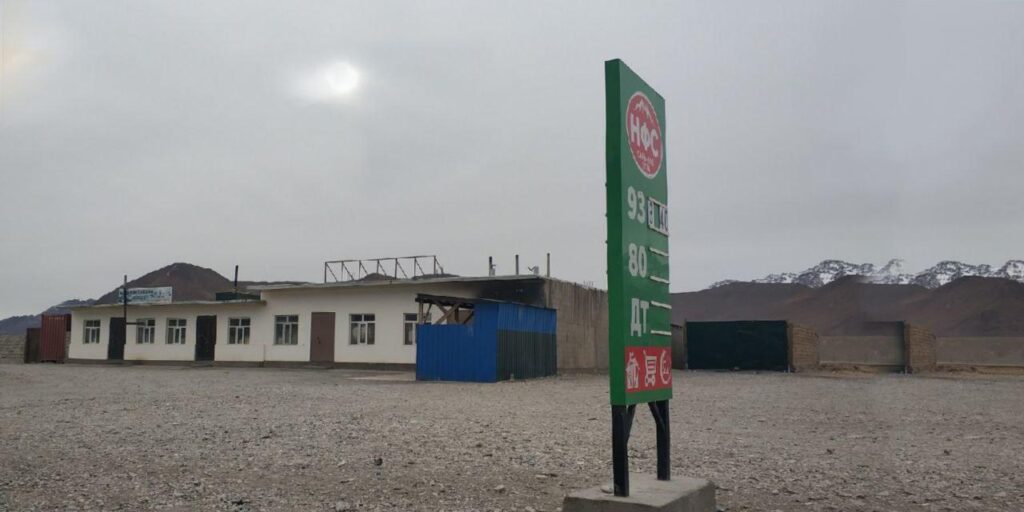
Central Asia Grapples with Fuel Shortages Amid Market Volatility

The heavy reliance on fuel imports from Russia is placing Central Asian countries in an increasingly precarious position. Disparities in pricing and exchange rates are driving a surge in illicit fuel resales, exacerbating supply challenges across the region. Gasoline and diesel prices continue to climb, and shortages are being felt widely. This dependence on Russian supplies is particularly concerning following U.S. President Donald Trump's ultimatum to Moscow: end the war in Ukraine within ten days or face 100% tariffs on countries trading oil and petroleum products with Russia. The tariffs could take effect as early as next week, placing Central Asian states in a hugely vulnerable position. Kazakhstan: Shortages and Shadow Exports In early July, motorists across Kazakhstan reported widespread shortages of AI-95 gasoline, particularly along the Karaganda-Balkhash and Astana-Pavlodar highways and in the country’s western regions. Some filling stations restricted purchases of AI-95 to 30 liters per vehicle, and AI-98 was only available via coupons. The Ministry of Energy attributed the shortages to increased tourist and transit traffic. Price caps on gasoline were lifted in January 2025, after which they began to steadily rise. According to the Ministry of Energy, fuel in Kazakhstan remains significantly cheaper than in other Eurasian Economic Union (EAEU) member states, prompting the government to gradually align prices with the regional market. Forecasts suggest gasoline prices could rise by up to 50%, further fueling inflation and impacting all sectors of the economy. The government argues that maintaining artificially low fuel prices would require substantial budget subsidies. The resulting price differentials have made illegal fuel exports more profitable, aggravating domestic shortages. To combat speculation, Kazakhstan imposed a ban in January on exporting gasoline and diesel by road and rail. Despite the country’s ongoing efforts to expand domestic production, Kazakhstan is expected to import substantial volumes from Russia in 2025: 285,000 tons of motor gasoline, 300,000 tons of jet fuel, 450,000 tons of diesel, and 500,000 tons of bitumen. Experts caution that significant increases in domestic output may not materialize until 2030. Russia’s decision on July 28 to tighten its gasoline export ban to include large producers is further complicating the situation. The embargo, introduced amid record-high exchange prices, is expected to last through August. Nevertheless, Energy Minister Erlan Akkenzhenov insists the Russian export restrictions will not affect Kazakhstan, citing a standing intergovernmental agreement that exempts the country from such measures. The Rise of Grey Market Schemes Despite official reassurances, fuel prices continue to rise. Energy expert Olzhas Baidildinov warns of a growing shadow market, driven in part by the weakening of the Kazakh tenge against the Russian ruble. With the exchange rate at 6.6 tenge per ruble, the economic incentive for illicit exports from Kazakhstan remains strong. Baidildinov predicts further shortages by the autumn if this trend continues. Kyrgyzstan: Growing Dependence Kyrgyzstan, which has faced repeated fuel shortages in recent years, has seen prices rise sharply. Over the past decade, the cost of AI-92 has climbed by 52%, AI-95 by 57%, and diesel, used in agriculture...

Kazakhstan Second Only to Russia in CIS for Gasoline Purchasing Power

Kazakhstan ranks 36th out of 124 countries in a global gasoline affordability index based on average monthly earnings, according to recent data from Numbeo and analysis by Energyprom.kz. The study assesses how many liters of gasoline a person can buy with an average monthly salary and compares this indicator across the Commonwealth of Independent States (CIS) and globally. Kazakhstan Among CIS Leaders in Fuel Affordability According to the report, the average Kazakhstani can purchase approximately 1,100 liters of gasoline per month based on their salary. This places Kazakhstan second among CIS countries, trailing only Russia, where the average salary covers about 1,140 liters, ranking 34th worldwide. Belarus follows with 801.3 liters, then Azerbaijan (677.9 liters), Kyrgyzstan (483.9 liters), Moldova (476.6 liters), Uzbekistan (461.3 liters), Armenia (450.3 liters), Ukraine (341.4 liters), and Tajikistan (223.8 liters). Globally, Libya leads with a staggering 10,100 liters, followed by Kuwait (8,900 liters) and Qatar (6,600 liters). In contrast, Syria ranks last, where the average salary can buy just 22.1 liters. Cuba (28.5 liters) and Côte d'Ivoire (112.3 liters) also rank among the lowest. Global Gasoline Prices: Kazakhstan Remains Among the Most Affordable Kazakhstan is also one of the countries with the lowest fuel prices, around $0.50 per liter. Cheaper fuel is found in Libya ($0.03), Egypt and Algeria ($0.30), Kuwait ($0.40), and Malaysia ($0.50). By comparison, the most expensive gasoline is in Hong Kong at $3.10 per liter, followed by Iceland ($2.40), and Singapore, the Netherlands, and Switzerland (all around $2.20). Price Trends in Kazakhstan In April 2025, gasoline prices in Kazakhstan rose by 0.4% compared to the previous month and by 2.2% year-on-year. Prices for premium grades, AI-95/96 and AI-98, increased by 0.1% month-over-month, while AI-92 rose by 0.4%. On an annual basis, AI-92 increased by 1.8%, AI-98 by 3.2%, and AI-95/96 by 4.3%. The Zhambyl region saw the highest monthly increase at 1%, followed by the Abai and Turkestan regions and Shymkent (all at 0.8%). North Kazakhstan recorded the smallest increase (0.1%), while prices remained unchanged in Aktobe, Ulytau, and Almaty. The West Kazakhstan region saw a slight price decline of 0.1%. Year-on-year, the highest price growth was observed in West Kazakhstan (4.8%), Aktobe (4.1%), and Shymkent (3.1%). The most modest increases were recorded in Almaty (0.9%), Akmola (1.1%), and Zhetysu (1.7%). Production, Pricing, and Export Data In April 2025, the average price per liter of AI-92 was 205 KZT ($0.40), AI-95/96 stood at 264 KZT ($0.52), and AI-98 at 299 KZT ($0.59). The highest AI-92 prices were in Petropavlovsk ($0.41), and the lowest in Atyrau ($0.38). Taldykorgan had the most expensive AI-95/96 ($0.54), while Atyrau offered the lowest ($0.48). AI-98 was priciest in Almaty ($0.62) and cheapest in Aktobe ($0.56). In the first two months of 2025, domestic producers met 99.99% of the nation’s gasoline demand. Kazakhstan produced 1.1 million tons of gasoline, a 20.8% year-on-year increase. Imports totaled only 101.8 tons, down 8.1%. The country exported 6,700 tons of gasoline during this period, all to Uzbekistan. Supplies to the domestic market...
