Tajikistan Holds Fuel Talks With U.S. After Starting Imports From Iran
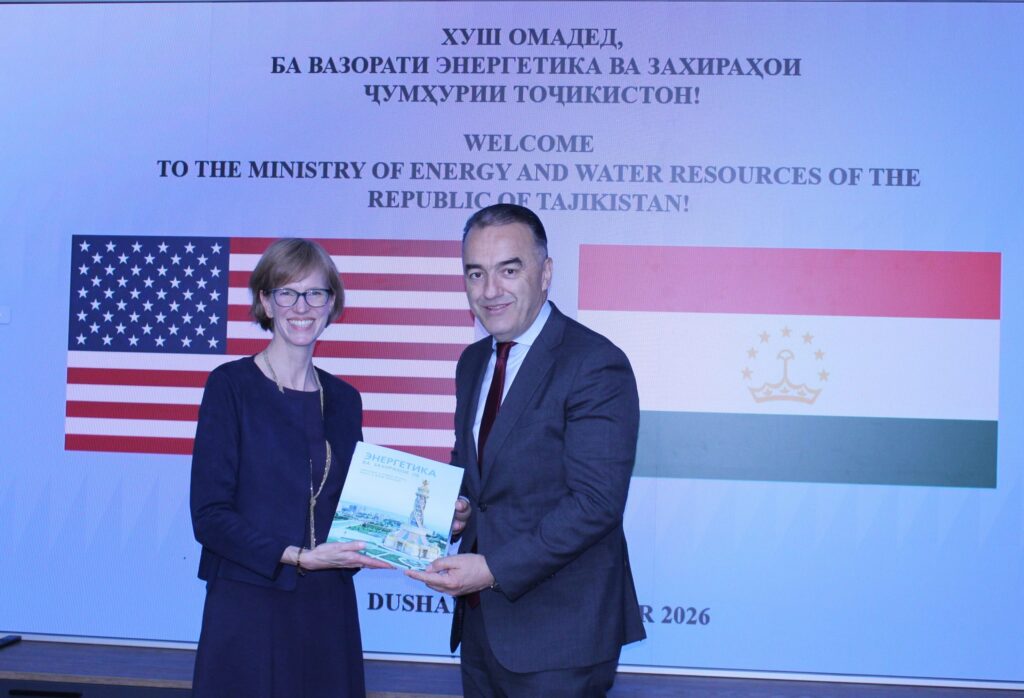
Tajikistan has discussed fuel supplies with the United States after beginning imports of petroleum products from Iran, whose oil sector is under U.S. sanctions. On October 8, Tajikistan's Minister of Energy and Water Resources Daler Juma met with Carson Relitz Rocker, chargé d'affaires at the U.S. Embassy, to discuss the country's petroleum supplies and other issues. Tajikistan depends almost entirely on imports of petroleum products. From January through September 2026, the country imported approximately 1.37 million metric tons of oil, petroleum products, liquefied gas, and related goods worth $1.13 billion. This included 333,200 metric tons of gasoline, 424,800 metric tons of diesel, and 321,300 metric tons of liquefied gas. Russia remains the country's main fuel supplier, accounting for more than half of its imports. It delivered approximately 708,000 metric tons worth $628.9 million over the nine-month period. Dushanbe purchases some of this fuel duty-free under intergovernmental agreements. Kazakhstan, meanwhile, accounts for a significant share of liquefied gas imports, supplying 225,600 metric tons worth $153.8 million. Imports of petroleum products from Iran totaled 15,600 metric tons worth $14.7 million over the nine-month period. In September, Tajikistan's Ministry of Energy and Water Resources confirmed that shipments of Iranian oil and petroleum products had begun in late August. The two sides had previously discussed potential purchases of up to 2.55 million metric tons annually, but this was a proposed volume rather than an existing contract. Tajikistan's authorities have not disclosed the exact composition of the shipments already received or how they were transported to the country. American restrictions cover Iran's oil sector and can affect international payments, insurance, and transportation. An official at the U.S. Department of the Treasury warned in comments to Radio Free Europe/Radio Liberty in early October that companies operating in Iran's petroleum sector face sanctions risks, but declined to comment on specific possible violations. Washington has not publicly accused Tajikistan of breaching sanctions over the shipments. Separately, Tajikistan is preparing to host the third B5+1 Forum, bringing together business representatives and policymakers from the U.S. and the five Central Asian countries. The meeting is scheduled for April 20–21, 2027. It is being organized by the U.S.-based Center for International Private Enterprise (CIPE) in cooperation with Tajikistan's government. B5+1 complements C5+1, the diplomatic format between the same six countries, and is intended to address trade, investment, and barriers to doing business. Previous forums were held in Almaty in 2024 and Bishkek in February 2026. According to CIPE, more than 15 memorandums were signed between American companies and Central Asian partners at the meeting in the Kyrgyz capital. The forum is expected to build on discussions of critical minerals, transport, and digitalization. However, CIPE has not announced a detailed agenda for the Dushanbe meeting, and there is no indication that American fuel supplies will be discussed.