• KZT/USD = 0.00223
  • TJS/USD = 0.10800
  • UZS/USD = 0.00009
  • TMT/USD = 0.29760
  • KZT/USD = 0.00223
  • TJS/USD = 0.10800
  • UZS/USD = 0.00009
  • TMT/USD = 0.29760
  • KZT/USD = 0.00223
  • TJS/USD = 0.10800
  • UZS/USD = 0.00009
  • TMT/USD = 0.29760
  • KZT/USD = 0.00223
  • TJS/USD = 0.10800
  • UZS/USD = 0.00009
  • TMT/USD = 0.29760
  • KZT/USD = 0.00223
  • TJS/USD = 0.10800
  • UZS/USD = 0.00009
  • TMT/USD = 0.29760
  • KZT/USD = 0.00223
  • TJS/USD = 0.10800
  • UZS/USD = 0.00009
  • TMT/USD = 0.29760
  • KZT/USD = 0.00223
  • TJS/USD = 0.10800
  • UZS/USD = 0.00009
  • TMT/USD = 0.29760
  • KZT/USD = 0.00223
  • TJS/USD = 0.10800
  • UZS/USD = 0.00009
  • TMT/USD = 0.29760
20 September 2026

Viewing results 1 - 6 of 9

Russian Gas Exports to Central Asia Rise 15% Amid Growing Regional Demand

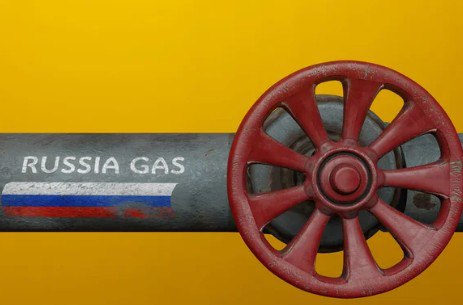
Russian natural gas exports to Central Asia increased by 15% in the first eight months of 2025 compared to the same period in 2024, Gazprom CEO Alexey Miller announced at the St. Petersburg International Gas Forum (PMG Forum 2025), according to TASS. Miller cited rapid economic growth across the region as the key driver of rising energy demand. He projected that Central Asia’s economy could expand by as much as 60% over the next five to six years, with natural gas playing a central role in meeting growing energy needs. “When we compare the first eight months of 2025 with the same period in 2024, the volume of Russian gas supplied to Central Asia, namely Uzbekistan, Kyrgyzstan, and Kazakhstan, rose by 15%. These are substantial volumes,” Miller said. Miller also pointed to the importance of major infrastructure initiatives, including projects under the Power of Siberia-2 megaproject, in expanding gas supply routes to the region. In 2024, Gazprom reported a doubling of gas exports to Central Asia between January and August. At that time, deliveries to Uzbekistan had reached maximum technical capacity through the Central Asia-Center pipeline, meeting peak demand typically seen during the coldest months of winter. The latest increase in exports highlights Central Asia’s growing strategic value to Russia as an energy market, as well as deepening energy cooperation between Moscow and the region.

The Power of Siberia 2 Project and Central Asia’s Gas Bargaining Power

The proposed Power of Siberia 2 (PoS-2) pipeline from Russia to China has re-entered the headlines on the strength of a new memorandum between Gazprom and CNPC. Russia calls the memorandum “legally binding,” but China has avoided the phrase, because the only thing that is legally binding is an agreement to negotiate. The memorandum affirms a design capacity up to 50 billion cubic meters per year (bcm/y), a route via Mongolia, and a total trunk length of roughly 2,600 kilometers (km) on the Russian side before crossing Mongolian territory. Feasibility work has highlighted a 1,420-millimeter (56-inch) pipe diameter, and an indicative cost cited in some trade reporting near $13–14 billion. The political signaling is strong, but pricing terms remain unresolved. For Central Asia, the significance is immediate: even without a final sales contract, the expectation of future Russian volumes tightens China’s negotiating posture with Turkmenistan, Kazakhstan, and Uzbekistan, the three states already connected to China by the Central Asia–China Gas Pipeline (CAGP). Central Asia's Gas Supplies to China China’s westbound import corridor from Central Asia consists today of three parallel pipelines that together provide a nominal capacity of 55 bcm/y (Lines “A” and “B” at 15 bcm/y each, and Line “C”  at 25 bcm/y). Construction of the first two lines began in 2008, with operations starting in 2009–2010; Line C entered service in 2014. Line D, planned at 30 bcm/y through Uzbekistan–Tajikistan–Kyrgyzstan to China, has been delayed for years; if completed, it would raise corridor capacity toward 85 bcm/y. Turkmenistan is the anchor supplier. The Oxford Institute for Energy Studies (OIES) estimates its deliveries to China at 32.9 bcm in 2022 (roughly 81% of the country’s gas exports that year), with long-term sales structured on formulas linked to the price of oil. Interfax reports that in the second quarter of 2025, the price for Turkmenistan’s gas fell below $290 per thousand cubic meters (mcm). This figure is consistent with oil-price linkage rather than hub-indexed European benchmarks. Recent industry and regional reporting puts Turkmenistan’s deliveries averaging approximately 35 bcm/y in the mid-2020s. Kazakhstan had committed to supply up to 10 bcm/y, but domestic constraints have kept actual flows lower. S&P Global cites 4.4 bcm in 2022 and 5.86 bcm in 2023, with winter interruptions to protect domestic consumers; of the 29.8 bcm of commercial gas produced in 2023, 19.4 bcm was consumed at home. Uzbekistan’s volumes have been more variable as Tashkent balances domestic demand, imports, and swap operations. Jamestown noted a fall in Uzbek gas export value to China from $1.07 billion in 2022 to $563.5 million in 2023, before a rebound in 2024 and 2025 according to Chinese customs-based press summaries. PoS-2’s Route, Mongolian Gatekeeping, and Central Asian Implications The geography of the route matters for Central Asia. On the Russian side, public summaries describe a corridor from Yamal via Urengoy through Krasnoyarsk and Irkutsk, then across Buryatia toward Kyakhta near the Mongolian border. In Mongolia, official communications stress underground installation across the steppes and local economic benefits, but final...

High Methane Emissions May Hinder Turkmenistan’s Gas Exports to Europe

High methane emissions could pose a significant obstacle to Turkmenistan’s entry into the European gas market, according to an updated report by the U.S. Department of Energy, published on February 6. The main findings of the study were summarized by Eurasia Review on February 19. The report, which examines oil and gas production in the Caspian region, notes that four countries, Azerbaijan, Kazakhstan, Turkmenistan, and Uzbekistan, account for 3% of global energy production. Turkmenistan’s Gas Reserves and Export Ambitions According to the report, Turkmenistan ranks fifth worldwide in natural gas reserves, estimated at 400 trillion cubic feet in 2025. In 2023, the country set a record by producing 3.0 trillion cubic feet of dry natural gas, the highest level since official statistics began in 1992. Currently, Turkmenistan’s primary gas exports are directed to China, but Ashgabat is seeking to expand its market reach, including potential supply routes through Afghanistan. However, the U.S. Department of Energy warns that excessive methane emissions from Turkmenistan’s fields could complicate access to the European market via the Trans-Caspian pipeline. In terms of oil reserves, Turkmenistan holds a relatively modest 600 million barrels, with an average daily production of 275,000 barrels in 2024. Diversification Efforts and New Export Deals Meanwhile, Turkmenistan is taking steps to diversify its export destinations. Gas supplies to Turkey are set to begin on March 1. During a phone call on February 10, Chairman of the Halk Maslahaty Gurbanguly Berdimuhamedov informed Iranian President Masoud Pezeshkian that an agreement had been reached to transit gas through Iran under a swap supply arrangement with Turkish energy company BOTAŞ. Efforts to Reduce Methane Emissions Turkmenistan has also been actively engaging in international initiatives to curb methane emissions. On December 1, 2023, the country joined the Global Methane Pledge (GMP), an initiative aimed at reducing greenhouse gas emissions. In November 2024, Bloomberg reported that the state-owned Turkmengaz plans to hire specialists to measure methane emissions more accurately and is preparing a tender for emission monitoring. That same month, the U.S. Environmental Defense Fund (EDF) released satellite data showing that methane leakage from oil and gas fields in Turkmenistan, the U.S., and Venezuela is significantly higher than official ground-based measurements suggest.