• KGS/USD = 0.01144 0%
  • KZT/USD = 0.00216 0%
  • TJS/USD = 0.10616 -0.19%
  • UZS/USD = 0.00008 0%
  • TMT/USD = 0.28530 0%
  • KGS/USD = 0.01144 0%
  • KZT/USD = 0.00216 0%
  • TJS/USD = 0.10616 -0.19%
  • UZS/USD = 0.00008 0%
  • TMT/USD = 0.28530 0%
  • KGS/USD = 0.01144 0%
  • KZT/USD = 0.00216 0%
  • TJS/USD = 0.10616 -0.19%
  • UZS/USD = 0.00008 0%
  • TMT/USD = 0.28530 0%
  • KGS/USD = 0.01144 0%
  • KZT/USD = 0.00216 0%
  • TJS/USD = 0.10616 -0.19%
  • UZS/USD = 0.00008 0%
  • TMT/USD = 0.28530 0%
  • KGS/USD = 0.01144 0%
  • KZT/USD = 0.00216 0%
  • TJS/USD = 0.10616 -0.19%
  • UZS/USD = 0.00008 0%
  • TMT/USD = 0.28530 0%
  • KGS/USD = 0.01144 0%
  • KZT/USD = 0.00216 0%
  • TJS/USD = 0.10616 -0.19%
  • UZS/USD = 0.00008 0%
  • TMT/USD = 0.28530 0%
  • KGS/USD = 0.01144 0%
  • KZT/USD = 0.00216 0%
  • TJS/USD = 0.10616 -0.19%
  • UZS/USD = 0.00008 0%
  • TMT/USD = 0.28530 0%
  • KGS/USD = 0.01144 0%
  • KZT/USD = 0.00216 0%
  • TJS/USD = 0.10616 -0.19%
  • UZS/USD = 0.00008 0%
  • TMT/USD = 0.28530 0%

Viewing results 1 - 6 of 17

Berdimuhamedov’s Beijing Visit and the Reshaping of Central Asia’s Gas System

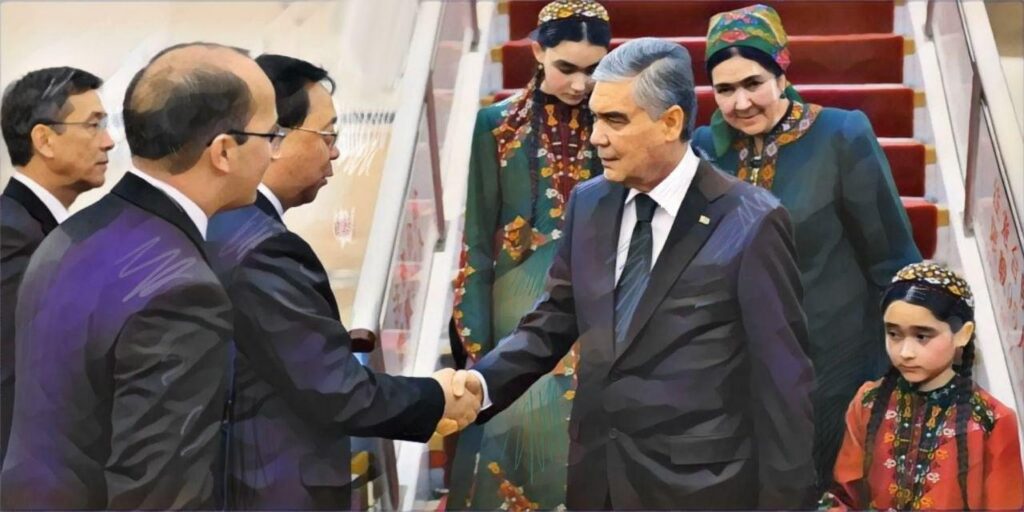
The visit by Turkmenistan’s Gurbanguly Berdimuhamedov, Chairman of the Halk Maslahaty, to Beijing on March 17–19 did more than routinely reaffirm Turkmenistan’s ties with China. It opened onto a wider issue in Central Asian energy, not simply about continuing the cooperation between Ashgabat and Beijing, but about how the renewal of that cooperation would affect the Central Asia–wide gas production and transmission system that increasingly intersects with China’s wider infrastructural and industrial presence in the region. No dramatic announcement of any new export route highlighted that wider significance, which emerged from a narrower sequence of policy initiatives that carried broader implications. Xi Jinping used the visit to restate the importance of cooperation in natural gas while widening the agenda to include connectivity, clean energy, artificial intelligence, and the digital economy. Within days of the meeting, Turkmenistan moved ahead on a new phase of development at Galkynysh with CNPC. These events signal a further deepening Chinese role in the upstream and systemic organization of Central Asian energy. What Beijing Actually Signaled Beijing’s own language about the matter was direct. In the official Xinhua account of Xi’s March 18 meeting with Berdimuhamedov, China called for the two sides to “expand the scale of cooperation in the natural gas sector” and to raise trade and investment levels. Such language confirms that gas remains at the center of the relationship even as the bilateral agenda widens. For all the parallel discussions of digitalization, transport links, and non-resource cooperation, the political weight of Sino-Turkmen ties still rests primarily on energy. The Chinese side, however, did not treat gas as a self-contained file. Gas remains the primary, but it is increasingly embedded within a wider pattern of regional engagement comprising energy, transport, and adjacent economic sectors. The same Beijing readout on the meeting with Berdimuhamedov placed connectivity, artificial intelligence, the digital economy, and clean energy alongside natural gas under a broader heading of expanded cooperation. This framing removes gas from its status as a stand-alone commodity and places it within a larger operational perspective. Neither the main Chinese readout nor the public official Turkmen framing of the visit highlighted Line D of the Central Asia–China gas pipeline system. Line D has long stood as the clearest indicator of a future expansion of Turkmen gas exports through Tajikistan and Kyrgyzstan into China. Had the visit produced a concrete breakthrough on that front, the official language would have been the obvious place to signal it. The practical movement after the trip lay elsewhere. Why It Matters Beyond Turkmenistan The focus lay at Galkynysh. In the immediate wake of the visit, President Serdar Berdimuhamedov authorized Turkmengaz to conclude a turnkey contract with CNPC Amudarya Petroleum Company Ltd. for Phase 4 of the Galkynysh gas field. The official Turkmen account linked the decision to meetings held during Gurbanguly Berdimuhamedov’s visit to China and specified facilities capable of processing 10 billion cubic meters of marketable gas per year. TCA reported the same move as a new phase of CNPC-backed field development....

Turkmen Natural Gas Could Supplement Azeri Supplies to Europe via the Southern Gas Corridor

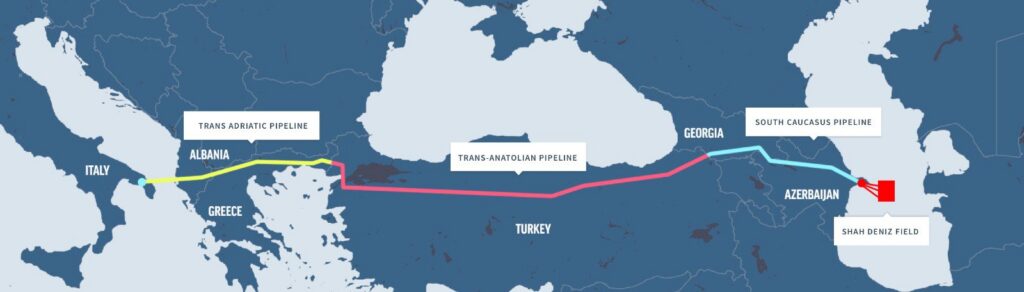
Turkmenistan views the Trans-Caspian Gas Pipeline project as one of the most important directions for diversifying its energy exports and strengthening energy security on the European continent, Turkmenistan’s former president Gurbanguly Berdymuhamedov said in an interview with the Al Arabiya television channel during his visit to the United States in February, according to official Turkmen media. The Trans-Caspian Gas Pipeline is a proposed infrastructure project designed to transport natural gas from Turkmenistan to Azerbaijan across the Caspian Sea, where it could connect to the Southern Gas Corridor (SGC). The SGC is intended to reduce Europe’s dependence on Russian gas and diversify the continent’s energy supplies by bringing natural gas from the Caspian region to European markets. Its primary supply source is Azerbaijan’s Shah Deniz gas field in the Caspian Sea. The corridor stretches from Azerbaijan through Georgia and Türkiye to Greece, Albania, and Italy. Turkmenistan is widely viewed as a potential additional supplier for the SGC, which could become increasingly important if Azerbaijani gas alone proves insufficient to meet rising European demand. Berdymuhamedov said that progress on the Trans-Caspian Gas Pipeline requires resolving international legal issues, particularly those related to the delimitation of the Caspian seabed. A Turkmen-Azerbaijani working commission has been established for this purpose. “We hope that its work will yield significant practical results,” he said. Berdymuhamedov also emphasized Turkmenistan’s large hydrocarbon resources, noting that the country ranks fourth globally in proven natural gas reserves. “For some time in the past, the bulk of Turkmen natural gas exports went to Russia, which received up to 40 billion cubic meters per year. Currently, China is our main gas buyer, with supply volumes at roughly the same level,” Berdymuhamedov said. He added that Turkmenistan’s policy of diversification allows the country to supply gas within the region through swap arrangements involving Iran and Azerbaijan, as well as Kazakhstan, Uzbekistan, and other neighboring states. Turkey is also considered a key link for potential Turkmen gas exports to Europe. Turkish Vice President Fuat Oktay previously said that, in cooperation with Azerbaijan, Turkmen natural gas could be transported through the Trans-Anatolian Natural Gas Pipeline (TANAP), which runs across Türkiye and forms the central segment of the Southern Gas Corridor. Oktay expressed confidence that negotiations between Turkey's Ministry of Energy and Natural Resources, the Turkish state energy company BOTAŞ, and Turkmenistan’s state-owned gas producer, Türkmengaz, could soon produce positive results. He also stated that Turkish state companies are ready to participate in the development of hydrocarbon resources at the jointly developed Turkmen-Azerbaijani Dostluk field in the Caspian Sea. Speaking at the 12th Ministerial Meeting of the Southern Gas Corridor Advisory Council in Baku on March 3, Zafer Demircan, Turkey's Deputy Minister of Energy and Natural Resources, highlighted the corridor’s strategic importance. “There is a strong common understanding of the crucial role of the Southern Gas Corridor in achieving long-term energy supply security,” Demircan said. “This valuable concept is evolving toward a Green Energy Corridor linking states in the Caucasus and Central Asia with Europe. Türkiye...

Russia Increases Natural Gas Exports to Uzbekistan

Russia significantly increased natural gas exports to Uzbekistan in 2025, with deliveries rising by about 30% to more than 7 billion cubic meters via the Central Asia–Center pipeline system, according to the International Energy Agency (IEA). The increase came despite an overall decline in Russia’s gas production and a sharp drop in exports to Europe, pointing to Central Asia’s growing role in Moscow’s energy strategy. In its latest report, the IEA said natural gas output across Eurasia fell by an estimated 2% in 2025, largely due to lower production in Russia. Preliminary data point to a 3% decline in Russian gas output, or around 22 billion cubic meters, amid weaker domestic demand and shrinking exports. Domestic deliveries dropped by nearly 3%, with the sharpest decline recorded in the first quarter, when milder winter temperatures reduced heating demand. At the same time, pipeline gas exports to Europe plunged by roughly 25% year on year following the halt of transit through Ukraine on January 1, 2025. The shortfall was only partly offset by increased supplies to China and Central Asia. Exports to China via the Power of Siberia pipeline rose by 25% to nearly 39 billion cubic meters, while shipments to Uzbekistan through Kazakhstan continued to increase. The IEA also noted diverging trends across Central Asia’s gas sector. Turkmenistan’s gas production rose by about 3% to roughly 80 billion cubic meters. By contrast, Uzbekistan’s output fell by 4.5% in the first 11 months of 2025 due to upstream capacity constraints. Kazakhstan, meanwhile, recorded a gain of more than 10% in sales gas production, although regional pipeline exports to China declined by around 5%. Against this backdrop, Russia is moving to formalize energy ties with Central Asian countries. The Russian Energy Ministry announced the creation of a joint energy working group following expert-level consultations held under the “Central Asia–Russia” framework at the Russian Foreign Ministry. Deputy Energy Minister Roman Marshavin, who participated in the talks, said the working group will operate at the deputy minister level and include representatives from Russia, Kazakhstan, Kyrgyzstan, Uzbekistan, Tajikistan, and Turkmenistan. The body will be tasked with implementing the Joint Action Plan for 2025-2027, adopted at the second Central Asia-Russia summit in Dushanbe in October 2025. The ministry said the group will focus on coordinating fuel and energy policy and overseeing the implementation of decisions approved by regional leaders.

Is TAPI Just ‘TA’ for Now?

The idea for the 1,800-kilometer Turkmenistan-Afghanistan-Pakistan-India (TAPI) natural gas pipeline project has been around for 30 years. There has not been much progress in building the pipeline during those decades. The chances of seeing TAPI realized seem far away at the moment, considering Pakistan and India were involved in fighting in May of this year, and in October, there were battles along the Pakistan-Afghanistan border. However, Turkmenistan and Afghanistan are still interested in TAPI, and top officials from those two countries just met along the border to inaugurate a new section of the pipeline, and it looks like, for now, these two countries are enough. Another Ceremony Gurbanguly Berdimuhamedov, the chairman of Turkmenistan’s Halk Maslahaty (People’s Council), went to the Turkmen-Afghan border on October 20 to meet with Afghanistan’s Deputy Prime Minister for Economic Affairs, Mullah Abdul Ghani Baradar, for an event inaugurating a new section of TAPI. The ceremony for the Serhetabat-Herat section of TAPI took place just inside Afghanistan, not far from where top officials from the four countries involved, including Berdimuhamedov, gathered in February 2018 to launch construction of the Afghan section of TAPI. Berdimuhamedov made his only previous visit to Afghanistan during that ceremony, when he, the Afghan president, Pakistani prime minister, and Indian minister for state and external affairs, briefly flew to Herat to continue celebrations marking the launch. The location of the October 20 inauguration was also not far from the Islim Chesme border crossing, where Berdimuhamedov met with Afghan officials in September 2024 to again launch construction of the Afghan section of TAPI. Baradar and Berdimuhamedov spoke about the project’s importance in fostering greater regional cooperation, the economic benefits of which include creating jobs and providing energy to areas that greatly need it. Similar remarks were made by Berdimuhamedov and others at previous TAPI launches. Work did finally start after the 2024 launch. Afghanistan’s Tolo News reported that according to the country’s Ministry of Mines and Petroleum, 14 kilometers of the pipe have been laid, and 70 more kilometers of the route are set for pipeline installation. Turkmen state media always refers to Berdimuhamedov as “Arkadag,” which means “protector” in the Turkmen language. According to Turkmen state media, the Serhetabat-Herat section of the pipeline is called “Arkadagyn Ak Yoly,” or “Arkadag’s White Road.” Tolo News also reported that, “Recently, a large quantity of gas transmission pipes was imported from Turkmenistan into Afghanistan.“ It appears the Serhetabat-Herat section of TAPI is making progress, but it could be years before the pipeline goes any farther. A More Modest Goal For nearly the entire history of the TAPI project, the major obstacle to actually building the pipeline was the security problem inside Afghanistan. That problem is not over, but it is significantly reduced now that the Taliban are again imposing brutal control over the country. Military conflicts in recent months between Pakistan and both the other partners in the TAPI project shine a spotlight on another problem that has always raised questions about the viability of...

Russian Gas Exports to Central Asia Rise 15% Amid Growing Regional Demand

Russian natural gas exports to Central Asia increased by 15% in the first eight months of 2025 compared to the same period in 2024, Gazprom CEO Alexey Miller announced at the St. Petersburg International Gas Forum (PMG Forum 2025), according to TASS. Miller cited rapid economic growth across the region as the key driver of rising energy demand. He projected that Central Asia’s economy could expand by as much as 60% over the next five to six years, with natural gas playing a central role in meeting growing energy needs. “When we compare the first eight months of 2025 with the same period in 2024, the volume of Russian gas supplied to Central Asia, namely Uzbekistan, Kyrgyzstan, and Kazakhstan, rose by 15%. These are substantial volumes,” Miller said. Miller also pointed to the importance of major infrastructure initiatives, including projects under the Power of Siberia-2 megaproject, in expanding gas supply routes to the region. In 2024, Gazprom reported a doubling of gas exports to Central Asia between January and August. At that time, deliveries to Uzbekistan had reached maximum technical capacity through the Central Asia-Center pipeline, meeting peak demand typically seen during the coldest months of winter. The latest increase in exports highlights Central Asia’s growing strategic value to Russia as an energy market, as well as deepening energy cooperation between Moscow and the region.

The Power of Siberia 2 Project and Central Asia’s Gas Bargaining Power

The proposed Power of Siberia 2 (PoS-2) pipeline from Russia to China has re-entered the headlines on the strength of a new memorandum between Gazprom and CNPC. Russia calls the memorandum “legally binding,” but China has avoided the phrase, because the only thing that is legally binding is an agreement to negotiate. The memorandum affirms a design capacity up to 50 billion cubic meters per year (bcm/y), a route via Mongolia, and a total trunk length of roughly 2,600 kilometers (km) on the Russian side before crossing Mongolian territory. Feasibility work has highlighted a 1,420-millimeter (56-inch) pipe diameter, and an indicative cost cited in some trade reporting near $13–14 billion. The political signaling is strong, but pricing terms remain unresolved. For Central Asia, the significance is immediate: even without a final sales contract, the expectation of future Russian volumes tightens China’s negotiating posture with Turkmenistan, Kazakhstan, and Uzbekistan, the three states already connected to China by the Central Asia–China Gas Pipeline (CAGP). Central Asia's Gas Supplies to China China’s westbound import corridor from Central Asia consists today of three parallel pipelines that together provide a nominal capacity of 55 bcm/y (Lines “A” and “B” at 15 bcm/y each, and Line “C”  at 25 bcm/y). Construction of the first two lines began in 2008, with operations starting in 2009–2010; Line C entered service in 2014. Line D, planned at 30 bcm/y through Uzbekistan–Tajikistan–Kyrgyzstan to China, has been delayed for years; if completed, it would raise corridor capacity toward 85 bcm/y. Turkmenistan is the anchor supplier. The Oxford Institute for Energy Studies (OIES) estimates its deliveries to China at 32.9 bcm in 2022 (roughly 81% of the country’s gas exports that year), with long-term sales structured on formulas linked to the price of oil. Interfax reports that in the second quarter of 2025, the price for Turkmenistan’s gas fell below $290 per thousand cubic meters (mcm). This figure is consistent with oil-price linkage rather than hub-indexed European benchmarks. Recent industry and regional reporting puts Turkmenistan’s deliveries averaging approximately 35 bcm/y in the mid-2020s. Kazakhstan had committed to supply up to 10 bcm/y, but domestic constraints have kept actual flows lower. S&P Global cites 4.4 bcm in 2022 and 5.86 bcm in 2023, with winter interruptions to protect domestic consumers; of the 29.8 bcm of commercial gas produced in 2023, 19.4 bcm was consumed at home. Uzbekistan’s volumes have been more variable as Tashkent balances domestic demand, imports, and swap operations. Jamestown noted a fall in Uzbek gas export value to China from $1.07 billion in 2022 to $563.5 million in 2023, before a rebound in 2024 and 2025 according to Chinese customs-based press summaries. PoS-2’s Route, Mongolian Gatekeeping, and Central Asian Implications The geography of the route matters for Central Asia. On the Russian side, public summaries describe a corridor from Yamal via Urengoy through Krasnoyarsk and Irkutsk, then across Buryatia toward Kyakhta near the Mongolian border. In Mongolia, official communications stress underground installation across the steppes and local economic benefits, but final...