• KZT/USD = 0.00210
  • TJS/USD = 0.10820
  • UZS/USD = 0.00008
  • TMT/USD = 0.29760
  • KZT/USD = 0.00210
  • TJS/USD = 0.10820
  • UZS/USD = 0.00008
  • TMT/USD = 0.29760
  • KZT/USD = 0.00210
  • TJS/USD = 0.10820
  • UZS/USD = 0.00008
  • TMT/USD = 0.29760
  • KZT/USD = 0.00210
  • TJS/USD = 0.10820
  • UZS/USD = 0.00008
  • TMT/USD = 0.29760
  • KZT/USD = 0.00210
  • TJS/USD = 0.10820
  • UZS/USD = 0.00008
  • TMT/USD = 0.29760
  • KZT/USD = 0.00210
  • TJS/USD = 0.10820
  • UZS/USD = 0.00008
  • TMT/USD = 0.29760
  • KZT/USD = 0.00210
  • TJS/USD = 0.10820
  • UZS/USD = 0.00008
  • TMT/USD = 0.29760
  • KZT/USD = 0.00210
  • TJS/USD = 0.10820
  • UZS/USD = 0.00008
  • TMT/USD = 0.29760

Viewing results 1 - 6 of 3

Average Marriage Age Rises in Kazakhstan, Kyrgyzstan, and Uzbekistan

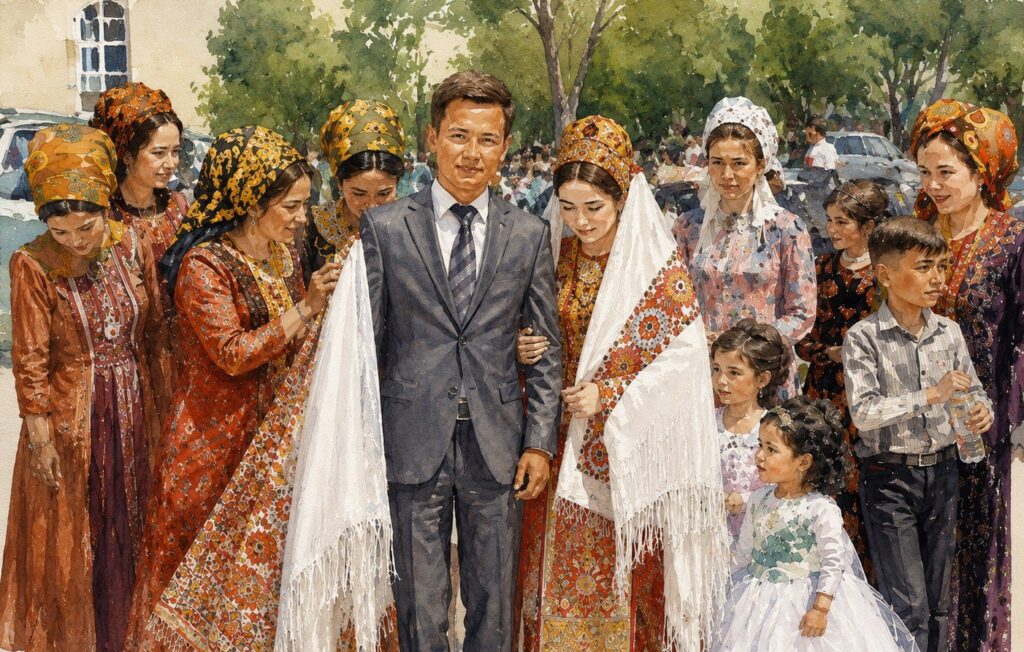
Twenty years ago, women in Kazakhstan first married at an average age of about 24. Today, the figure is about 25. Kyrgyzstan and Uzbekistan show the same gradual increase, although the pace varies from one country to another. Marriage Ages Rise Gradually in Kazakhstan According to Kazakhstan’s Bureau of National Statistics, the average age at first marriage in 2025 was 27.9 for men and 25.3 for women. In 2014, the averages were lower at 27.1 and 24.6, respectively. The gradual rise follows a global pattern. The average age of newlyweds is rising as the number of registered marriages declines. Kazakhstan registered 139,500 marriages in 2019. By 2024, the total had fallen 11.4% to 123,600. Seasonal patterns have remained steady. Most marriages in 2025 were registered during the summer, including nearly 13,000 in July. The bureau tracks both figures each year, and later reports will show whether these trends continue. Urban and Rural Marriage Ages Diverge in Kyrgyzstan In Kyrgyzstan, women first married at an average age of 23.7 in 2024, up from 22.4 in 2000. The nationwide increase was just over a year. Bishkek recorded a much larger change. The average age for first-time brides in the capital rose from 23 in 2001 to 27 two decades later. The increase was nearly four years, compared with just over one year nationwide. Regional differences remain substantial. Women in Batken Region first marry at an average age of 22.7, compared with 25.9 in Bishkek. The gap exceeds three years, showing how the national average combines sharply different local patterns. Men in Kyrgyzstan first married at an average age of 27.6 in 2024. The national average for men was almost four years higher than the figure for women. Annual statistics continue to show wide differences between regions. Marriage Age Is Rising Faster for Uzbekistani Men According to Uzbekistan’s State Committee on Statistics, men first married at an average age of 26.2 in 2024, compared with 21.8 for women. In 2000, the averages were 24.2 for men and 21.4 for women. Over those two decades, the figure for men rose by two years. The increase for women was less than half a year, a much smaller change than in neighboring countries. As a result, the gap between the average ages of men and women at first marriage widened from 2.8 years in 2000 to 4.4 years in 2024. Men are delaying marriage far more than women, and the difference has become a consistent feature of Uzbekistan’s marriage statistics. The trend is unfolding in a country with a young and growing population. As The Times of Central Asia recently reported, Uzbekistan’s 2026 census revealed a larger and younger population than previous estimates had indicated. How Central Asia Compares Internationally People in Central Asia still marry earlier than those in many European and North American countries. In the United States, the average age at first marriage is 30.8 for women and 32 for men. In Norway, it is 36.8 for women and 38.4 for men. Within...

Almaty University Criticized After Female Students Told to Bow to Men

A controversy has erupted at the Kazakh National Pedagogical University (KazNPU) in Almaty after first-year female students were instructed to bow to men during an orientation session. The incident, which triggered widespread criticism, has drawn sharp condemnation on social media and reignited debates about gender roles in Kazakhstani society. According to social media posts, female students were gathered in an auditorium where they were shown a video containing behavioral "recommendations." In the footage, men of varying ages advised young women on how to conduct themselves in public, including avoiding revealing clothing, refraining from loud speech, and bowing to men as a sign of respect. The online response was overwhelmingly critical: “I am for modesty, but bowing? I’m a guy myself, and I don’t support this.” “At this rate, it won’t just be North Korea waiting for us, but Afghanistan too. What’s next, banning women from education?” “Instead of teaching girls about their rights, financial literacy, or where to seek help, they’re being taught useless things, like how to be patient and accommodating.” “Disobedient girls are Kazakhstan’s main problem, aren’t they?” “And when will men be taught not to beat women and to respect their mothers?” The KazNPU administration released a statement in response, promising stricter oversight of educational materials used in student events: “On May 5, an educational session was held at the university to promote national values and enhance the cultural and moral awareness of students, aligned with the ethical philosophy of Abai Kunanbayev. Although similar content has not previously drawn criticism, the video shown during this session sparked a mixed reaction and significant debate. The administration acknowledges the concerns and will exercise heightened caution in selecting materials for such events going forward.” The university also stated that KazNPU is a secular institution committed to upholding students’ rights to personal choice and freedom of expression. The controversy continues to fuel discussions online, highlighting broader tensions between traditional values and contemporary views on gender and education in Kazakhstan. This is not the first time Kazakhstani universities have come under scrutiny. In February 2025, a second-year student at Nazarbayev University in Astana was detained by law enforcement after being caught secretly recording female students in a restroom. The university launched an internal investigation following a public outcry. In another incident, a guest business coach at a university in Almaty, later identified as Aika Aleami, prompted complaints after asking students to close their eyes and sing along to what appeared to be religious music. Aleami later clarified that the exercise was intended as a mindfulness technique, not a religious practice, citing its popularity in Western wellness programs.

Men in Kazakhstan Paid Almost One-Third More than Women

In Kazakhstan, men are paid 27% higher salaries than women in similar positions, as reported in a study conducted by analysts, Finprom.kz. The authors state that in a regional context, the largest gap in 2023 was observed in the Atyrau region: 85.8% (in 2022 - 77.2%), followed by Mangistau and Ulytau: 72.8% and 52.4%, respectively. The smallest gap was noted in the Zhambyl Oblast: 1,8%. "Only in two out of 20 regions of the RK women on average received more than men. Thus, in Zhetysu region men earned 6.1% less, in Turkestan region 0.8% less than women. By way of comparison: in 2022, the average monthly nominal salary of women was higher than men in five of the 18 regions of the country at that time," the analysts stated. The analysts noted that the largest gap was observed in the field of information and communication: 36.5% in favor of men, followed by the spheres of art, entertainment and recreation (36.1%), construction (28.5%), healthcare and social services (24.1%), transportation and warehousing (23.4%). "Only women working as farmers and workers in agriculture, forestry, fisheries and fishing received more than men: the gap in favor of women was 7.6%," the analysts concluded.