• KGS/USD = 0.01144 0%
  • KZT/USD = 0.00208 0%
  • TJS/USD = 0.10440 -0.19%
  • UZS/USD = 0.00008 0%
  • TMT/USD = 0.28490 0%
  • KGS/USD = 0.01144 0%
  • KZT/USD = 0.00208 0%
  • TJS/USD = 0.10440 -0.19%
  • UZS/USD = 0.00008 0%
  • TMT/USD = 0.28490 0%
  • KGS/USD = 0.01144 0%
  • KZT/USD = 0.00208 0%
  • TJS/USD = 0.10440 -0.19%
  • UZS/USD = 0.00008 0%
  • TMT/USD = 0.28490 0%
  • KGS/USD = 0.01144 0%
  • KZT/USD = 0.00208 0%
  • TJS/USD = 0.10440 -0.19%
  • UZS/USD = 0.00008 0%
  • TMT/USD = 0.28490 0%
  • KGS/USD = 0.01144 0%
  • KZT/USD = 0.00208 0%
  • TJS/USD = 0.10440 -0.19%
  • UZS/USD = 0.00008 0%
  • TMT/USD = 0.28490 0%
  • KGS/USD = 0.01144 0%
  • KZT/USD = 0.00208 0%
  • TJS/USD = 0.10440 -0.19%
  • UZS/USD = 0.00008 0%
  • TMT/USD = 0.28490 0%
  • KGS/USD = 0.01144 0%
  • KZT/USD = 0.00208 0%
  • TJS/USD = 0.10440 -0.19%
  • UZS/USD = 0.00008 0%
  • TMT/USD = 0.28490 0%
  • KGS/USD = 0.01144 0%
  • KZT/USD = 0.00208 0%
  • TJS/USD = 0.10440 -0.19%
  • UZS/USD = 0.00008 0%
  • TMT/USD = 0.28490 0%

Viewing results 1 - 6 of 141

Bakyt Baketayev: Organization of Turkic States Is About Investment, Not Politics

The 11th summit of the Organization of Turkic States (OTS), which includes Kyrgyzstan, Kazakhstan, Uzbekistan, Turkmenistan, Azerbaijan, Turkey, and Hungary (as an observer), was held in Bishkek, Kyrgyzstan's capital. Speaking with The Times of Central Asia, Kyrgyz political analyst Bakyt Baketayev noted that the OTS was initially created on a cultural and linguistic basis. However, the turbulent geopolitical situation in the world gave the organization impetus for its current development. “The catalyst for the development of the OTS was the geopolitical situation and military-political events in the world. At the beginning of the organization's work - in 2009 - the countries worked on cultural programs and common spiritual issues uniting Turkic peoples. Today, the members of the OTS already cooperate at the level of governments, ministries, and agencies and discuss economic issues,” Baketayev said. Baketayev drew attention to the composition of the Organization of Turkic States. It includes countries representing different economic and political associations: NATO (Turkey), the European Union (Hungary), and the EAEU (Kyrgyzstan and Kazakhstan). “We should not expect any big results from the OTS summit. There will be no common political statements - the countries are scattered geographically and have different interests. But from the economic point of view of trade development and investment development, concrete steps are quite possible,” Baketayev said. The analyst is confident that the Organisation of Turkic States will help overcome problems related to hydropower and the lack of water resources in Central Asia. If the heads of state have common economic interests, they will be more likely to reach an agreement.
Kazakhstan’s Strategic Stand: Navigating BRICS Amidst Geopolitical Tensions

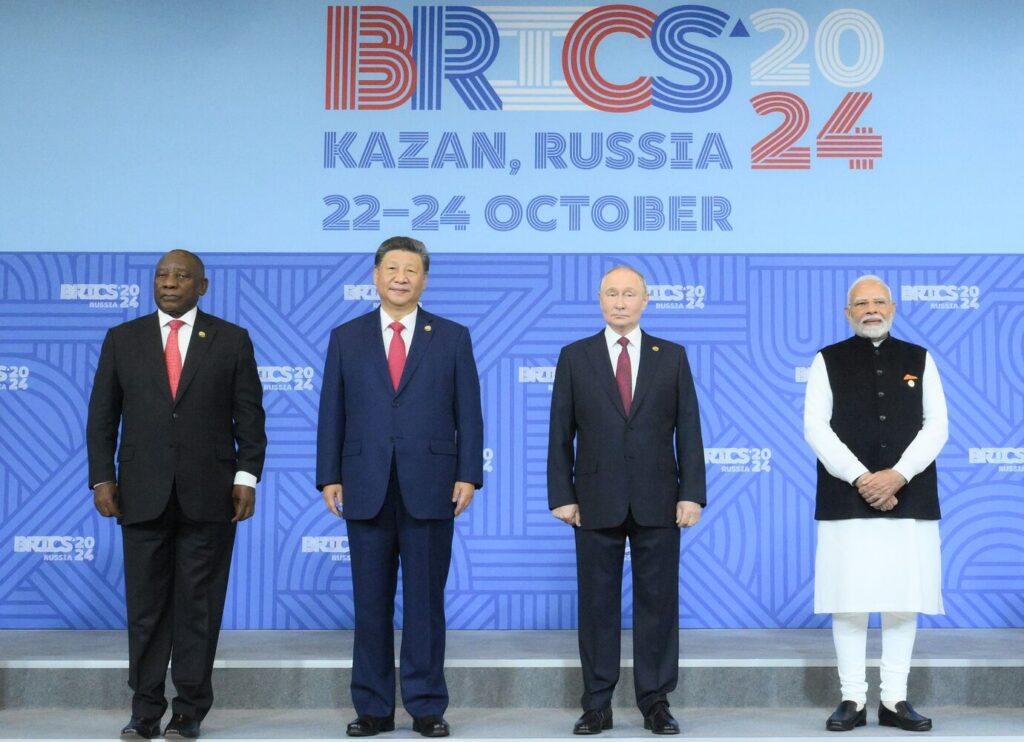
In recent days, BRICS - an intergovernmental organization comprising Brazil, Russia, India, China, South Africa, Iran, Egypt, Ethiopia, and the UAE - has become one of the most critical topics on the Eurasian region's information agenda. Russian propaganda has presented the BRICS summit, which is taking place in Kazan, as a global event. However, the press secretary of Kazakhstan's president, Kassym-Jomart Tokayev, has stated that the republic has no plans to apply for BRICS membership in the foreseeable future, which has caused an adverse reaction in the Russian media, and led to a seemingly retaliatory Russian ban on Kazakhstan's agro-products. The Kazakhstani side, represented by the expert community, has tried to explain that its reasoning is based not only on Astana's national interest, but also on its obligations to its partners in Central Asia. Perhaps the most convincing argument is that the C5+1 mechanism is effective as a format for the region's interactions with the outside world. Therefore, it is not worth breaking this mechanism. No Central Asian country besides Kazakhstan has been invited to join BRICS, but Astana cannot afford to damage the established alliance by creating the conditions for distrust from its neighbors; Central Asia has already gone through a period of distrust. At the same time, rejecting the idea of joining BRICS, where India, Russia, Brazil and China are the founding members, does not unduly affect Kazakhstan's interactions with these powers. Kazakhstan works with China and Russia within the framework of the SCO (Shanghai Cooperation Organisation) and EAEU (Eurasian Economic Union), and has signed multiple partnership and alliance agreements with Beijing and Moscow. In other words, the information hysteria that Kazakhstan will exit Russia's sphere tomorrow and join the "Global West" (a term used in the Russian media) has no basis in reality. At the same time, however, it is evident that most Central Asian countries are trying to distance themselves from Russia as much as possible, maintaining cooperation only along certain economic lines. Even banks in Kyrgyzstan, a republic maximally dependent on Moscow on several essential issues, have stopped working with Russian banks. The Kazakhstan Stock Exchange, meanwhile, recently announced the end of cooperation with the sanctioned Moscow Stock Exchange. Moreover, Rosselkhoznadzor's ban on imports of a wide range of agro-industrial products from Kazakhstan, if not a response to the refusal to join the BRICS, clearly hints that behind the scenes, economic relations between Astana and Moscow are not all that smooth. Another argument against joining BRICS was voiced not just within Kazakhstan, but also by Russian experts. Despite the organization's purportedly representative nature, which includes countries with a combined population of 3.5 billion people (45% of the Earth's population), the association has no structure. Russian analysts opposed to the Kremlin believe that BRICS is a club where one can come, sabre-rattle at the West, conclude bilateral agreements, and forget about everything until the next summit. No coordinating center monitors the implementation of any agreements reached. BRICS was conceived as an intercontinental organization, uniting similar economies in volume and GDP. Thus, it initially included Brazil, representing...

OTS Countries Take Steps Towards Turkic Integration

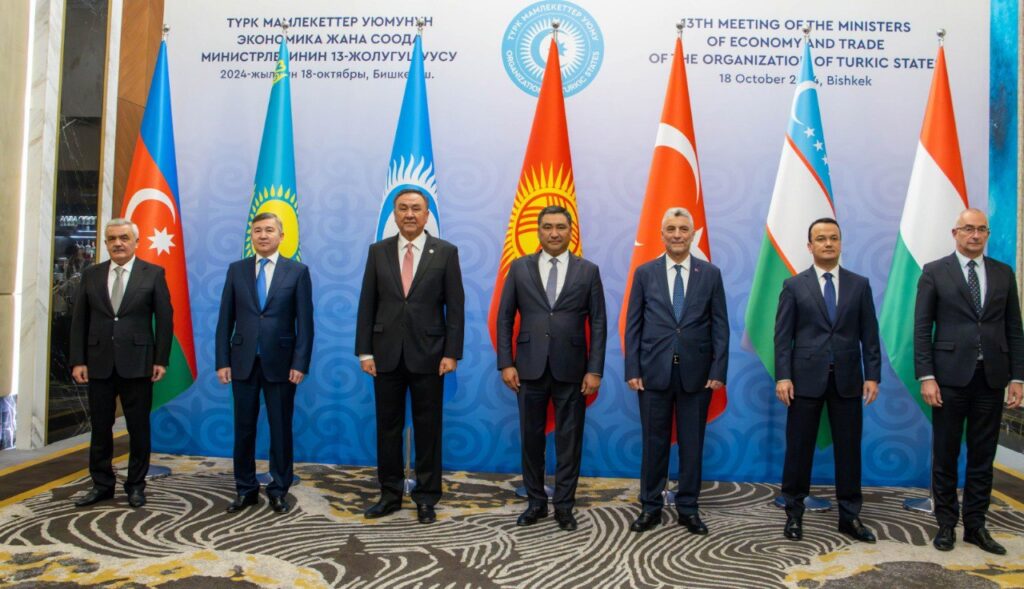
On October 18, Bishkek hosted the 13th meeting of the Organization of Turkic States (OTS), wherein Ministers of Economy and Trade aimed to strengthen economic cooperation between the OTS member states. The OTS, currently comprising Azerbaijan, Kazakhstan, Kyrgyzstan, Turkey, Uzbekistan, and Turkmenistan, with Hungary and the Turkish Republic of Northern Cyprus as observers, was founded in 2009 to foster comprehensive cooperation among Turkic-speaking nations. During the meeting, Chairman of the Cabinet of Ministers of Kyrgyzstan, Akylbek Japarov, stated that in recent years, Kyrgyzstan's trade turnover with the OTS member states has grown by almost 62%, with Kyrgyz exports increasing by 54.6%, and imports by 66%. The Deputy Prime Minister - Minister of National Economy of Kazakhstan, Nurlan Baibazarov, emphasized Kazakhstan’s adherence to the development of Turkic integration and announced that the "Turkic Investment Fund created within the OTS demonstrates a common desire to expand economic and investment cooperation, implement joint investment projects, and attract capital, technology, and talent for our countries' dynamic growth and prosperity." OTS ministers supported Kazakhstan's initiatives to create a Green Finance Council, a Council of Central (National) Banks of the OTS member states, and the inauguration of the Turan Special Economic Zone in the Kazakh city of Turkestan, where the next meeting will be held. In January-August 2024, trade between Kazakhstan and the OTS countries amounted to $7.2 billion, and according to the Turkish Ministry of Finance, by the end of 2024, the Turkic states are poised to play an important role in the world economy, reaching an economic volume of $1.9 trillion and a population of 178 million. As previously reported by The Times of Central Asia,  the Turkic Investment Fund, with an authorized capital of $1 billion, will begin financing major joint projects of the OTS member countries from January 2025.

Navigating Afghan-Pakistani Conflict: Central Asia’s Mediating Role in Regional Stability

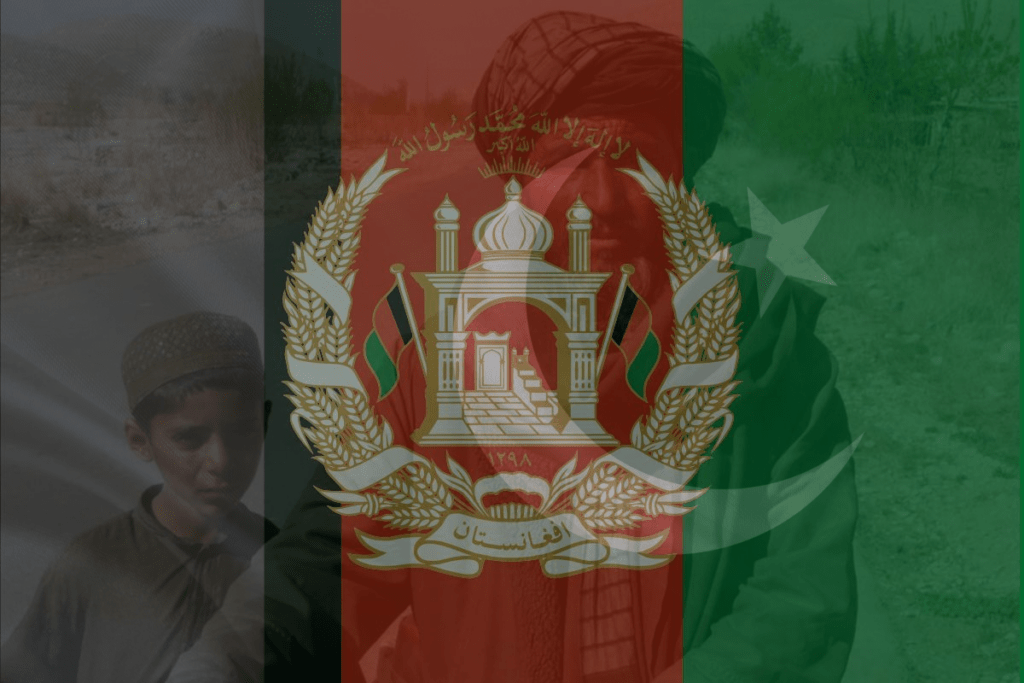
Recently, there has been a significant increase in tensions between Afghanistan and Pakistan, with both sides regularly exchanging accusations. In addition to this, border conflicts have become more frequent, with border crossings periodically closed. According to Modern Diplomacy, both countries are in a state of quite severe political conflict, and distrust and hostility from the Afghan population towards Pakistan is growing even though the "victory of the Taliban and the reincarnation of the Islamic Emirate... should have been a victory for Pakistan and strengthened its position in the region.” The confrontation between the two neighbors in South Asia is a source of concern for other countries in the region, especially for the Central Asian republics, which are increasingly acquiring the status of independent players in their dealings with Afghanistan. Due to their proximity, these republics to varying degrees link their development with a stable Afghanistan designed to become a bridge to South Asia. Negative dynamics in Afghan-Pakistani relations are a cause of much wringing of hands. Pakistan was among the first states to recognize the independence of the former Soviet Central Asian republics and has dynamic ties with them. Pakistan's trade turnover with the region is roughly $500 million annually, most of which comes from imports to Pakistan. The nations are linked by the Quadrilateral Traffic in Transit Agreement (QTTA), the Turkmenistan-Afghanistan-Pakistan-India (TAPI) gas pipeline project, the CASA-1000 energy project, and the Uzbekistan–Afghanistan–Pakistan Railway Project. The majority of these projects use Afghanistan as a bridge between Central Asia and Pakistan. In this regard, the countries of Central Asia are interested in a political situation which excludes confrontational approaches; none of them are interested in further destabilization in Afghanistan. In the Central Asian republics, there is a well-established understanding of Pakistan's exceptional and particularly important role in Afghanistan’s stability. Pakistan has a defining influence on security in Afghanistan and has historically been the most integrated in Afghan issues at the level of political and multi-ethnic conflicts. Pakistan is linked to its neighbor by historical and socio-cultural ties. In reality, however, a different story is emerging. At both a global and regional level, active measures out of Islamabad set to discredit the de facto Taliban-led government of Afghanistan have been observed. Islamabad has undertaken a robust information campaign, which has put forward an entrenched narrative about Afghanistan being one of the world’s major sources of terrorism. In this information war, Islamabad, being a fully-fledged member of the international community, has clear advantages and has used all available tools, including access to global platforms. Islamabad also has access to specialized committees and departments of the UN, which regularly prepare reports on the situation in Afghanistan. Unsurprisingly, it has used these to include ideas favorable its' position on the world stage. Acting as a source of information, Islamabad has presented its point of view, which the international community has largely accepted as objective information. However, it does not provide specific data, such as the size of terrorist groups or the location of their training camps....

Inside Kazakhstan’s Nuclear Power Play

Kazakhstan recently held a referendum in which approximately 71% of voters supported the initiative to construct the country's first nuclear power plant (NPP). This project is part of Kazakhstan's broader strategy to diversify its energy mix, reduce dependence on coal, and address chronic energy shortages that have affected the country for years. As the world's largest uranium producer, Kazakhstan has abundant natural resources that make nuclear power a viable and strategic option. The government views nuclear power as crucial for enhancing energy independence and security, while also contributing to environmental sustainability by reducing greenhouse gas emissions. The goal is for nuclear energy to contribute about 5% of the national generation mix by 2035, marking a significant shift towards cleaner energy sources.   A strategic opportunity for Kazakhstan The NPP project is expected to be undertaken by an international consortium, the members of which are yet to be selected. Kazakhstan's balanced multi-vector foreign policy encourages the involvement of various potential partners, such as Russia's Rosatom, China's National Nuclear Corporation, South Korea's Hydro & Nuclear Power, and France's EDF. Kazakhstan's strategy for involving an international consortium aims to reduce potential geopolitical risks, particularly concerning Russia's Rosatom. Rosatom is a key player in the nuclear energy sector, but Western sanctions against Russian companies raise concerns about its involvement in Kazakhstan's project. By involving multiple international partners, Kazakhstan aims to prevent overreliance on any single country, such as Russia, and maintain a diversified approach to foreign relations. This approach allows Kazakhstan to leverage advanced technologies from multiple sources, foster innovation, improve efficiency, and reduce risks associated with the NPP's construction and operation. It also ensures that the best practices from leading global enterprises can be integrated into the project, enhancing overall safety and performance. Moreover, the involvement of international partners is likely to facilitate knowledge transfer, enabling Kazakhstan to build domestic expertise in nuclear energy. The estimated cost for the NPP is between $10 and $12 billion, with the expectation that contractors will secure financing. An international consortium could attract investment from multiple sources, including their own countries, thereby reducing Kazakhstan's financial burden for the project, inculcating resilience against uncertainties such as currency fluctuations, and distributing the risks among several stakeholders. As sanctions against Rosatom and broader economic concerns make sole reliance on Russian intolerably risky, attracting investment from multiple international stakeholders will also enable Kazakhstan to spread financial risks, thus enhancing the project's viability. A key strategic opportunity for Kazakhstan is to develop self-sufficiency in uranium enrichment. As the world's largest producer of uranium, Kazakhstan has the potential to enrich its own yellowcake, i.e., impure uranium obtained by processing uranium ore. Developing this capability would reduce Kazakhstan's dependence on Russia for enriched uranium imports and significantly enhance its energy independence. Japan serves as a relevant model for this, as it enriches uranium domestically under international safeguards for civilian nuclear use. Kazakhstan could pursue a similar approach under International Atomic Energy Agency (IAEA) supervision, ensuring compliance with its non-proliferation commitments under the Nuclear Non-Proliferation...

Ambassador of Taliban-led Afghanistan Starts Work in Uzbekistan

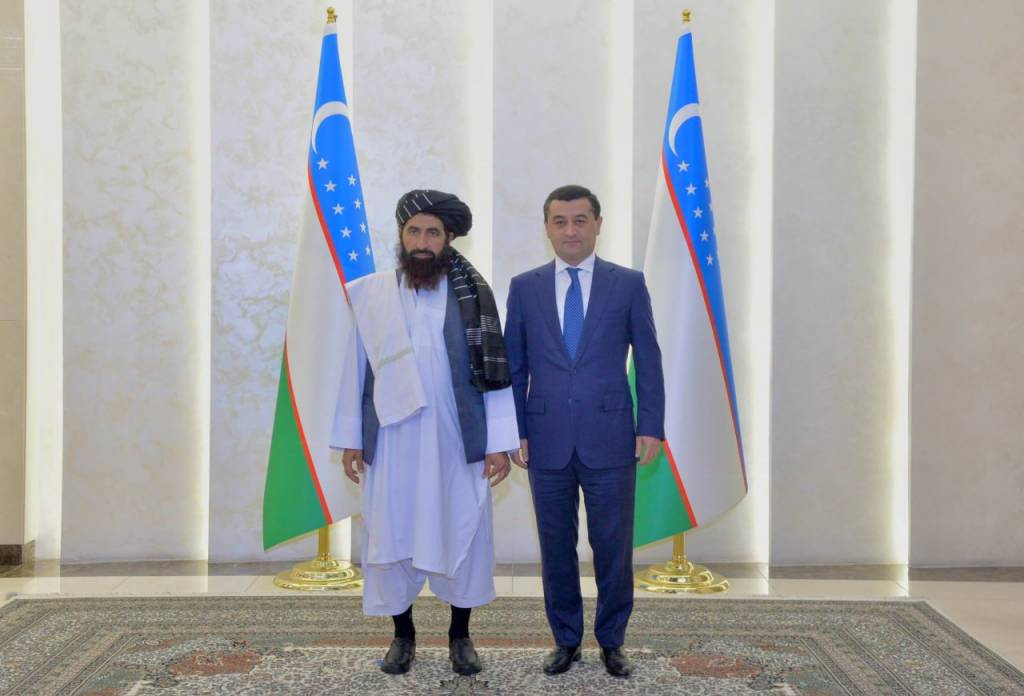
Uzbekistan’s Ministry of Foreign Affairs has reported that on October 9, Foreign Minister Bakhtiyor Saidov received Abdul Ghafar Terawi, the new head of Afghanistan’s diplomatic mission to Uzbekistan, in Tashkent. During talks, both parties emphasized the need to enhance relations between Uzbekistan and Afghanistan, realize the untapped potential of cooperation, and develop new projects to serve the interests of their people. The ambassador expressed gratitude on behalf of Afghanistan for the ongoing assistance provided by Uzbekistan. Speaking at the 79th session of the United Nations General Assembly late in September, Uzbek Foreign Minister Saidov stated that Afghanistan is an integral part of Central Asia and addressing the Afghan problem is  key to ensuring stability and sustainable development in the region. “Uzbekistan is pursuing a pragmatic policy towards Afghanistan. We will continue to contribute to Afghanistan’s economic reconstruction and the development of its transport and energy infrastructure,” announced the Uzbek foreign minister. He also commended Uzbekistan's implementation of the ambitious construction of the Trans-Afghan railway,  which by providing  access to global ports, will have a positive impact on the economic development of the vast region. The minister emphasized that the International Trade Center, recently established in the Uzbek city of Termez on the Afghan border, was designed to foster a favorable business environment and enhance logistics, and added that Uzbekistan is ready to expand the Educational Center for Afghan citizens in Termez into a global training center. Afghanistan’s TOLOnews earlier reported that China and the United Arab Emirates had also officially accepted ambassadors from the Taliban-led Afghan government. Early in September, Kyrgyzstan’s Ministry of Foreign Affairs announced a decision to remove the Taliban from the list of prohibited organizations within the territory of the Kyrgyz Republic. The Ministry emphasized that the removal of the Taliban, the unrecognized group that effectively controls Afghanistan, from the list of banned terrorist organizations aims to enhance regional stability and support ongoing dialogue. Early in June, Kazakhstan’s President Kassym-Jomart Tokayev announced that his country had removed the Taliban from its list of terrorist organizations, stressing that the move was made to develop trade and economic ties with Taliban-led Afghanistan, and in late August, Kazakhstan’s Foreign Ministry accredited a chargé d’affaires of Taliban-led Afghanistan to expand trade, economic, and humanitarian cooperation between the two countries.