• KGS/USD = 0.01143 0%
  • KZT/USD = 0.00206 0%
  • TJS/USD = 0.10811 -0.09%
  • UZS/USD = 0.00008 0%
  • TMT/USD = 0.28571 0%
  • KGS/USD = 0.01143 0%
  • KZT/USD = 0.00206 0%
  • TJS/USD = 0.10811 -0.09%
  • UZS/USD = 0.00008 0%
  • TMT/USD = 0.28571 0%
  • KGS/USD = 0.01143 0%
  • KZT/USD = 0.00206 0%
  • TJS/USD = 0.10811 -0.09%
  • UZS/USD = 0.00008 0%
  • TMT/USD = 0.28571 0%
  • KGS/USD = 0.01143 0%
  • KZT/USD = 0.00206 0%
  • TJS/USD = 0.10811 -0.09%
  • UZS/USD = 0.00008 0%
  • TMT/USD = 0.28571 0%
  • KGS/USD = 0.01143 0%
  • KZT/USD = 0.00206 0%
  • TJS/USD = 0.10811 -0.09%
  • UZS/USD = 0.00008 0%
  • TMT/USD = 0.28571 0%
  • KGS/USD = 0.01143 0%
  • KZT/USD = 0.00206 0%
  • TJS/USD = 0.10811 -0.09%
  • UZS/USD = 0.00008 0%
  • TMT/USD = 0.28571 0%
  • KGS/USD = 0.01143 0%
  • KZT/USD = 0.00206 0%
  • TJS/USD = 0.10811 -0.09%
  • UZS/USD = 0.00008 0%
  • TMT/USD = 0.28571 0%
  • KGS/USD = 0.01143 0%
  • KZT/USD = 0.00206 0%
  • TJS/USD = 0.10811 -0.09%
  • UZS/USD = 0.00008 0%
  • TMT/USD = 0.28571 0%

Viewing results 1 - 6 of 7

Kazakhstan Registers Five New Gold Deposits as Jewelers Seek Raw Materials

Citing World Gold Council data, Azamat Panbayev, chairman of the Industrial Committee at Kazakhstan’s Ministry of Industry and Construction, said Kazakhstan ranked 14th globally in gold production last year. He was speaking at the VII Forum of Gold Producers of Kazakhstan  held as part of the international Astana Mining & Metallurgy Congress 2026. “The gold mining industry remains one of the strategically important sectors of industry and makes a significant contribution to the country’s economic development,” Panbayev said. “Kazakhstan has a substantial mineral resource base: 374 gold deposits with total reserves of 2,369 tons are currently listed on the state balance sheet. Last year alone, five new deposits with reserves of around 98 tons of gold were added to the state register.” According to the Ministry of Industry and Construction, Kazakhstan produced 71.2 tons of refined gold in 2025, while investment in precious metals production reached $202.6 million, up 38% from the previous year. Gold refining in Kazakhstan is carried out by Tau-Ken Altyn LLP, the country’s only specialized state refinery and a subsidiary of National Mining Company Tau-Ken Samruk JSC. The Astana-based plant purchases doré, a semi-refined alloy containing gold and silver, from gold mining companies and sells gold refined to 99.99% purity. However, only 5% of the raw materials purchased by jewelers in Kazakhstan come from the Astana refinery, said Kanat Baitov, executive director of the Dragnet Association. He estimated that more than 50% of the industry’s raw materials market remains in the shadow economy. “We mine 70 tons of gold every year. If even 20 tons, or at least 5 tons, of that were used for jewelry production, the industry would have real potential,” Baitov said. Kazakhstan has introduced a VAT exemption for jewelers purchasing granulated gold from the state refinery, according to Baitov. “They are ready to supply not only granulated gold but, over time, if volumes increase, they are also prepared to supply alloys to the domestic market and could produce ready-made assay standards for jewelers,” he said, referring to Tau-Ken Altyn. He noted that jewelers would only be able to benefit from the new tax incentives for purchasing raw materials from the state plant if they increased procurement volumes. Currently, by his estimate, purchases do not exceed 30 kilograms per year. He added that such practices could eventually raise questions from the state regarding the origin of the raw materials used by jewelers in Kazakhstan. Zhaniya Dabyr, co-owner of the jewelry company Kazakhyuvelir, said the industry faces several challenges. These include high raw material costs, limited access to financing, the shadow market, insufficient government support, weak promotion in foreign markets, and limited tax incentives. “We propose expanding the mechanism for selling gold to domestic manufacturers and introducing a more flexible system of installment payments, fixing the gold price on the purchase date, as well as considering discounts for domestic producers and additional preferences for export-oriented companies,” Dabyr said. Kazakhyuvelir also proposed creating a digital accounting system for the jewelry market that would cover manufacturers...
Canadian Silvercorp to Develop Major Gold Deposits in Kyrgyzstan

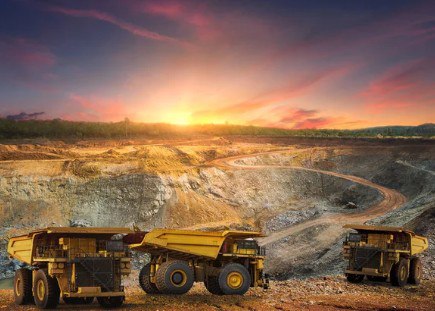
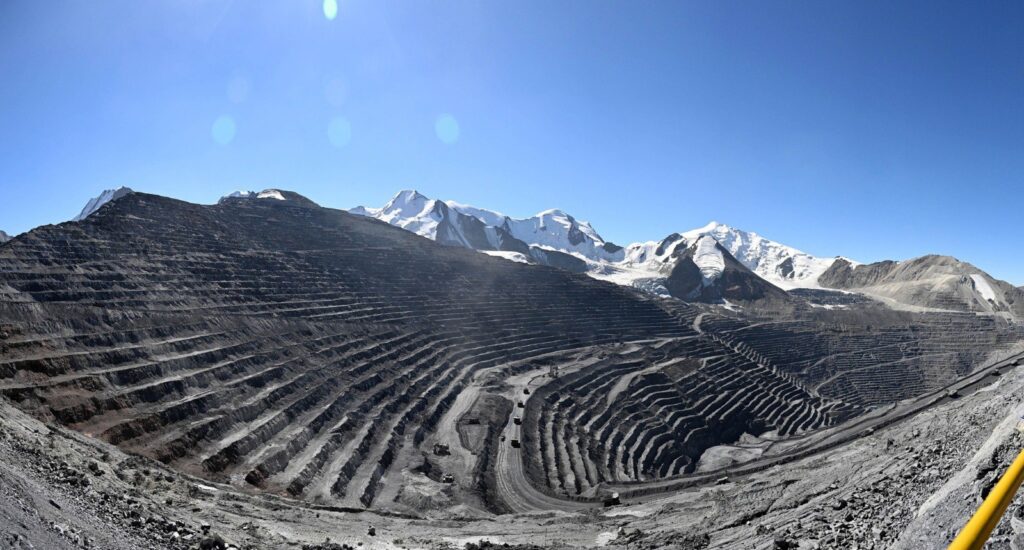
A Canadian mining company is set to develop two of the largest undeveloped gold deposits in western Kyrgyzstan’s Tien Shan gold belt. Silvercorp Metals Inc., a diversified producer of silver, gold, lead, and zinc, announced it has signed a Share Purchase Agreement with Chaarat Gold Holdings Limited, along with a Cooperation Agreement with the National Investment Agency under the President of the Kyrgyz Republic. Under the agreements, Silvercorp will acquire a 70% stake in Chaarat ZAAV CJSC for $162 million. Chaarat ZAAV holds the mining license for the fully permitted Tulkubash and Kyzyltash gold deposits, covering approximately 7 square kilometers, as well as exploration licenses spanning an additional 27.42 square kilometers, which include the Karator and Ishakuld gold zones. Silvercorp has also signed a Share Purchase and Shareholders Agreement with Kyrgyzaltyn, the state-owned gold company. Upon completion, ZAAV will become a joint venture between Silvercorp and Kyrgyzaltyn, with the Canadian firm maintaining a 70% stake and serving as the operator. As part of the deal, the Kyrgyz government will waive its pre-emptive rights and extend the mining license through June 25, 2062, enhancing long-term investment stability. Located about 490 kilometers southwest of Bishkek, the Tulkubash and Kyzyltash projects will be developed in two phases. Phase One (2026-2028) will focus on the Tulkubash deposit. Silvercorp plans to invest around $150 million to construct an open-pit mine with a processing capacity of 4 million tons of ore annually. Commercial production is expected between 2027 and 2028, with annual output estimated at 110,000 ounces of gold over an initial mine life of three to four years. If the Karator exploration license is converted to a mining license in 2026, this phase could be extended by at least two more years. Phase Two (2028-2031) will develop the Kyzyltash sulfide deposit. This stage is expected to require about $400 million in investment and will include both open-pit and underground operations with a capacity of 3-4 million tons per year. Once fully operational from 2031, Kyzyltash is projected to produce between 190,000 and 230,000 ounces of gold annually for more than 18 years. The antimony-gold mineralization at the site was first discovered by Soviet geologists in the 1970s. Since 2002, Chaarat Gold has invested approximately $174 million in exploration, technical studies, and infrastructure, including roads, camps, and support facilities. Silvercorp becomes the second Canadian mining firm to operate in Kyrgyzstan, following Centerra Gold’s development of the Kumtor mine in the Issyk-Kul region. Kumtor was nationalized in 2021, and in August 2022, Kumtor Gold Company was designated a 100% state-owned enterprise. At a ceremony marking the launch of underground mining at Kumtor in August 2025, President Sadyr Japarov stated that Kyrgyzstan had received only $100 million in dividends during 28 years of foreign management, compared to $441 million paid to the state in the three years following nationalization. The Silvercorp transaction marks one of the largest foreign mining investments in Kyrgyzstan since the Kumtor nationalization and is seen as a key test of the country’s ability to...

Kyrgyzstan Expands Mineral Reserves Amid New Exploration Drive

Kyrgyzstan now boasts over 1,000 deposits of 51 different types of minerals, including precious, base, and rare earth metals, as well as coal and hydrocarbons, according to the Ministry of Natural Resources, Ecology, and Technical Supervision. Among the most prominent is the Kumtor gold mine, situated at an altitude of 4,000 meters in the Issyk-Kul region. Kumtor ranks among the world’s ten largest gold deposits and remains a cornerstone of the national mining sector. Approximately 400 deposits across the country are currently under development or active exploration, while operations at around 600 sites have been suspended pending reserve reassessments and upgrades to mining technologies. The mining sector is considered a strategic priority for Kyrgyzstan’s economy. After years of limited geological activity, the government allocated 1 billion soms in 2024 to Kyrgyzgeology for equipment modernization and intensified exploration of polymetals and rare earth elements. Between January and September 2025, the industry recorded stable growth in both output and reserves. As of January 1, 2025, Kyrgyzstan’s confirmed reserves included 973 tons of gold, 1,100 tons of silver, and 960,400 tons of copper, along with significant quantities of other minerals. Recent exploration efforts yielded an additional 5.8 tons of gold, 3.7 tons of silver, and substantial volumes of non-ferrous metals, coal, and construction materials. In the first nine months of 2025, Kyrgyzstan produced 17 tons of gold, 198,000 tons of oil, 18.9 million cubic meters of gas, and 2.3 million tons of coal. To support industry growth, the government conducted 26 auctions for subsoil use rights, generating $1.6 million in revenue. As of September 2025, a total of 2,005 mining licenses had been issued, including 103 granted to state-owned enterprises.

Indian Gold Miners Enter Kyrgyz Market for the First Time

Indian mining firm Deccan Gold Mines has launched operations at the Altyn Tor gold deposit in Kyrgyzstan’s Naryn region, marking the first overseas venture by an Indian gold mining company, according to Indian media reports. The project is being developed through Deccan's local subsidiary, Avelum Partners LLC, which holds a 60% stake in the mine. Production of doré bars is scheduled to begin in October 2025. Geological assessments estimate the Altyn Tor deposit contains approximately 4.6 million tons of gold-bearing ore with an average grade of 1.2 grams per ton, translating to roughly 60 tons of total gold reserves. Hanuma Prasad Modali, CEO of Deccan Gold Mines, said preparations are progressing on schedule. “Eleven conveyor systems have been installed at the site, and the crushing complex has been tested. In early September, the ball mill, one of the key components of the processing plant, will go online, enabling us to reach design capacity as planned,” Modali stated. The company has positioned the project as a model of responsible mining, aiming to strengthen bilateral ties between India and Kyrgyzstan. Despite challenging climatic conditions at the site’s 3,300-meter elevation, year-round production is planned. Altyn Tor forms part of the larger Solton-Sary gold deposit, originally discovered by Soviet geologists in the 1940s. Mining activity at the site was active through the 1990s and early 2000s but later ceased due to insufficient investment. Deccan Gold Mines is also evaluating the potential for processing materials in the tailings pond, where residual gold remains. The company remains the only publicly listed gold mining firm on the Indian stock exchange. News of its overseas expansion triggered a surge in share prices. Earlier, Kyrgyzaltyn, the state-owned holding company, confirmed that production at the site was expected to commence in the second half of 2024.

Kyrgyzstan Launches Major Gold Exploration at Historic Makmal Deposit

Kyrgyzstan has initiated large-scale geological exploration at the historic Makmal gold deposit in the Jalal-Abad region, marking the first such effort in decades. The announcement was made by Kyrgyzaltyn, the state-owned enterprise responsible for gold and precious metals mining. According to the company, its subsidiary, Makmal Gold Company, has begun exploratory drilling in the southwestern section of the mine, an area previously untouched by mining operations. Soviet-era geological surveys suggest that this zone may hold up to four tons of gold reserves. "Extensive work is underway to extend the life of the Makmal mine," the Kyrgyzaltyn press service stated. "We plan to drill 19 wells at depths ranging from 140 to 400 meters. This will help us better define reserves and create additional employment opportunities." The exploration will proceed in two phases. In the first stage, geologists will drill a total of 3,275 meters. If results are favorable, a one-kilometer tunnel will be constructed to allow for precise reserve estimation, laying the groundwork for future industrial extraction. Kyrgyzaltyn also plans to evaluate other previously unexplored areas of the deposit. Historic and Economic Significance The Makmal deposit, one of Kyrgyzstan’s earliest gold mining sites, began industrial operations in 1986. Originally projected to last ten years, the discovery of new veins has kept the mine active to the present day. Currently, the mine contributes more than 95% of budget revenues for the Toguz-Toro district. Makmalzoloto, the operator, has also invested significantly in regional infrastructure, allocating 54 million Kyrgyz som (approximately $618,000) over the past three years, with an additional 50 million som ($572,000) directed toward charitable initiatives. The company employs more than 500 workers, nearly all of whom are local residents. While the annual output is modest, less than one ton, Makmal remains among the ten largest operational gold mines in the country. Kyrgyzstan has around 2,500 registered mineral deposits, of which 46 are classified as large.

Kazakhstan to Auction 50 Rare Metal Deposits in June 2025

Kazakhstan will grant exploration and development rights for 50 deposits of gold and rare metals through an electronic auction scheduled for June 2025, the Ministry of Industry and Construction has announced. Almas Kushumov, Director of the Ministry’s Department of Subsoil Use, shared the details through MINEX Kazakhstan (Mining and Exploration Forum). “We will auction off deposits with confirmed balance reserves, gold, coal, rare metals, and polymetals,” Kushumov said. “The information will be published soon on the Unified Platform of Subsoil Use, and in June we plan to hold the electronic auction. All participants will be able to submit their documents online.” The auction will be hosted on the Unified Subsoil Use Platform: minerals.e-qazyna.kz. Licenses will be awarded for both exploration and production, with production licenses valid for 25 years. Companies from the United States, European Union, and China have already submitted applications, according to the ministry. The full list of the 50 deposits will be made public in the coming days. Kazakhstan has prior experience with this auction format, between 2023 and 2024, 117 deposits were awarded through electronic auctions, generating over KZT29 billion ($55.9 million) in signing bonuses. Kazakhstan currently holds over 9,000 registered deposits, including 987 classified as solid mineral sites. Many of these were surveyed more than three decades ago, which is why the government is now prioritizing not only production rights but also geological exploration, with strong interest from both domestic and foreign investors. Kushumov noted that the introduction of the Code on Subsoil and Subsoil Use in 2018 significantly improved the investment climate, tripling the volume of private capital in the sector. As previously reported by The Times of Central Asia, the state mining company Tau-Ken Samruk is advancing work at the Kuirektykol rare earth deposit, where exploration began in 2022. Recent studies have identified new promising zones which, if confirmed, could place Kazakhstan among the global leaders in rare earth metal reserves.