• KZT/USD = 0.00213
  • TJS/USD = 0.10810
  • UZS/USD = 0.00008
  • TMT/USD = 0.29850
  • KZT/USD = 0.00213
  • TJS/USD = 0.10810
  • UZS/USD = 0.00008
  • TMT/USD = 0.29850
  • KZT/USD = 0.00213
  • TJS/USD = 0.10810
  • UZS/USD = 0.00008
  • TMT/USD = 0.29850
  • KZT/USD = 0.00213
  • TJS/USD = 0.10810
  • UZS/USD = 0.00008
  • TMT/USD = 0.29850
  • KZT/USD = 0.00213
  • TJS/USD = 0.10810
  • UZS/USD = 0.00008
  • TMT/USD = 0.29850
  • KZT/USD = 0.00213
  • TJS/USD = 0.10810
  • UZS/USD = 0.00008
  • TMT/USD = 0.29850
  • KZT/USD = 0.00213
  • TJS/USD = 0.10810
  • UZS/USD = 0.00008
  • TMT/USD = 0.29850
  • KZT/USD = 0.00213
  • TJS/USD = 0.10810
  • UZS/USD = 0.00008
  • TMT/USD = 0.29850
07 August 2026

Viewing results 1 - 6 of 13

Kazakhstan and South Korea to Establish Rare Metals Research Center in Almaty

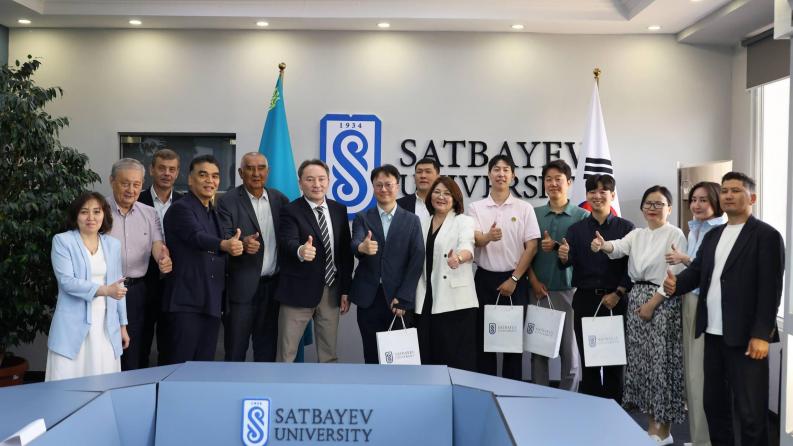
Kazakhstan and South Korea are establishing a joint research and technology center in Almaty to support the development of Kazakhstan’s rare metals and critical minerals industry. The Kazakh-Korean Center for Rare and Rare Earth Metals will be established at Satbayev University in partnership with the Korea Institute of Industrial Technology and the Korea National Institute of Rare Metals. During a meeting on July 9, representatives of the three institutions discussed how the project will be carried out. They also reviewed the purchase of modern laboratory equipment and long-term scientific and technological cooperation. The center will train specialists for Kazakhstan’s growing rare metals industry and give local researchers access to modern analytical and processing equipment. It will also support joint research with international partners. “The combined scientific potential of Kazakhstan and the Republic of Korea will enable the implementation of modern technologies for processing strategic raw materials, expand scientific research, and train world-class specialists,” Satbayev University Rector Meiram Begentayev said. According to the university, the facility will become Kazakhstan’s first full-cycle scientific and technological platform dedicated to developing, testing, and commercializing environmentally friendly technologies for the production of high-purity and ultra-high-purity rare and rare earth metals. The center will also conduct fundamental and applied research and pilot new technologies for processing mineral and industrial raw materials. The initiative is part of Kazakhstan’s effort to become a major supplier of critical minerals. Demand is rising from electric vehicle makers and renewable energy companies, while semiconductor and defense industries are also increasing their need for rare metals. Speaking at the C5+1 Critical Minerals Dialogue in Astana on June 10, Minister of Industry and Construction Yersaiyn Nagaspayev described critical minerals as a strategic priority for Kazakhstan’s industrial policy and long-term economic development. He said the country has more than 9,500 mineral deposits, including over 100 containing rare and rare earth metals. Nagaspayev has previously said Kazakhstan is capable of supplying 19 of the 50 critical raw materials identified by the United States and 21 of the 34 minerals included on the European Union’s critical raw materials list, positioning the country as an increasingly important participant in global supply chains. Kazakhstan already produces strategic materials including beryllium, titanium, tantalum, niobium, rhenium, antimony, bismuth, selenium, and tellurium, both as primary metals and as components used in advanced industrial applications.

Financial Analyst Says Kazakhstan’s State Data Centers Are Priced Beyond Reach of Businesses

The cost of services offered by state-backed data centers in Kazakhstan is too high for many businesses, making overseas cloud providers a more economical alternative, financial analyst Rasul Rysmambetov said. His comments come as Kazakhstan invests heavily in digital infrastructure and artificial intelligence technologies. Last year, the country launched what authorities described as Central Asia’s most powerful supercomputer, saying its capacity would be made available to startups, universities, and private companies developing AI solutions. The government has also announced plans to create a Data Center Valley in the northeastern Pavlodar Region to support the digitalization of the economy. However, Rysmambetov argued that the pricing of state-supported data centers limits their appeal to the private sector. “A real digital economy is built on microservices, not giant buildings filled with computers,” Rysmambetov told the Atameken Business Forum. “Data centers depreciate at a tremendous pace. Today, state data centers in Kazakhstan charge prices so high that, as a financier, it is far cheaper and easier for me to buy cloud capacity directly in California.” Rysmambetov said that despite economic growth and rising foreign investment, many Kazakhstanis have yet to see significant improvements in living standards. In his view, the key challenge is not attracting investment but converting it into jobs and productive industries. He also argued that traditional investment incentives are losing effectiveness. “Tax breaks, subsidies, and state support measures no longer create a competitive advantage. Instead, they often generate a dangerous environment for corruption,” he said. “What matters today is the quality of institutions and the speed of decision-making.” According to Rysmambetov, Kazakhstan’s investor support system remains fragmented, with multiple agencies performing overlapping functions while coordination between central and regional authorities remains weak. As a result, some government directives are not implemented locally, requiring intervention by prosecutors to protect investors’ rights. Rysmambetov identified rare earth metals and tungsten as among the sectors attracting the greatest investor interest. However, he warned that Kazakhstan risks repeating the resource-dependent model that characterized its oil industry if it focuses primarily on exporting raw materials rather than developing domestic processing industries. “Foreign investors do not create growth, they join it,” he said. “Investors see a functioning economic model, recognize an opportunity, and participate in it. But if we ourselves do not believe in our development strategy, nobody from outside will come.” Kazakhstan aims to attract $62.7 billion in investment this year, including $25.5 billion from foreign investors, as part of its economic development strategy.

Uzbekistan Joins a U.S. Critical Minerals Implementation Track

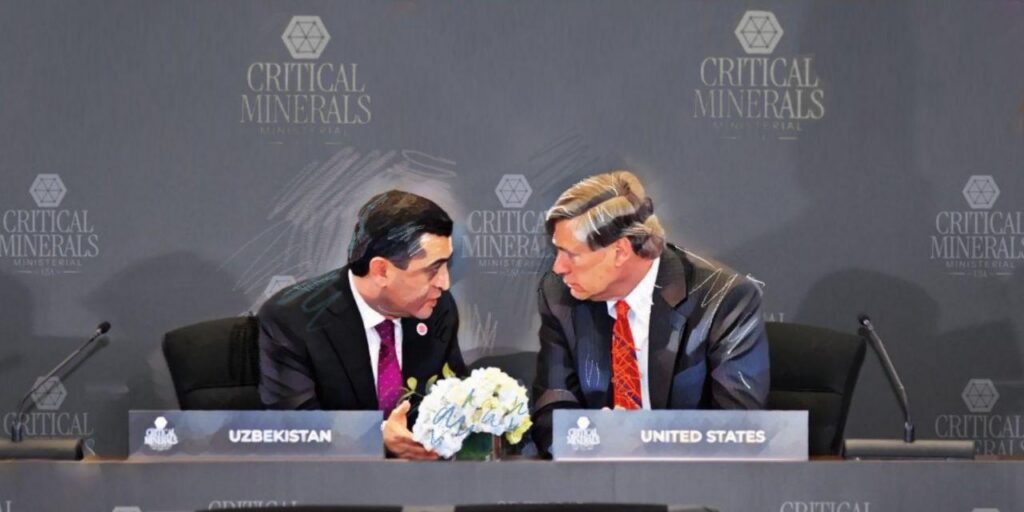
On February 4, 2026, in Washington, D.C., Uzbekistan’s Foreign Minister Bakhtiyor Saidov and U.S. Deputy Secretary of State Christopher Landau signed an intergovernmental Memorandum of Understanding (MoU) on securing supply chains for critical minerals and rare earth elements, spanning both mining and processing. A further agreement signed on February 19 brought implementation and financing to the foreground. The U.S. International Development Finance Corporation (DFC) signed “heads of terms” (i.e., commercial principles and essential terms of a proposed future agreement) for a Joint Investment Framework and outlined a proposed joint holding company. An agreement to establish an “investment platform” was exchanged in the presence of Uzbekistan’s President Shavkat Mirziyoyev. These agreements are not a single mining deal. They combine a political instrument with a financing-and-structuring track that is intended to yield a small set of projects that can be financed and built, and they treat processing capacity and supporting infrastructure not as optional add-ons but as core deliverables. They also provide a path for early projects to full review and financing while connecting them to longer-term offtake structures that match Washington’s newer supply-shock tools, including “Project Vault.” What the MoU Changes The MoU’s immediate purpose is to align government priorities for critical minerals across the value chain while setting expectations that will later shape which financing and partners are feasible. The press agency of Uzbekistan’s foreign ministry emphasized “responsible partnership” and “long-term development” as part of the public framing, placing governance and reputational risk on the same plane as the geological givens. The MoU also leaves several items deliberately unresolved in public form. These include project annexes, deposit designations, and operational timelines. That document design-choice pushes the next phase of bilateral cooperation into working-level scoping and sequencing, where only a small number of candidate projects can be advanced into full review. At the ministerial-level meeting, Washington clarified why it was framed as supply-chain security rather than commodity trade. Secretary of State Marco Rubio noted that critical minerals are inputs for infrastructure, industry, and defense, while Vice President J.D. Vance stressed the expansion of production across partner networks. As previously reported by The Times of Central Asia, this framing is part of a broader repositioning of U.S. engagement in Central Asia, where diplomatic formats are increasingly paired with mechanisms intended to generate trackable transactions and private-sector follow-through. For Uzbekistan, what is attractive about this cooperation is the potential to convert resource endowment into a lever for industrial development, rather than treating extraction as the endpoint. President Shavkat Mirziyoyev has publicly valued the country’s underground wealth at roughly $3 trillion. He has linked rising global demand for technological minerals to the case for higher value-added activity around strategic reserves, including lithium and tungsten. The same logic supports a commercially open posture. For Tashkent’s other investors, buyers, and processing partners, Uzbekistan’s diversification toward U.S.-linked capital signals non-exclusivity. Turning the MoU Into Projects The next phase is practical. A candidate project will advance only if investors and public lenders can transparently evaluate its licensing and...

Mirziyoyev: Uzbekistan’s Natural Resources Valued at Up to $79,000 Per Person

Uzbekistan’s vast underground wealth has drawn renewed attention following the release of an international ranking of countries by natural resource value per capita, as reported by Uzbek publication Zamin. According to the ranking, Saudi Arabia tops the list, with natural resources valued at approximately $1 million per person, driven largely by its extensive oil reserves. Canada and Australia follow, each exceeding $700,000 per capita, supported by a combination of oil, forests, minerals, iron ore, coal, and natural gas. Russia ranks fourth, with more than $520,000 in resources per person. Although accurately assessing Uzbekistan’s total natural resource value remains difficult due to fluctuating global commodity prices and ongoing geological exploration, the country's long-term potential is considered substantial. In July 2018, Azam Qadirhodjayev, then Deputy Chairman of Uzbekistan’s State Committee for Geology and Mineral Resources, estimated the total potential value of the country’s mineral resources at approximately $5.7 trillion. Of this, over $1 trillion stemmed from explored and currently developed deposits. At the time, only about 20% of Uzbekistan’s territory had been fully studied, leaving considerable room for new discoveries. Additional details were provided in December 2023, when Ilyos Jumayev, a representative of the Ministry of Mining Industry and Geology, announced at a press conference that Uzbekistan officially possesses 101 gold deposits and three silver deposits. According to the ministry, the country holds nearly all mineral types found globally, including gold, silver, copper, uranium, oil, natural gas, lithium, molybdenum, tungsten, manganese, nickel, cobalt, tantalum, and niobium. Major gold reserves serve as the raw material base for the Navoi and Almalyk mining and metallurgical complexes, while copper deposits are primarily located in the Tashkent region. The value of Uzbekistan’s natural resources was also a key topic at the Tashkent International Investment Forum in June 2025. President Shavkat Mirziyoyev stated that the country’s underground wealth is valued at approximately $3 trillion. He emphasized that the global demand for technological minerals is rising amid the fourth industrial revolution and identified strategic reserves of lithium, tungsten, magnesium, graphite, titanium, and vanadium as vital for developing high value-added industries. Based on the president’s $3 trillion estimate and Uzbekistan’s current population of roughly 38.24 million, the per capita value of natural resources stands at approximately $78,000 to $79,000. While lower than the per capita resource wealth in countries like Saudi Arabia or Canada, officials argue that incomplete geological surveying leaves room for this figure to grow. Uzbekistan’s resource base includes not only precious and rare earth metals but also energy resources such as oil and natural gas, underscoring the country’s strategic position in the global minerals landscape.

Kazakhstan Enters the Global Rare Earth Metals Arena

Kazakhstan ranks among the global leaders in proven rare earth metals (REM) reserves. Until recently, this fact was often accompanied by the familiar phrase “underutilized potential.” Today, the country is rapidly shifting from being a raw material supplier to a strategic actor capable of influencing critical material supply chains. Amid intensifying global competition for resources, Kazakhstan is steadily establishing itself in the rare earth market. Central to this transformation is the state-owned mining company Tau-Ken Samruk, which is expanding aggressively both domestically and internationally. Rare Earth Potential Kazakhstan recently announced the discovery of a deposit containing strategically significant minerals, including cerium, lanthanum, neodymium, and yttrium, with total reserves estimated at multi-million tons. These materials are vital for modern industrial production and technological development. To date, over 100 deposits of rare and rare-earth elements have been identified in Kazakhstan, including Kurumsak, Bala-Sauskandyk, Akbulak, Kundybay, and Verkhnee-Espe. The country currently produces 19 of the 34 known rare earth elements. Kazakhstan possesses a unique combination of advantages: vast reserves, strategic geographic location, political stability, and a pivot toward processing and manufacturing high-value-added products. Where once the country focused primarily on extraction and minimal processing, the current strategy is fundamentally different. Kazakhstan is now aiming to build a full-scale industrial chain, positioning itself as an alternative hub in a market long dominated by China. This is particularly notable as diversification efforts by the U.S., European Union, Japan, and South Korea have progressed slowly. In short, Kazakhstan is quickly gaining strategic "rare earth" agency. A recent example is the case of the Severny Katpar and Verkhniy Kairakty tungsten deposits. In 2018, China’s Xiamen Tungsten expressed interest, but withdrew without signing legally binding agreements. In 2025, Tau-Ken Samruk signed an agreement with U.S.-based Cove Capital to develop the same assets. This development underscores a larger trend: Kazakhstan is no longer viewed as a peripheral resource supplier, but rather as a contested zone in the U.S.-China competition for critical materials. Global Expansion According to Nurlan Zhakupov, chairman of the board of the Samruk-Kazyna sovereign wealth fund, Kazakhstan intends to deepen its involvement in the global REM market by processing not only domestic materials but also raw inputs from third countries. Tau-Ken Samruk has launched geological exploration projects for rare earths in Rwanda and Afghanistan. “Tau-Ken Samruk is actively engaging with foreign partners,” Zhakupov noted. “We’ve signed an agreement with a Rwandan government agency and identified five target areas. Entry requires establishing a joint venture with a Rwandan state-owned company.” Africa is emerging as a significant REM source, with countries like Burundi already engaging in commercial mining. British firm Rainbow Rare Earths began operations at the Gakara mine in 2017. Kazakhstan’s exploration efforts in Rwanda aim to secure raw inputs for domestic processing. Collaboration with Rwanda’s Mines, Petroleum and Gas Board includes evaluating beryllium sales for Kazatomprom. During his official visit to Kazakhstan, Rwandan President Paul Kagame expressed interest in Kazakhstani technologies, particularly in energy, mining, and mineral processing. However, operations in Africa come with risks. Rwanda and...

Kazakhstan to Launch Internationally Accredited Rare Earth Laboratory

Kazakhstan is set to host an internationally accredited laboratory for rare earth metals, a move expected to bolster the country’s role in global supply chains for critical raw materials. Minister of Industry and Construction Yersayin Nagaspayev announced that agreements have been reached with two leading global laboratory brands, RCI Inspection and PARAGON, to open a geo-analytical facility in Astana under their certification. The site will include core storage and archival repositories. Preparatory work on design and feasibility studies is already underway. The initiative follows President Kassym-Jomart Tokayev’s September 8 address to Parliament, in which he emphasized the strategic importance of rare earth elements (REEs) for Kazakhstan’s long-term economic development. The laboratory will be established under the National Geological Service and is scheduled to open by mid-2026. Tokayev also directed the government to launch at least three high-tech production facilities using rare earth metals within the next three years, citing their growing importance in global trade and technology. “Given global trends, rare earth metals and other critical materials are acquiring particular significance. Kazakhstan has all the capabilities to firmly integrate into global production and trade chains,” Tokayev said. Rare earth metals, a group of 17 elements including scandium, yttrium, and the lanthanides, are essential for manufacturing electronics, batteries, renewable energy equipment, and defense technologies. Despite holding substantial reserves, Kazakhstan has traditionally exported REEs in raw form, a practice that has sparked concern among lawmakers. Nagaspayev outlined four strategic priorities for domestic processing: Battery materials production Recycling, including permanent magnets Heat-resistant alloys for turbine engines Semiconductor materials manufacturing Kazakhstan is building partnerships with the EU, U.S., Japan, South Korea, and China to advance these sectors. Planned projects include: A 15-ton-per-year gallium plant Production of high-purity manganese sulfate and graphite for battery use Nickel-based superalloys for advanced manufacturing Pilot recycling of permanent magnets is scheduled to begin next year at the Zhezkazganredmet and Ulbinsky Metallurgical Plant, in cooperation with European partners. As The Times of Central Asia recently reported, new geological surveys have revealed that Kazakhstan’s rare earth reserves exceed previous estimates, further strengthening its position as a potential global supplier.