• KGS/USD = 0.01143 0%
  • KZT/USD = 0.00212 0%
  • TJS/USD = 0.10823 0.19%
  • UZS/USD = 0.00008 0%
  • TMT/USD = 0.28571 0%
  • KGS/USD = 0.01143 0%
  • KZT/USD = 0.00212 0%
  • TJS/USD = 0.10823 0.19%
  • UZS/USD = 0.00008 0%
  • TMT/USD = 0.28571 0%
  • KGS/USD = 0.01143 0%
  • KZT/USD = 0.00212 0%
  • TJS/USD = 0.10823 0.19%
  • UZS/USD = 0.00008 0%
  • TMT/USD = 0.28571 0%
  • KGS/USD = 0.01143 0%
  • KZT/USD = 0.00212 0%
  • TJS/USD = 0.10823 0.19%
  • UZS/USD = 0.00008 0%
  • TMT/USD = 0.28571 0%
  • KGS/USD = 0.01143 0%
  • KZT/USD = 0.00212 0%
  • TJS/USD = 0.10823 0.19%
  • UZS/USD = 0.00008 0%
  • TMT/USD = 0.28571 0%
  • KGS/USD = 0.01143 0%
  • KZT/USD = 0.00212 0%
  • TJS/USD = 0.10823 0.19%
  • UZS/USD = 0.00008 0%
  • TMT/USD = 0.28571 0%
  • KGS/USD = 0.01143 0%
  • KZT/USD = 0.00212 0%
  • TJS/USD = 0.10823 0.19%
  • UZS/USD = 0.00008 0%
  • TMT/USD = 0.28571 0%
  • KGS/USD = 0.01143 0%
  • KZT/USD = 0.00212 0%
  • TJS/USD = 0.10823 0.19%
  • UZS/USD = 0.00008 0%
  • TMT/USD = 0.28571 0%

Viewing results 1 - 6 of 24

Gold and Gunfire: Tajik-Taliban Tensions Flare on the Border

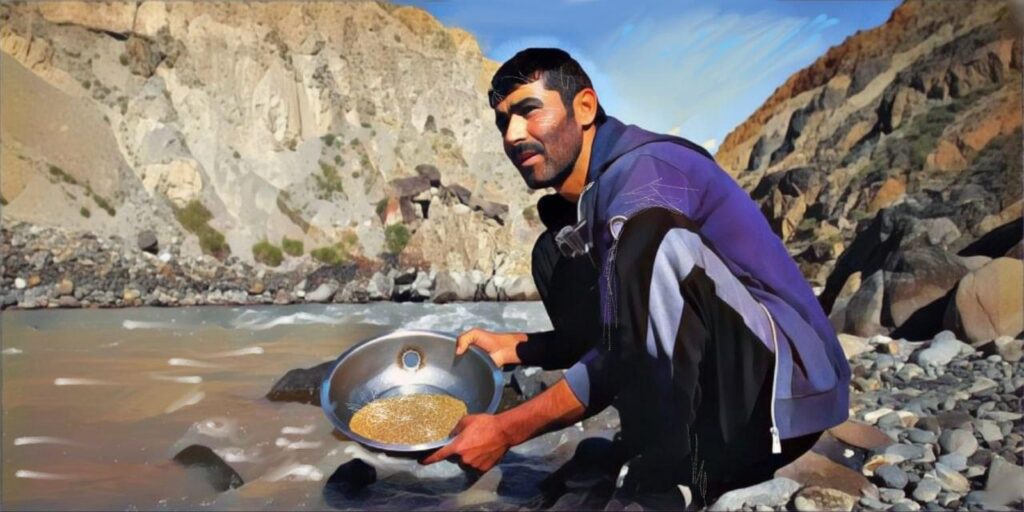
Tajik border guards and Taliban fighters have exchanged fire in an area along the Tajik-Afghan border. The incident happened on August 24 and is connected to a Chinese gold mining operation on the Afghan side of the border. The hostilities ended after a rare meeting between local Tajik and Taliban officials, though each side accused the other of harboring enemies. Gold Mining The Tajik authorities have been watching Afghanistan’s Dovang district in Afghanistan’s Badakhshan Province since the start of a gold mining operation there three years ago. Residents of Tajikistan’s Shamsiddin Shohin district, across the Pyanj River from Dovang, reported rising water levels in their area. Sodikjon Rahmonzoda, the head of the district branch of Tajikistan’s Ministry for Emergency Situations, stated that “On the opposite bank of the river, in Afghanistan, industrial gold mining started…. They built infrastructure (including) dams that direct water to our bank.” The Tajik authorities have been reinforcing the bank on the Tajik side of the river to prevent nearby villages from flooding. It is unclear if the two sides were previously in contact about the problems the diversion of water in the river was causing in Tajikistan. The other four Central Asian governments have all established a dialogue with the Taliban since they returned to power in August 2021. Kazakh, Kyrgyz, Turkmen, and Uzbek officials have visited Afghanistan, and Taliban representatives have visited Kazakhstan, Turkmenistan, and Uzbekistan (but so far, not Kyrgyzstan). The Tajik government has kept its contact with the Afghan militant group to a minimum, though several border crossing points are working again, and some bazaars on the Tajik side of the frontier have reopened to Afghan customers. Rising Tensions In May, Tajik authorities detained a group of Chinese and Afghans who drove across the river on excavators from the mining site in Dovang into Tajikistan. According to the Tajik authorities, the Chinese and Afghans were seeking to launder money in Tajikistan. On August 24, a group of Taliban arrived at the border area in Dovang. It is not clear what sparked the shooting, but Tajik border guards and Taliban fighters exchanged fire using heavy weapons. One Taliban fighter was reportedly killed, and four others were wounded. There were no reports of casualties among the Tajik border guards. Neither the Tajik government nor Taliban officials have commented on the clash. A Rare Meeting Following the shooting, the commander of the Tajik border guard unit in the Shamsiddin Shohin district led a group of soldiers across the border to Dovang to meet with the head of mining operations and other officials in Badakhshan Province. The two sides discussed the gold mining operation on the Afghan side of the border, but the conversation degenerated into accusations, with each side complaining that the other was sheltering and training their enemies. Both sides are correct. The Tajik government allows members of the National Resistance Front (NRF), including its leader Ahmad Masoud, to travel to and often stay in Tajikistan. The NRF is a group of mainly ethnic...

Underground Gold Mining Officially Launched at Kumtor

Kyrgyz President Sadyr Japarov has inaugurated underground mining operations at the high-altitude Kumtor gold mine during a working visit to the Issyk-Kul region. According to Japarov, underground development at Kumtor should have started two decades ago. However, the mine’s former operator, Canadian company Centerra Gold, opted instead for open-pit mining, which was less costly but had serious environmental consequences. He said the dumping of waste rock onto the Davydov and Lysyi glaciers resulted in their degradation. “The launch of underground gold mining at Kumtor is a crucial step toward environmental protection and glacier preservation,” Japarov stated. He reported that approximately 1,600 meters of tunnels have already been excavated, and ore with a gold content exceeding five grams per ton is ready for extraction. The underground operation is projected to continue for 17 years, with proven reserves estimated at 147 tons of gold. While Centerra Gold had previously explored underground mining, low global gold prices over a decade ago rendered the project financially unviable. The open-pit method yielded between five and seven grams of gold per ton of ore, then considered the threshold for profitability. As gold content declined over time, the possibility of mine closure loomed. That outlook changed with rising gold prices. Following the nationalization of Kumtor in 2021, the mine’s profitability increased substantially. According to Japarov, since May 2021 the mine has produced 54 tons of gold, generating $3.5 billion in revenue. Of that, $891 million was paid into the state budget through taxes and other contributions. By contrast, the president noted, Kyrgyzstan received just $100 million during the 28 years the mine was under foreign ownership. Speaking to The Times of Central Asia, veteran Kyrgyz geologist Rozalia Djenchuraeva suggested Kumtor’s reserves may be even larger. “Even on Soviet maps, one can see that there is a lot of gold in this area. Gold-bearing veins run under the glaciers from the Kyrgyz-Chinese border through Kumtor and extend westward for many kilometers,” she said. Djenchuraeva added that with modern technologies, especially underground extraction, it is possible to mine gold efficiently while adhering to environmental standards.

Kyrgyzstan Launches Major Gold Exploration at Historic Makmal Deposit

Kyrgyzstan has initiated large-scale geological exploration at the historic Makmal gold deposit in the Jalal-Abad region, marking the first such effort in decades. The announcement was made by Kyrgyzaltyn, the state-owned enterprise responsible for gold and precious metals mining. According to the company, its subsidiary, Makmal Gold Company, has begun exploratory drilling in the southwestern section of the mine, an area previously untouched by mining operations. Soviet-era geological surveys suggest that this zone may hold up to four tons of gold reserves. "Extensive work is underway to extend the life of the Makmal mine," the Kyrgyzaltyn press service stated. "We plan to drill 19 wells at depths ranging from 140 to 400 meters. This will help us better define reserves and create additional employment opportunities." The exploration will proceed in two phases. In the first stage, geologists will drill a total of 3,275 meters. If results are favorable, a one-kilometer tunnel will be constructed to allow for precise reserve estimation, laying the groundwork for future industrial extraction. Kyrgyzaltyn also plans to evaluate other previously unexplored areas of the deposit. Historic and Economic Significance The Makmal deposit, one of Kyrgyzstan’s earliest gold mining sites, began industrial operations in 1986. Originally projected to last ten years, the discovery of new veins has kept the mine active to the present day. Currently, the mine contributes more than 95% of budget revenues for the Toguz-Toro district. Makmalzoloto, the operator, has also invested significantly in regional infrastructure, allocating 54 million Kyrgyz som (approximately $618,000) over the past three years, with an additional 50 million som ($572,000) directed toward charitable initiatives. The company employs more than 500 workers, nearly all of whom are local residents. While the annual output is modest, less than one ton, Makmal remains among the ten largest operational gold mines in the country. Kyrgyzstan has around 2,500 registered mineral deposits, of which 46 are classified as large.

Kumtor Launches Tire Retreading Program to Cut Costs and Waste

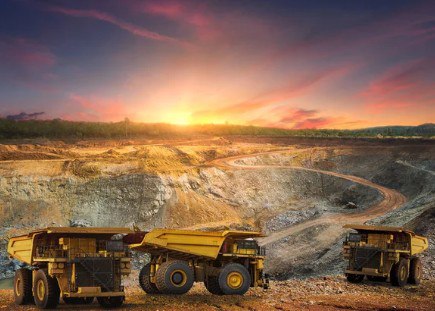
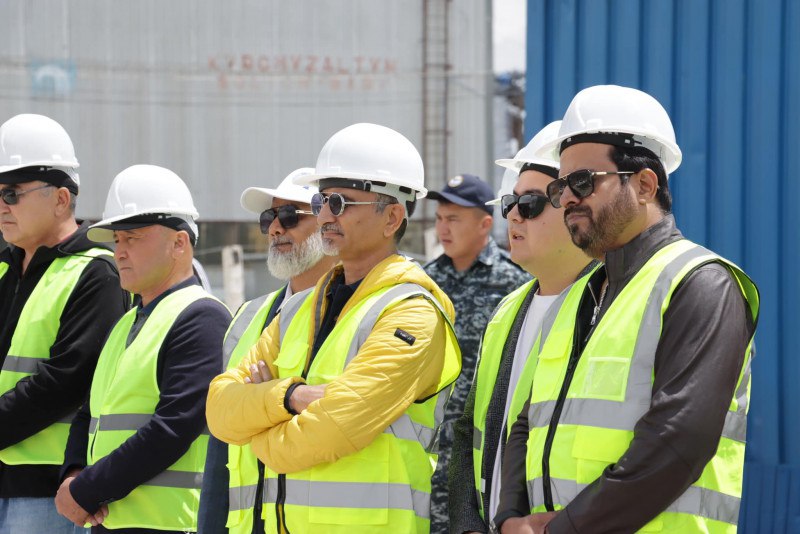
Kumtor, Kyrgyzstan’s largest gold mining operation, has initiated a tire retreading program for its fleet of large Caterpillar mining dump trucks. The announcement was made by Kubat Abdraimov, chairman of the board of the state-owned Kyrgyzaltyn company, which oversees the Kumtor enterprise. The retreading work is being carried out at a facility in Tokmok. The first set of refurbished tires has already been installed on dump trucks and is undergoing operational testing at the mine. If successful, the program will expand, with the Tokmok plant expected to retread between 200 and 300 tires annually. “This will save more than $1.5 million per year. At the same time, we are solving an important environmental problem by reducing waste and reusing resources,” Abdraimov said during a site inspection of Kumtor’s production facilities. New tires for Caterpillar dump trucks can cost up to $30,000 each. In the high-altitude conditions of the Kumtor mine, located at 3,500 to 4,500 meters above sea level, tire wear is especially rapid, making operations significantly more expensive. According to the company’s press service, the refurbished tires were delivered to the mine at the end of May. One vehicle fitted with the retreaded tires has already logged over 1,000 kilometers and more than 100 hours of work under full load. The condition of the tires is being monitored continuously. In the early years of Kumtor’s development during the 1990s, the initial tire supply came from the Belarusian manufacturer BelAZ. However, the products proved unsuitable for the mine’s extreme conditions, leading to a switch to Canadian suppliers along with other imported components. Abdraimov also highlighted the critical contribution of technical personnel to the reliability of mining operations. “The mine uses modern mining and auxiliary equipment. Work is carried out around the clock in challenging weather and at high altitudes. The reliability and qualifications of the repair crews are key to sustainable operation,” he said. Industry experts suggest the tire retreading initiative could be a foundational step in creating a domestic industrial cluster focused on the repair and maintenance of mining equipment in Kyrgyzstan.

Kumtor: Drop In Gold Production No Cause For Concern

Kyrgyzstan's largest gold mining company, Kumtor, has announced a decrease in gold production. However, authorities assure that this is temporary. In 2023, Kumtor Gold Company produced 13.5 tons of gold, less than planned; the professional community even began to talk about the mine's imminent depletion. However, the company itself hastened to reassure citizens. The company's representatives commented: “Reduced gold production targets are common due to the low grade of gold in commercial ore mined at Kumtor. The mining of low-grade ore will continue for some time. In the future, gold production is expected to increase to 17-18 tons gradually. This takes into account the implementation of projects for underground mining of gold-containing ore and processing waste ore from the tailings pond.” It is worth noting that all of Kyrgyzstan is watching the volume of gold production, as Kumtor's share of the country's GDP is almost 10%. In 2023, the company paid more than $200 million to the country's budget. After nationalization in 2021, foreign experts predicted a rapid closure of production. Allegedly, the gold extracted by open-pit mining at the mine is running out. “Right now, the ore is poor," responded Cabinet Chief Akylbek Japarov to the criticism. "We plan to mine 14 tons each. Previously, we were getting 17 tons. This happens in geology.” However, the low figures have forced the country's authorities to reconsider their approach to mining. Gold will now be mined underground. In addition, it was announced that the processing of gold in Kumtor's tailings pond will begin soon. Specialists of the Institute of Geology at the National Academy of Sciences confirmed to The Times of Central Asia information about the reduction of precious metals in the area of the open pit at Kumtor. Earlier, there were 7 grams of gold per ton of ore; today, it is 5 grams. “But the gold is not running out. There is still quite a lot of gold at Kumtor - over a thousand tons. But everything depends on the areas that are going to be developed. Part of the gold-bearing strip is under glaciers,” said geologist Rozalia Jenchuraeva. The Institute of Geology recommends that the government quietly conduct exploration and not rush to mine gold hidden under glaciers, as this could damage the ecology. “There is still enough gold at Kumtor, and you don't have to worry about it. Although gold mined underground will be more expensive, this method will have less impact on the melting of glaciers. The depth of gold content will probably change, but we will have enough for a hundred years; we need to be rational in our approach to mining,” Jenchuraeva emphasized. Previously, the Kumtor mine produced 20-22 tons of gold annually.

Kumtor Gold Boosts Kyrgyzstan Economy

On May 7, Chairman of the Cabinet of Ministers of the Kyrgyz Republic Akylbek Japarov inspected the Kumtor gold mine in the permafrost zone of the Issyk-Kul region. Sitting 4,000 meters above sea level, the mine serves one of the world’s ten largest gold deposits and prior to being nationalized in 2021, was owned by Canadian company, Centerra Gold. The mine now has over 3,000 employees, 99.9% of whom are local specialists, and more than 800 specialist vehicles, machinery and equipment to ensure uninterrupted production. With reference to the significant developments to the site since nationalisation,  the Prime Minister emphasized the importance of the state’s role in maintaining its efficient operation. Last year, the mine generated 17.2 billion soms (over $194 million) in taxes and social payments - equivalent to roughly one-third of Kyrgyzstan’s state budget. Japarov also inspected Kumtor’s underground gold mining project, which launched in February, will enable the further extraction of about 115 tons of gold. At Kumtor’s open-pit mine, it currently takes one ton of processed ore and over 40 tons of extracted waste rock to produce 5-7 grams of gold. Underground mining has the potential to double that yield with less damage to the environment than its open-pit equivalent. Further to the prime minister’s visit, it was reported that from 2026, mining will begin on ore waste stored at the Kumtor mine tailings and according to estimates, will produce an additional 120 tons of gold. In 2023, the Kumtor mine produced 13,567 tons of gold, with a total revenue of $848 million, and net profit of $302.5 million.