• KZT/USD = 0.00210
  • TJS/USD = 0.10810
  • UZS/USD = 0.00008
  • TMT/USD = 0.29850
  • KZT/USD = 0.00210
  • TJS/USD = 0.10810
  • UZS/USD = 0.00008
  • TMT/USD = 0.29850
  • KZT/USD = 0.00210
  • TJS/USD = 0.10810
  • UZS/USD = 0.00008
  • TMT/USD = 0.29850
  • KZT/USD = 0.00210
  • TJS/USD = 0.10810
  • UZS/USD = 0.00008
  • TMT/USD = 0.29850
  • KZT/USD = 0.00210
  • TJS/USD = 0.10810
  • UZS/USD = 0.00008
  • TMT/USD = 0.29850
  • KZT/USD = 0.00210
  • TJS/USD = 0.10810
  • UZS/USD = 0.00008
  • TMT/USD = 0.29850
  • KZT/USD = 0.00210
  • TJS/USD = 0.10810
  • UZS/USD = 0.00008
  • TMT/USD = 0.29850
  • KZT/USD = 0.00210
  • TJS/USD = 0.10810
  • UZS/USD = 0.00008
  • TMT/USD = 0.29850

Viewing results 1 - 6 of 15

Kumtor Launches Tire Retreading Program to Cut Costs and Waste

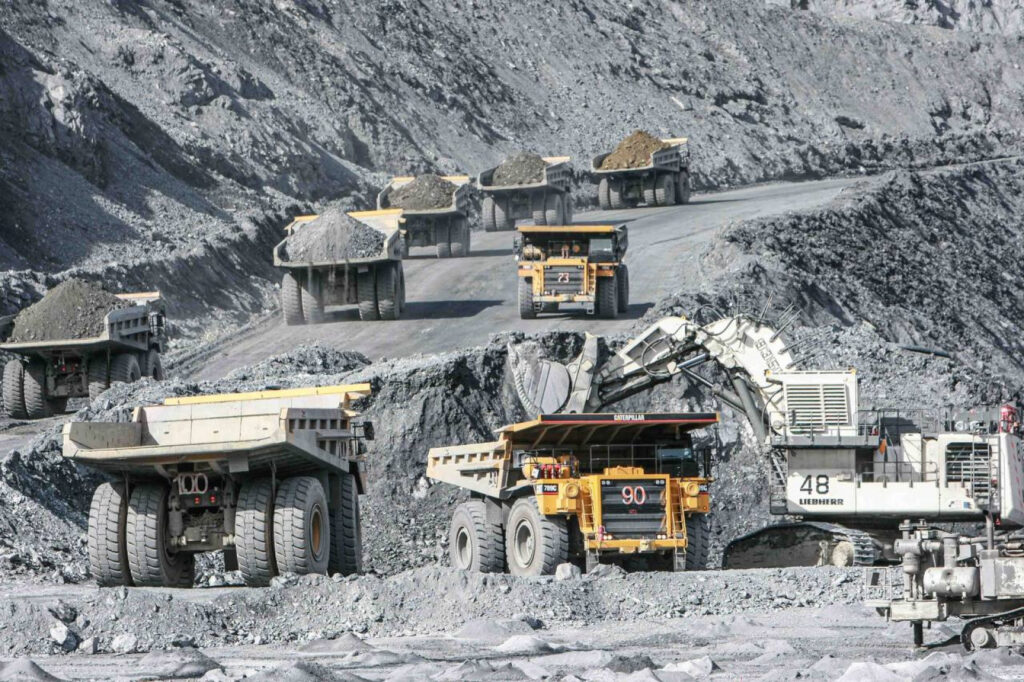
Kumtor, Kyrgyzstan’s largest gold mining operation, has initiated a tire retreading program for its fleet of large Caterpillar mining dump trucks. The announcement was made by Kubat Abdraimov, chairman of the board of the state-owned Kyrgyzaltyn company, which oversees the Kumtor enterprise. The retreading work is being carried out at a facility in Tokmok. The first set of refurbished tires has already been installed on dump trucks and is undergoing operational testing at the mine. If successful, the program will expand, with the Tokmok plant expected to retread between 200 and 300 tires annually. “This will save more than $1.5 million per year. At the same time, we are solving an important environmental problem by reducing waste and reusing resources,” Abdraimov said during a site inspection of Kumtor’s production facilities. New tires for Caterpillar dump trucks can cost up to $30,000 each. In the high-altitude conditions of the Kumtor mine, located at 3,500 to 4,500 meters above sea level, tire wear is especially rapid, making operations significantly more expensive. According to the company’s press service, the refurbished tires were delivered to the mine at the end of May. One vehicle fitted with the retreaded tires has already logged over 1,000 kilometers and more than 100 hours of work under full load. The condition of the tires is being monitored continuously. In the early years of Kumtor’s development during the 1990s, the initial tire supply came from the Belarusian manufacturer BelAZ. However, the products proved unsuitable for the mine’s extreme conditions, leading to a switch to Canadian suppliers along with other imported components. Abdraimov also highlighted the critical contribution of technical personnel to the reliability of mining operations. “The mine uses modern mining and auxiliary equipment. Work is carried out around the clock in challenging weather and at high altitudes. The reliability and qualifications of the repair crews are key to sustainable operation,” he said. Industry experts suggest the tire retreading initiative could be a foundational step in creating a domestic industrial cluster focused on the repair and maintenance of mining equipment in Kyrgyzstan.

Kumtor: Drop In Gold Production No Cause For Concern

Kyrgyzstan's largest gold mining company, Kumtor, has announced a decrease in gold production. However, authorities assure that this is temporary. In 2023, Kumtor Gold Company produced 13.5 tons of gold, less than planned; the professional community even began to talk about the mine's imminent depletion. However, the company itself hastened to reassure citizens. The company's representatives commented: “Reduced gold production targets are common due to the low grade of gold in commercial ore mined at Kumtor. The mining of low-grade ore will continue for some time. In the future, gold production is expected to increase to 17-18 tons gradually. This takes into account the implementation of projects for underground mining of gold-containing ore and processing waste ore from the tailings pond.” It is worth noting that all of Kyrgyzstan is watching the volume of gold production, as Kumtor's share of the country's GDP is almost 10%. In 2023, the company paid more than $200 million to the country's budget. After nationalization in 2021, foreign experts predicted a rapid closure of production. Allegedly, the gold extracted by open-pit mining at the mine is running out. “Right now, the ore is poor," responded Cabinet Chief Akylbek Japarov to the criticism. "We plan to mine 14 tons each. Previously, we were getting 17 tons. This happens in geology.” However, the low figures have forced the country's authorities to reconsider their approach to mining. Gold will now be mined underground. In addition, it was announced that the processing of gold in Kumtor's tailings pond will begin soon. Specialists of the Institute of Geology at the National Academy of Sciences confirmed to The Times of Central Asia information about the reduction of precious metals in the area of the open pit at Kumtor. Earlier, there were 7 grams of gold per ton of ore; today, it is 5 grams. “But the gold is not running out. There is still quite a lot of gold at Kumtor - over a thousand tons. But everything depends on the areas that are going to be developed. Part of the gold-bearing strip is under glaciers,” said geologist Rozalia Jenchuraeva. The Institute of Geology recommends that the government quietly conduct exploration and not rush to mine gold hidden under glaciers, as this could damage the ecology. “There is still enough gold at Kumtor, and you don't have to worry about it. Although gold mined underground will be more expensive, this method will have less impact on the melting of glaciers. The depth of gold content will probably change, but we will have enough for a hundred years; we need to be rational in our approach to mining,” Jenchuraeva emphasized. Previously, the Kumtor mine produced 20-22 tons of gold annually.

Kumtor Gold Boosts Kyrgyzstan Economy

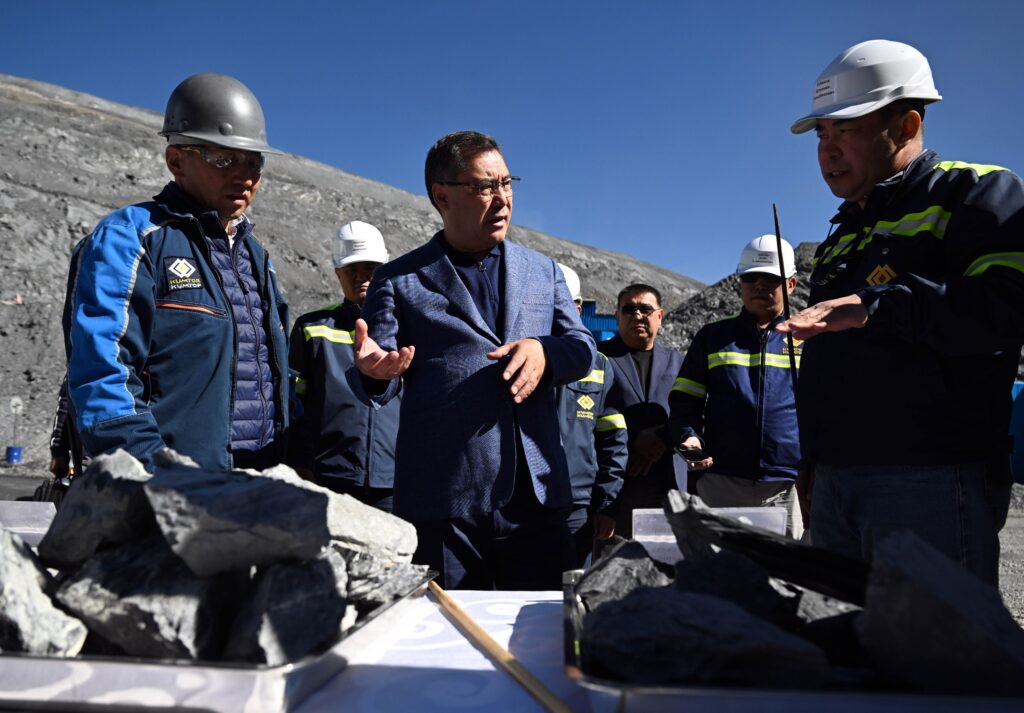
On May 7, Chairman of the Cabinet of Ministers of the Kyrgyz Republic Akylbek Japarov inspected the Kumtor gold mine in the permafrost zone of the Issyk-Kul region. Sitting 4,000 meters above sea level, the mine serves one of the world’s ten largest gold deposits and prior to being nationalized in 2021, was owned by Canadian company, Centerra Gold. The mine now has over 3,000 employees, 99.9% of whom are local specialists, and more than 800 specialist vehicles, machinery and equipment to ensure uninterrupted production. With reference to the significant developments to the site since nationalisation,  the Prime Minister emphasized the importance of the state’s role in maintaining its efficient operation. Last year, the mine generated 17.2 billion soms (over $194 million) in taxes and social payments - equivalent to roughly one-third of Kyrgyzstan’s state budget. Japarov also inspected Kumtor’s underground gold mining project, which launched in February, will enable the further extraction of about 115 tons of gold. At Kumtor’s open-pit mine, it currently takes one ton of processed ore and over 40 tons of extracted waste rock to produce 5-7 grams of gold. Underground mining has the potential to double that yield with less damage to the environment than its open-pit equivalent. Further to the prime minister’s visit, it was reported that from 2026, mining will begin on ore waste stored at the Kumtor mine tailings and according to estimates, will produce an additional 120 tons of gold. In 2023, the Kumtor mine produced 13,567 tons of gold, with a total revenue of $848 million, and net profit of $302.5 million.