• KGS/USD = 0.01143 0%
  • KZT/USD = 0.00216 0%
  • TJS/USD = 0.10684 -0.28%
  • UZS/USD = 0.00008 0%
  • TMT/USD = 0.28571 0%
  • KGS/USD = 0.01143 0%
  • KZT/USD = 0.00216 0%
  • TJS/USD = 0.10684 -0.28%
  • UZS/USD = 0.00008 0%
  • TMT/USD = 0.28571 0%
  • KGS/USD = 0.01143 0%
  • KZT/USD = 0.00216 0%
  • TJS/USD = 0.10684 -0.28%
  • UZS/USD = 0.00008 0%
  • TMT/USD = 0.28571 0%
  • KGS/USD = 0.01143 0%
  • KZT/USD = 0.00216 0%
  • TJS/USD = 0.10684 -0.28%
  • UZS/USD = 0.00008 0%
  • TMT/USD = 0.28571 0%
  • KGS/USD = 0.01143 0%
  • KZT/USD = 0.00216 0%
  • TJS/USD = 0.10684 -0.28%
  • UZS/USD = 0.00008 0%
  • TMT/USD = 0.28571 0%
  • KGS/USD = 0.01143 0%
  • KZT/USD = 0.00216 0%
  • TJS/USD = 0.10684 -0.28%
  • UZS/USD = 0.00008 0%
  • TMT/USD = 0.28571 0%
  • KGS/USD = 0.01143 0%
  • KZT/USD = 0.00216 0%
  • TJS/USD = 0.10684 -0.28%
  • UZS/USD = 0.00008 0%
  • TMT/USD = 0.28571 0%
  • KGS/USD = 0.01143 0%
  • KZT/USD = 0.00216 0%
  • TJS/USD = 0.10684 -0.28%
  • UZS/USD = 0.00008 0%
  • TMT/USD = 0.28571 0%

Viewing results 1 - 6 of 108

Kyrgyzstan’s Gold Reserves Could Last a Century, Says Top Geologist

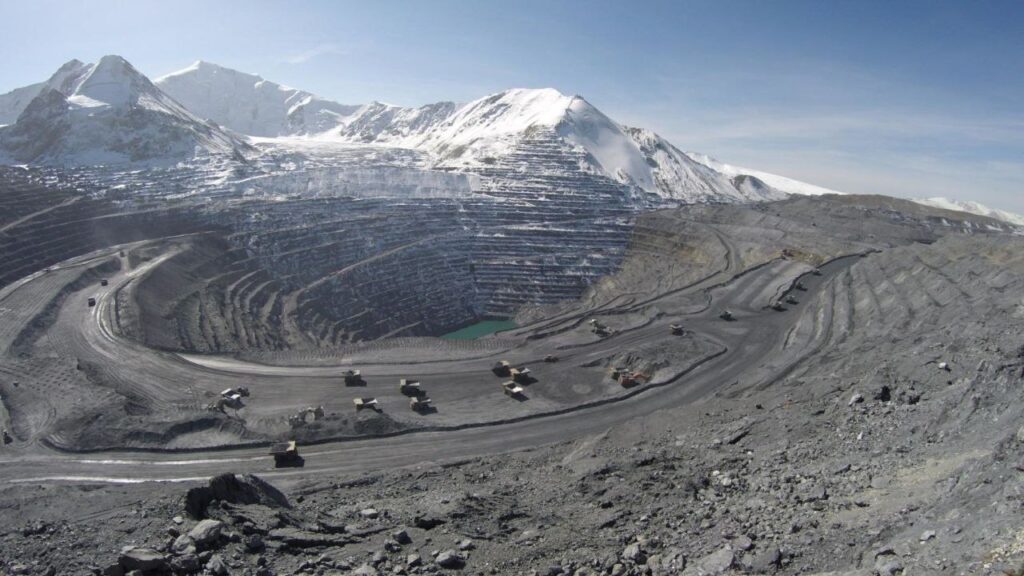
Kyrgyzstan’s largest gold mining operation, Kumtor Gold Company, has identified an additional 147 tons of gold through recent geological exploration. These reserves have now been officially added to the balance sheet of the state-run enterprise, reinforcing expert forecasts that gold extraction in the country can continue for decades to come. The announcement was made by Minister of Natural Resources Meder Mashiev during a press briefing in Bishkek. Mashiev noted that previously unexploited reserves at Kumtor, a key contributor to the national budget, were estimated at 127 tons. Following the new exploration, total reserves now stand at 261 tons. Kumtor Gold Company was nationalized in 2022 after Canadian firm Centerra Gold withdrew from the project. At the time, industry experts predicted the mine would cease operations by 2027 due to depleted reserves at the main open pit. The prospect of investing in new infrastructure at adjacent sites was deemed economically unfeasible. This view was partly supported by production data: in 2015, ore yielded about 5 grams of gold per ton; today, it yields less than one gram. Local experts, however, have described this decline as temporary. According to official figures, Kumtor produced 17.3 tons of gold in 2022, 13.5 tons in 2023, and was projected to produce 12.2 tons in 2024, numbers not seen since 2012, when output fell below 10 tons. Back then, the company cited falling global gold prices and the limited viability of high-volume production. Under the 2022 agreement with Centerra Gold, the Kyrgyz Cabinet of Ministers assumed full management of the Kumtor mine. The Canadian company also agreed to pay over $60 million for environmental protection and transferred control of a $53 million reclamation fund to the Kyrgyz side. In return, it was released from future mine reclamation obligations. In an interview with The Times of Central Asia, Rozalia Djenchuraeva, a geologist at the National Academy of Sciences, stated that with proper management, Kumtor could continue producing gold for another hundred years. “Gold is not running out. There’s still a substantial amount at Kumtor. In the 1980s and 1990s, we recalculated potential reserves in the area and identified over a thousand tons,” Djenchuraeva said. “The entire strip where Kumtor is located is gold-bearing. It stretches along the mountains beneath glaciers, and we have enough gold to last a century. The key is to avoid harming nature.” She emphasized that much of the remaining gold lies beneath glaciers, making extraction without environmental damage particularly challenging. “The high-altitude ecosystem is very sensitive to human interference,” she said. Nonetheless, Djenchuraeva believes that modern exploration and mining technologies offer a path forward. “If we proceed responsibly and with care, gold extraction can continue for many years to come,” she concluded.

Uzbekistan Leads Global Gold Purchases in January

Uzbekistan was the world’s largest gold buyer in January 2025, according to the World Gold Council (WGC). Global central banks continued their gold-buying spree at the start of the year, with net purchases totaling 18 tons for the month. The WGC notes that this sustained demand highlights gold’s strategic importance in central bank reserves, as many countries view it as a safe-haven asset amid geopolitical uncertainty. Uzbekistan Tops the List The Central Bank of Uzbekistan purchased 8 tons of gold in January, increasing the country’s gold reserves to 391 tons. Gold now accounts for 82% of Uzbekistan’s total international reserves. China was the second-largest buyer, adding 5 tons to its holdings. By the end of January, China’s total gold reserves had reached 2,285 tons, representing 6% of its total assets. Kazakhstan ranked third, purchasing 4 tons, followed by Poland and India with 3 tons each. The Czech Republic added 2 tons, while Qatar increased its reserves by 1 ton. Gold Sales and Market Trends While several countries increased their gold holdings, others reduced their reserves. Russia and Jordan each sold 3 tons, while Kyrgyzstan offloaded 2 tons in January. In 2023, Uzbekistan was the world’s second-largest gold seller, offloading over 25 tons, according to the WGC. Kazakhstan led global sales that year, selling nearly twice as much as Uzbekistan. Despite these sales, Uzbekistan’s gold exports generated $8.15 billion in 2023, nearly double the revenue from 2022. Meanwhile, China was the world’s top gold buyer last year, purchasing almost 230 tons. Other major buyers included Poland, Singapore, Libya, and the Czech Republic.

Uzbekistan Ranked Second in Global Gold Purchases in November 2024

The Central Bank of Uzbekistan significantly increased its gold reserves in November, marking its first gold purchase since July 2024, according to Spot and data from the World Gold Council (WGC). Global central banks collectively made net gold purchases of 53 tonnes in November, continuing the strong buying trend observed throughout 2024. The WGC noted that the decline in gold prices, partly influenced by the U.S. presidential elections, may have further encouraged gold accumulation by regulators. Leading the list of gold buyers was the National Bank of Poland, which added 21 tonnes to its reserves, bringing its total to 448 tonnes. Poland also emerged as the largest buyer of precious metals in 2024, purchasing 90 tonnes over the year. The Central Bank of Uzbekistan ranked second globally in November, purchasing 9 tonnes of gold. This marked its first increase in gold reserves since the summer and brought its annual net gold purchases to 11 tonnes. As of the end of November, Uzbekistan’s total gold reserves stood at 382 tonnes. The Reserve Bank of India ranked third with 8 tonnes purchased in November and 73 tonnes accumulated throughout the year. Other notable buyers included Kazakhstan and China (5 tonnes each), Jordan (4 tonnes), Turkey (3 tonnes), the Czech Republic (2 tonnes), and Ghana (1 tonne). Singapore was the largest seller of gold during the month, offloading 5 tonnes. As previously reported by The Times of Central Asia, Uzbekistan’s international reserves experienced a decline in November. The Central Bank of Uzbekistan reported a $1.7 billion drop, or approximately 3.9%, reducing total reserves to $41.5 billion as of December 1.

Uzbekistan’s Gold Reserves Drop by $1.7 Billion in December

Uzbekistan’s international reserves declined in November, with the Central Bank of Uzbekistan reporting a decrease of $1.7 billion, or approximately 3.9%, bringing the total reserves to $41.5 billion as of December 1. The country’s gold reserves, which form a significant part of its international assets, saw a decrease in value by $623 million—from $33.4 billion to $32.7 billion—despite a slight increase in the physical volume of gold to 12.3 million troy ounces. Meanwhile, assets in freely convertible currency dropped by $1.04 billion in November, reaching $8.2 billion. This decrease is mirrored in the cash held in foreign accounts by the Central Bank, which also fell by $1.04 billion to $8.08 billion. Of this, $370.1 million is held in accounts with other central banks and the International Monetary Fund (IMF), while the remaining $7.7 billion is distributed among foreign financial institutions. In contrast to the decline in gold and currency reserves, the value of securities purchased by the Central Bank rose slightly, increasing by $101.3 million during the same period. Uzbekistan’s international reserves had reached a record high of $39.15 billion as of September 1, a peak since the country began disclosing reserve data in 2018. While November’s decline marks a significant drop, the reserves remain above the levels recorded earlier in the year. The fluctuation in Uzbekistan’s reserves reflects changing global market conditions and highlights the dynamics of managing gold and foreign currency assets. As the Central Bank navigates these challenges, the stability and long-term outlook of Uzbekistan’s financial reserves remain areas to watch closely.

Gold Reserves in Kyrgyzstan May Reach Up to 4,000 Tons

Kyrgyzstan holds over 5,000 deposits of various minerals, including valuable resources such as gold, rare earth elements, uranium, and thorium. This was announced by Deputy Minister of Natural Resources Narynbek Satybaldiev during a briefing. According to official state data, Kyrgyzstan has just over 1,000 tons of confirmed gold reserves. However, geologists estimate that the country's total potential exceeds 4,000 tons. Many deposits are complex, containing other metals such as antimony, copper, and zinc alongside gold. Satybaldiev highlighted that the recent lifting of a moratorium on deposit development presents new opportunities for mining gold and other strategically important metals essential for the global economy. The Kyrgyz government is developing a comprehensive strategy to fully utilize its mineral resources. The plan includes exploration, mining, and processing initiatives, with a particular focus on rare earth metals. These resources are critical for producing high-tech products and advancing green energy technologies. The implementation of this strategy is expected to boost mining revenues, strengthen Kyrgyzstan's economic independence, and attract foreign investment. In June 2024, Kyrgyzstan lifted a ban on developing uranium and thorium deposits, a restriction that had been in place since 2019. The decision reflects the government’s aim to balance environmental safety with the need to harness strategically important resources for economic growth. The policy change is expected to attract investment, create jobs, and increase revenues from mineral exports.

Kyrgyzstan Removes Restrictions on Sale of Gold

In early September, a state-owned store selling gold bars opened in Bishkek where gold can be bought without the presentation of a passport. Kyrgyzaltyn OJSC has already reported record sales, topping 50 million KGS ($585 thousand), and providing the store with a net income of 3 million KGS ($35 thousand). Changes in the law which previously allowed gold bars to only be bought in limited amounts through the National Bank of Kyrgyzstan, were instigated by President Sadyr Japarov of Kyrgyz, who explained: “The National Bank does not sell bullion without a passport. Businessmen and rich people approached me -  worried that if they started showing their documents - the whole of Kyrgyzstan would know about it, including robbers. Businessmen said they would have to stay in their houses and guard the gold,” Having lifted restrictions, Sadyr Japarov called on citizens to buy domestic gold, recommending it as a reliable and profitable investment. The Kyrgyzaltyn store sells gold bars weighing from 1 to 100 grams, each carrying an individual QR code confirming the gold's origin. Prices for the sale and repurchase of gold are set daily, based on London Bullion Exchange quotations. Kyrgyz economists believe that the growth of investment in gold indicates an increase in confidence in this asset. “In Kyrgyzstan, this trend is influenced by several factors. Global instability and fluctuations in currency markets make people look for more reliable assets. Declining yields on bank deposits are also pushing for alternatives. In addition, inflation expectations encourage people to convert their savings into gold,” economist Nurgul Akimova told The Times of Central Asia. Kyrgyzstan has about 380 gold deposits, the largest of which is Kumtor in Issyk-Kul Oblast. The republic's mining sector produced over 20 tons of gold in 2023.