• KGS/USD = 0.01143 0%
  • KZT/USD = 0.00216 0%
  • TJS/USD = 0.10633 -0.28%
  • UZS/USD = 0.00008 0%
  • TMT/USD = 0.28571 0%
  • KGS/USD = 0.01143 0%
  • KZT/USD = 0.00216 0%
  • TJS/USD = 0.10633 -0.28%
  • UZS/USD = 0.00008 0%
  • TMT/USD = 0.28571 0%
  • KGS/USD = 0.01143 0%
  • KZT/USD = 0.00216 0%
  • TJS/USD = 0.10633 -0.28%
  • UZS/USD = 0.00008 0%
  • TMT/USD = 0.28571 0%
  • KGS/USD = 0.01143 0%
  • KZT/USD = 0.00216 0%
  • TJS/USD = 0.10633 -0.28%
  • UZS/USD = 0.00008 0%
  • TMT/USD = 0.28571 0%
  • KGS/USD = 0.01143 0%
  • KZT/USD = 0.00216 0%
  • TJS/USD = 0.10633 -0.28%
  • UZS/USD = 0.00008 0%
  • TMT/USD = 0.28571 0%
  • KGS/USD = 0.01143 0%
  • KZT/USD = 0.00216 0%
  • TJS/USD = 0.10633 -0.28%
  • UZS/USD = 0.00008 0%
  • TMT/USD = 0.28571 0%
  • KGS/USD = 0.01143 0%
  • KZT/USD = 0.00216 0%
  • TJS/USD = 0.10633 -0.28%
  • UZS/USD = 0.00008 0%
  • TMT/USD = 0.28571 0%
  • KGS/USD = 0.01143 0%
  • KZT/USD = 0.00216 0%
  • TJS/USD = 0.10633 -0.28%
  • UZS/USD = 0.00008 0%
  • TMT/USD = 0.28571 0%

Viewing results 1 - 6 of 108

Sharp Rise in Global Gold Prices Expected to Benefit Kyrgyz Economy

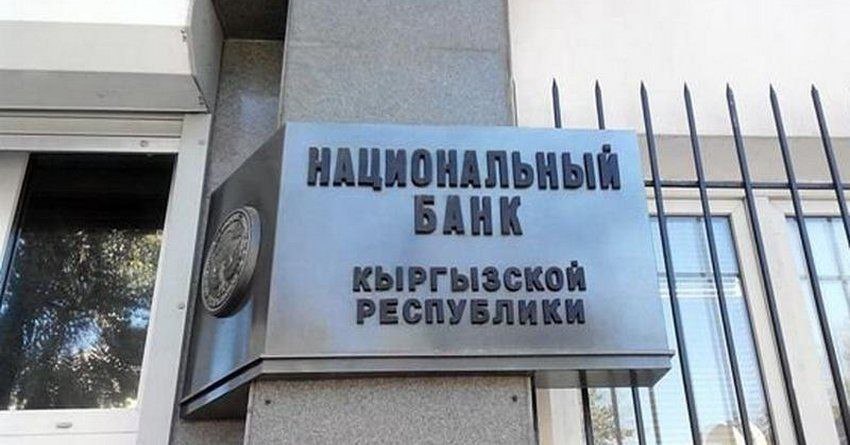
A significant surge in global gold prices is presenting new economic opportunities for Kyrgyzstan. Over recent weeks, gold has risen by more than $400 per troy ounce on the London Commodities Exchange, signaling potential gains for the country’s gold-dependent economy. Back in 2022, amid escalating global geopolitical tensions, Kyrgyz authorities began encouraging citizens to hold their savings in gold. Three years on, that strategy appears vindicated: gold prices have nearly doubled. According to the National Bank of Kyrgyzstan, the country’s international reserves reached over $7 billion in 2025, growing by $2 billion in just one year. A substantial portion of these reserves is held in gold bullion, highlighting the precious metal’s role as the cornerstone of Kyrgyzstan’s financial resilience. The current price surge is expected to further insulate the national economy from external shocks. In 2024, Kyrgyz mining enterprises produced 24 tons of gold. If production levels remain steady, export revenues could exceed $2.5 billion in 2025. This would provide a significant boost to tax revenues, the national budget, and the country’s foreign currency reserves. Economist Kubanychbek Idinov told The Times of Central Asia that the Kumtor mine, the country’s flagship gold asset, remains the primary driver of state revenue. “Thanks to the nationalization of Kumtor in 2022, government revenues from the enterprise have increased several times. These funds are already being used to build social housing and develop new industries. With the launch of underground mining, authorities now have the capacity to further expand social spending and finance industrial growth,” said Idinov. He estimates that Kumtor still holds between 500 and 700 tons of gold, which could support Kyrgyzstan’s economic stability for up to two more decades. However, experts warn against overreliance on gold. “Prices may rise, but they can also fall,” Idinov noted. “While current conditions offer windfall revenues, these should be strategically invested into infrastructure, trade, and industrial development. That is the path to a more resilient and diversified economy.” The latest rally in gold prices offers Kyrgyzstan a rare window of opportunity. But capitalizing on this moment will depend on how effectively authorities can translate resource wealth into long-term national development.

Kyrgyzstan Rises to Third Place Globally in Gold Exports

Kyrgyzstan ranked third in the world for gold exports in the first quarter of 2025, selling 3.8 tons of the precious metal on the international market, according to data from the World Gold Council. Despite this export success, Kyrgyzstan’s official gold reserves remain among the lowest in Central Asia. The country holds 34.2 tons of gold, compared to Kazakhstan’s 290 tons and Uzbekistan’s 367 tons. Uzbekistan led global gold exports during the same period with nearly 15 tons sold, while Kazakhstan opted to bolster its reserves, adding 6.5 tons in the first three months of the year. However, figures from Kyrgyzstan’s National Bank tell a different story. In June 2025, National Bank Chairman Melis Turgunbaev told parliament that the country’s reserves had reached 52 tons. This suggests either a sharp two-month increase or a discrepancy between national and international reporting standards. “Our analysts monitor gold prices and market conditions daily. We buy or sell gold as needed, just like currency, that's one of the bank's core functions,” Turgunbaev explained. “Last year, we achieved substantial income through effective reserve management. The first five months of this year have also yielded strong results.” Members of parliament expressed satisfaction with the size of the country’s gold and foreign exchange reserves, which currently stand at an estimated $3.7 billion, exceeding Kyrgyzstan’s annual state budget. Kyrgyz mining operations produce approximately 20 tons of gold annually. A significant share of this output is exported, leaving domestic jewelers with limited access to raw materials. Sales channels include the London Commodity Exchange and buyers in Switzerland. The National Bank also offers measured gold bars for public purchase at a modest premium.

Uzbekistan’s Gold Exports Surge 55% in Early 2025, Reaching $6.49 Billion

Uzbekistan’s gold exports surged in the first five months of 2025, reaching $6.49 billion, a 54.8% increase compared to the same period in 2024, according to the National Statistics Committee. Gold now accounts for nearly 44% of the country’s total export revenues, up from $2.66 billion and 37.1% during the same period last year. The rise in gold exports reflects a combination of high global prices, hovering near record highs of around $3,000 per ounce and strong international demand for bullion. Analysts note that much of the growth occurred after February, contributing to a sharp uptick in trade revenue. A Strategic Export Commodity Uzbekistan remains one of the world’s top gold producers, largely due to massive operations such as the Muruntau mine, which in 2021 produced approximately 85,000 kg of gold. According to the World Gold Council, Uzbekistan produced 119.6 tonnes of gold in 2023, ranking tenth globally. Gold plays a pivotal role in Uzbekistan’s economy, generating significant export earnings and bolstering foreign currency reserves. It remains a central pillar of the country’s trade strategy and monetary policy. Record Foreign Reserves With the rise in gold exports, Uzbekistan’s international reserves have reached an all-time high. As of late May 2025, reserves stood at $49.66 billion, up from about $37.4 billion in mid-2024. Much of this increase is attributed to gold: the Central Bank of Uzbekistan’s holdings grew both in volume and value, with the rise in gold prices adding over $1.8 billion in recent months. In January 2025, Uzbekistan even became the world’s top official-sector gold buyer, a move aimed at strengthening its reserve position. In 2023, the country earned $8.15 billion from gold exports, nearly double the previous year’s figure, despite some sales from national reserves. These trends underscore gold’s growing importance as both a trade driver and a stabilizing force for Uzbekistan’s economic and financial position.

Opinion: The U.S. Dollar Loses Its Luster as the Uzbek Som Shines

From May 20, 2025, to June 19, 2025, the U.S. dollar declined from 12,885 Uzbek som to 12,625 som, reaching its lowest level since early December 2023. This trend is anticipated to persist. Over the past 30 days, the dollar has depreciated by 2.08% against the som. The Central Bank of Uzbekistan adheres to a flexible exchange rate mechanism, commonly referred to as a floating exchange rate. This approach allows the value of the Uzbek som to be primarily influenced by market forces of supply and demand, rather than being fixed or pegged to another currency. In the context of Uzbekistan, the Central Bank defines the market-determined exchange rate, permitting the som to fluctuate freely based on the interactions between buyers and sellers in the foreign exchange market. In 2017, Uzbekistan transitioned to a flexible exchange rate regime, aligning the som with market conditions and narrowing the gap between the official and parallel exchange rates. This move is expected to enhance export competitiveness, as noted by the European Bank for Reconstruction and Development (EBRD). While the market predominantly determines the exchange rate, the Central Bank reserves the right to intervene in the foreign exchange market to mitigate excessive fluctuations or address significant imbalances. However, it does not maintain a fixed exchange rate. The primary objective of the Central Bank is to uphold price stability, ensuring low and stable inflation. The flexible exchange rate regime empowers the Central Bank to utilize interest rates as a tool to influence inflation and manage the overall economy. Since 2020, the Central Bank of Uzbekistan has been implementing an inflation targeting framework that guides its monetary policy decisions, including those related to the exchange rate. Uzbekistan has recently achieved a remarkable milestone, with its international reserves soaring to an unprecedented $49.6 billion, primarily driven by a substantial increase in gold prices. This significant figure, recorded at the end of last week, represents the highest level of international reserves since the Central Bank of Uzbekistan began tracking this data in 2013. Uzbekistan has been on a remarkable journey of financial growth, marked by a sustained increase in its reserves over the past five months. Since the beginning of the year, the country's reserves have increased by an impressive $8.48 billion, reaching a new historic high of $49.66 billion. In May alone, the reserves saw a substantial boost of $410.2 million, translating to a 0.8% increase compared to April. This consistent upward momentum not only highlights the resilience of Uzbekistan's economy but also demonstrates its ability to adapt and thrive in a dynamic global landscape. Central to this financial ascent has been the role of gold, which has enjoyed significant demand due to its elevated prices in international markets. Over the last month, gold prices surged by 3.27%, rising from $3,280 to $3,390.07 per ounce. When examining the broader trends, it is evident that gold has significantly appreciated, with a striking 25.5% increase since the start of this year and an even more impressive 41.3% surge over...

Gold and Copper Exploration in Kazakhstan Gets Boost from Australian Joint Venture

Australian mining firm C29 Metals Limited has entered into a joint venture agreement with Bask International Group Ltd, a company registered in Astana. The newly established joint venture (JV) aims to explore promising copper and gold deposits across Kazakhstan. C29 Metals is not a newcomer to Kazakhstan’s mineral sector. In the spring of 2024, the company obtained a geological exploration license for its Ulytau project, which includes several solid mineral deposits, notably uranium. It has since submitted two additional applications for uranium exploration. However, according to a recent company announcement, the new JV will focus exclusively on copper and gold and will not be involved in C29 Metals’ uranium interests in the country. The joint venture, registered at the Astana International Financial Center (AIFC), will concentrate on identifying and acquiring exploration projects with significant geological potential. According to the agreement, C29 Metals will hold a 75% stake in the venture, with Bask International Group retaining 25%. C29 will fully finance the geological exploration, thereby relieving its Kazakh partner of any financial burden. The board of directors will comprise two representatives from the Australian company and one from the Kazakh side. “The conclusion of this joint venture agreement marks another important milestone in our strategic growth plans,” said Shannon Green, Managing Director of C29 Metals. “The partnership with Bask International Group in Kazakhstan will give us access to opportunities beyond our typical reach. Bask’s network and capabilities will enable us to move at an unprecedented pace as we scale operations.” Yerlan Issekeshev, head of Bask International Group Ltd, emphasized Kazakhstan’s untapped mining potential: “Kazakhstan is on the cusp of a new era in resource development. While exploration slowed during the post-Soviet period, the country’s mineral wealth remains vast and underexplored.” As previously reported by The Times of Central Asia, Kazakhstan is set to auction off 50 gold and rare metal deposits in June 2025, offering electronic tenders for exploration and development rights.

Kazakhstan to Auction 50 Rare Metal Deposits in June 2025

Kazakhstan will grant exploration and development rights for 50 deposits of gold and rare metals through an electronic auction scheduled for June 2025, the Ministry of Industry and Construction has announced. Almas Kushumov, Director of the Ministry’s Department of Subsoil Use, shared the details through MINEX Kazakhstan (Mining and Exploration Forum). “We will auction off deposits with confirmed balance reserves, gold, coal, rare metals, and polymetals,” Kushumov said. “The information will be published soon on the Unified Platform of Subsoil Use, and in June we plan to hold the electronic auction. All participants will be able to submit their documents online.” The auction will be hosted on the Unified Subsoil Use Platform: minerals.e-qazyna.kz. Licenses will be awarded for both exploration and production, with production licenses valid for 25 years. Companies from the United States, European Union, and China have already submitted applications, according to the ministry. The full list of the 50 deposits will be made public in the coming days. Kazakhstan has prior experience with this auction format, between 2023 and 2024, 117 deposits were awarded through electronic auctions, generating over KZT29 billion ($55.9 million) in signing bonuses. Kazakhstan currently holds over 9,000 registered deposits, including 987 classified as solid mineral sites. Many of these were surveyed more than three decades ago, which is why the government is now prioritizing not only production rights but also geological exploration, with strong interest from both domestic and foreign investors. Kushumov noted that the introduction of the Code on Subsoil and Subsoil Use in 2018 significantly improved the investment climate, tripling the volume of private capital in the sector. As previously reported by The Times of Central Asia, the state mining company Tau-Ken Samruk is advancing work at the Kuirektykol rare earth deposit, where exploration began in 2022. Recent studies have identified new promising zones which, if confirmed, could place Kazakhstan among the global leaders in rare earth metal reserves.