
• KZT/USD = 0.00222
  • TJS/USD = 0.10820
  • UZS/USD = 0.00008
  • TMT/USD = 0.29850
  • KZT/USD = 0.00222
  • TJS/USD = 0.10820
  • UZS/USD = 0.00008
  • TMT/USD = 0.29850
  • KZT/USD = 0.00222
  • TJS/USD = 0.10820
  • UZS/USD = 0.00008
  • TMT/USD = 0.29850
  • KZT/USD = 0.00222
  • TJS/USD = 0.10820
  • UZS/USD = 0.00008
  • TMT/USD = 0.29850
  • KZT/USD = 0.00222
  • TJS/USD = 0.10820
  • UZS/USD = 0.00008
  • TMT/USD = 0.29850
  • KZT/USD = 0.00222
  • TJS/USD = 0.10820
  • UZS/USD = 0.00008
  • TMT/USD = 0.29850
  • KZT/USD = 0.00222
  • TJS/USD = 0.10820
  • UZS/USD = 0.00008
  • TMT/USD = 0.29850
  • KZT/USD = 0.00222
  • TJS/USD = 0.10820
  • UZS/USD = 0.00008
  • TMT/USD = 0.29850
09 October 2026

Viewing results 1 - 6 of 3

West2West: Kazakhstan Adds a Regional Dimension to Trade with Afghanistan

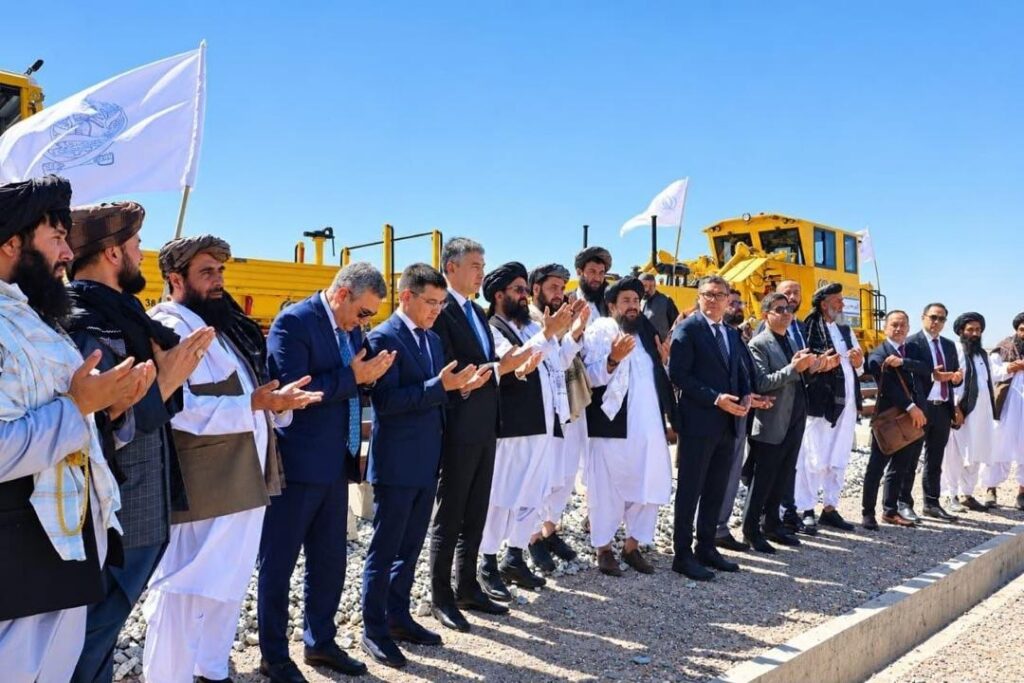
In late September, a Kazakhstani official and business delegation led by Yerkin Tukumov, the Special Representative of the President of Kazakhstan for Afghanistan, visited Herat. The delegation included trade officials, representatives of the Mangystau and West Kazakhstan regions, and businesses. Officials called the new approach West2West, meaning cooperation between Kazakhstan's western regions and western Afghanistan. Kazakhstan and Afghanistan have held several business forums and exhibitions in recent years. However, the choice of Herat and the attempt to shift some cooperation from the intergovernmental to the interregional level make this initiative different. Since 2021, Kazakhstan’s economic dialogue with Afghanistan has developed mainly from the top down. The two governments set ambitious trade targets and sought to turn political engagement into commercial deals. The results looked impressive on paper. In October 2024, the two countries adopted a road map to raise mutual trade to $3 billion. In April 2025, documents worth $140 million were signed in Kabul, followed by 15 documents worth $303 million in Shymkent that October. Actual trade, however, grew much more slowly. In 2024, it totaled $545.2 million, while in 2025 it slipped slightly to $541.6 million. The $3 billion target remains more of a strategic benchmark than a near-term goal. According to official data from Kazakhstan, trade reached $581.1 million in January-July 2026, exceeding the total for the entire previous year. Kazakhstan’s exports accounted for $572.9 million, while imports from Afghanistan were just $8.2 million. Trade is therefore growing rapidly, but remains overwhelmingly one-sided. West2West is partly an attempt to broaden that relationship. Herat's Strategic Location Herat is one of Afghanistan’s main industrial and commercial centers, situated near several important transport routes. To the north is Torghundi, a rail border crossing with Turkmenistan. To the west runs the Khaf-Herat railway, which connects Afghanistan to Iran’s railway system. Herat could eventually become part of longer routes toward Kandahar and Pakistan, although much of the necessary infrastructure remains at the planning stage. During the September visit, officials opened a 43-kilometer section of the Khaf-Herat railway. Afghan sources estimate its cost at approximately $58 million. The section was built with the involvement of Kazakhstani company Integra Construction KZ. In August 2026, freight transported along the Khaf-Herat line totaled approximately 137,700 metric tons. Discussions have also focused on increasing its monthly capacity to 150,000 metric tons. Together with Uzbekistan and the United Arab Emirates, Kazakhstan has begun working on the Central Asia–South Asia railway project, which envisages a trans-Afghan connection to Pakistan’s ports. So far, the parties have agreed to conduct technical and economic studies, and no final route has been approved. The route through Turkmenistan is developing separately. Ashgabat views Torghundi-Herat as a joint project with Afghanistan linked to the expansion of the Serhetabat-Torghundi crossing and other infrastructure in western Afghanistan. Kazakhstan’s interest in Herat predates West2West. In 2023, Astana announced plans to establish a Kazakhstan Trade House in Afghanistan, with its main office in Herat. It opened in May 2024. Arman Yessentayev, its head, described Herat in 2023 as a...
Kazakhstan’s Agricultural Exports to Iran Nearly Double in 2025

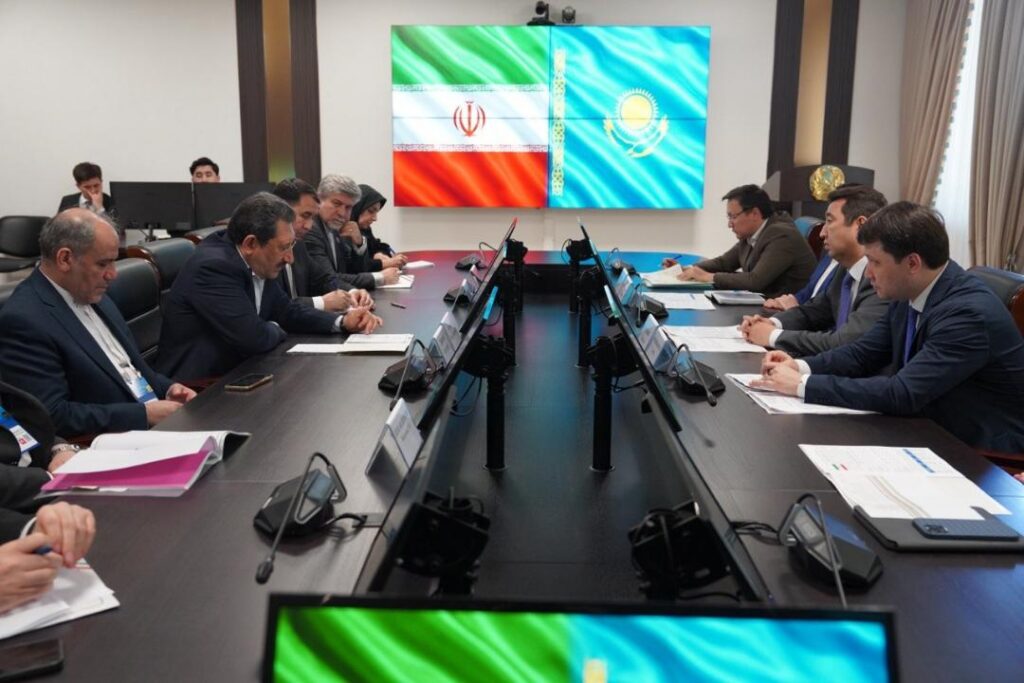
Kazakhstan’s agricultural exports to Iran nearly doubled in 2025, driven by a sharp increase in grain shipments, Agriculture Minister Aidarbek Saparov said during talks with Iranian Minister of Industry, Mine and Trade Seyyed Mohammad Atabak. According to Kazakhstan’s Agriculture Ministry, agricultural trade between the two countries rose 55.8% year-on-year to $342 million in 2025, accounting for 79% of total bilateral trade. Exports of Kazakhstan's agricultural products increased 97% to $238.5 million. Grain exports more than doubled to 1.1 million metric tons, valued at $225.3 million, Saparov said. “Kazakhstan attaches special importance to expanding cooperation with Iran in the agricultural sector. Our markets complement each other, as demonstrated by the steady growth in bilateral agricultural trade,” he said. The ministers discussed prospects for expanding trade in agricultural products, investment cooperation, and the development of joint projects in the agro-industrial sector. Particular attention was given to increasing Kazakhstan's exports of grain, beef, and lamb that meet international veterinary and halal standards. The two sides also highlighted the potential for expanding supplies of vegetable oils and other food products to the Iranian market. Atabak said Iran was interested in expanding economic ties with Kazakhstan, including through increased agricultural trade, improved transport links, and joint processing projects. “Kazakhstan is an important partner for Iran in the region. We are interested in increasing bilateral trade, expanding agricultural supplies, developing logistics routes, and implementing joint projects in processing and agro-industrial cooperation,” he said. Saparov also invited Iranian investors to participate in projects involving agricultural production and value-added processing, including grain and oilseed processing facilities. The growth in agricultural trade comes despite disruptions to some bilateral projects earlier this year. In April, Kazakhstan’s Deputy Foreign Minister Arman Issetov said several joint projects with Iran had been suspended because of military hostilities there. Trade ties have nevertheless continued to expand. In May, Kazakhstan's vegetable oil producers launched pilot shipments of rapeseed and sunflower oil to Iran via the Caspian Sea, opening a new export route for the sector. Kazakhstan and Iran have set an ambitious target of increasing bilateral trade to $1 billion in the coming years, with plans to double that figure over the longer term, following agreements reached during Iranian President Masoud Pezeshkian’s visit to Astana last year.

Kazakhstan Ready to Become Key Food Hub in Eurasia

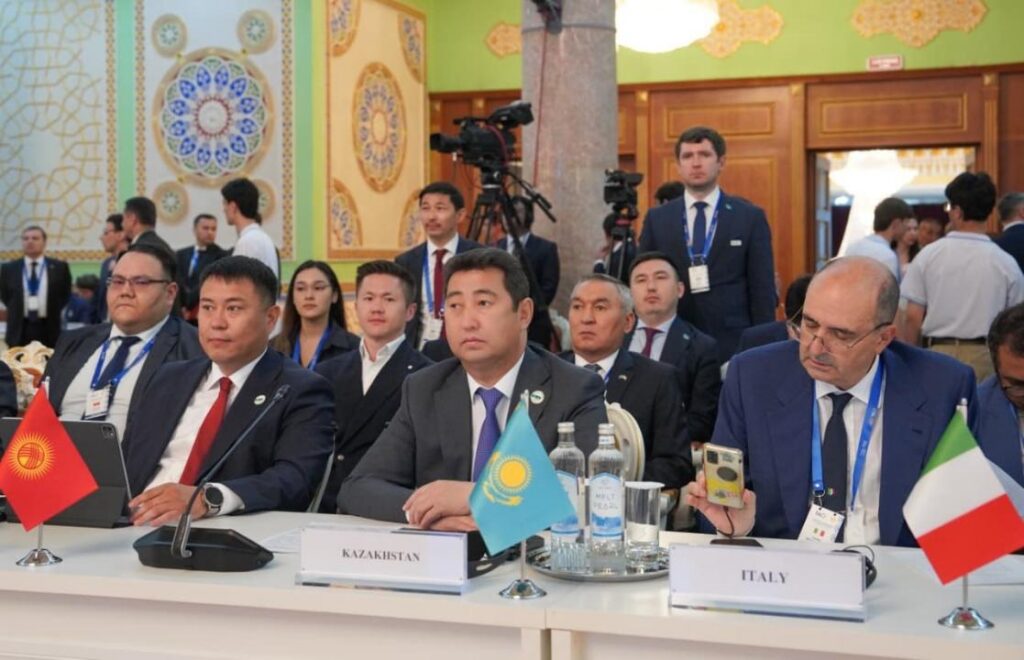
Tajikistan is hosting the 35th Session of the FAO Regional Conference for Europe from May 11 to 15, bringing together members of the Food and Agriculture Organization (FAO) of the United Nations from Europe and Central Asia for discussions on regional food security and agricultural development priorities. The conference has gathered agriculture ministers from Azerbaijan, Kazakhstan, Kyrgyzstan, Tajikistan, Turkmenistan, and Uzbekistan to address the most pressing challenges facing the sector, review FAO activities in Europe and Central Asia in 2024-2025, and outline priorities for 2026-2027. Speaking at the conference, Kazakhstan’s Minister of Agriculture Aidarbek Saparov said the country occupies a strategically important position in the global food security system and remains among the world’s leading grain producers. According to Saparov, Kazakhstan harvested around 27 million tons of grain for the second consecutive year in 2025, along with nearly 5 million tons of oilseeds and approximately 1 million tons of legumes. During the latest agricultural season, the country exported 15.3 million tons of grain. Kazakhstan currently ranks 10th globally in grain exports, second in flour exports, and eighth in sunflower oil exports, supplying agricultural products to around 50 countries. “Against the backdrop of population growth, climate change, and instability in global markets, food security is becoming a key factor in the sustainable development of states. Under these conditions, Kazakhstan is capable of occupying a strategic niche as a regional center for the production, storage, processing, and supply of grain products,” Saparov said. The minister added that Kazakhstan is implementing a comprehensive livestock development plan for 2026-2030 aimed at increasing livestock numbers and expanding the sector’s export potential. Saparov said Kazakhstan possesses the resources necessary to strengthen its position as one of Eurasia’s key food hubs and is prepared to ensure stable, rapid, and cost-effective supplies of grain and processed grain products to Central Asia, the Middle East, Europe, and other regions.
