• KGS/USD = 0.01143 0%
  • KZT/USD = 0.00207 0%
  • TJS/USD = 0.10465 0.1%
  • UZS/USD = 0.00008 0%
  • TMT/USD = 0.28571 0.28%
  • KGS/USD = 0.01143 0%
  • KZT/USD = 0.00207 0%
  • TJS/USD = 0.10465 0.1%
  • UZS/USD = 0.00008 0%
  • TMT/USD = 0.28571 0.28%
  • KGS/USD = 0.01143 0%
  • KZT/USD = 0.00207 0%
  • TJS/USD = 0.10465 0.1%
  • UZS/USD = 0.00008 0%
  • TMT/USD = 0.28571 0.28%
  • KGS/USD = 0.01143 0%
  • KZT/USD = 0.00207 0%
  • TJS/USD = 0.10465 0.1%
  • UZS/USD = 0.00008 0%
  • TMT/USD = 0.28571 0.28%
  • KGS/USD = 0.01143 0%
  • KZT/USD = 0.00207 0%
  • TJS/USD = 0.10465 0.1%
  • UZS/USD = 0.00008 0%
  • TMT/USD = 0.28571 0.28%
  • KGS/USD = 0.01143 0%
  • KZT/USD = 0.00207 0%
  • TJS/USD = 0.10465 0.1%
  • UZS/USD = 0.00008 0%
  • TMT/USD = 0.28571 0.28%
  • KGS/USD = 0.01143 0%
  • KZT/USD = 0.00207 0%
  • TJS/USD = 0.10465 0.1%
  • UZS/USD = 0.00008 0%
  • TMT/USD = 0.28571 0.28%
  • KGS/USD = 0.01143 0%
  • KZT/USD = 0.00207 0%
  • TJS/USD = 0.10465 0.1%
  • UZS/USD = 0.00008 0%
  • TMT/USD = 0.28571 0.28%

Viewing results 1 - 6 of 4

Kyrgyzstan Sets New Summer Electricity Consumption Record

Kyrgyzstan has recorded a new peak in daily electricity consumption during the summer season, reaching 44.1 million kilowatt-hours (kWh) in a single day, according to the National Electric Grid of Kyrgyzstan (NEGK). This marks a 22% increase compared to the same period in 2024, when the maximum daily load stood at 36 million kWh. The surge is largely attributed to an extended heatwave, with temperatures in major cities exceeding 40°C, prompting heavy use of air conditioners and cooling systems. The NEGK also reported a steady rise in electricity consumers, with an estimated 30,000 new subscribers joining the grid annually. This trend is fueled by Kyrgyzstan’s ongoing construction boom, which includes the development of residential complexes and industrial sites, sectors that have become pillars of the national economy. Despite the strain, the power grid remains stable. “We urge citizens to use electricity sparingly. Rational resource use contributes to the reliable operation of the energy system,” the company stated in a public advisory. Residents were also encouraged to unplug unused appliances to conserve energy. Summer Surplus, Winter Strain Unlike the winter months, Kyrgyzstan typically enjoys a surplus of electricity in summer due to the seasonal melting of glaciers, which boosts hydroelectric output. The country is preparing to participate in the CASA-1000 project alongside Tajikistan, aiming to export surplus electricity to Pakistan via Afghanistan. These exports will be limited to the summer, as Kyrgyzstan faces significant energy shortages in winter. According to the National Energy and Power System Company, winter electricity demand can reach 80 million kWh per day, placing substations under considerable stress. To mitigate shortages and prevent rolling blackouts, Kyrgyzstan imports electricity from Kazakhstan and Russia, and under contracts with Turkmenistan and Uzbekistan. The country’s energy reserve capacity is shrinking due to increasing demand. In response, the Ministry of Energy is investing in network expansion and voltage stabilization. In 2024, five 110 kV substations were constructed. In 2025, two additional major facilities are slated to open in the Issyk-Kul and Batken regions, each with a capacity of 500 kWh.

World Bank Report: Central Asia Faces Rising Risks from Extreme Heat

Cities across Central Asia are becoming increasingly vulnerable to extreme heat, posing significant risks to public health, economic productivity, and infrastructure, according to a new report by the World Bank. The study, which covers 70 urban areas in Europe and Central Asia, including Astana, Bishkek, Ashgabat, Tashkent, and several smaller cities in Tajikistan and Turkmenistan, highlights the urgent need for heat adaptation strategies. Rising Mortality and Economic Losses The report finds that heat-related mortality is already a serious concern. In Ashgabat, an estimated 25-28 people per 100,000 die annually due to extreme heat. In Astana, Bishkek, and Tashkent, the toll is slightly lower, at approximately 19-21 deaths per 100,000. Without intervention, annual heat-related deaths in cities like Astana and Tashkent could rise dramatically, reaching between 10,000 and 23,000 by 2090. Economic impacts are also mounting. In 2023, higher temperatures resulted in the loss of over 87,000 full-time jobs across the region. Uzbekistan alone saw more than 22,000 job losses, while nearly 18,000 were reported in Azerbaijan. By 2050, heat-related economic losses could exceed 2% of GDP in some urban centers, such as Ashgabat. Infrastructure Under Strain Rising temperatures are damaging infrastructure across Central Asia. In Kyrgyzstan, extreme heat causes deterioration to nearly 200 kilometers of road annually, driving up repair costs and disrupting transportation. Kazakhstan is facing similar challenges: recent heatwaves have warped asphalt and concrete surfaces in the southern and northeastern regions of the country. Adaptation Measures and Challenges Despite these threats, the report outlines viable solutions. Urban greening, such as planting trees and creating shaded areas, can help cool city streets. Retrofitting buildings to improve thermal insulation without increasing energy use, establishing early warning systems, and creating cooling centers are also recommended. Urban planning strategies should incorporate climate resilience by using heat-tolerant materials and factoring climate risks into infrastructure design. Investment in parks and green spaces, alongside the use of heat vulnerability maps, can guide targeted interventions. However, the report warns that a lack of funding may hinder progress. Without innovative financing mechanisms, many adaptation plans could be stalled despite their potential to mitigate long-term risks. The World Bank concludes that while the impacts of rising temperatures are already being felt across Central Asia, timely action can prevent far more serious consequences. Policymakers are urged to prioritize heat adaptation to safeguard lives, livelihoods, and infrastructure in an increasingly warming world.

Bishkek Launches “Living Wall” Project to Tackle Heat and Pollution

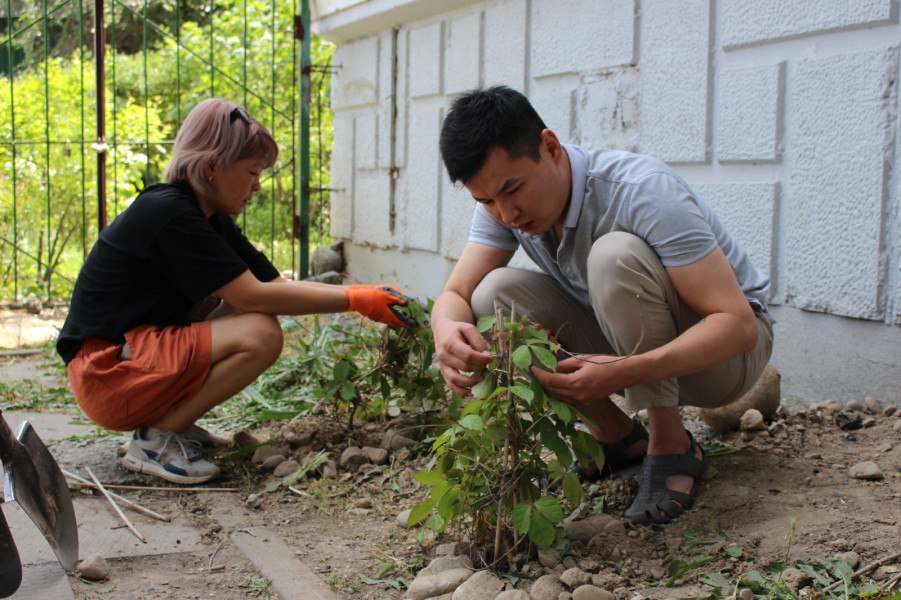
Bishkek has launched a pilot project to green the facades of buildings as part of a broader effort to adapt to climate change and mitigate growing heat and air pollution in Kyrgyzstan’s capital. In June, vertical greenery was installed on the facades of three schools and one apartment building under the “1000 Green Walls” program. The initiative is jointly implemented by the environmental organization MoveGreen and the Bishkek municipality, with support from the United Nations Environment Programme (UNEP) and the development agency Bread for the World. More Than Just Aesthetic Green facades, also known as living walls, offer both visual and environmental benefits. They reduce building surface temperatures, absorb carbon dioxide, release oxygen, and filter dust and pollutants from the air. These vertical gardens also improve sound insulation, protect buildings from temperature extremes, and support urban biodiversity, providing habitat for birds, insects, and butterflies. Two species were selected for the pilot phase: maiden grapes and ivy. Maiden grapes are fast-growing, frost- and drought-resistant vines that create dense green coverage. In addition to insulating buildings, they absorb dust and exhaust emissions, improving local air quality. Their vibrant red foliage in autumn also enhances the city’s visual appeal. Ivy, an evergreen perennial, retains its foliage year-round and provides consistent thermal and acoustic insulation. It is effective in trapping airborne pollutants and helps create a more temperate and pleasant microclimate around buildings. A Scalable Urban Solution The Bishkek municipality views this as a sustainable and scalable urban solution. “These green facades contribute to a more comfortable, ecological, and aesthetically pleasing urban environment,” officials said. The city plans to expand the 1000 Green Walls program to include more schools, kindergartens, and residential buildings in the coming months.

Extreme Heat Warps Roads Across Kazakhstan

Kazakhstan is experiencing widespread road damage due to an intense heatwave, with asphalt and cement concrete surfaces warping in both southern and northeastern regions of the country. The national road operator KazAutoZhol has stated that such deformation is a normal response to extreme heat conditions. Air temperatures have soared above 35°C across most regions, prompting meteorologists to advise residents to avoid going outdoors during peak daylight hours. The most affected areas are inter-city highways, where the heat has caused significant stress on infrastructure. The first reports of road warping emerged from the Pavlodar Region in northeastern Kazakhstan. On June 13, local authorities conducted emergency repairs at kilometer 1,265 of the Astana-Shiderty-Pavlodar-Uspenka-Russian border highway. Concrete slabs had buckled following a sharp temperature increase to 33-35°C. Notably, this highway is a toll road, and the damage drew criticism from motorists. Shortly thereafter, similar issues were reported in the south. On June 19, KazAutoZhol announced repairs on the Shymkent, Uzbekistan border highway, specifically at kilometer 763, another toll section. The pavement there had deformed due to air temperatures reaching 40-45°C. On the same day, further damage was reported on the Astana-Pavlodar highway in central Kazakhstan, where several consecutive days of temperatures between 32-35°C contributed to the melting and lifting of concrete slabs. "Cement concrete pavements are particularly sensitive to sudden temperature changes," experts from KazAutoZhol explained. "In hot conditions, the slabs expand. If gaps between them are insufficient or joints are compromised, internal stress can cause the slabs to suddenly lift, a phenomenon commonly referred to as a 'blow-up.' This is typical in regions where daytime temperatures exceed 35°C, which includes much of southern and central Kazakhstan." KazAutoZhol also cited similar challenges in other countries, noting that in the United States, states like Minnesota, Wisconsin, and Illinois report comparable incidents nearly every summer. The organization operates under the Ministry of Transport of Kazakhstan, which recently saw a leadership shake-up. In mid-May, President Kassym-Jomart Tokayev reprimanded then-Minister Marat Karabayev for multiple failings within the transport sector. Karabayev was dismissed in early June, and his deputy, Maksat Kaliakparov, was appointed acting minister. As previously reported by The Times of Central Asia, construction began this month on the strategic Center-West highway corridor, part of the Trans-Caspian International Transport Route (TITR), a key freight link connecting China and Europe via Kazakhstan.