• KGS/USD = 0.01144 0%
  • KZT/USD = 0.00206 0%
  • TJS/USD = 0.10760 0%
  • UZS/USD = 0.00008 0%
  • TMT/USD = 0.28571 0%
  • KGS/USD = 0.01144 0%
  • KZT/USD = 0.00206 0%
  • TJS/USD = 0.10760 0%
  • UZS/USD = 0.00008 0%
  • TMT/USD = 0.28571 0%
  • KGS/USD = 0.01144 0%
  • KZT/USD = 0.00206 0%
  • TJS/USD = 0.10760 0%
  • UZS/USD = 0.00008 0%
  • TMT/USD = 0.28571 0%
  • KGS/USD = 0.01144 0%
  • KZT/USD = 0.00206 0%
  • TJS/USD = 0.10760 0%
  • UZS/USD = 0.00008 0%
  • TMT/USD = 0.28571 0%
  • KGS/USD = 0.01144 0%
  • KZT/USD = 0.00206 0%
  • TJS/USD = 0.10760 0%
  • UZS/USD = 0.00008 0%
  • TMT/USD = 0.28571 0%
  • KGS/USD = 0.01144 0%
  • KZT/USD = 0.00206 0%
  • TJS/USD = 0.10760 0%
  • UZS/USD = 0.00008 0%
  • TMT/USD = 0.28571 0%
  • KGS/USD = 0.01144 0%
  • KZT/USD = 0.00206 0%
  • TJS/USD = 0.10760 0%
  • UZS/USD = 0.00008 0%
  • TMT/USD = 0.28571 0%
  • KGS/USD = 0.01144 0%
  • KZT/USD = 0.00206 0%
  • TJS/USD = 0.10760 0%
  • UZS/USD = 0.00008 0%
  • TMT/USD = 0.28571 0%

Viewing results 1 - 6 of 72

Leading French Engineering School to Open Branch in Kazakhstan

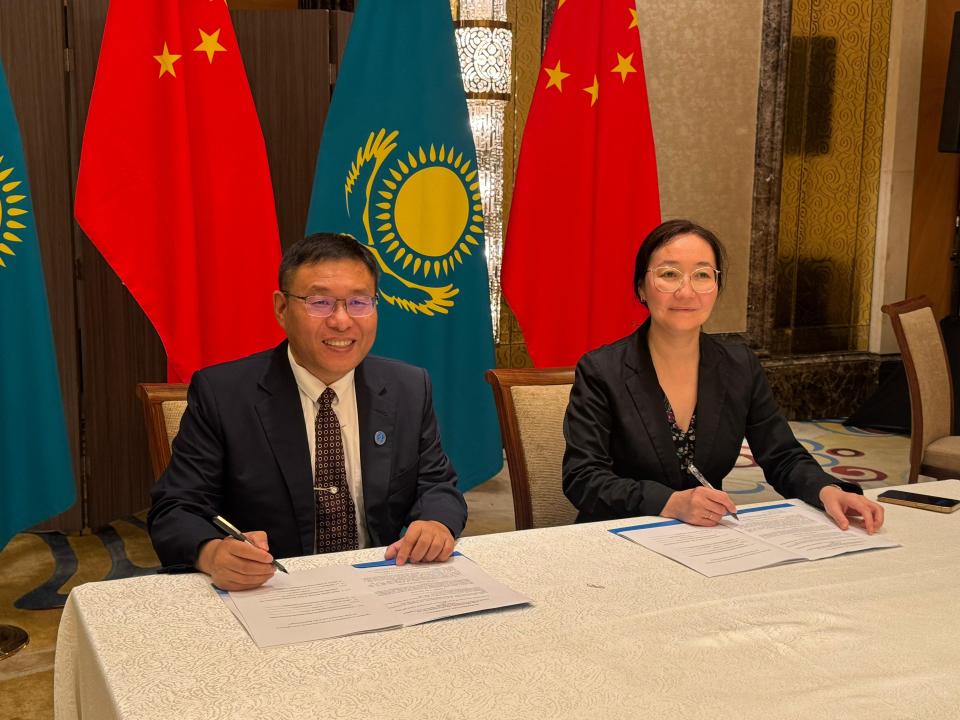
The Kazakh Ministry of Science and Higher Education has finalized an agreement with Grenoble INP-Phelma, UGA - France’s premier engineering school specializing in physics, electronics, and materials science, to open a branch campus in Almaty in 2026. The new campus will operate in partnership with Satbayev University, one of Kazakhstan’s top technical institutions. The agreement was signed by vice presidents of both universities in the presence of Kazakhstan’s Minister of Science and Higher Education Sayasat Nurbek and French Ambassador to Kazakhstan Sylvain Guiguet. Grenoble INP-Phelma, located in the city of Grenoble, is part of the Grenoble Institute of Technology and is internationally recognized for its excellence in engineering education. The Kazakhstan branch of Phelma will offer dual degree programs in Nuclear Engineering, Renewable Engineering, and Advanced Studies. The initiative aims to train highly qualified specialists in nuclear and renewable energy, fields of growing strategic importance as Kazakhstan prepares to construct its first nuclear power plant. Participating students will have the opportunity to undergo practical training at French nuclear power facilities, which operate 56 reactors and supply more than 70% of France’s electricity. This hands-on experience is expected to prepare graduates for careers in Kazakhstan’s evolving energy sector. The Times of Central Asia previously reported that the Colorado School of Mines will also open its first international campus in Kazakhstan in 2026. That campus will be located in Zhezkazgan, the center of the country’s geological industry. The Colorado School of Mines has already established a dual degree partnership with Satbayev University in geology, petroleum engineering, and mining, which includes joint research collaborations.

Colorado School of Mines to Open First International Campus in Kazakhstan

In 2026, the Colorado School of Mines will open its first international campus in Kazakhstan, marking a significant milestone in U.S.-Kazakhstan academic cooperation. An agreement to establish the branch was signed between Kazakhstan’s Ministry of Science and Higher Education and the Colorado School of Mines, which currently ranks No. 1 globally in Mineral & Mining Engineering according to the QS World University Rankings 2025. The new campus will be located in Zhezkazgan, the center of Kazakhstan’s geological industry, on the grounds of the newly established Ulytau Technical University. Instruction will be in English and will focus on four core bachelor's degree programs: Mining, Geology and Geological Exploration; Geophysical Engineering; and Petroleum Engineering. According to the Ministry, the project underscores Kazakhstan’s growing status as a destination for educational investment and knowledge transfer in technical fields. “We have identified Kazakhstan as a priority country for partnership and development,” said John Bradford, Vice President of Global Initiatives at the Colorado School of Mines. “This agreement will allow us to elevate our collaboration and academic exchange.” Earlier, the Colorado School of Mines signed a dual degree agreement with Kazakhstan’s Satbayev University in the fields of geology, petroleum engineering, and mining, which also includes joint research initiatives. Once operational, the Zhezkazgan campus is expected to attract young professionals to the region, create new job opportunities, and train highly qualified specialists for both Kazakhstan’s domestic needs and the global labor market.

Tajik Students Gain Expanded Access to Internships and Training in the UK

Educational cooperation between Tajikistan and the United Kingdom is reaching new milestones, with fresh opportunities emerging for Tajik students to study and gain professional experience in the UK. On May 31, representatives of Tajikistan’s State Agency “Center for International Programs” held talks with leadership at the University of Greenwich to discuss avenues for academic collaboration and student support initiatives. Building Bridges in Higher Education The meeting took place within the framework of Tajikistan’s broader strategy to internationalize its education and science sectors. According to the Ministry of Education and Science, discussions focused on improving access for Tajik citizens to high-quality education, facilitating professional internships, and exploring financial assistance mechanisms. Particular emphasis was placed on fields such as economics, finance, and management. University of Greenwich officials highlighted their partnerships with major financial institutions, which enable students to gain practical experience and enhance their competitiveness in global labor markets. Greenwich: A Gateway to Global Careers As part of the talks, the two sides explored the possibility of offering scholarships to Tajik students through national and international funding schemes. An agreement was reached to continue discussions and expand academic exchange programs. Experts see this initiative as a significant step in strengthening bilateral educational ties and opening new horizons for Tajik youth. Strengthening Tajik-UK Educational Ties Tajik-UK educational cooperation has grown steadily in recent years. Since 2018, more than 30 Tajik students have received Chevening Scholarships to pursue master's degrees at top British universities. The program, funded by the UK government, remains a key pillar of bilateral academic exchange. In 2022, the British Council resumed operations in Dushanbe, boosting collaboration on English language education and teacher training. Joint projects with the Tajik Ministry of Education aim to modernize teaching methods and improve educational outcomes. Tajik universities, such as Rudaki Tajik National University, are also forging partnerships with British institutions like the University of Central Lancashire, including dual degree programs and collaborative research. STEM education is a growing area of focus: in 2023, British-supported robotics and programming courses were launched for Tajik schoolchildren. Regional Context: Broader British Engagement in Central Asia The UK is expanding its educational footprint across Central Asia. In Turkmenistan, British experts have supported teacher training and curriculum modernization. In the 2024/25 academic year, 12 Turkmen nationals received Chevening Scholarships. The British Council continues to roll out digital education initiatives, such as the Digital Learning project, in the region. In May 2025, Turkmenistan also participated in the World Education Forum in London, joining delegates from over 100 countries to discuss global trends and priorities in education.

Video: From Hardship to Accomplishment – Meet the Kazakh Woman Supporting Female STEM Students

Kalmakhanova Marzhan Seitkyzy is a young professor in Kazakhstan supporting female students in the fields of science, technology, engineering, and mathematics (STEM), offering guidance and helping them navigate the realities of research work. Watch her story: [video width="3840" height="2160" mp4="https://timesca.com/wp-content/uploads/2025/04/Конкурс-2.mp4"][/video]

Korean Universities Expand Cooperation with Kazakhstan

South Korea’s Woosong University is set to open its branch in Turkestan, Kazakhstan, before the start of the new academic year, according to Kazakhstan’s Minister of Science and Higher Education, Sayasat Nurbek. The announcement came during a meeting with South Korea’s Vice Minister of Education, Oh Seok Hwan, on April 28 in Almaty.  Construction of the university premises is currently underway. For the initial intake, Woosong University has allocated 110 scholarships, which will supplement academic grants provided by the Kazakh government. Strengthening Educational Ties During the meeting, Minister Nurbek highlighted several ongoing joint educational and scientific projects between Korean and Kazakhstani institutions: Dong-Eui University, one of South Korea’s leading mechanical engineering universities, is collaborating with Akhmet Baitursynov University to train mechanical engineers for automobile plants in Kostanay. Korkyt Ata University in Kyzylorda has launched dual-degree programs with Seoul National University of Science and Technology (SeoulTech). Satbayev University in Almaty is partnering with the Korea Advanced Institute of Science and Technology (KAIST) to establish a center for rare earth metals processing. According to Nurbek, the establishment of foreign university branches plays a crucial role in Kazakhstan’s ambition to become a regional hub for higher education and to further integrate into the global educational landscape. Vice Minister Oh Seok Hwan expressed confidence that Kazakhstan’s systemic approach and academic potential would ensure its leadership position in the Central Asian educational market. Following their meeting, Nurbek and Oh Seok Hwan attended the opening of the Study in Korea exhibition in Almaty, which featured participation from more than 30 Korean universities. Kazakhstan’s Expanding Educational Horizon Kazakhstan’s growing reputation as an academic hub is further evidenced by other international initiatives. As previously reported by The Times of Central Asia, the Moscow State Institute of International Relations (MGIMO), one of Russia’s top universities, will open a branch in Astana in September 2025.  Additionally, Cardiff University in Wales plans to launch a campus in Astana later this year, reinforcing the Kazakh capital’s rising status as a regional center for higher education. 

Unlocking Potential: Education Reform Necessary for Central Asia’s Economic Rise

Central Asian countries have made remarkable progress in providing universal access to education, showcasing their commitment to developing their human capital. According to recent data, the region boasts impressive enrolment rates, with students averaging 12.6 years of primary and secondary education — nearing the maximum limit of 14 years. Even more striking is that approximately 40% of young adults successfully graduate from universities, exceeding the global average of 31%, and private education in the region is also growing competitively, with the number of higher education institutions in particular doubling in the last two to five years, reflecting the region's commitment to higher education. Despite the significant strides made in access to education and levels of academic achievement, a disconcerting trend is emerging: students' academic performance is declining. This troubling shift becomes apparent through the diminishing scores recorded on standardized assessments, most notably the Program for International Student Assessment (PISA), which gauges the competencies of 15-year-olds globally. Over the last decade, the decline in math scores among Central Asian students has been particularly alarming, reflecting a staggering regression equivalent to the loss of an entire year of formal schooling. This deterioration in academic performance raises critical concerns, as it jeopardizes not only the prospects of these students but the whole region's broader economic potential and workforce capabilities. The implications of such a decline are profound, threatening to undermine the foundation of growth and innovation that education is meant to support. Mental arithmetic is traditionally defined as the ability to perform precise calculations without any reliance on external tools such as paper, pencils, mechanical calculators, or computers. This skill, widely known is crucial in a child's mathematical education and development. In Central Asia, mental arithmetic has gained immense popularity as an educational approach, particularly targeting children between the ages of 4 and 16. This method emphasizes the cultivation of mental calculation skills through various engaging tools, with the abacus being one of the most prominent. Instead of depending solely on written calculations or electronic devices, this approach aims to enhance a child’s cognitive abilities, fostering essential skills such as mental retention, focus, and practical problem-solving strategies. Moreover, it instills confidence in their mathematical capabilities while nurturing a genuine appreciation for the subject. By mastering mental arithmetic, students improve their mathematical prowess and gain significant advantages — especially for those aspiring to enter fields such as policymaking that rely heavily on Information technology, science, statistics, and economics. While modern technology has introduced tools like calculators and sophisticated spreadsheets to handle complex computations, the benefits of proficient mental math skills are undeniable. Such skills can significantly enhance a policymaker’s efficiency, accuracy, and decision-making capabilities in various real-world scenarios. Here are some reasons why these skills are crucial: Faster Data Analysis and Estimations Economists often deal with large datasets, percentages, and financial projections. Mental arithmetic helps them quickly estimate trends, identify errors, and make fast decisions without always relying on tools. Improved Problem-Solving and Logical Thinking Mental math strengthens the brain’s cognitive flexibility, helping economists...