• KZT/USD = 0.00214
  • TJS/USD = 0.10810
  • UZS/USD = 0.00008
  • TMT/USD = 0.29850
  • KZT/USD = 0.00214
  • TJS/USD = 0.10810
  • UZS/USD = 0.00008
  • TMT/USD = 0.29850
  • KZT/USD = 0.00214
  • TJS/USD = 0.10810
  • UZS/USD = 0.00008
  • TMT/USD = 0.29850
  • KZT/USD = 0.00214
  • TJS/USD = 0.10810
  • UZS/USD = 0.00008
  • TMT/USD = 0.29850
  • KZT/USD = 0.00214
  • TJS/USD = 0.10810
  • UZS/USD = 0.00008
  • TMT/USD = 0.29850
  • KZT/USD = 0.00214
  • TJS/USD = 0.10810
  • UZS/USD = 0.00008
  • TMT/USD = 0.29850
  • KZT/USD = 0.00214
  • TJS/USD = 0.10810
  • UZS/USD = 0.00008
  • TMT/USD = 0.29850
  • KZT/USD = 0.00214
  • TJS/USD = 0.10810
  • UZS/USD = 0.00008
  • TMT/USD = 0.29850
11 August 2026

Viewing results 1 - 6 of 43

Video: From Hardship to Accomplishment – Meet the Kazakh Woman Supporting Female STEM Students

Kalmakhanova Marzhan Seitkyzy is a young professor in Kazakhstan supporting female students in the fields of science, technology, engineering, and mathematics (STEM), offering guidance and helping them navigate the realities of research work. Watch her story: [video width="3840" height="2160" mp4="https://timesca.com/wp-content/uploads/2025/04/Конкурс-2.mp4"][/video]

Korean Universities Expand Cooperation with Kazakhstan

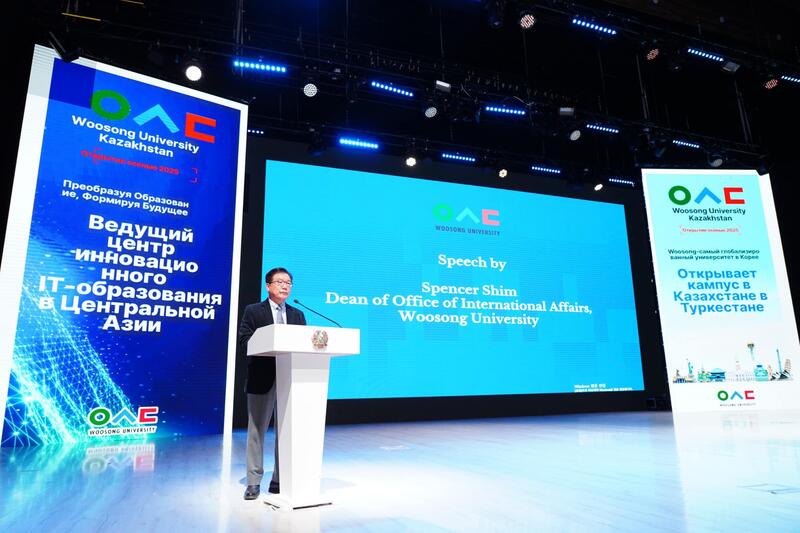
South Korea’s Woosong University is set to open its branch in Turkestan, Kazakhstan, before the start of the new academic year, according to Kazakhstan’s Minister of Science and Higher Education, Sayasat Nurbek. The announcement came during a meeting with South Korea’s Vice Minister of Education, Oh Seok Hwan, on April 28 in Almaty.  Construction of the university premises is currently underway. For the initial intake, Woosong University has allocated 110 scholarships, which will supplement academic grants provided by the Kazakh government. Strengthening Educational Ties During the meeting, Minister Nurbek highlighted several ongoing joint educational and scientific projects between Korean and Kazakhstani institutions: Dong-Eui University, one of South Korea’s leading mechanical engineering universities, is collaborating with Akhmet Baitursynov University to train mechanical engineers for automobile plants in Kostanay. Korkyt Ata University in Kyzylorda has launched dual-degree programs with Seoul National University of Science and Technology (SeoulTech). Satbayev University in Almaty is partnering with the Korea Advanced Institute of Science and Technology (KAIST) to establish a center for rare earth metals processing. According to Nurbek, the establishment of foreign university branches plays a crucial role in Kazakhstan’s ambition to become a regional hub for higher education and to further integrate into the global educational landscape. Vice Minister Oh Seok Hwan expressed confidence that Kazakhstan’s systemic approach and academic potential would ensure its leadership position in the Central Asian educational market. Following their meeting, Nurbek and Oh Seok Hwan attended the opening of the Study in Korea exhibition in Almaty, which featured participation from more than 30 Korean universities. Kazakhstan’s Expanding Educational Horizon Kazakhstan’s growing reputation as an academic hub is further evidenced by other international initiatives. As previously reported by The Times of Central Asia, the Moscow State Institute of International Relations (MGIMO), one of Russia’s top universities, will open a branch in Astana in September 2025.  Additionally, Cardiff University in Wales plans to launch a campus in Astana later this year, reinforcing the Kazakh capital’s rising status as a regional center for higher education. 

Unlocking Potential: Education Reform Necessary for Central Asia’s Economic Rise

Central Asian countries have made remarkable progress in providing universal access to education, showcasing their commitment to developing their human capital. According to recent data, the region boasts impressive enrolment rates, with students averaging 12.6 years of primary and secondary education — nearing the maximum limit of 14 years. Even more striking is that approximately 40% of young adults successfully graduate from universities, exceeding the global average of 31%, and private education in the region is also growing competitively, with the number of higher education institutions in particular doubling in the last two to five years, reflecting the region's commitment to higher education. Despite the significant strides made in access to education and levels of academic achievement, a disconcerting trend is emerging: students' academic performance is declining. This troubling shift becomes apparent through the diminishing scores recorded on standardized assessments, most notably the Program for International Student Assessment (PISA), which gauges the competencies of 15-year-olds globally. Over the last decade, the decline in math scores among Central Asian students has been particularly alarming, reflecting a staggering regression equivalent to the loss of an entire year of formal schooling. This deterioration in academic performance raises critical concerns, as it jeopardizes not only the prospects of these students but the whole region's broader economic potential and workforce capabilities. The implications of such a decline are profound, threatening to undermine the foundation of growth and innovation that education is meant to support. Mental arithmetic is traditionally defined as the ability to perform precise calculations without any reliance on external tools such as paper, pencils, mechanical calculators, or computers. This skill, widely known is crucial in a child's mathematical education and development. In Central Asia, mental arithmetic has gained immense popularity as an educational approach, particularly targeting children between the ages of 4 and 16. This method emphasizes the cultivation of mental calculation skills through various engaging tools, with the abacus being one of the most prominent. Instead of depending solely on written calculations or electronic devices, this approach aims to enhance a child’s cognitive abilities, fostering essential skills such as mental retention, focus, and practical problem-solving strategies. Moreover, it instills confidence in their mathematical capabilities while nurturing a genuine appreciation for the subject. By mastering mental arithmetic, students improve their mathematical prowess and gain significant advantages — especially for those aspiring to enter fields such as policymaking that rely heavily on Information technology, science, statistics, and economics. While modern technology has introduced tools like calculators and sophisticated spreadsheets to handle complex computations, the benefits of proficient mental math skills are undeniable. Such skills can significantly enhance a policymaker’s efficiency, accuracy, and decision-making capabilities in various real-world scenarios. Here are some reasons why these skills are crucial: Faster Data Analysis and Estimations Economists often deal with large datasets, percentages, and financial projections. Mental arithmetic helps them quickly estimate trends, identify errors, and make fast decisions without always relying on tools. Improved Problem-Solving and Logical Thinking Mental math strengthens the brain’s cognitive flexibility, helping economists...

Moscow’s MGIMO University to Open Branch in Astana

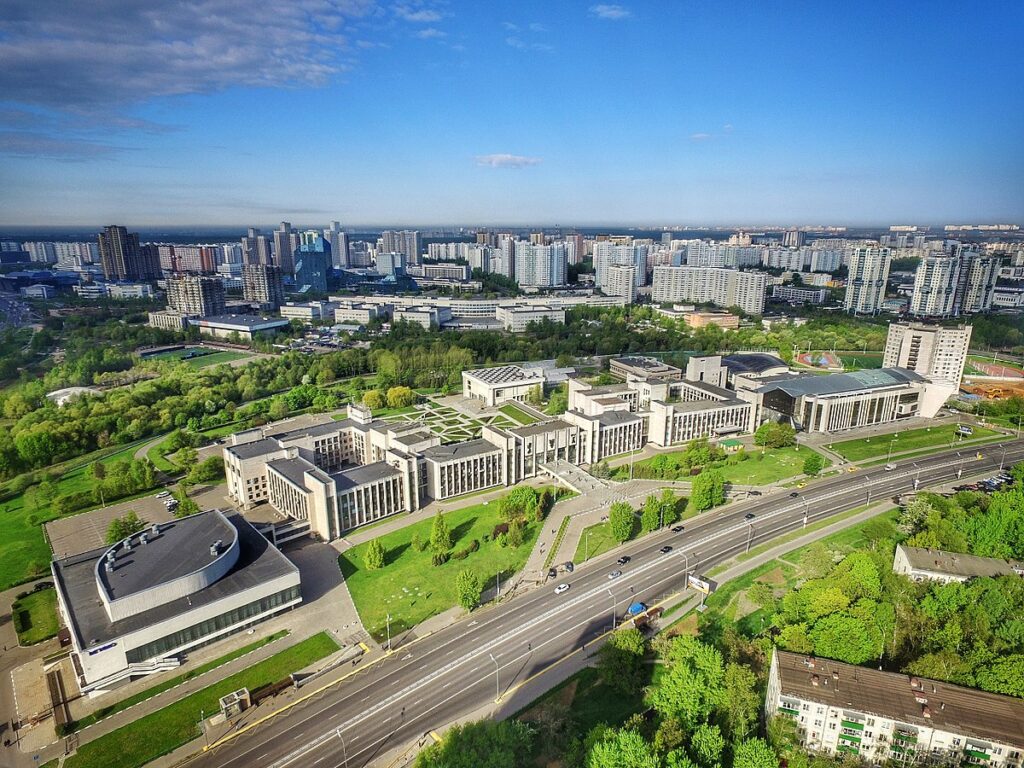
The Moscow State Institute of International Relations (MGIMO), one of Russia’s most prestigious universities and the flagship institution of the Russian Ministry of Foreign Affairs, will open a branch in Astana in September 2025, according to Kazakhstan’s Ministry of Science and Higher Education. The Astana branch, known as MGIMO-Astana, will initially offer two undergraduate programs: World Mineral Resources and Energy Markets and Analysis and Modeling of Socioeconomic and Business Processes. Two master’s degree programs will also be available: Financial Economics and Financial Technologies and Multilateral Institutions and Management of Global Technological Development. Applicants will have the opportunity to apply for academic grants, though tuition-based enrolment will also be available. Instruction will be conducted by MGIMO professors from Moscow, complemented by local faculty trained in the university’s academic standards and methodologies. MGIMO-Astana will initially operate from the campus of the L.N. Gumilyov Eurasian National University, before moving to its own dedicated campus. Planning and design for the new facility are already underway. This will be MGIMO’s second international branch. Its first overseas campus, MGIMO-Tashkent, opened in Uzbekistan and currently offers six undergraduate and graduate programs, all taught by MGIMO faculty and tailored to the local academic landscape. As The Times of Central Asia previously reported, Cardiff University in Wales also plans to open a campus in Astana later this year, underscoring the Kazakh capital’s growing role as a regional hub for higher education.

New York Film Academy Launches Branch in Kazakhstan

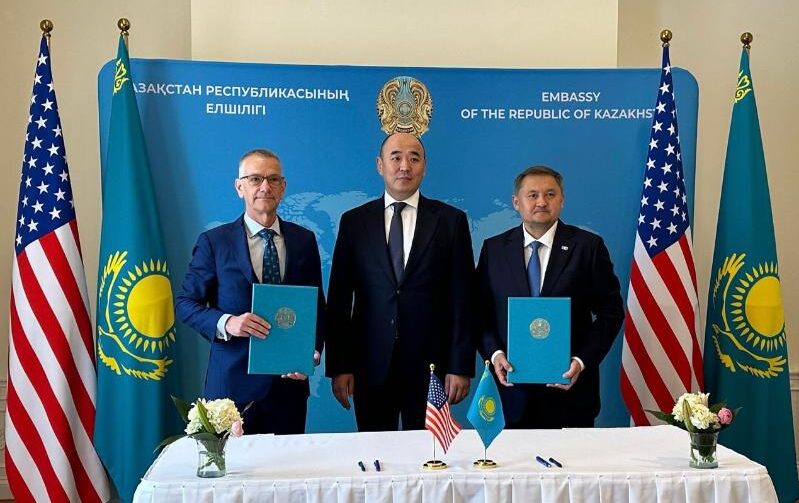
The New York Film Academy (NYFA) has officially opened a branch in Kazakhstan, marking its third campus outside the United States and the first world-class creative university to establish a presence in the country, the Ministry of Science and Higher Education of Kazakhstan announced. The launch agreement was signed virtually on March 1 by Sayasat Nurbek, Kazakhstan’s Minister of Science and Higher Education, and Michael Yang, President of the New York Film Academy. Academic programs at the new campus are set to begin on September 29 at the Energo University Creative Industries Park in Kaskelen, near Almaty. Instruction will be delivered in person by professional NYFA faculty from the United States. The Kazakhstan branch will offer one-year and short-term training programs in five core disciplines: Filmmaking Producing Screenwriting Animation and Visual Effects (3D Animation & VFX) Game Development (Game Design) The inaugural class will enroll up to 200 students from Kazakhstan and neighboring countries, including China, India, and Russia. Graduates will receive diplomas from the U.S.-based NYFA and will have the opportunity to continue their studies at the Academy’s campuses in New York or Los Angeles, with credits transferred from their coursework in Kazakhstan.

Is Beijing’s Educational Diplomacy Turning the Dial on Central Asian Public Opinion?

OSH, KYRGYZSTAN – On the eastern bank of the Ak-Buura River, a mini-Chinatown is developing. At Osh’s old bus station, buses and taxis hawk their services to Kashgar, 300 kilometers away over the Pamir Mountains in China’s Xinjiang Province. Blue-plated SUVs stand by the roadside, sporting the 新 character that also symbolizes their origin in Xinjiang. At the Kelechek Bazaar, hordes of money changers shout the best rates for Dollars, Uzbek Som, and Chinese Yuan. Tucked away from the mêlée behind the Peking Hotel is the five-story Confucius Institute. “The Chinese language is in huge demand right now,” said Ali, a student who has moved to Osh from nearby Uzbekistan to study here. He believes the move will be good for his career. “It’s the best opportunity for anyone in this region,” he told The Times of Central Asia, before enthusing about his plans to study in China next year. [caption id="attachment_30054" align="aligncenter" width="1600"] The Confucius Institute in Osh, Kyrgyzstan; image: Joe Luc Barnes[/caption] “There’s a strong possibility that the younger generation will have a more positive view towards China,” Yunis Sharifli, a non-resident fellow at the China Global South Project told TCA. “This is good for China-Central Asia relations because we know that in the past, anti-China sentiments have hindered cooperation.” Chinese diplomats often refer to win-win diplomacy, where engagement between states can lead to positive outcomes for both sides. This is viewed with understandable cynicism by those who see Beijing’s diplomacy as entirely self-interested, but when it comes to education, even if we avoid the term win-win, the opportunities that it offers young Central Asians are hard to deny. In return, China hopes to create a network of influence and goodwill from people like Ali. Nevertheless, the jury is out on whether it is working. [caption id="attachment_30053" align="aligncenter" width="1600"] China-plated cars are an increasingly common sight in Kyrgyzstan; image: Joe Luc Barnes[/caption] Swelling numbers Given that numerous questions have been asked about the accuracy of China’s own population data, monitoring the number of foreign students in the country can be a fiendish task. The consensus is that the numbers are increasing. Chinese state media outlet Xinhua claimed that student numbers grew from 11,930 to 29,885 between 2010 and 2018, and have recovered since the pandemic. One recent report put the number of Kazakh students alone at “approaching 20,000”. These numbers are unlikely to dethrone Russia as the top destination for Central Asian students any time soon. Moscow claimed in 2023 that 168,000 Central Asians were studying in the country, with around a third of them being funded by the Russian government. However, Sharifli believes that Russia’s luster is beginning to wane. “Moscow State University has historically been very attractive for Central Asian people, particularly in the social science or the technical fields,” said Sharifli. “But since the war [in Ukraine] began there has been a lot of discrimination against Central Asians in Russia.” This was demonstrated in a recent account given to The Times of Central Asia by...