• KZT/USD = 0.00222
  • TJS/USD = 0.10820
  • UZS/USD = 0.00009
  • TMT/USD = 0.29760
  • KZT/USD = 0.00222
  • TJS/USD = 0.10820
  • UZS/USD = 0.00009
  • TMT/USD = 0.29760
  • KZT/USD = 0.00222
  • TJS/USD = 0.10820
  • UZS/USD = 0.00009
  • TMT/USD = 0.29760
  • KZT/USD = 0.00222
  • TJS/USD = 0.10820
  • UZS/USD = 0.00009
  • TMT/USD = 0.29760
  • KZT/USD = 0.00222
  • TJS/USD = 0.10820
  • UZS/USD = 0.00009
  • TMT/USD = 0.29760
  • KZT/USD = 0.00222
  • TJS/USD = 0.10820
  • UZS/USD = 0.00009
  • TMT/USD = 0.29760
  • KZT/USD = 0.00222
  • TJS/USD = 0.10820
  • UZS/USD = 0.00009
  • TMT/USD = 0.29760
  • KZT/USD = 0.00222
  • TJS/USD = 0.10820
  • UZS/USD = 0.00009
  • TMT/USD = 0.29760
12 September 2026

Viewing results 1 - 6 of 138

Love and Politics: How the Wives of Alash Founders Sparked a Controversy

A controversy that may appear perplexing to outside observers has ignited debate across Kazakh society. The target of online backlash is journalist Maya Bekbaeva, known for her extensive work promoting Kazakh history, from the era of Khan Jochi, son of Genghis Khan, to notable Soviet-era figures. Two years ago, Bekbaeva released a documentary highlighting the wives of prominent Kazakhs who fought for autonomy within the Russian Empire. A fragment of the film, selectively edited, surfaced on YouTube last week, triggering widespread public reaction. A Controversy with Cultural Implications The edited clip suggested that the founders of the Alash party routinely married Russian women because Kazakh women were “uneducated” and unable to compete, a claim that quickly drew backlash. The storm was fueled by a Facebook post from journalist Mukhtar Tumenbay, who encountered the clip and shared it with commentary that drew a flood of emotionally charged responses. Some commenters accused the film of inciting interethnic tension, implying that Alash leaders chose Russian partners due to the inaccessibility of “proud and chaste Kazakh women.” Bekbaeva responded by clarifying that the excerpt had been misleadingly edited. She reiterated that the film was intended to inspire modern Kazakh women to pursue education and societal advancement. “You could always talk to [those women] about various things. That’s something we should remember when raising girls, don’t rush them into marriage; let them learn and prove themselves. Love prefers equals,” she said, emphasizing the film’s deeper message. Revisiting Alash and Alash Orda To understand the roots of this debate, one must revisit the early 20th century. Following its defeat in the Russo-Japanese War, the Russian Empire entered a period of upheaval. Peripheral regions, including modern-day Kazakhstan, began resisting colonial policies such as the Stolypin reforms, which facilitated the resettlement of Russian and Ukrainian peasants to Kazakh steppe lands, disrupting nomadic traditions and livelihoods. A pivotal moment came on May 16, 1907, when Bakhytzhan Karataev, a descendant of Khan Abulkhair and a law graduate from St. Petersburg, delivered a speech in the State Duma defending the rights of the steppe people. His ideas eventually laid the groundwork for the formation of the Alash party in 1917. Founded by Alikhan Bokeikhanov, Akhmet Baitursynov, and Mirzhakip Dulatov, the Alash movement advocated for autonomy and reform. That same year, the All-Kazakh Congress in Orenburg approved the creation of the Alash Orda Provisional People's Council, a precursor to the modern Kazakh state. The Wives Behind the Leaders Among the Alash founders, two were indeed married to Russian women. Akhmet Baitursynov’s wife, born Alexandra Ivanova, converted to Islam and adopted the name Badrisafa. She supported Baitursynov through exile, imprisonment, and repression, becoming one of the first women deeply involved in the national movement. Alikhan Bokeikhanov married Elena Sevostyanova, daughter of an exiled Narodnik. Despite his mother’s opposition, Elena was Christian, the couple remained together until her death. Some speculate that Bokeikhanov may have converted to Christianity for her, as she was buried with Orthodox rites. Political analyst Daniyar Ashimbayev notes that until...
Marking Victory Day: When Kazakh WWII Snipers Made the News in Australia

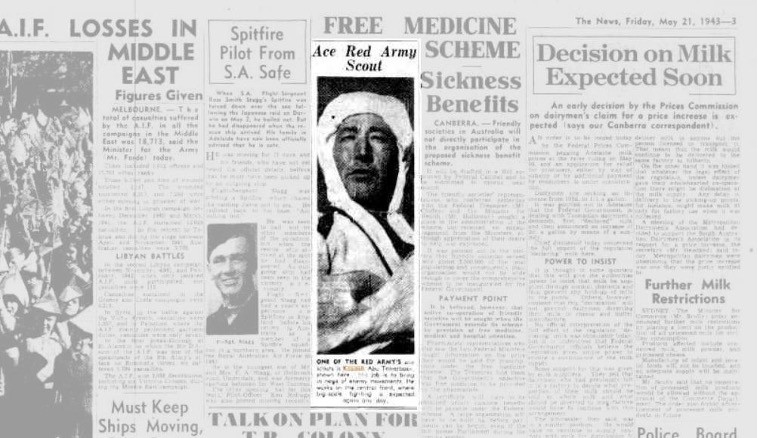
When we speak of the Second World War, Kazakhstan has never wavered in honoring the bravery of those who went to the front lines eight decades ago. Historical records show that more than 1.2 million people from the Kazakh Soviet Socialist Republic took part in the war. Over 500 of them were awarded the title of Hero of the Soviet Union. Among these valiant fighters was Kazakh lieutenant Rakhimzhan Koshkarbayev, one of the first soldiers to raise the Soviet flag over the Reichstag in Berlin. On the home front, Kazakhstan played a vital role in supplying the war effort with food, clothing, and military equipment. But this article sheds light on a lesser-known chapter: how newspapers in far-off Australia once reported on Kazakhs fighting on the Eastern Front. The Two Snipers On October 19, 1943, a brief story appeared in The Mirror, a Sydney-based newspaper, highlighting Kazakh snipers serving in the Red Army. The article titled Red Snipers’ Grim Harvest reads: "Grim-faced sniper, Siyazbekov, a Kazakh, kills four to five fascists every day. This photograph, taken during actual fighting scenes on the Russian front, shows Siyazbekov (right) well-hidden in a snow-covered Russian field, with Red Army man Djakeyev, who is also a sniper." Curious after reading this, we searched online for more information about these Kazakh marksmen. Unfortunately, the trail runs cold, suggesting this may be a topic worthy of deeper historical research. The newspaper’s accompanying image shows the two soldiers locked in focus behind their sniper rifles, stern, battle-hardened, and fearless. Behind Enemy Lines Another mention of a Kazakh soldier appeared in an Australian daily published in Adelaide, dated May 21, 1943. The story, found on page three, spotlighted a reconnaissance scout: "One of the Red Army’s ace scouts is Kazakh Abu Temerbaev, shown here. His job is to bring in news of enemy movements. He works on the central front, where big-scale fighting is expected again any day." Once again, we attempted to uncover more about this soldier. Yet, aside from this single article and one wartime photo showing him in winter camouflage, history offers no further trace. These brief mentions in Australian newspapers, now yellowed with age, hint at a vast and mostly forgotten archive of Kazakh valor. Their stories, still waiting to be told, echo across continents and urge us not to forget.

The Story of World War Two Hero Tair Tastandiev

During World War II, the Soviet leadership established the “Order of Glory”, to honor soldiers for acts of personal bravery. Often referred to as the “Soldier’s Order,” it was awarded strictly for individual merit. According to its statute, the order was to be conferred progressively, beginning with the 3rd Class and culminating in the 1st Class. Those who received all three classes became Full Cavaliers of the Order of Glory and were granted the same rights as recipients of the title “Hero of the Soviet Union.” Yet during the war, for unclear reasons, there were curious cases in which the same soldier was awarded the Order of Glory 3rd Class multiple times, despite qualifying for higher classes. Such was the fate of Guard Sergeant Tair Burkutbaevich Tastandiev. [caption id="attachment_31491" align="aligncenter" width="288"] Tair Burkutbaevich Tastandiev (1924–1974), WWII veteran, Full Cavalier of the Order of Glory. Photo from the 1960s[/caption] Tastandiev was born on March 20, 1924, in the village of Kyzyl-Aryk, Zhambyl region, Kazakhstan. In August 1942, he was drafted into the Red Army and served as a heavy machine gunner in the 72nd Guards Rifle Regiment. On November 26, 1944, during a battle for a strategic position south of the Latvian village of Rudbārži, Tastandiev destroyed an enemy machine gun nest with grenades. He was the first to storm into the village, leading his fellow soldiers. Later, on January 29, 1945, during combat six kilometers northwest of Königsberg (now Kaliningrad), Tastandiev’s unit captured two enemy machine guns, eliminating their crews and enabling the company's advance. For his bravery in Latvia, he was awarded the Order of Glory 3rd Class on February 8, 1945. He would then be again awarded the Order of Glory 3rd Class on March 12, 1945, for his actions in Königsberg. On April 6, 1945, during a breakthrough of enemy defenses near the village of Metgethen, Tastandiev and his crew breached enemy barbed wire, paving the way for an infantry assault. On April 8, in the same area, he was concussed in combat but continued to fight with his gun crew. For this, he received the Order of Glory 3rd Class a third time, on April 11, 1945. After the war, Tastandiev was demobilized and returned to his native village of Kyzyl-Aryk, where he worked on a collective farm. Only a decade later, on August 19, 1955, a decree by the Presidium of the Supreme Soviet of the USSR corrected the awarding irregularity. Recognizing the administrative oversight, Soviet authorities conferred upon Tastandiev the 2nd and 1st Classes of the Order of Glory, thereby officially designating him a Full Cavalier.

Twentieth Century Travelogue Documents British Women’s Experiences in Central Asia

Interpreting English-language sources accurately for Kazakh readers can be quite challenging. It often requires drawing on the richness, expressiveness, and natural rhythm of the Kazakh language. I came to appreciate this during an internship in the United States. Each evening, on the first floor of our home in Arlington, Virginia, I would spend about three hours in the study, poring over old library books containing historical records about Kazakhs. A quote often came to mind during those long nights: “A person with a good book is never truly alone.” It became both a source of inspiration and motivation. One day, I discovered a remarkable book, published in 1927 in both Boston and New York, titled Through the Jade Gate and Central Asia. Written by Mildred Cable and Francesca French, the book recounts their travels as British female missionaries across northwestern China and Central Asia. It offers a vivid portrayal of life in the region a century ago. The authors journeyed through Gansu, Xinjiang, the Gobi Desert, and visited Mongol and Tibetan settlements. In 1923, Cable, French, and their companion, Evangeline French, traveled more than 2,400 kilometers through Central Asia. They set out from Huozhou, spreading Christianity along the way. During their travels, they opened a mission school, distributed religious literature, and tried to learn local languages, such as Uyghur, to better communicate with Muslim women. However, conversions among local women were rare. The group crossed the desert five times, traversed the Tibetan plains, and eventually reached Zaysan via Shauyeshek. In Zaysan they met with Kazakh families and documented their encounters. For example, one Kazakh man asked if they knew how to operate a sewing machine, likely one he had purchased from Russians. They also met a Nogai man with two wives and a son, one wife being Kazakh and the other from another Turkic group. Throughout the book, the authors include photographs and descriptions of the people they met along the way.   Their journey continued along the Irtysh River, where they were moved by a boatman’s song. Upon reaching Semey, they then traveled by train to Novosibirsk and Omsk. On a boat from Omsk, they observed a Kazakh family and were struck by their blend of nomadic tradition and Western education. The family’s Western-style clothing, musical abilities, and refined manners stood out. One Kazakh man even played traditional music on the piano for his child, a moment that so impressed the authors that they included the musical notation in their book. The book also records a striking demographic insight: “We were told the Kazakh population exceeds seven million.” The travelers were clearly impressed by the Kazakhs’ adaptability, modesty, and political awareness, suggesting these qualities would soon position them for greater influence. They were especially taken by the poise and beauty of a Kazakh nurse, who left a lasting impression. In the end, every foreign source that offers insight into our history is an asset. This travelogue stands out as a vivid and respectful portrayal of our ancestors and as...

Shadows of Power: Assassination Attempt Exposes Kazakhstan’s Turbulent Past

The assassination attempt on the deputy akim (head of the local government) in Shymkent, Kazakhstan’s third-largest city with a population exceeding one million, has drawn intense public attention. Shymkent, designated a city of republican significance, rarely sees violence of this nature targeting high-ranking officials. Ruslan Berdenov, the official in question, was wounded by shotgun fire from a smoothbore weapon on the steps of the city administration building, which struck him in the thigh and the shoulder. The attack appears less like a calculated contract killing and more like an act of personal retribution. Despite its entrenched presence in Russian criminal culture, the phenomenon of contract killings has not firmly taken root in Kazakhstan or the broader Central Asian region. Nonetheless, several contract-style assassinations have left a deep imprint on the public consciousness. The following cases are among the most significant. Alexander Svichinsky On December 28, 1992, Alexander Svichinsky, the general director of the Karaganda Metallurgical Plant, was gunned down in Temirtau. This was the first confirmed contract killing in post-Soviet Kazakhstan. Svichinsky, who had risen through the ranks at Karmet Combine from mechanic to general director, had recently succeeded Oleg Soskovets, who later served in both the Kazakh and Russian governments. He was shot in the back of the head at the plant’s gatehouse. President Nursultan Nazarbayev took personal control of the investigation. Gabdrakhim Mendeshev, a veteran criminal investigator, eventually uncovered the truth: the hit was arranged by a demoted former deputy of Svichinsky. The intermediary, a driver at the plant, enlisted three Lithuanian nationals staying at a local hotel to carry out the murder. Following Svichinsky’s death, the plant’s fortunes declined. It was eventually sold to Indian industrialist Lakshmi Mittal’s Ispat Corporation. Iosif Milgram A year later, in December 1993, Almaty saw its first major contract killing. Iosif Milgram, the head of the Almatygorstroy construction firm, and his driver Dmitry Tarasov were murdered in the courtyard of Milgram’s home. The case went unsolved until 1998 when a traffic stop led to the arrest of Zakir Salakhutdinov. After killing a police officer during the stop, Salakhutdinov was detained and eventually confessed to the murder of Milgram. Investigators discovered that Milgram had accused his business partner, Valentin Li, of embezzlement. Li allegedly paid Salakhutdinov $20,000 to carry out the killing. In 1999, Salakhutdinov was sentenced to death and Li received a 15-year sentence, although he was released early due to illness. Nurlan Turysov In 2002, businessman Nurlan Turysov and his wife Bayan Atabaeva were murdered in their Almaty apartment. Turysov was the son of Karatay Turysov, a prominent political figure in Soviet Kazakhstan who had served as vice-premier of the republic’s Council of Ministers. Investigators believe Turysov was acquainted with the killers, as he let them in himself. He was shot twice in the temple and once in the back of the head. Hearing the shots, his wife attempted to flee and was attacked at the window, stabbed, and then shot in the head. The apartment was ransacked, suggesting the killers...

The Ruthless History of the Great Game in Central Asia

In the so-called New Great Game, Central Asia is no longer a mere backdrop; with its strategic location, massive oil and gas reserves, and newfound deposits of critical raw materials, it’s a key player. In stark contrast to events in the 19th century, this time, Central Asia finds itself courted by four great powers - China, the EU, the U.S., and Russia - instead of caught in the crosshairs of conquest. The region finds itself with agency. However, the original Great Game was anything but fair play. Comprising vast steppes, nomadic horsemen, descendants of Genghis Khan’s Great Horde, and a lone nation of Persians, during the 19th century, the once-thriving Silk Road states became entangled in a high-stakes battle of expansion and espionage between Britain and Russia. Afghanistan became the buffer zone, while the rest of the region fell under Russian control, vanishing behind what became known as the “Iron Curtain” for almost a century. The term “Great Game” was first coined by British intelligence officer Arthur Conolly in the 19th century, during his travels through the fiercely contested region between the Caucasus and the Khyber. He used it in a letter to describe the geopolitical chessboard unfolding before him. While Conolly introduced the idea, it was Rudyard Kipling who made it famous in his 1904 novel Kim, depicting the contest as the epic power clash between Tsarist Russia and the British Empire over India. Conolly’s reports impressed both Calcutta and London, highlighting Afghanistan’s strategic importance. Britain pledged to win over Afghan leaders — through diplomacy, if possible, and by force, if necessary. The Afghan rulers found themselves caught in a barrage of imperial ambition, as the British and Russian Empires played on their vulnerabilities to serve their own strategic goals. Former Ambassador Sergio Romano summed it up perfectly in I Luoghi della Storia: "The Afghans spent much of the 19th century locked in a diplomatic and military chess match with the great powers — the infamous 'Great Game,' where the key move was turning the Russians against the Brits and the Brits against the Russians." The Great Game can be said to have been initiated on January 12, 1830, when Lord Ellenborough, President of the Board of Control for India, instructed Lord William Bentinck, the Governor-General, to create a new trade route to the Emirate of Bukhara. Britain aimed to dominate Afghanistan, turning it into a protectorate, while using the Ottoman Empire, Persian Empire, Khanate of Khiva, and Emirate of Bukhara as buffer states. This strategy was designed to safeguard India and key British sea trade routes, blocking Russia from accessing the Persian Gulf or the Indian Ocean. Russia countered by proposing Afghanistan as a neutral zone. The ensuing conflicts included the disastrous First Anglo-Afghan War (1838), the First Anglo-Sikh War (1845), the Second Anglo-Sikh War (1848), the Second Anglo-Afghan War (1878), and Russia’s annexation of Kokand. At the start of the Central Asian power struggle, both Britain and Russia had scant knowledge of the region's people, terrain, or...