• KZT/USD = 0.00222
  • TJS/USD = 0.10820
  • UZS/USD = 0.00009
  • TMT/USD = 0.29760
  • KZT/USD = 0.00222
  • TJS/USD = 0.10820
  • UZS/USD = 0.00009
  • TMT/USD = 0.29760
  • KZT/USD = 0.00222
  • TJS/USD = 0.10820
  • UZS/USD = 0.00009
  • TMT/USD = 0.29760
  • KZT/USD = 0.00222
  • TJS/USD = 0.10820
  • UZS/USD = 0.00009
  • TMT/USD = 0.29760
  • KZT/USD = 0.00222
  • TJS/USD = 0.10820
  • UZS/USD = 0.00009
  • TMT/USD = 0.29760
  • KZT/USD = 0.00222
  • TJS/USD = 0.10820
  • UZS/USD = 0.00009
  • TMT/USD = 0.29760
  • KZT/USD = 0.00222
  • TJS/USD = 0.10820
  • UZS/USD = 0.00009
  • TMT/USD = 0.29760
  • KZT/USD = 0.00222
  • TJS/USD = 0.10820
  • UZS/USD = 0.00009
  • TMT/USD = 0.29760
12 September 2026

Viewing results 1 - 6 of 138

How The New York Times Came to Publish an Obituary for Kazakh writer Mukhtar Auezov

While browsing old issues of The New York Times, we wondered: “Is there anything here about the Kazakhs or Kazakhstan?” One edition stood out, the June 28, 1961 issue. On page 35, alongside obituaries for several prominent figures, was one for our great writer, Mukhtar Auezov. [caption id="attachment_33412" align="aligncenter" width="378"] “Winner of Lenin Prize in 1959 for 2-Volume Work Dies Mukhtar O. Auezov, the Kazakh poet and philosopher whose two-novel work, ‘Abai’ and ‘The Road of Abai,’ earned a Lenin Prize two years ago, died yesterday in Alma-Ata.”[/caption] The article went on to note that Mukhtar Auezov was born and raised in the Shyngystau region (known today as the Abai District), and later wrote a major work about the life of Abai. It also mentioned that he studied at Leningrad University and authored numerous literary works. In 1960, Auezov visited several U.S. states as part of a Soviet writers’ delegation. Upon returning home, he expressed in interviews his admiration for the towering skyscrapers of New York City. What pleased us even more was that The New York Times included a photograph of Auezov alongside the obituary. This shows that even in the 1960s, American literary circles recognized and took notice of a Kazakh writer. In other words, Auezov left a lasting impression on the American public. Other articles about him may have appeared in the U.S. press, but so far this obituary is the only one we have been able to find. Mukhtar Omarkhanuli Auezov holds the distinction of being the first known Kazakh writer to set foot on American soil. His official visit was well covered by the U.S. press and known to the American public at the time. This likely explains why such a major publication honored him with a dedicated obituary, informing readers around the world of his passing. The gesture reflects a significant level of respect and recognition. Mukhtar Auezov indeed visited the United States from February 17 to March 17, 1960, as part of a delegation of Soviet writers. This trip was part of the “Agreement Between the United States of America and the Union of Soviet Socialist Republics on Exchanges in the Cultural, Technical, and Educational Fields.” According to the agreement, four American writers visited the USSR in 1959, and in return, a Soviet delegation traveled to the U.S. in February/March 1960. To give readers a closer look at his journey, we are sharing excerpts from Mukhtar Auezov’s diary, where he reflects on the trip. The entries were later published in a bilingual edition, Mukhtar Auezov: Impressions of America, in 2021, in both Kazakh and English. Below are a few details from Auezov’s impressions of the U.S.: That day we toured Washington, D.C. It’s a very beautiful city. No two houses look alike. Even the cars are all different, though there are many, they never repeat. We visited the old part of the city, the area known as ‘Georgetown.’ All the houses here are old, yet highly stylish, elegant two-story homes. There is one...

A British Scholar’s Glimpse into Kazakh Life a Century Ago

A century ago, in 1925, British historian, writer, and revolutionary Ralph Fox published People of the Steppes, a compelling account of his travels offering rare insights into the life and culture of the Kazakh people. Fox (1900–1936) was no ordinary observer. A journalist, Marxist, and author of biographies on Lenin and Genghis Khan, he traveled through Soviet Central Asia in the early 1920s and spent his final years working at the Marx-Engels Institute in Moscow, where he wrote his last major tome. In the foreword to People of the Steppes, Fox states that his aim was not political propaganda but to record what he had witnessed. His observations, written as he journeyed through the steppe from the Orenburg region to the Aral Sea, provide a vivid portrait of nomadic life. As the train carried him across Turkestan, Fox was struck by the sights outside his window: “For the first time I see, through the train windows, the round black tents of the nomads, shaped like broad beehives, and I whisper to myself that under just such a tent was Chingiz Khan born… Sometimes there passes a family on the march, the elders and children perched above their household goods on the beautiful shaggy Bactrian camels, the youths on horseback, small, sturdy ponies. It is all strange to me and I feel a beauty of slowness and order in their movements, the eternal rhythm of a wandering shepherd's life.” Fox shortly visited a nomadic camp, recording his impressions in the sub-section “The Tents of the Kazakhs”. “We sat on some empty crates and watched the hens scutter across the floor," he wrote, "while his wife, a quiet, kindly woman, brought us a bowl of Kummis (Mare’s milk) to drink." The hospitality of the Kazakhs left a lasting impression: “ They roused me when the meal was ready. ‘The Kazaks, men and women, sat round the pot in the dim tent, for smoke filled all the upper part now, and the sun had set. Brown arms were thrust into the mess, or painted wooden spoons, while we dainty whites were given wooden bowls. ‘The meat was tough and greasy, and to me only the little cakes of dough were palatable, though they were gritty with sand, so I did not eat much… It was all fantastic around that evil-smelling fire.” The next day, Fox encountered a group of Lesser Horde Kazakhs migrating from Siberia along the Syr Darya River. He noted that some had already settled in Torgai, while others aimed to reach the Urals. “ Once there, they would willingly sell off their surplus stock to buy their necessities on the bazaars to last them through the following year, at Kazalinsk, at Jussali, at Perovsk and ‘Turkestan, the great bazaars of the Syr Daria.” Fox also explored the broader historical and cultural context of the Kazakhs, noting that their nomadic lifestyle limited the development of written literature but fostered rich oral traditions and epic poetry: “It is hard to unravel their...

Lenin Falls in Osh: Central Asia Redefines Its Soviet Legacy

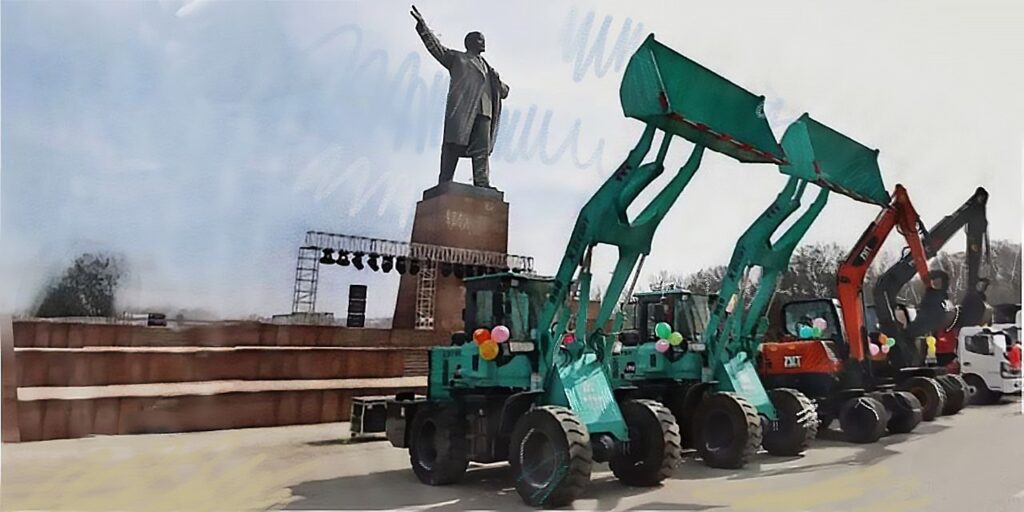
The recent removal of a towering 23-meter-tall monument to Vladimir Lenin in Osh, Kyrgyzstan, has ignited heated debate both domestically and abroad. While many are surprised the monument remained in place for more than three decades after the fall of the Soviet Union, its dismantling is part of a broader regional trend of de-Sovietization, a complex process involving the renaming of cities, removal of Soviet-era symbols, and the reassertion of national identity across Central Asia. A Symbol Removed, A Debate Ignited [caption id="attachment_32769" align="aligncenter" width="2560"] Lenin Monument in Osh, October 2024; image: TCA, Jonathan Campion[/caption] On June 7, Osh authorities dismantled what was once the tallest Lenin statue in Central Asia. Originally installed in 1975, the monument is to be relocated to a city park, according to the local government. Officials stressed the move was intended to improve the city’s architectural landscape, not to make a political statement, and have warned against "politicizing" the issue. Despite official reassurances, the move has sparked sharp reactions on social media and in the press, with Russian media outlets characterizing the relocation as an anti-Russian gesture. Generational divides have become apparent: younger residents tend to support the removal, while older citizens have expressed dismay over what they see as the erasure of history. “It’s a shame. It was more than a monument, it was part of our lives,” Elena, a local schoolteacher told The Times of Central Asia. “We joke that Lenin crossed the ‘red line’ and got demolished.” Irina Bayramukova, a 68-year-old public figure, called the decision a mistake. “The Lenin monument by Nikolai Tomsky was not only artistically significant, it represented an era. Removing it is like declaring war on those who identify with that past,” she told TCA. Kyrgyzstan, like other Central Asian republics, has been distancing itself from its Soviet legacy since gaining independence in 1991. One of the earliest symbolic moves was the renaming of the capital, once called Frunze after a Bolshevik military leader, back to Bishkek, a modified version of its pre-Soviet name. A Museum to Mikhail Frunze still stands in Bishkek, where the thatched-roof hut of his boyhood was purportedly transported brick by brick. A supporter of Stalin’s rival Zinoviev, when forced to undergo routine surgery by Uncle Joe in 1925, Frunze “mysteriously” died of chloroform anesthetic poisoning. Redefining History [caption id="attachment_32778" align="aligncenter" width="2560"] Lenin Monument in Bishkek; image: TCA, Stephen M. Bland[/caption] Originally erected in 1984 in the Central Square of Bishkek, a Lenin statue was relocated behind the State Historical Museum in 2003. As previously reported by TCA, earlier this year a debate on removing the monument altogether flared up. In 2022, the National Historical Museum of the Kyrgyz Republic in Bishkek finally reopened its doors after being closed in 2016 for renovations which were planned to take less than a year but ended up taking six years. Several government officials were charged with misappropriating funds designated for the renovations, with former Prime Minister Sapar Isakov sentenced to 18 years in prison. Reportedly, over...

Russian Lawmaker Cites Historical Ties Between Siberia and Central Asian Migrants

A Russian regional lawmaker has stirred debate by suggesting that parts of Siberia may be the ancestral homeland of some Central Asian migrants, including Uzbeks. The statement was made by Khalid Tagi-Zade, a member of the Khanty-Mansi Autonomous Okrug (Yugra) regional parliament, during a discussion on birthrate trends among local and migrant populations. His remarks were broadcast via a livestream on the parliament’s official VKontakte page, according to Gazeta.ru. Tagi-Zade emphasized the historical complexity of migration, arguing that “not all migrants are the same.” He pointed to the fact that Yugra and parts of the neighboring Tyumen region were once territories of the Siberian Khanate. He further noted that the Khanate’s last ruler, Khan Kuchum, descended from the Shaybanid dynasty, a prominent Uzbek lineage from the Bukhara Khanate. From this, he implied that some Uzbek migrants could view their presence in the region as a form of return to ancestral lands. The speaker of the parliament, Boris Khokhryakov, quickly moved to halt the discussion, citing procedural rules that prohibit extended remarks during that segment of the session. Tagi-Zade’s comments come at a time of heightened scrutiny over the treatment of Uzbek migrants in Russia. On May 2, Uzbekistan’s Deputy Foreign Minister Bobur Usmonov raised concerns in a meeting with Russian Ambassador Oleg Malginov in Tashkent. According to Uzbekistan’s Ministry of Foreign Affairs, Usmonov expressed alarm over a rising number of reports involving the mistreatment of Uzbek citizens in Russia and urged Moscow to safeguard their rights.

Rediscovered Correspondence from the Man Behind the “Great Game”

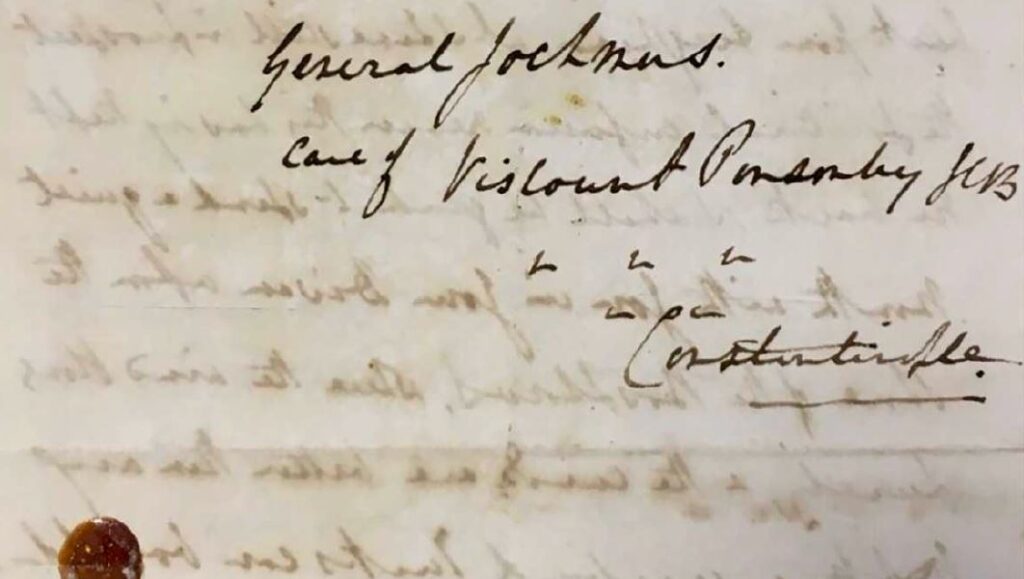
A recently uncovered letter written by Captain Arthur Conolly, the British officer who coined the term "Great Game," has captivated historians and scholars of 19th-century geopolitics. The correspondence offers a rare glimpse into the mind of the officer whose ill-fated expedition to Central Asia would become emblematic of the imperial rivalry between the British and Russian empires. The letter dates from April 1841, when Conolly stopped on the bank of the Amu Darya River, the northern boundary of Afghanistan, en route to Bukhara. Partly written in code, the missive, addressed to the Austrian General, August Giacomo Jochmus, commander of the combined forces of the Ottoman Empire, Britain, and Austria during the Syrian War of 1839–1841, reveals new details about Conolly’s observations regarding Central Asia’s complex power dynamics. The letter was discovered in the Russian State Archive of Literature and Art in Moscow. While the term "Great Game" would only gain prominence much later through Rudyard Kipling’s Kim, Conolly's writings shine a light on the precarious nature of imperial ambitions. His correspondence often reflected a mix of hope and foreboding, as he championed diplomatic engagement to win influence in the region while recognizing the human cost of such rivalry. The newly discovered letter includes remarks on the state of local governance, tribal allegiances, and the risks posed by Russian territorial advances. These insights could reshape the contemporary understanding of British intelligence operations and frontier policies at the height of imperial competition. "Travel has its charms and excitements, but it also has its disenchantment,” Conolly wrote, “and if I get safely back from Peshawar, I shall be glad to spend a quiet month with you in your Divan upon the shore of the Bosporus." Conolly’s fate remains a tragic footnote to his legacy. Captured and executed in 1842 by the Emir of Bukhara while attempting to negotiate the release of fellow British officer, Charles Stoddart, he became both a cautionary tale and a symbol of imperial zeal. This rediscovered letter serves as a poignant reminder of the personal stakes involved in the sprawling global chessboard that defined 19th-century diplomacy.

The Photographs of Prokudin-Gorsky: A Glimpse of a Lost World

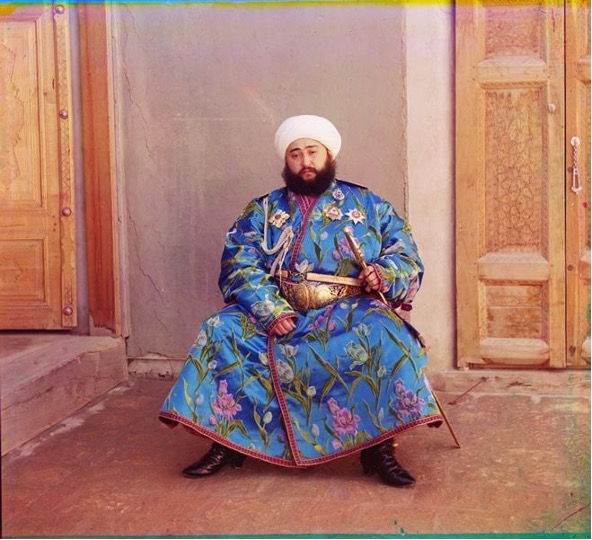
Using the emerging technology of color photography, Sergey Mikhaylovich Prokudin-Gorsky (1863–1944) undertook several photographic expeditions to capture images of the Russian Empire. Most of his work took place between 1909 and 1915, though some photographs date as early as 1905. At the time, the Russian Empire stretched roughly 7,000 miles east to west and 3,000 miles north to south. It encompassed one-sixth of the Earth’s land surface, making it the largest empire in history, spanning what are now eleven time zones. [caption id="attachment_32008" align="aligncenter" width="484"] Abutment for a dam and house belonging to the government. [Kuzminskoe] Prokudin-Gorsky, Sergey Mikhaylovich, 1912[/caption]Tsar Nicholas II supported Prokudin-Gorsky’s ambitious endeavor by granting him travel permits and access to various modes of transportation, including trains, boats, and automobiles. His journeys are preserved in photographic albums that include the original negatives. One album also features miscellaneous images, including scenes from other parts of Europe. The photographs capture a broad array of subjects: religious architecture and shrines (churches, cathedrals, mosques, and monasteries); religious and secular artifacts (such as vestments, icons, and items linked to saints, former Tsars, and the Napoleonic Wars); infrastructure and public works (railroads, bridges, dams, and roads); a variety of industries (including mining, textile production, and street vending); agricultural scenes (like tea plantations and field work); portraits, which often showed people in traditional dress, as well as cityscapes, villages, natural landscapes, and blooming plants. Besides being a photographer, Sergey Prokudin-Gorsky was a chemist who is renowned for his pioneering contributions to color photography in the early 20th century. In 1901, he traveled to Berlin to study photochemistry before returning to Russia, where he outfitted a railroad car as a mobile darkroom with the support of Tsar Nicholas II. As he traveled across the Russian Empire, he documented its people and landscapes, eventually earning recognition in Russia, Germany, and France. In 1906, he was appointed head of the photography section of Fotograf-Liubitel, Russia’s leading photography journal. One of his most famous works is a color portrait of Leo Tolstoy, taken in 1908. “By capturing the result of artistic inspiration in the full richness of its colors on the light-sensitive photographic plate, we pass the priceless document to future generations,” wrote Prokudin-Gorsky. As a nobleman, inventor, professor, and pioneer of color photography in Russia, Prokudin-Gorsky had a deep sense of national identity and heritage. Although he was unable to complete his grand project due to the outbreak of World War I and increasing social unrest across the Russian Empire, he still managed to capture photographs in regions such as the Urals, Siberia, Crimea, Dagestan, Finland, and Central Asia, as well as along the Volga and Oka rivers. Unfortunately, much of his photographic archive was lost in the aftermath of the 1917 Revolution. Prokudin-Gorsky created unique black-and-white negatives using a triple-frame method, taking three separate exposures through blue, green, and red filters. This technique allowed the images to be printed or projected in color, often for magic lantern slide presentations. The complete collection of 1,902 triple-frame glass...