
• KGS/USD = 0.01143 0%
  • KZT/USD = 0.00207 0%
  • TJS/USD = 0.10465 0.1%
  • UZS/USD = 0.00008 0%
  • TMT/USD = 0.28571 0.28%
  • KGS/USD = 0.01143 0%
  • KZT/USD = 0.00207 0%
  • TJS/USD = 0.10465 0.1%
  • UZS/USD = 0.00008 0%
  • TMT/USD = 0.28571 0.28%
  • KGS/USD = 0.01143 0%
  • KZT/USD = 0.00207 0%
  • TJS/USD = 0.10465 0.1%
  • UZS/USD = 0.00008 0%
  • TMT/USD = 0.28571 0.28%
  • KGS/USD = 0.01143 0%
  • KZT/USD = 0.00207 0%
  • TJS/USD = 0.10465 0.1%
  • UZS/USD = 0.00008 0%
  • TMT/USD = 0.28571 0.28%
  • KGS/USD = 0.01143 0%
  • KZT/USD = 0.00207 0%
  • TJS/USD = 0.10465 0.1%
  • UZS/USD = 0.00008 0%
  • TMT/USD = 0.28571 0.28%
  • KGS/USD = 0.01143 0%
  • KZT/USD = 0.00207 0%
  • TJS/USD = 0.10465 0.1%
  • UZS/USD = 0.00008 0%
  • TMT/USD = 0.28571 0.28%
  • KGS/USD = 0.01143 0%
  • KZT/USD = 0.00207 0%
  • TJS/USD = 0.10465 0.1%
  • UZS/USD = 0.00008 0%
  • TMT/USD = 0.28571 0.28%
  • KGS/USD = 0.01143 0%
  • KZT/USD = 0.00207 0%
  • TJS/USD = 0.10465 0.1%
  • UZS/USD = 0.00008 0%
  • TMT/USD = 0.28571 0.28%

Viewing results 1 - 6 of 4

Tajik Students Win Award in Los Angeles for Music Video Honoring Jalaluddin Rumi

The music video Nai Noumie by Jalaluddin Rumi, directed by Ilyas Daudi, won first place in the “Best Music Video” category at the Los Angeles Cinema Festival of Hollywood. The project was selected from among hundreds of international submissions. Creating the Project Tajik students Shahriyor Gulmakhmadzoda and Yosuman Ismailova, both studying at the Gerasimov Institute of Cinematography (VGIK) in Moscow, participated in the video. They recited poetry by the renowned Persian mystic Jalaluddin Rumi, set to music by Iranian composer Arash Faladvand. The composition is part of a trilogy by Daudi dedicated to Eastern philosophy and poetry. According to the director, the choice to involve Tajik students was intentional. “The involvement of students from Farhad Mahmudov’s Tajik workshop was guided by the linguistic and cultural proximity between Persian and Tajik traditions,” Daudi explained. He praised the voices of Yosuman and Shahriyor as perfect for the project. Faladvand’s symphonic piece was adapted into what Daudi described as a “concise rock version with an exquisite professional arrangement.” The project had an international scope from the outset. Iranian historians and linguists contributed to ensuring the poetic integrity of Rumi’s work was faithfully preserved. Daudi, an award-winning director and screenwriter, is also the author of the book In the Kunduz Circle. He has received accolades in Los Angeles, Austin, Berlin, Geneva, Madrid, and other cities. Shahriyor's Story Shahriyor Gulmakhmadzoda, 22, is from the Matchinsky district in Tajikistan's Sughd region. His parents, both farmers, currently work in Russia to support his studies. Passionate about the performing arts from a young age, he participated in school productions and later enrolled at the M. Tursunzade Tajik State Institute of Culture and Arts under the mentorship of Kurbon Sobir, a People’s Artist of Tajikistan. “My parents and my brother Shohrukh always supported my path. My teacher Kurbon Sobir gave me so much and showed great patience to shape me. He helped me enter VGIK through a presidential quota, and Maestro Farhad Makhmudov accepted us. For me, he’s someone I would give all my blood to,” Shahriyor said. Yosuman's Story Yosuman Ismailova, 21, was born in Dushanbe and is originally from Tajikistan's Gorno-Badakhshan region. Her mother worked as a dispatcher at Shabakai Avval (First Channel), and her father, a taxi driver, recently relocated to Moscow. From childhood, Yosuman aspired to perform on stage. She studied vocals and graduated from the A. Bokulov College of Arts. “I still remember my teacher, Irina Norayrovna Arutyunyan, with deep appreciation. She did so much for me, and I’m immensely grateful,” she shared. First Steps into Cinema This summer, both students began their studies in Farhad Makhmudov’s workshop at VGIK. Upon learning about the new Tajik students, Daudi invited them to join his project. “We gladly agreed, even though we had no prior experience. Everything was new, filming, recording vocals, working on set,” Yosuman recalled. Filming took place in VGIK’s training studio and on location in the Zavidovo nature reserve outside Moscow. For Shahriyor and Yosuman, this was their first professional cinematic experience and a...
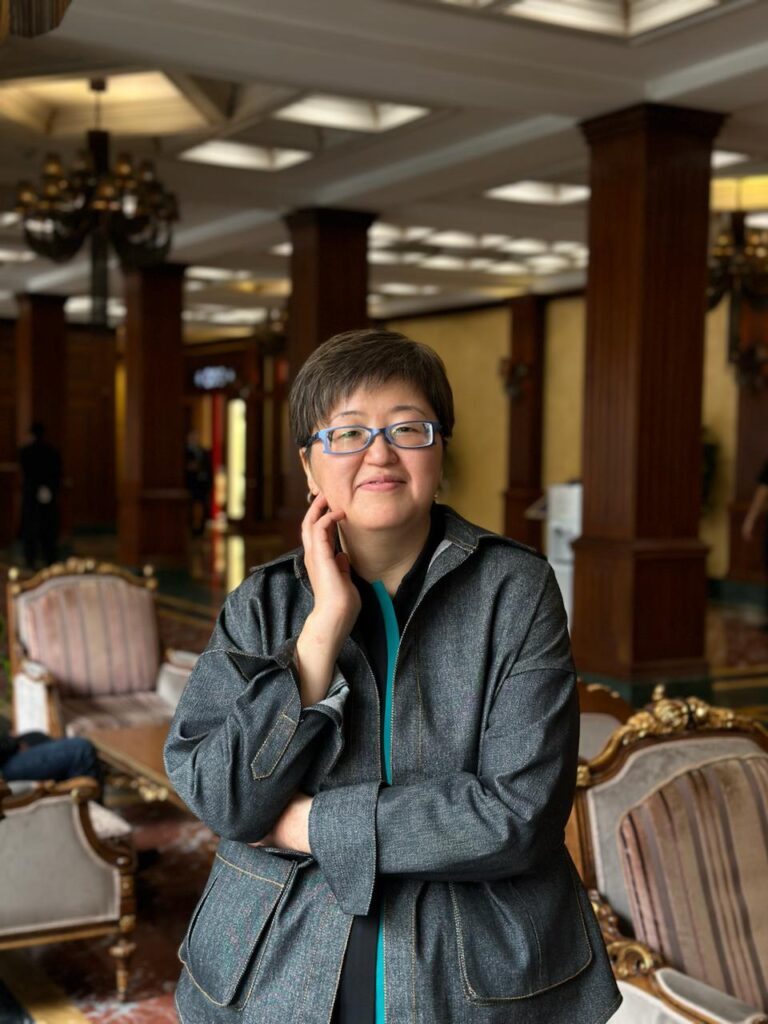

Behind the Scenes in Hollywood: Kyrgyz Screenwriter Guljan Toktogul on the Industry Without the Glamour

Screenwriter Guljan Toktogul spent nearly a decade in Hollywood. She wrote the script for the movie Salam, New York, about a Kyrgyz man adapting to life in America, and also has writing credits for the short films I'll Be A Star and Alexandra. A graduate of the American Film Institute (AFI), she now plans to continue her screenwriting career in her native Kyrgyzstan, having recently returned to Bishkek. The Times of Central Asia spoke with Toktogul about how screenwriters sell scripts in the U.S., how much they earn, what the bidding process entails, and whether it’s all worth it. TCA: What was it like living in Hollywood? Did it ever feel like home? Toktogul: It became comfortable, but not immediately, only after I built some connections. I first arrived in the U.S. in 2016 with my brother, who was there for work. We lived in Washington, D.C. for two years. When he left, I suddenly felt anxious. The thought of being alone so far from family, literally a day’s flight away, was overwhelming. I cried. But when I moved to L.A., completed a semester, and made friends, things improved quickly. I was lucky to be studying screenwriting at film school. TCA: Did the school feel like a second family? Toktogul: Exactly. Writing and working together means sharing deeply personal memories and thoughts, so people bond much faster than in everyday life. The school created a very supportive environment, full of people just as obsessed with film as I was. You live and breathe cinema, nothing else seems to matter. TCA: How are screenwriters treated in the U.S. compared to Central Asia? Toktogul: In the U.S., screenwriters are respected, but still often in the background. Producers and directors are the main creative forces. That’s why many screenwriters eventually try directing, to retain more control. You hand over your script, but what happens next is out of your hands. We don’t just write randomly, there’s meaning in every scene. When a script is mishandled on set, it’s painful. Many screenwriters avoid being on set for that reason. TCA: Are screenwriters usually present during filming? Toktogul: Yes, and rightly so. Unexpected problems always arise, maybe an actor drops out or a location falls through, so changes must be made on the spot. This is especially true for low-budget projects. I once worked on an indie film in Chicago and realized just how crucial a screenwriter’s presence can be. TCA: But aren’t things in the U.S. locked down by contracts before filming begins? Toktogul: Only if you're someone like Aaron Sorkin. He insists on filming scripts exactly as written. He’s known for demanding that actors deliver 10 pages of dialogue in nine minutes with no cuts. And it works, his dialogue has a musical quality. But most writers aren’t in that position. Ideally, scripts would be treated with more care. We’re not trying to take over, we just want the best version of the story to be told. TCA: Were you a member of...