
• KGS/USD = 0.01143 0%
  • KZT/USD = 0.00205 0%
  • TJS/USD = 0.10724 0.09%
  • UZS/USD = 0.00008 0%
  • TMT/USD = 0.28571 0%
  • KGS/USD = 0.01143 0%
  • KZT/USD = 0.00205 0%
  • TJS/USD = 0.10724 0.09%
  • UZS/USD = 0.00008 0%
  • TMT/USD = 0.28571 0%
  • KGS/USD = 0.01143 0%
  • KZT/USD = 0.00205 0%
  • TJS/USD = 0.10724 0.09%
  • UZS/USD = 0.00008 0%
  • TMT/USD = 0.28571 0%
  • KGS/USD = 0.01143 0%
  • KZT/USD = 0.00205 0%
  • TJS/USD = 0.10724 0.09%
  • UZS/USD = 0.00008 0%
  • TMT/USD = 0.28571 0%
  • KGS/USD = 0.01143 0%
  • KZT/USD = 0.00205 0%
  • TJS/USD = 0.10724 0.09%
  • UZS/USD = 0.00008 0%
  • TMT/USD = 0.28571 0%
  • KGS/USD = 0.01143 0%
  • KZT/USD = 0.00205 0%
  • TJS/USD = 0.10724 0.09%
  • UZS/USD = 0.00008 0%
  • TMT/USD = 0.28571 0%
  • KGS/USD = 0.01143 0%
  • KZT/USD = 0.00205 0%
  • TJS/USD = 0.10724 0.09%
  • UZS/USD = 0.00008 0%
  • TMT/USD = 0.28571 0%
  • KGS/USD = 0.01143 0%
  • KZT/USD = 0.00205 0%
  • TJS/USD = 0.10724 0.09%
  • UZS/USD = 0.00008 0%
  • TMT/USD = 0.28571 0%

Viewing results 1 - 6 of 6

Kyrgyzstan Retains Lowest Minimum Wage in the Eurasian Economic Union

Kyrgyzstan continues to have the lowest minimum wage among member states of the Eurasian Economic Union (EAEU), according to Eurasian Economic Commission (EEC) data cited by local media. As of March 2026, Kyrgyzstan’s minimum monthly wage was about $38. By comparison, the minimum wage stood at $337 in Russia, $292 in Belarus, $174 in Kazakhstan, and $199 in Armenia. Analysts say Armenia’s economy is broadly comparable in scale to Kyrgyzstan’s. According to official statistics, the minimum wage in Kyrgyzstan has risen far more slowly than in other EAEU countries and remains significantly below both the country’s average salary and the official subsistence minimum. Data from Kyrgyzstan’s National Statistical Committee show that the subsistence minimum currently stands at around $105. Meanwhile, minimum wages in Russia and Belarus have nearly doubled over the past several years. Against this backdrop, the situation regarding average salaries in Kyrgyzstan appears somewhat more positive. According to the EEC, Kyrgyzstan and Belarus recorded the highest rates of average wage growth in the region. Over the past year, average wages in Kyrgyzstan increased by around 10%, while Belarus recorded growth of approximately 9%. Despite this, average wages in Kyrgyzstan remain the lowest among EAEU member states. By the end of 2025, the average monthly salary in Kyrgyzstan stood at approximately $508, compared to $783 in Armenia, $877 in Belarus, and $1,203 in Russia. No data for Kazakhstan were included in the published EEC statistics. Kyrgyzstan’s National Statistical Committee previously stated that nominal wages in the country have roughly doubled over the past five years. Per capita household spending has also increased significantly, which officials say reflects rising consumption levels and gradual improvements in living standards. At the same time, consumer spending continues to account for the largest share of household expenditures in Kyrgyzstan.

Food Spending Remains High in Kazakhstan Households

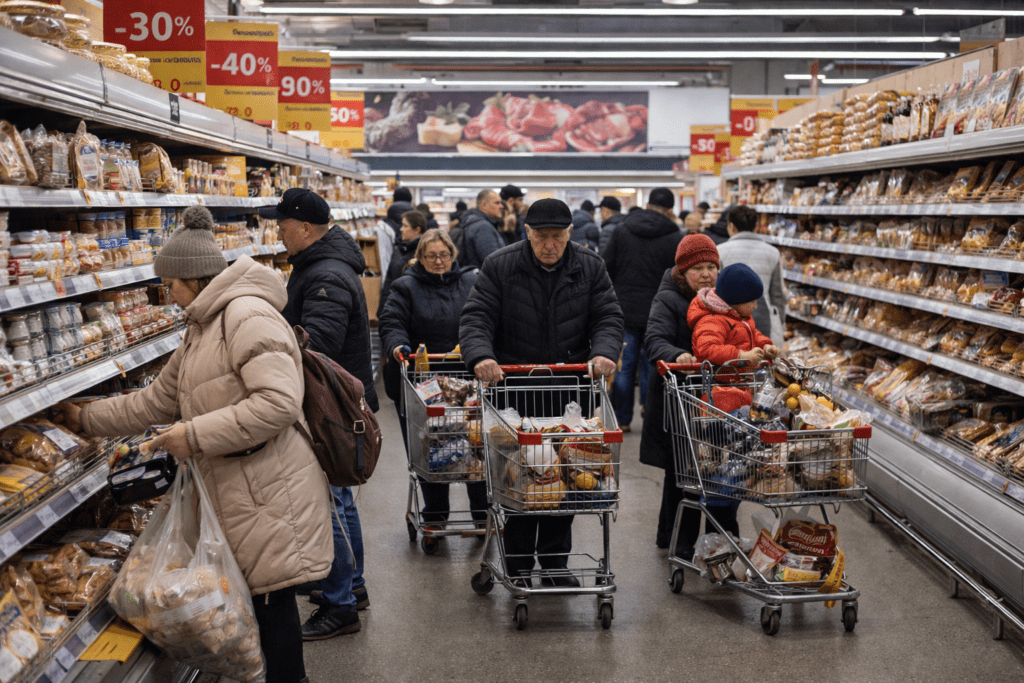
A high share of household spending on food remains a key indicator of living standards in Kazakhstan, according to analysts at Finprom.kz. By the end of 2025, average annual spending on food and non-alcoholic beverages reached $1,292 per person, up 13.9% year-on-year and nearly six times higher than in 2010. At the same time, the structure of spending has remained largely unchanged. In 2025, food accounted for 47.8% of total expenditures, only slightly below the pre-pandemic level of 50.4%. As a share of income, food expenditures rose to 42.5%, compared to 40.7% a year earlier, suggesting that income growth is being largely offset by inflation. Consumption patterns also remain relatively rigid. Meat and meat products account for 34.4% of food spending, approximately $444 per person, with prices in this category rising by 18.1% over the year. Bread and cereal products (14.7%) and dairy products (10.6%) also make up a significant share. Combined, these categories account for about 60% of total food expenditures. Spending on fruit and vegetables is increasing in absolute terms by 15.3% and 22.8%, respectively, but their shares remain relatively low at 9.1% and 7.7%, pointing to limited diversification in consumption. Fish and seafood account for 4.4% of spending, and eggs for 2.1%, further reflecting a concentration on staple foods. According to analysts, inflation remains the main driver of rising expenditures. In February 2026, prices for food and non-alcoholic beverages increased by 12.6% year-on-year, compared to 6.3% a year earlier. This level is close to the highest rates recorded over the past decade, with the exception of February 2023, when growth reached 26.4%. Analysts warn that if current inflation trends persist, the share of spending on food in 2026 could again exceed 50%, limiting households’ ability to spend on non-food goods and services and placing additional pressure on living standards.