
• KGS/USD = 0.01144 0%
  • KZT/USD = 0.00207 0%
  • TJS/USD = 0.10463 0%
  • UZS/USD = 0.00008 0%
  • TMT/USD = 0.28490 0%
  • KGS/USD = 0.01144 0%
  • KZT/USD = 0.00207 0%
  • TJS/USD = 0.10463 0%
  • UZS/USD = 0.00008 0%
  • TMT/USD = 0.28490 0%
  • KGS/USD = 0.01144 0%
  • KZT/USD = 0.00207 0%
  • TJS/USD = 0.10463 0%
  • UZS/USD = 0.00008 0%
  • TMT/USD = 0.28490 0%
  • KGS/USD = 0.01144 0%
  • KZT/USD = 0.00207 0%
  • TJS/USD = 0.10463 0%
  • UZS/USD = 0.00008 0%
  • TMT/USD = 0.28490 0%
  • KGS/USD = 0.01144 0%
  • KZT/USD = 0.00207 0%
  • TJS/USD = 0.10463 0%
  • UZS/USD = 0.00008 0%
  • TMT/USD = 0.28490 0%
  • KGS/USD = 0.01144 0%
  • KZT/USD = 0.00207 0%
  • TJS/USD = 0.10463 0%
  • UZS/USD = 0.00008 0%
  • TMT/USD = 0.28490 0%
  • KGS/USD = 0.01144 0%
  • KZT/USD = 0.00207 0%
  • TJS/USD = 0.10463 0%
  • UZS/USD = 0.00008 0%
  • TMT/USD = 0.28490 0%
  • KGS/USD = 0.01144 0%
  • KZT/USD = 0.00207 0%
  • TJS/USD = 0.10463 0%
  • UZS/USD = 0.00008 0%
  • TMT/USD = 0.28490 0%

Viewing results 1 - 6 of 61

Tajikistan and Central Asia Face Escalating Water Crisis

Central Asia is emerging as one of the regions most vulnerable to drought, according to the latest Global Drought Outlook published by the United Nations. A Region Under Climate Pressure The report highlights a persistent rise in average annual temperatures, diminishing snow cover, and accelerated glacier retreat, particularly in the mountainous regions of Tajikistan and Kyrgyzstan, as key drivers of water insecurity. “Climate change is accelerating glacier retreat... This poses a long-term threat to the region's water security,” the report states. Tajikistan, which holds over 60% of Central Asia’s glaciers, plays a critical role in the region’s hydrology. Agriculture on the Brink The first sector to suffer from prolonged drought is agriculture, which underpins food security across Tajikistan, Uzbekistan, and Turkmenistan. Most agriculture in these countries relies on outdated irrigation systems ill-equipped to handle evolving climate conditions. According to the Food and Agriculture Organization (FAO), the global incidence of droughts rose by 29% between 2000 and 2023. In Central Asia, this trend has resulted in declining crop yields, income losses, and forced livestock sales. In Tajikistan’s Khatlon and Sogd regions, farmers experience income drops of 15-30% during dry years. Despite generating more than 60% of the region's freshwater through glaciers and high-altitude rivers, Tajikistan struggles with its own water shortages. Nearly 60% of water is lost due to leakage in dilapidated canals, compounded by inefficient water management. Rural communities are particularly affected, with thousands of families lacking regular access to clean water. Hydropower and Economic Risks Tajikistan relies on hydropower for over 90% of its electricity. However, inconsistent snowfall and prolonged summer droughts have drastically lowered reservoir levels, threatening national energy stability. More than half of the country’s 14,000 kilometers of irrigation canals require modernization. From 2000 to 2016, drought-related economic losses in Central Asia exceeded $2 billion. In 2023 alone, Tajikistan incurred $5.4 million in damages due to power shortages. Droughts are also impacting public health, employment, and migration. Natural disasters annually affect around 1.4 million people in Uzbekistan and 500,000 in Kazakhstan and Tajikistan. By 2050, drought-related losses are expected to reach 1.3% of regional GDP annually, with up to five million climate migrants projected. Regional and Global Responses Tajikistan, a signatory to the UN Convention to Combat Desertification, is pursuing land restoration and sustainable water management projects. Under the ISCAUZR-2 initiative (Central Asian Initiative on Sustainable Land Management), the country secured nearly $1.5 million to support sustainable agricultural practices. Efforts include the development of fruit tree nurseries, installation of drip irrigation systems, construction of freshwater reservoirs, and deployment of monitoring sensors at water sources. Agroforestry techniques and drought-resistant crop varieties are also being introduced. Despite these initiatives, the region continues to face rising temperatures, Asia has already surpassed a +1.04°C increase and Tajikistan has lost more than 1,000 glaciers. An estimated 10 million people across Central Asia lack sustainable access to safe drinking water. Natural phenomena increasingly compound one another: droughts cause dust storms, which in turn accelerate glacier melt. The UN report warns that without systemic...
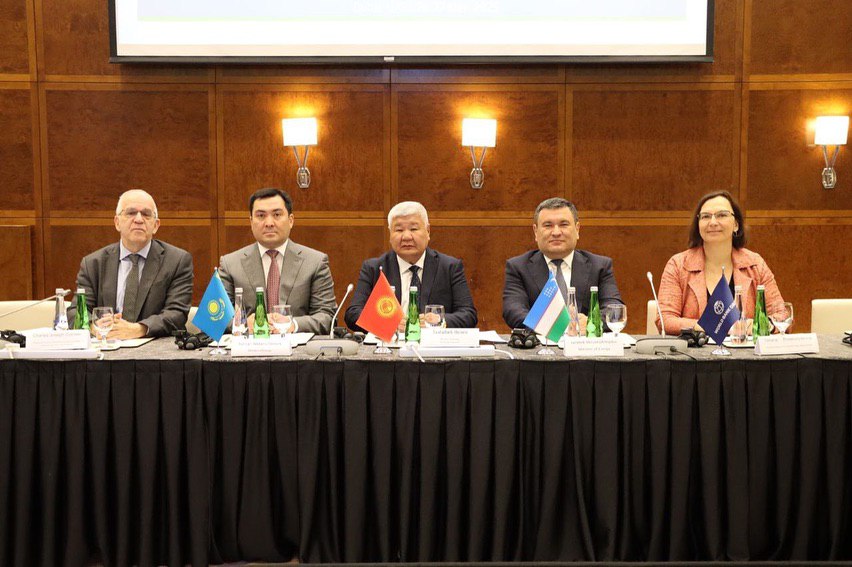
Dubai Hosts Talks on Major Central Asian Hydropower Project

On May 26-27, 2025, energy ministers from Kazakhstan, Kyrgyzstan, and Uzbekistan met in Dubai, United Arab Emirates, for the second high-level meeting on the Kambarata-1 Hydropower Plant (HPP) project. The meeting was organized with the support of the World Bank, according to Kyrgyzstan’s Ministry of Energy. Kambarata-1 is a flagship regional initiative designed to enhance energy security and water management across Central Asia. The planned hydropower facility, with a capacity of 1,860 megawatts, will be constructed on the Naryn River in Kyrgyzstan. The delegations were led by Energy Ministers Yerlan Akkenzhenov (Kazakhstan), Taalaibek Ibraev (Kyrgyzstan), and Jurabek Mirzamakhmudov (Uzbekistan). High-level representatives from the finance and water ministries of the three countries also participated. During the meeting, the ministers formally requested technical assistance from the World Bank. This includes an updated feasibility study, environmental and social impact assessments, and the development of a robust financial and commercial implementation model. The World Bank delegation featured several senior officials, including Tatiana Proskuryakova, Regional Director for Central Asia; Carolina Sánchez-Páramo, Director for Strategy and Operations in Europe and Central Asia (ECA); Charles Joseph Cormier, Regional Infrastructure Director for ECA; and Stephanie Gil, Program Leader for Energy. “We are pleased to support the governments of Kazakhstan, Kyrgyzstan, and Uzbekistan in advancing the Kambarata-1 project,” said Proskuryakova. “It will bring major economic and social benefits to the region.” The ministers reiterated their commitment to the project, describing it as a cornerstone of regional energy integration. Participants reviewed progress since the first roundtable in Tashkent in January 2025. Discussions focused on revised cost estimates, grid modernization needs, financing strategies, and the importance of strong environmental and social safeguards. Kazakhstan’s Yerlan Akkenzhenov highlighted the collaborative nature of the initiative: “Kazakhstan fully supports this project and will continue working closely with its regional partners.” Kyrgyzstan’s Taalaibek Ibraev underscored the national significance of the HPP: “This project is the foundation of Kyrgyzstan’s energy strategy. We are proud to implement it in partnership with Kazakhstan and Uzbekistan.” Uzbekistan’s Jurabek Mirzamakhmudov referenced the tangible progress already made: “With joint efforts and international backing, we are confident in our ability to realize this project according to global standards.” The ministers agreed on specific next steps and timelines for project preparation and pledged to hold regular meetings to ensure steady progress. As previously reported by The Times of Central Asia, the Kambarata-1 HPP will be located in the upper reaches of the Naryn River in Kyrgyzstan. Once completed, it is expected to generate approximately 5.6 billion kilowatt-hours of electricity annually. The estimated construction cost exceeds $4 billion.

Turkish Company to Build Hydropower Plants in Kyrgyzstan and New Heat and Power Plant for Bishkek

Kyrgyzstan’s Ministry of Energy and Turkish open joint-stock company Orta Asya Investment Holding signed a protocol of intent on February 27 to construct the Kazarman cascade of hydroelectric power plants (HPP) on the Naryn River, with a total capacity of 912 MW. New Hydropower Projects According to the Ministry of Energy, the agreement includes preparations for an investment agreement and a feasibility study for the project. Orta Asya Investment Holding has expressed interest in constructing three hydropower plants in the cascade: Ala-Buga HPP - 600 MW Kara-Bulun-1 HPP - 149 MW Kara-Bulun-2 HPP = 163 MW Together, these HPPs will generate 3.746 billion kWh of electricity annually, significantly contributing to Kyrgyzstan’s growing energy demands. New Heat and Power Plant for Bishkek On the same day, the Ministry of Energy and Orta Asya Investment Holding discussed the construction of a 250 MW natural gas-fired combined heat and power plant (CHPP-2) in Bishkek. The project is estimated to take 2 - 4 years, with a budget of $443 million. Orta Asya Investment Holding has committed to investing approximately 3 billion KGS (about $34 million) in the project. The Ministry and the company have agreed to finalize a feasibility study for Bishkek CHPP-2 within three months and then begin implementation. Once completed, CHPP-2 will: Increase the country’s energy capacity. Ensure stable electricity and heat supply for residents and businesses. Improve Bishkek’s environmental situation by using natural gas, a cleaner energy source. CHPP-2 will be Bishkek’s second power plant, reducing reliance on the city’s aging Thermal Power Plant (TPP). Power Shortage in Bishkek Bishkek, home to over one million residents, currently relies on a single power plant for both electricity and heating. The Bishkek TPP produces approximately 13% of Kyrgyzstan’s total electricity output, with the remainder coming from hydropower plants. The TPP also provides heat and hot water to nearly two-thirds of the capital. However, the aging plant has suffered two major accidents in recent years: January 2018 - A breakdown left the city without heating for three days in freezing temperatures. February 2, 2024 - An explosion seriously injured three people and forced authorities to impose hot water and heating restrictions in some parts of the city. Following the 2024 accident, the government prohibited newly built high-rise residential buildings from connecting to the existing TPP heating system. Once completed, Bishkek CHPP-2 is expected to meet the city’s growing heating needs and reduce the risk of energy shortages.

ADB Considers $500 Million Support for Tajikistan’s Rogun Hydropower Plant

The Asian Development Bank (ADB) will continue supporting Tajikistan’s Rogun Hydropower Plant (HPP) project in 2025, the bank’s new country manager, Ko Sakamoto, announced on February 25. Speaking to reporters, Sakamoto emphasized that Rogun HPP is a top priority for the Tajik government, highlighting its significance for Tajikistan’s energy independence, regional stability and climate change mitigation. The ADB has been invited to join a consortium of financial institutions financing the project. Tajikistan has requested $500 million in assistance, and the bank is currently reviewing the proposal. “ADB will continue to support the project and share updates as negotiations progress,” Sakamoto said. In 2024, ADB provided $220 million in assistance to Tajikistan, funding six projects across agriculture, energy, health, public administration and transport. ADB plans to approve four new projects in 2025, including an initiative on digital agriculture aimed at boosting food security. The bank is developing a five-year strategy that will align with Tajikistan’s long-term development goals. It will support glacier protection efforts, as Tajikistan leads regional climate initiatives. An international glacier conservation conference is scheduled for May in Dushanbe. As Tajikistan works toward greater energy security, Rogun remains central to its economic and environmental strategy. ADB’s continued involvement signals strong international backing for the project, which has the potential to transform Tajikistan into a key regional energy exporter. If approved, the $500 million in funding would mark a significant step toward completing one of Central Asia’s most ambitious hydropower projects.

Kazakhstan to Help Build Small Hydropower Plants in Kyrgyzstan

The energy ministries of Kazakhstan and Kyrgyzstan have signed a roadmap for the construction of small hydropower plants (HPPs) in Kyrgyzstan. The agreement, signed on February 25 during a visit by the Chairman of Kyrgyzstan's Cabinet of Ministers, Adylbek Kasymaliyev, to Kazakhstan, aims to enhance energy cooperation between the two nations, and support Kyrgyzstan’s efforts to develop its hydropower potential. Kazakhstan’s Energy Minister, Almasadam Satkaliyev, emphasized Kazakhstan’s commitment to regional cooperation in the energy sector. “We consider this a guarantee of stability and prosperity for all of Central Asia. The signing of the roadmap with Kyrgyzstan is further proof of our commitment to this goal. We are ready to share our experience and resources to build an energy-independent future together," he said. In recent years, Kyrgyzstan has intensified its efforts to boost electricity generation and address chronic power shortages by modernizing existing and constructing new hydropower plants. One of the largest ongoing projects is Kambarata-1, a joint initiative involving Kyrgyzstan, Kazakhstan, and Uzbekistan. Kambarata-1, once completed, will be the largest hydropower plant in Kyrgyzstan. The project is expected to enhance regional cooperation in water and energy resource management. Discussions on the progress of Kambarata-1 are ongoing, involving Central Asian countries and the World Bank. The Kazakhstan-Kyrgyzstan hydropower cooperation marks another step toward strengthening Central Asia’s energy infrastructure. With Kazakhstan’s expertise and resources, Kyrgyzstan is expected to make significant progress in achieving energy security and sustainability.

Kyrgyzstan Advances Hydropower Modernization Efforts

Kyrgyzstan is moving forward with the modernization of two major hydroelectric power plants as part of its efforts to increase electricity generation and meet the country’s growing energy demands. According to the Ministry of Energy, on February 20, French company GE Hydro will begin reconstruction of hydroelectric generating unit No. 4 at the Toktogul Hydropower Plant (HPP) - the country’s largest power facility, located on the Naryn River. The plant currently generates approximately 40% of Kyrgyzstan’s electricity. Once completed, the upgrade will add 60 megawatts (MW) to the plant’s capacity. In November 2024, Toktogul HPP successfully launched a modernized unit No. 1, increasing its output by 60 MW. That unit’s reconstruction, which began in March 2024, followed earlier upgrades to units No. 2 and No. 3, which collectively added 120 MW to the facility’s capacity. Before modernization, Toktogul HPP had a total capacity of 1,200 MW, with each of its four units generating 300 MW. Upon completion of upgrades to all four units, Toktogul HPP’s total capacity will rise to 1,440 MW, and its operational lifespan will be extended by 25 to 30 years. Meanwhile, on March 1, 2025, China National Electric Engineering Company (CNEEC) will begin the modernization of unit No. 2 at the Uch-Kurgan HPP, increasing its capacity by 9 MW. Situated on the Naryn River, the Uch-Kurgan HPP plays a key role in Kyrgyzstan’s energy supply. Before its modernization, the plant had a total capacity of 180 MW, with four units generating 45 MW each. Since its commissioning in 1962, the plant had never undergone major upgrades until 2024, when unit No. 4 was reconstructed, boosting its output by 16 MW. The modernization of Toktogul unit No. 4 and Uch-Kurgan unit No. 2 is expected to be completed by December 2025. To ensure an uninterrupted power supply during the temporary shutdown of these units, the Ministry of Energy has held negotiations with neighboring countries regarding electricity imports. The government has also urged the population to use electricity sparingly while modernization work is underway. In addition to these upgrades, Kyrgyzstan is constructing the Kambarata-1 Hydropower Plant, which will have a projected capacity of 1,860 MW and an average annual generation of 5.6 billion kilowatt-hours. Once completed, Kambarata-1 will be the country’s largest hydropower facility and is expected to help eliminate Kyrgyzstan’s electricity shortages.
