• KZT/USD = 0.00211
  • TJS/USD = 0.10810
  • UZS/USD = 0.00008
  • TMT/USD = 0.29760
  • KZT/USD = 0.00211
  • TJS/USD = 0.10810
  • UZS/USD = 0.00008
  • TMT/USD = 0.29760
  • KZT/USD = 0.00211
  • TJS/USD = 0.10810
  • UZS/USD = 0.00008
  • TMT/USD = 0.29760
  • KZT/USD = 0.00211
  • TJS/USD = 0.10810
  • UZS/USD = 0.00008
  • TMT/USD = 0.29760
  • KZT/USD = 0.00211
  • TJS/USD = 0.10810
  • UZS/USD = 0.00008
  • TMT/USD = 0.29760
  • KZT/USD = 0.00211
  • TJS/USD = 0.10810
  • UZS/USD = 0.00008
  • TMT/USD = 0.29760
  • KZT/USD = 0.00211
  • TJS/USD = 0.10810
  • UZS/USD = 0.00008
  • TMT/USD = 0.29760
  • KZT/USD = 0.00211
  • TJS/USD = 0.10810
  • UZS/USD = 0.00008
  • TMT/USD = 0.29760
02 August 2026

Viewing results 1 - 6 of 51

Tajikistan Upgrades Nurek Dam to Boost Power Supply Ahead of Winter Crunch

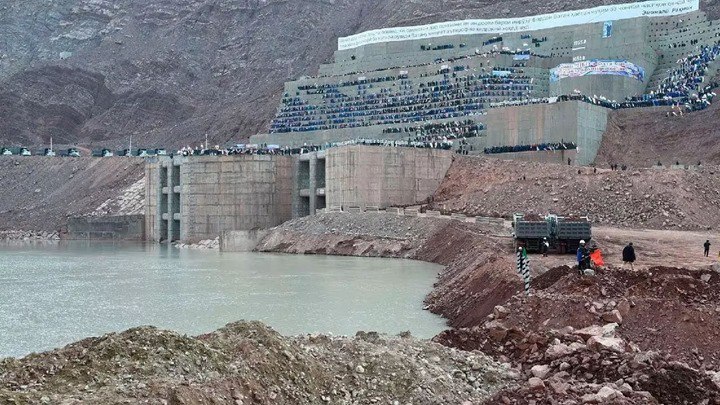
Tajikistan’s massive Nurek hydroelectric dam – the world’s second-tallest – is undergoing a sweeping modernization to shore up the nation’s electricity supply ahead of the demanding winter season. The 300-meter-high dam, completed in 1980 on the Vakhsh River near the Afghan border, has long been a strategic asset, supplying approximately 70% of Tajikistan’s power. As winter approaches and energy demand peaks, crews at the 3,015 MW hydropower plant are racing to upgrade aging turbines and infrastructure to ensure reliable electricity across the country. The overhaul, which began several years ago, promises not only to keep the lights on through harsh weather but also to boost Nurek’s capacity and extend the life of a facility that has defined Tajikistan’s energy landscape for five decades. A Soviet-Era Marvel at the Heart of Tajikistan’s Power Grid When it was completed in 1980, Nurek was the tallest dam in the world, a record it held for years as a feat of Soviet engineering, with the earth-fill embankment forming a vast reservoir of 98 km² that stores some 10.5 billion cubic meters of water. Between 1972 and 1979, nine giant hydro turbines were installed, giving Nurek an original design capacity of approximately 2,700 MW. Over time, improvements brought its output to just over 3,000 MW. In addition to producing power, the reservoir also supports major irrigation across the Amu Darya basin with one scheme alone - via the Dangara tunnel - irrigating roughly 70,000 hectares, underscoring its dual importance for energy and agriculture. For Tajikistan, a mountainous country of roughly 10.8 million people, Nurek has been nothing short of an economic lifeline. Hydropower accounts for roughly 98% of Tajikistan’s electricity generation, one of the highest shares of renewable energy in the world. This green energy dominance is largely thanks to Nurek and a network of smaller dams. However, the infrastructure is aging, and after 50 years of service, Nurek’s machinery had begun to falter. By the mid-2010s, winter electricity shortages had become common. During the cold months from late September to April, the hydrological cycle leaves Tajikistan with reduced river flow, just as heating needs spike. In those winters, rural areas often faced power rationing and outages, while the capital Dushanbe and other major cities narrowly avoided blackouts. Modernizing Nurek became essential to prevent a return to the severe energy crises of the past and to meet the country’s development goals. Upgrading and Expanding a Giant A comprehensive rehabilitation of Nurek began in earnest in recent years, backed by international financing, including the World Bank. The overhaul is split into phases: Phase I of the modernization — covering four of Nurek’s nine generating units along with major dam-safety works — is scheduled for completion by the end of 2026. Phase II will then refurbish the remaining six units. The upgrades are substantial - new high-efficiency Francis turbines will raise each unit’s capacity from 335 MW to 375 MW. In October 2022, the first upgraded unit came online, producing about 10% more power than before. By August...

A Cascade of Opportunity: How Hydropower Is Driving Growth in Eastern Kazakhstan

Eastern Kazakhstan is harnessing its hydropower potential to transform water into economic strength. In a region that holds over 40% of the country’s water resources, local authorities are positioning hydropower as a cornerstone of sustainable development and energy independence. At the recent Altai Invest-2025 international investment forum in Ust-Kamenogorsk, the regional capital of East Kazakhstan, officials signed memorandums for the construction of multiple hydroelectric power plants on the Ubi and Little Ulba rivers. The planned facilities are expected to deliver tens of megawatts of clean energy, generate hundreds of jobs, and reduce dependence on external electricity supplies.  Regional Potential and Water Strategy East Kazakhstan has long been regarded as the country’s renewable energy hub. The region already hosts seven operating hydroelectric power plants, including the Bukhtarma, Ust-Kamenogorsk, and Turgusun stations. With its climate less suited to solar and wind energy, hydropower remains the region’s most viable renewable resource. Local authorities have identified 95 potential sites for small-scale hydropower projects, with a combined capacity of approximately 2 gigawatts. These facilities aim to supply rural areas with electricity, regulate water balances, and support irrigation and flood prevention efforts. One of the largest agreements signed at the forum involves the construction of two hydropower plants on the Ubi River. According to a memorandum with Global Turbo Compressors, the projects will produce 150 MW and 50 MW, respectively. Small Stations, Big Returns CAPITAL DVP plans to construct two mini-hydropower plants with a combined capacity of 45 MW in the Altai region, near the village of Lesnaya Pristan. These projects will utilize modular technologies to accelerate construction timelines and reduce environmental impact.  Another project, spearheaded by Kazakh firm Zhel Kuat, involves a 15 MW station on the Little Ulba River. Developed in partnership with the regional energy administration, the facility aims to enhance energy supply stability and create local employment. [caption id="attachment_38407" align="aligncenter" width="300"] @TCA[/caption] The project also includes provisions for environmental impact assessments, fish protection systems, and technical adaptations suited to local conditions. For East Kazakhstan, hydropower serves not only as a renewable energy source but also as a catalyst for broader regional development. These facilities help regulate floodwaters, support agricultural irrigation, and sustain ecosystems. The Ubi River, a major tributary of the Irtysh, runs through the Shemonaikha district and flows into the Shulbinskoye reservoir. Planned hydropower sites along its course will leverage natural elevation differences, avoiding the need to flood large areas. The Turgusinskaya hydropower plant, launched in 2021, is frequently cited as a successful model. The 24.9 MW station has increased energy output, raised tax revenues, and created jobs, all while maintaining environmental standards. A Broader Development Vision At Altai Invest-2025, East Kazakhstan region head Nurymbet Saktaganov outlined a regional development strategy through 2030. Key goals include increasing the population to one million, revitalizing border areas, expanding gas infrastructure, and fostering job creation. “These are ambitious but realistic goals that combine economic growth and social development in the region,” Saktaganov emphasized.

Japarov Pledges Energy Independence Within 2.5 Years

Kyrgyzstan will meet its domestic electricity needs during the winter months within the next two and a half years, President Sadyr Japarov announced during the inauguration of the Kara-Kul Hydropower Plant (HPP) on October 27. The shift will be made possible by the completion of nearly 40 new hydropower plants and a coal-fired power station at the Kara-Keche deposit. “In two and a half years, we will no longer import electricity during winter. We will have enough domestically produced power,” Japarov stated, urging citizens to remain patient amid ongoing seasonal shortages. Energy Minister Taalaibek Ibraev recently warned that the upcoming winter could be one of the most challenging in recent memory due to critically low water levels in the Toktogul Reservoir, which supplies around 40% of the country’s electricity. Kyrgyzstan has long struggled with chronic electricity deficits in winter, as many households rely heavily on electric heating. In 2024, electricity consumption reached 18.3 billion kWh, an increase of 1.1 billion kWh from the previous year. To bridge the shortfall, Kyrgyzstan imported 3.6 billion kWh from Kazakhstan, Turkmenistan, Uzbekistan, and Russia. Additional volumes have been secured for the 2025-2026 winter period. The newly commissioned Kara-Kul HPP, located on the Kara-Suu River in the southern Jalal-Abad region, is part of a broader national energy strategy. Built at a cost of $25 million, the facility has two generating units with a combined capacity of 18 MW and is expected to produce 104 million kWh annually, offsetting roughly 2.5% of the current winter shortfall. Japarov emphasized that the project is one component of Kyrgyzstan’s drive for energy independence. Preparations are also underway for the construction of the Kambarata-1 HPP, set to be the largest hydropower plant in both Kyrgyzstan and Central Asia. The plant will have an installed capacity of 1,860 MW and is expected to generate 5.6 billion kWh annually. The Kambarata-1 project is being developed in cooperation with Kazakhstan and Uzbekistan, with technical and financial support from the European Union. During the Global Gateway Forum held in Brussels on October 9-10, Kyrgyz Energy Minister Taalaibek Ibraev met with regional counterparts and EU institutions. Key outcomes from the forum included the signing of €900 million in Memoranda of Understanding between the EU, European Investment Bank (EIB), and the three Central Asian states. A feasibility study, co-financed by the EU and implemented by the World Bank, is also underway. Additionally, the European Bank for Reconstruction and Development (EBRD) signed MoUs with Kyrgyzstan, Kazakhstan, and Uzbekistan, and is considering an overall financing package of €1.3 billion to support the project.

Iran to Retain Control of Sangtuda-2 Hydropower Plant in Tajikistan Until 2032

Tajikistan and Iran have agreed to extend the repayment period for Iran’s investment in the Sangtuda-2 hydroelectric power plant by six years and four months. The extension will allow the Iranian side to recover its investment, after which full ownership of the facility will transfer to the Tajik government. The amendments to the electricity purchase agreement between Tajikistan’s state-owned power utility Barki Tochik and Iran’s Sangtuda Sangob company were ratified by the lower house of Tajikistan’s parliament in early October. The revised agreement was originally signed on May 29, 2025, in Dushanbe, following high-level negotiations between the two countries. Under the initial agreement, Iran was to recover its investment by August 2026, after which the hydropower plant would become Tajik state property. However, under the new terms, Iranian management of the plant will continue until the end of 2032. The total construction cost of the Sangtuda-2 hydroelectric plant was $256 million. Of this, the Iranian government contributed $180 million, Sangob invested $36 million, and the Tajik government provided $40 million. According to Tajikistan’s Ministry of Energy and Water Resources, between the plant’s launch in 2012 and the end of 2023, Barki Tochik purchased 8.9 billion kilowatt-hours of electricity worth $451.5 million. However, the power plant itself received only $122.5 million, roughly 27% of the total value. As a result, Tajikistan’s outstanding debt to Sangtuda-2 reached $329 million. Under the new agreement, this debt will be fully written off. In return, Dushanbe has committed to a new payment schedule over the next six years and four months. After this period, control of the plant will transfer to Barki Tochik. Sangtuda-2 is among the largest joint energy projects between Tajikistan and Iran. Construction began in 2006, with the first hydroelectric unit launched in September 2011 and the second in 2014. The plant is located in the Danghara district of the Khatlon region, on the Vakhsh River. It is the fifth stage of the Vakhsh cascade of hydroelectric stations.

Tajikistan’s Rogun Dam to Triple Forests Under No Net Loss Plan

The construction of Tajikistan’s massive Rogun Hydropower Plant (HPP) will proceed under strict environmental conditions, guided by what experts describe as a "No Net Loss" (NNL) approach to nature. According to Asia-Plus, the updated Environmental and Social Impact Assessment (ESIA) for the project outlines a series of measures to offset ecological damage, including large-scale forest restoration. The report states that 262 hectares of land, including 185 hectares of juniper forest and 77 hectares of floodplain, will be lost due to construction. To compensate, authorities plan to restore 786 hectares of new forest, tripling the area impacted. The reforestation effort will prioritize juniper, riverside, and fruit and nut forests, while also establishing new protected areas to reinforce local ecosystems. Tajikistan’s Forestry Agency has already allocated nearly 7,600 hectares of land for these efforts. Reforestation is expected to cost over $7.5 million, with annual maintenance costs projected at approximately $10,500. The ESIA outlines a phased strategy. From 2025 to 2030, specific restoration sites will be identified. Practical implementation, including planting and ecosystem protection, is scheduled to begin in 2031. The NNL principle aims to ensure that long-term ecological gains outweigh short-term environmental disruptions. Once completed, the Rogun HPP will have an installed capacity of 3,780 megawatts, making it the largest hydropower facility in Central Asia. Its six turbines, each with a capacity of 630 MW, are expected to generate over 14.5 billion kilowatt-hours of electricity annually once the plant becomes fully operational in 2029. Two units, launched in 2018 and 2019, are already producing power at reduced capacity. In 2024, the plant generated 1.22 billion kWh, accounting for 5.5 percent of Tajikistan’s total electricity output. However, the project has not escaped controversy. The World Bank’s Inspection Panel recently agreed to review a formal complaint filed by residents of Uzbekistan and Turkmenistan, supported by the regional coalition Rivers Without Boundaries. The complaint questions the adequacy of the project's environmental assessments, which critics argue fail to fully account for downstream impacts on communities and ecosystems along the Amu Darya basin. Despite these concerns, Tajik officials maintain that Rogun will enhance national energy independence while also helping position Central Asia as a hub for renewable energy.

EDB to Fund Feasibility Study for Kyrgyz Hydropower Cascade

On September 18, the Eurasian Development Bank (EDB) and Orta Asya Investment Holding signed an agreement to develop a feasibility study for the Suusamyr-Kokomeren hydropower plant cascade project in Kyrgyzstan. The study will be financed by the EDB, a multilateral development bank headquartered in Almaty that invests across its member states: Armenia, Belarus, Kazakhstan, Kyrgyzstan, Russia, Tajikistan, and Uzbekistan. This agreement builds on earlier investment deals between Kyrgyzstan and Central Asian Investment Holding, a subsidiary of Turkey’s İhlas Holding, to develop both the Kokomeren and Kazarman cascades. With a combined capacity of 2,217 MW, these agreements were signed on August 11 by Kyrgyz Energy Minister Taalaibek Ibraev and Ahmet Mücahid Ören, Chairman of İhlas Holding’s Board of Directors. These projects are considered strategically important for both Kyrgyzstan and the broader Central Asian region, with planned investments exceeding $6 billion. Once completed, they are expected to increase Kyrgyzstan’s electricity generation capacity by more than 50%, meeting rising domestic demand and enabling future electricity exports. The Kokomeren River cascade will include three hydroelectric plants with a combined capacity of 1,305 MW: Karakol HPP - 33 MW Kokomeren-1 HPP - 360 MW Kokomeren-2 HPP - 912 MW Under the terms of the agreements, Central Asian Investment Holding will operate the plants for 20 years, with Kyrgyzstan guaranteeing the purchase of the electricity generated. İhlas Holding, through its subsidiary, is also developing a 250 MW natural gas-fired combined heat and power plant (CHPP-2) in Bishkek. Scheduled for commissioning in 2028, CHPP-2 is expected to enhance the capital’s heating and electricity supply while reducing reliance on the aging coal-fired Thermal Power Plant, currently the city’s primary energy source. The parallel development of hydropower and cleaner thermal energy projects is seen as central to Kyrgyzstan’s energy transition, offering both economic benefits and improved environmental outcomes.