• KGS/USD = 0.01143 0%
  • KZT/USD = 0.00216 0%
  • TJS/USD = 0.10684 -0.28%
  • UZS/USD = 0.00008 0%
  • TMT/USD = 0.28571 0%
  • KGS/USD = 0.01143 0%
  • KZT/USD = 0.00216 0%
  • TJS/USD = 0.10684 -0.28%
  • UZS/USD = 0.00008 0%
  • TMT/USD = 0.28571 0%
  • KGS/USD = 0.01143 0%
  • KZT/USD = 0.00216 0%
  • TJS/USD = 0.10684 -0.28%
  • UZS/USD = 0.00008 0%
  • TMT/USD = 0.28571 0%
  • KGS/USD = 0.01143 0%
  • KZT/USD = 0.00216 0%
  • TJS/USD = 0.10684 -0.28%
  • UZS/USD = 0.00008 0%
  • TMT/USD = 0.28571 0%
  • KGS/USD = 0.01143 0%
  • KZT/USD = 0.00216 0%
  • TJS/USD = 0.10684 -0.28%
  • UZS/USD = 0.00008 0%
  • TMT/USD = 0.28571 0%
  • KGS/USD = 0.01143 0%
  • KZT/USD = 0.00216 0%
  • TJS/USD = 0.10684 -0.28%
  • UZS/USD = 0.00008 0%
  • TMT/USD = 0.28571 0%
  • KGS/USD = 0.01143 0%
  • KZT/USD = 0.00216 0%
  • TJS/USD = 0.10684 -0.28%
  • UZS/USD = 0.00008 0%
  • TMT/USD = 0.28571 0%
  • KGS/USD = 0.01143 0%
  • KZT/USD = 0.00216 0%
  • TJS/USD = 0.10684 -0.28%
  • UZS/USD = 0.00008 0%
  • TMT/USD = 0.28571 0%

Viewing results 1 - 6 of 76

Kazakhstan, Kyrgyzstan, Uzbekistan Agree on Toktogul Water Releases

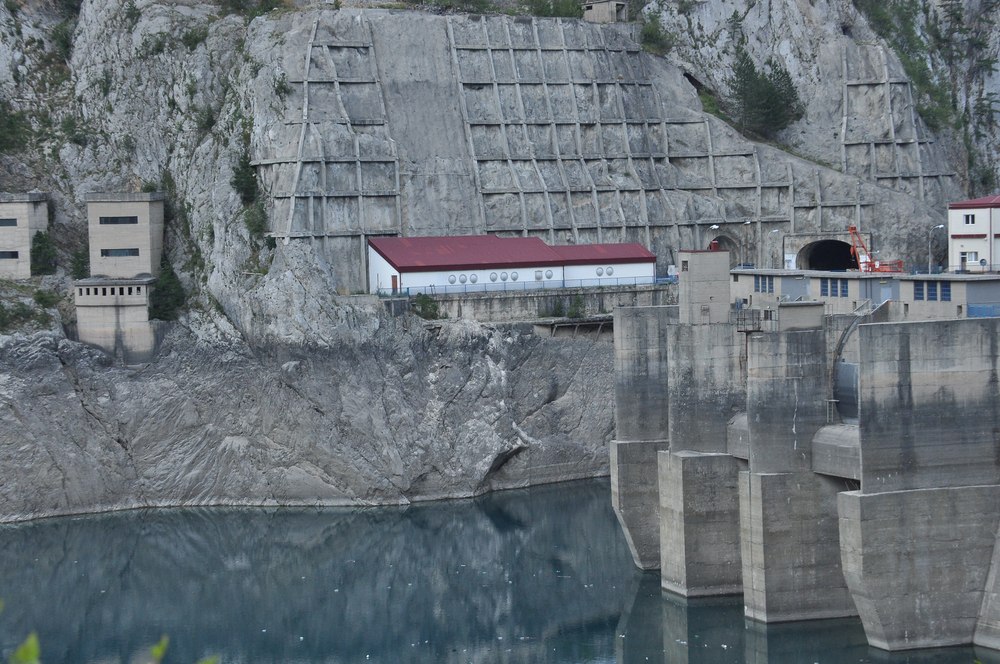
Energy and water ministers from Kazakhstan, Kyrgyzstan, and Uzbekistan signed a trilateral protocol in Tashkent on May 7 establishing agreed water release volumes and schedules from the Toktogul Reservoir for the next two months. The Toktogul Reservoir plays a central role in maintaining water and energy stability across Central Asia. The Toktogul Hydropower Plant, located on the Naryn River, the main tributary of the Syr Darya, is Kyrgyzstan’s largest power station and supplies around 40% of the country’s electricity. The reservoir serves a dual purpose: generating electricity for Kyrgyzstan while regulating water flows essential for downstream agriculture in Kazakhstan and Uzbekistan. During winter, Kyrgyzstan typically increases electricity generation to meet heating demand, often lowering reservoir levels and reducing the amount of water available for irrigation during the following spring and summer. According to Kazakhstan’s Energy Ministry, the newly signed protocol removes uncertainty for farmers in southern Kazakhstan at the start of the agricultural season and allows both Kazakh and Uzbek farmers to begin irrigation activities on schedule. To ensure stable water supplies throughout the remainder of the growing season, the three countries agreed to continue coordination in stages. The next ministerial meeting is scheduled for mid-June in Bishkek, where officials plan to finalize water release schedules for the critical summer months of July, August, and September. The agreement highlights the continued functioning of the region’s interstate water-energy exchange mechanism. Coordination over summer irrigation flows was preceded by extensive cooperation during the winter season. From September 2025 to April 2026, Kazakhstan supplied more than 1.5 billion kilowatt-hours of electricity to Kyrgyzstan, helping the upstream country reduce winter water releases for heating and preserve additional reserves in the Toktogul Reservoir for summer irrigation needs in Kazakhstan and Uzbekistan. According to Kyrgyzstan’s Deputy Energy Minister Altynbek Rysbekov, the Toktogul Reservoir held 7 billion cubic meters of water on April 1, 2026, down from 9.14 billion cubic meters on January 1 after the winter heating season. The reservoir’s so-called “dead water level,” the threshold below which turbines can no longer operate, stands at 6.5 billion cubic meters.

Uzbekistan Plans $5.8 Billion Expansion of Hydropower Sector

Uzbekistan is planning a major expansion of its hydropower sector, with 73 new projects worth $5.8 billion scheduled for implementation between 2026 and 2032, officials said during a presentation to Shavkat Mirziyoyev. According to the briefing, the country aims to add 3.6 gigawatts of new generating capacity as part of efforts to diversify its energy mix. Currently, most of Uzbekistan’s electricity is produced from natural gas and coal, while hydropower accounts for only about 10-12%. Officials emphasized that Uzbekistan’s extensive water network, more than 150,000 kilometers of rivers, canals, and streams, represents a largely untapped energy resource. Expanding hydropower is seen as key to improving energy stability, reducing dependence on fossil fuels, and making more efficient use of water. The sector has already seen significant growth in recent years. The number of hydroelectric power plants has increased from 36 in 2017 to 100 in 2025, while installed capacity has risen from 1.6 gigawatts to 2.4 gigawatts. Among the projects discussed, the Upper Pskem hydropower plant in the Bostanlyk district stands out. With an investment of $365 million, it is expected to generate 160 megawatts of electricity and supply power to around 161,000 households. In the Fergana region, a 15-megawatt plant is planned in the Sokh district, which is expected to cover 71% of local electricity demand. Authorities also reviewed the potential for constructing 42 small hydropower plants in the Upper Tupalang area, which could add 541 megawatts of capacity and generate up to 1.9 billion kilowatt-hours annually. In addition, nearly 3,000 small and micro hydropower plants are planned, with a combined capacity of 164 megawatts. This year alone, 13 hydropower plants and one wind power facility are expected to come online, with a total capacity of 114 megawatts and annual generation of 537 million kilowatt-hours. A 20-megawatt wind project is also under construction in Bostanlyk with $28 million in grant funding. Officials said Uzbekistan is also considering the construction of three pumped-storage hydropower plants with a combined capacity of 1.4 gigawatts, which would help balance electricity supply and demand. The presentation highlighted ongoing efforts to modernize the sector through digital technologies. More than 3,500 monitoring devices have already been installed to track water levels, weather conditions, and infrastructure performance in real time. The plans build on earlier developments in the sector. Last year, Uzbekistan launched the first stage of the Naryn hydropower cascade, a project valued at over $428 million. The initial plant, built using domestic materials and equipment, produces 171 million kilowatt-hours annually and supplies electricity to around 430,000 households.

Chinese Company to Build Hydropower and Solar Plants in Kyrgyzstan

Construction of a small hydropower plant and a solar power station has begun in Kyrgyzstan’s Jalal-Abad region as part of efforts to expand domestic electricity generation and reduce reliance on energy imports. The groundbreaking ceremony took place on April 28 and was attended by the presidential envoy to the region, Tilek Tekebayev; the project’s scientific supervisor and former Prime Minister Akylbek Japarov; as well as representatives of the Chinese corporation SINOMACH. The project involves the construction of two facilities: a small hydropower plant with a capacity of 5 megawatts and an annual output of around 20 million kWh, and a solar power plant with a capacity of 1 megawatt, generating approximately 1.6 million kWh per year. The total investment, to be implemented under a public-private partnership model, is estimated at $259.8 million. Once operational, the facilities are expected to help reduce electricity shortages in the region and decrease dependence on imports. The project is also expected to create more than 100 jobs and provide irrigation for over 1,000 hectares of arid land. Kyrgyzstan is accelerating the development of small hydropower projects amid rising electricity demand and limited generation capacity. Currently, 48 small hydropower plants are operating in the country, with a combined capacity of around 180 megawatts. Another 50 facilities are under construction, which authorities say will strengthen the country’s energy independence.

U.S. Envoy Gor Meets Rahmon in Tajikistan for Trade, Security Talks

Tajik President Emomali Rahmon met Special Envoy of the President of the United States for South and Central Asia Sergio Gor in Dushanbe on April 28 for talks focused on trade, investment, security, and the next stage of cooperation under the C5+1 framework. Gor also met Tajik Foreign Minister Sirojiddin Muhriddin during the visit. “Just landed in Tajikistan!” Gor wrote on X. “Excellent meeting with Foreign Minister Sirojiddin Muhriddin in Dushanbe on deepening U.S.-Tajikistan ties. Excited to build a stronger partnership that delivers greater security and prosperity for both our countries.” The U.S. Embassy in Dushanbe said Gor’s meetings would continue over the next few days. According to the Tajik president’s press service, the meeting with President Rahmon covered the current state of bilateral relations and prospects for expanding cooperation. Particular attention was given to agreements reached through the C5+1 dialogue, which brings together the United States and the five Central Asian states. Rahmon said Tajikistan is interested in expanding ties with Washington in areas of mutual interest, noting that the United States is among Tajikistan’s top five investment partners. The sides discussed the use of the Trade and Investment Framework Agreement, known as TIFA, as a tool for developing practical cooperation. The talks pointed to several sectors where Dushanbe hopes to attract greater U.S. involvement. These include hydropower, mining, mineral processing, light industry, food production, chemicals, and pharmaceuticals. Tajikistan has long promoted its hydropower potential as a basis for regional energy trade and industrial development, while mining and processing are increasingly tied to wider U.S. interest in critical minerals and supply-chain diversification. Digital cooperation also featured, with the two sides identifying artificial intelligence, digital infrastructure, and the wider digitalization of the economy as promising areas for cooperation. They also discussed the creation of joint ventures to process agricultural products for export and attract investment. The Tajik Foreign Ministry said Muhriddin and Gor discussed political, economic, investment, humanitarian, and security cooperation. It said they also exchanged views on the regional situation, emphasizing stability and the prevention of humanitarian risks. “Particular attention was paid to the need for coordinated efforts in addressing modern challenges and threats, including terrorism, extremism, and drug trafficking,” the ministry said. Security remains a central part of Tajikistan’s relationship with Washington. Tajikistan shares a long border with Afghanistan, where narcotics trafficking, militant activity, and cross-border violence have repeatedly tested Dushanbe’s security forces. Earlier this month, Tajikistan said its security forces killed two alleged drug smugglers from Afghanistan who crossed into the Farkhor district of the Khatlon region. The State Committee for National Security said the group was trying to smuggle 25 kilograms of hashish. The Afghan border has also become a concern for foreign investors. In late 2025, several Chinese workers were killed in attacks launched from Afghan territory, prompting China to urge Tajikistan to strengthen protection for Chinese citizens and businesses. The attacks sharpened attention on Tajikistan’s ability to secure border areas where foreign-backed infrastructure and mining projects are expanding. Cooperation has also extended into health....

Kyrgyzstan Expands Small Hydropower to Tackle Rising Energy Deficit

Kyrgyzstan is accelerating its development of small hydropower plants as it seeks to close a widening electricity gap driven by surging demand and limited domestic generation capacity. On April 20, two new small hydroelectric power plants (HPPs) were commissioned in the country's northern Chui region. The Sokuluk-3 HPP has a capacity of 9.5 MW, while the Tuyuk HPP has a capacity of 5.9 MW. Combined, they are expected to generate between 60 million and 70 million kWh of electricity annually. Speaking at the launch ceremony, President Sadyr Japarov underscored the strategic importance of small-scale hydropower. “Such projects increase the resilience of the energy system and facilitate the gradual reduction of the energy deficit. Today, 48 small hydroelectric power plants with a total capacity of 180 MW are operating in Kyrgyzstan. They play a significant role in strengthening energy independence and reducing dependence on imports,” he said. The government is scaling up efforts in the sector, with 50 small HPPs currently under construction across the country. Of these, 13 are scheduled to be commissioned in 2026. Electricity demand in Kyrgyzstan continues to rise rapidly. In 2025, total consumption reached 19.3 billion kWh, up by 900 million kWh compared to the previous year. Domestic generation accounted for 15.4 billion kWh, while the remaining 3.9 billion kWh was covered through imports from Turkmenistan, Uzbekistan, Kazakhstan, and Russia. According to Minister of Water Resources, Agriculture, and Processing Industry, Bakyt Torobayev, electricity consumption has grown by more than 25% over the past five years, rising from 15.4 billion kWh in 2020. “If current electricity consumption rates continue, it could reach 25 billion kWh by 2030,” Torobayev said. The surge in demand has been driven by rapid housing construction and the launch of new industrial facilities. With Kyrgyzstan’s population now exceeding 7.4 million, the number of electricity consumers is expanding steadily. Over the past three years alone, 4,192 industrial facilities and 96,975 households have been connected to the national grid, according to the Energy Ministry. Despite the expansion of generation capacity, supply continues to lag behind demand, prompting authorities to prioritize small hydropower as a flexible and scalable solution to improve energy security and reduce reliance on imports.

Chinese Firm to Modernize Historic Hydropower Plant Near Bishkek

Kyrgyzstan’s state-owned Chakan HPP OJSC has signed a contract with China National Heavy Machinery Corporation (CHMC), which will serve as the general contractor for the modernization of the Lebedinovskaya hydroelectric power plant (HPP) on the outskirts of Bishkek. The project forms part of the Ministry of Energy’s broader program to upgrade and rehabilitate hydropower facilities in an effort to reduce the country’s chronic electricity shortages and strengthen energy security. The Lebedinovskaya HPP is the main station of the Alamedin HPP cascade, which comprises eight small hydropower plants located on the Western Big Chui Canal in the Chui region. According to the Ministry of Energy, the modernization will involve replacing key equipment, increasing generating capacity, and extending the plant’s operational lifespan. The project involves increasing the plant’s installed capacity from 7.6 megawatts (MW) to 10 MW and raising annual electricity generation from 37.2 million kilowatt-hours (kWh) to 53.5 million kWh. CHMC has already begun preparing the design and cost-estimate documentation. Lebedinovskaya HPP is one of the oldest operating hydropower plants in northern Kyrgyzstan. Construction began in May 1942, during World War II. Much of the main construction work was carried out during a harsh winter, when more than 7,000 women and children reportedly excavated frozen soil by hand, transported it across the ice, and stood in icy water to pump out up to 200 cubic meters of groundwater daily to protect the plant’s foundation. Construction was completed in one year and two weeks. In 1943, the city of Frunze, now Bishkek, began receiving electricity from the plant. The additional power enabled factories evacuated from western parts of the Soviet Union during the war to resume operations at their new location.