• KGS/USD = 0.01144 0%
  • KZT/USD = 0.00209 0%
  • TJS/USD = 0.10807 0%
  • UZS/USD = 0.00008 0%
  • TMT/USD = 0.28571 0%
  • KGS/USD = 0.01144 0%
  • KZT/USD = 0.00209 0%
  • TJS/USD = 0.10807 0%
  • UZS/USD = 0.00008 0%
  • TMT/USD = 0.28571 0%
  • KGS/USD = 0.01144 0%
  • KZT/USD = 0.00209 0%
  • TJS/USD = 0.10807 0%
  • UZS/USD = 0.00008 0%
  • TMT/USD = 0.28571 0%
  • KGS/USD = 0.01144 0%
  • KZT/USD = 0.00209 0%
  • TJS/USD = 0.10807 0%
  • UZS/USD = 0.00008 0%
  • TMT/USD = 0.28571 0%
  • KGS/USD = 0.01144 0%
  • KZT/USD = 0.00209 0%
  • TJS/USD = 0.10807 0%
  • UZS/USD = 0.00008 0%
  • TMT/USD = 0.28571 0%
  • KGS/USD = 0.01144 0%
  • KZT/USD = 0.00209 0%
  • TJS/USD = 0.10807 0%
  • UZS/USD = 0.00008 0%
  • TMT/USD = 0.28571 0%
  • KGS/USD = 0.01144 0%
  • KZT/USD = 0.00209 0%
  • TJS/USD = 0.10807 0%
  • UZS/USD = 0.00008 0%
  • TMT/USD = 0.28571 0%
  • KGS/USD = 0.01144 0%
  • KZT/USD = 0.00209 0%
  • TJS/USD = 0.10807 0%
  • UZS/USD = 0.00008 0%
  • TMT/USD = 0.28571 0%

Viewing results 1 - 6 of 5

Kazakhstan and Saudi Arabia Sign Mining Cooperation MOU at AMM Congress

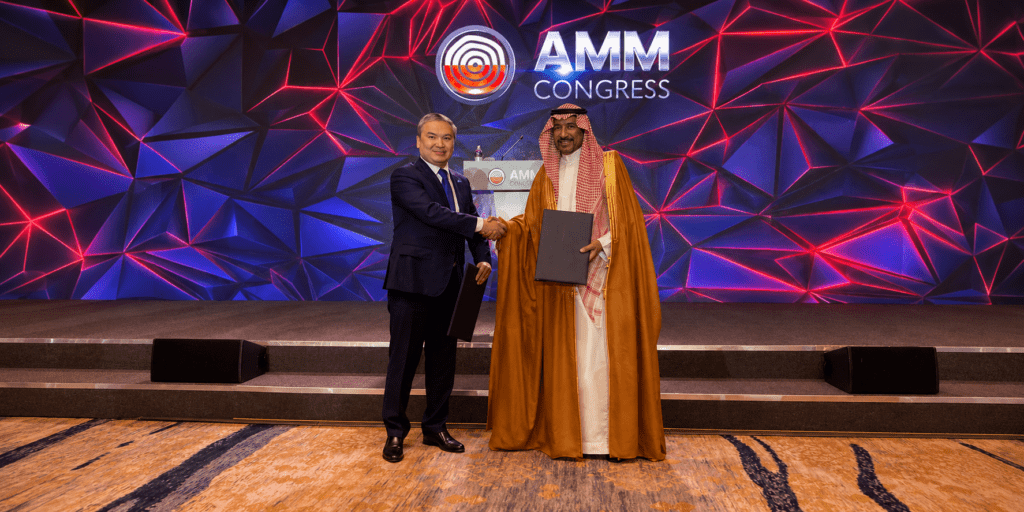
ASTANA — Kazakhstan and Saudi Arabia signed a Memorandum of Understanding (MOU) on cooperation in rare earth metals, critical minerals, and the broader mining space at the opening of the Astana Mining & Metallurgy Congress 2026 (AMM) on June 11, marking a significant new step in the two countries’ efforts to expand industrial and critical minerals ties. The MOU was signed by Kazakhstan’s Prime Minister Olzhas Bektenov and Saudi Arabia’s Minister of Industry and Mineral Resources, Bandar bin Ibrahim Al-Khorayef, who arrived in Astana to attend the AMM. The document aims to develop and strengthen cooperation between the Ministry of Industry and Mineral Resources of Saudi Arabia and the Ministry of Industry and Construction of the Republic of Kazakhstan in the field of mineral resources through the exchange of expertise in the mining industry, modern technologies used in mineral resource exploration, and raw materials evaluation. The agreement also covers cooperation across the mining value chain, but with a focus on rare earths and other mineral resources. Both sides are seeking to strengthen collaboration in extraction, processing, and higher value-added production. The signing comes as Kazakhstan is working to attract more investment into critical minerals and downstream processing, while Saudi Arabia is expanding its role in global mining and mineral supply chains as part of its wider economic diversification strategy. Bektenov and Al-Khorayef also held talks in Astana ahead of the congress. According to the Kazakh government, the discussions focused on further cooperation in the mining and metallurgical sectors and in concretizing prospects for joint projects in high-demand and scarce minerals. The sides also discussed investment and trade opportunities as well as geologic mapping and processing, leading to higher value-added production. The signing of the MOU at AMM, considered one of Central Asia’s main mining and metallurgy forums, had a diplomatic dimension at a time when rare earths and critical minerals are moving higher on the agendas of governments and investors. The congress brings together government officials, mining companies, investors, equipment suppliers, and industry experts. For Kazakhstan, the MOU fits into a broader effort to position the country not only as a source of mineral resources, but also as a platform for processing and higher-value production. Astana has been promoting geological exploration, investment in processing capacity, and strategic partnerships with foreign governments and companies. As Kazakhstan seeks to bring more of the value chain onshore, it is building on examples such as titanium production at Ust-Kamenogorsk Titanium and Magnesium and zinc processing at Kazzinc’s integrated facilities. For Saudi Arabia, the agreement reflects Riyadh’s growing interest in international mining partnerships. The Kingdom has been seeking to develop its domestic mineral sector while securing access to strategic raw materials needed for industrial development, clean energy technologies, and advanced manufacturing. At its AMM booth in Astana, Saudi Arabia’s Ministry of Industry and Mineral Resources highlighted its upcoming Future Minerals Forum, set for January 2027 in Riyadh; it is one of the world's leading mining events. Kazakhstan and the other Central Asian countries will be...
Uzbekistan Explores Gas-Chemical Cooperation with South Africa’s Sasol

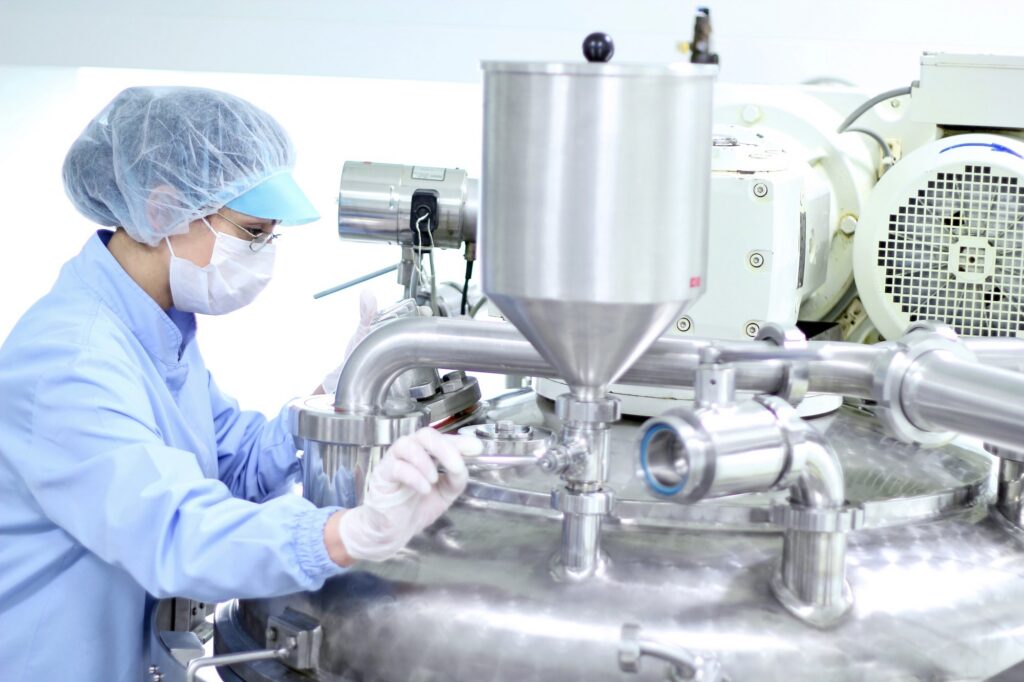
Uzbekistan is considering involving South Africa’s Sasol Limited in the development of its gas-chemical sector following talks held in Tashkent on March 15, according to the Ministry of Investment, Industry and Trade. The meeting brought together Uzbekistan’s Minister of Investment, Industry and Trade, Laziz Kudratov, and Sasol Executive Vice President Dr. Sarushen Pillay. Discussions focused on expanding cooperation in gas-chemical and coal-chemical industries, with both sides expressing interest in joint projects based on the deep processing of natural gas and coal. According to the ministry, particular attention was given to Sasol’s potential participation in a coal-to-olefins (CTO) project aimed at converting coal into higher-value chemical products. The parties also explored opportunities for technological cooperation in further developing Uzbekistan’s existing gas-to-liquids (GTL) complex, including the possible expansion of production capacity and the introduction of advanced processing technologies. Officials noted that the dialogue builds on earlier discussions held in Cape Town in February, indicating continued engagement between the two sides. Founded in 1950, Sasol is an international energy and chemical company operating in more than 20 countries. The company reported revenues of approximately $16.6 billion in 2024 and employs more than 28,000 people worldwide. As previously reported by The Times of Central Asia, Kazakhstan has also been expanding economic ties with African countries. Trade turnover increased by 15% in 2024 to reach $783 million. Regional officials have highlighted the importance of building partnerships based on mutual economic interests, particularly in sectors such as energy, industry, and technology.

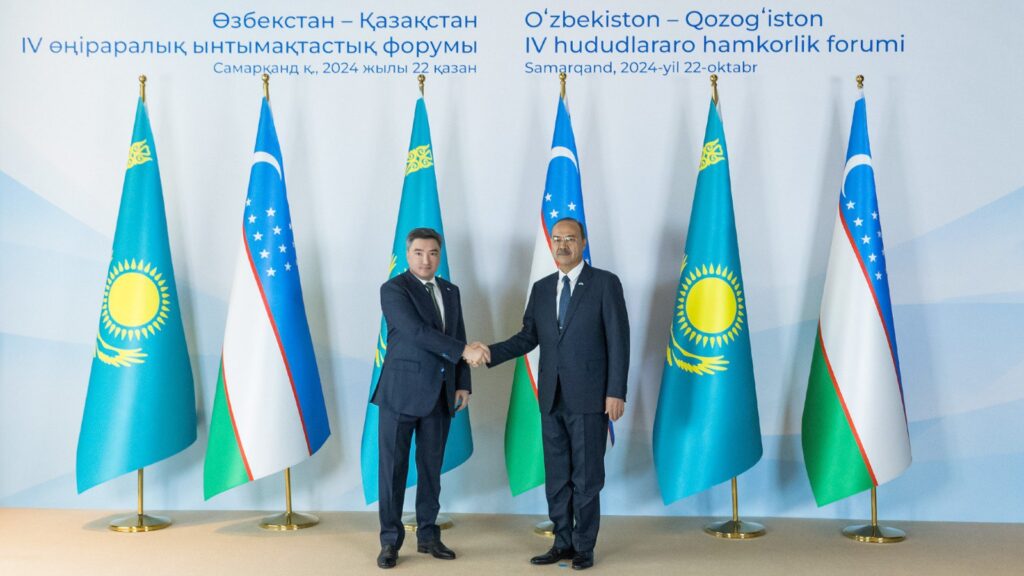
Kazakhstan and Uzbekistan Prioritize Cooperation Between Regions

On October 22, the 4th Interregional Forum, “Uzbekistan-Kazakhstan,” was held in Samarkand, Uzbekistan. The forum addressed issues such as increasing bilateral trade turnover, developing industrial cooperation, and enhancing collaboration in the water, energy, transit, and transport sectors. Speaking at the forum, Uzbekistan’s Prime Minister, Abdulla Aripov, emphasized that developing cooperation between the regions of Uzbekistan and Kazakhstan is a priority in relations between the two countries. Aripov stated that “Over the past seven years, trade turnover between Uzbekistan and Kazakhstan has grown almost 2.5-fold, reaching $4.4 billion last year. Today, more than 1,000 enterprises with Kazakh capital operate in Uzbekistan. Border regions have established direct and close ties with each other — the Republic of Karakalpakstan [in Uzbekistan] with the Mangistau region [in Kazakhstan], the Tashkent region with the Turkestan region, and the Navoi region with the Kyzylorda region. At the same time, this great potential has yet to be realized.” Kazakhstan’s Prime Minister, Olzhas Bektenov, meanwhile, announced at the forum that Kazakhstan is ready to increase exports to Uzbekistan by over $550 million, offering 40 types of high-value-added Kazakh products. Uzbekistan is Kazakhstan’s main trading partner in Central Asia. From January-August 2024, bilateral trade amounted to $2.5 billion, with more than 50% of Uzbekistan’s trade passing through Kazakhstan in transit. The forum paid special attention to the development of industrial cooperation, including 74 joint projects with a total investment volume of $3.4 billion and the creation of 14,600 jobs. Of these, 65 enterprises will be established in Kazakhstan, creating 13,600 new jobs. Examples of Kazakh-Uzbek industrial cooperation include the manufacture of Chevrolet Onix cars in Kostanay (Kazakhstan), a plant for the production of household appliances in Saran (Kazakhstan), sewing, spinning, and weaving factories in the Shymkent and Turkestan regions (Kazakhstan), and the production of autoclaved aerated concrete in Angren (Uzbekistan). Kazakhstan and Uzbekistan are also working on establishing the International Center for Industrial Cooperation “Central Asia,” which will offer “one-stop shop” for services and tax and customs for entrepreneurs from both countries.

Expansion of Japanese Investment in Uzbekistan

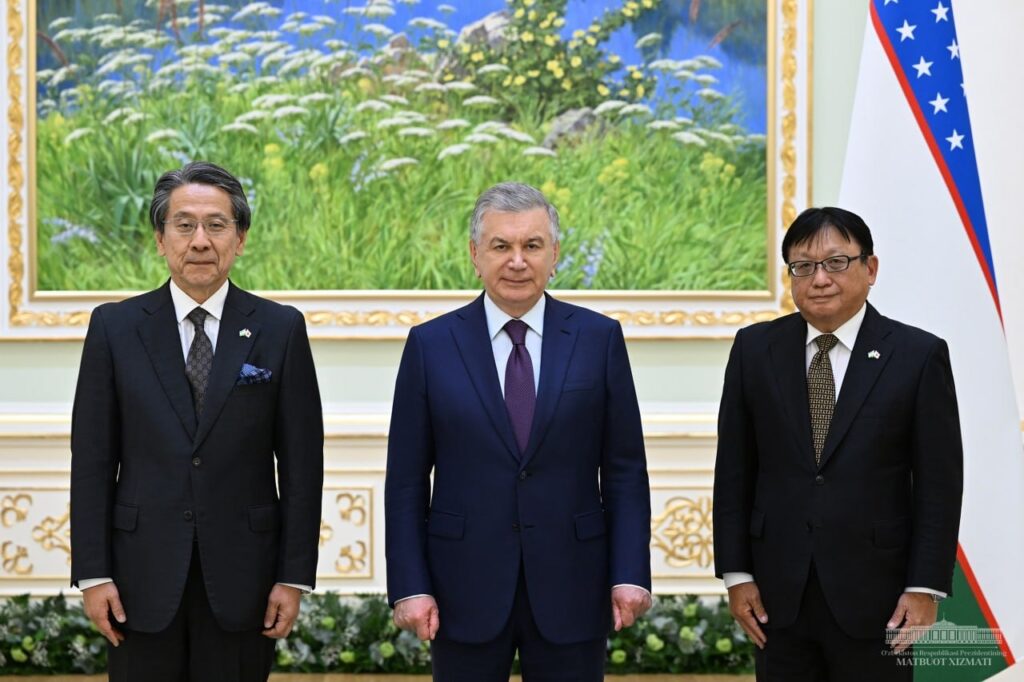
On July 9, Uzbekistan's President Shavkat Mirziyoyev held a meeting in Tashkent with a Japanese delegation, including Tadashi Maeda, Chairman of the Board of Directors of the Japan Bank for International Cooperation (JBIC), and a representative of the Sojitz Corporation. Agreements were reached on the adoption of a three-year cooperation program with JBIC, as well as a roadmap with Sojitz Corporation for the implementation of potential projects in high-tech sectors of Uzbekistan’s economy. The Uzbek leader noted JBIC’s significant role in the implementation of investment projects in the country, which today includes a portfolio of joint initiatives worth over $3.7 billion in the petrochemical and textile industries, energy, and infrastructure modernization. The president also expressed his deep appreciation of Sojitz’s implementation of projects in the country’s oil and gas sector. The Japanese company confirmed its intention to expand business activities in Uzbekistan, including, based on an agreement signed in 2022, the Syrdarya II IPP project, destined to become one of the largest power generation facilities in Uzbekistan. The Sojitz Corporation also announced its opening of a liaison office in Tashkent through which it aims to strengthen existing business as well as develop new business while striving to address regional needs across Central Asia.

Uzbekistan and Mongolia to Develop Multifaceted Cooperation

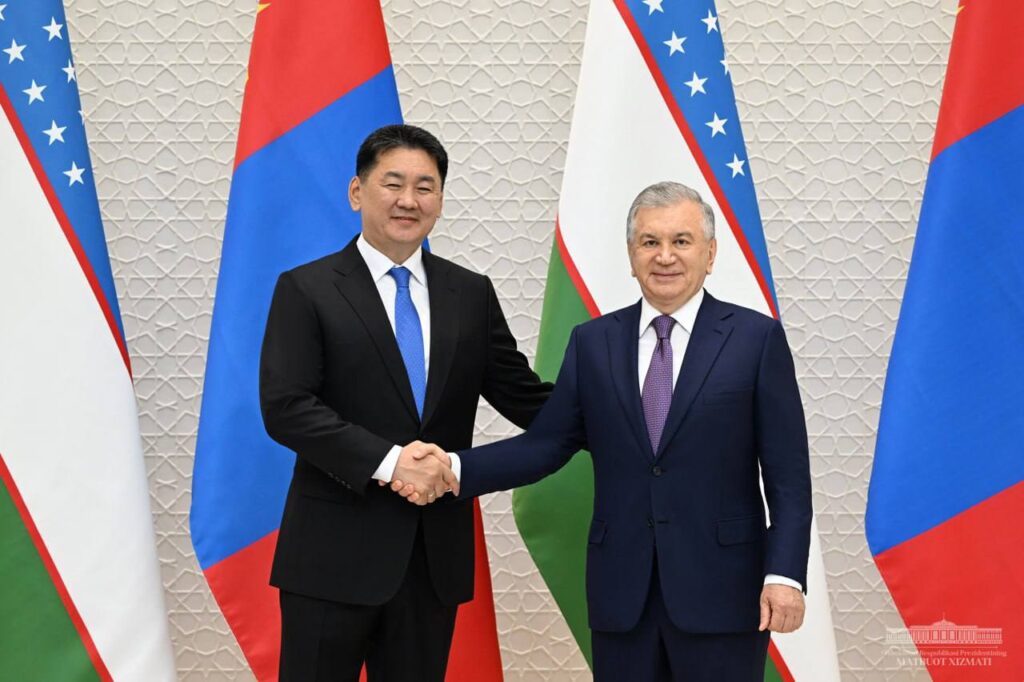
On June 24, the first state visit of President of Mongolia Ukhnaagiin Khurelsukh opened a new page in the development of Uzbek-Mongolian relations. Following negotiations in Taskent between President of Mongolia Ukhnaagiin Khurelsukh  and President of Uzbekistan Shavkat Mirziyoyev,  on deepening trade and economic cooperation, plans were announced to increase bilateral trade 5 to 10-fold in the coming years. The two leaders tasked their governments to create a joint working group on increasing trade turnover, opening official trading houses in Ulaanbaatar and Tashkent, preparing an Agreement on Preferential Trade, and instigating proposals for simplifying access to both countries’ markets. President Mirziyoyev proposed adopting a medium-term Industrial Cooperation Program, with priority given to identifying partnership in geological exploration, development, and processing of raw materials. In addition, it was mooted that comprehensive cooperation be established in agriculture and related industries and plans were discussed on the launch of large joint livestock complexes in Karakalpakstan, Namangan, and other regions of Uzbekistan. Proposals have already been prepared for the import of meat and related processed products from Mongolia, and in return, poultry meat, fruit, vegetables and other agricultural products from Uzbekistan. Negotiations concluded with an agreement to prepare a roadmap for the implementation of the above. The Mongolian president’s visit also included an Uzbek-Mongolian business forum attended by heads of ministries, government agencies, industry associations, and over 150 representatives from leading companies of both countries. As reported by the Uzbek Ministry of Investment, Industry and Trade, the forum identified several prospective avenues for increasing trade and economic partnerships in mining, agriculture, construction materials, healthcare, pharmaceuticals, food, and banking. Initiatives for the joint exploration of new rare metal and basalt deposits, as well as the creation of joint livestock and agro-clusters aimed at exporting produce were earmarked as particularly promising. Dashzeveg Enkhtuvshin, President of the National Chamber of Commerce and Industry of Mongolia, lauded the potential for expanding trade, investment, and industrial collaboration between the two countries, and encouraged entrepreneurs to intensify their interactions and pursue ambitious joint ventures.