• KZT/USD = 0.00214
  • TJS/USD = 0.10810
  • UZS/USD = 0.00008
  • TMT/USD = 0.29760
  • KZT/USD = 0.00214
  • TJS/USD = 0.10810
  • UZS/USD = 0.00008
  • TMT/USD = 0.29760
  • KZT/USD = 0.00214
  • TJS/USD = 0.10810
  • UZS/USD = 0.00008
  • TMT/USD = 0.29760
  • KZT/USD = 0.00214
  • TJS/USD = 0.10810
  • UZS/USD = 0.00008
  • TMT/USD = 0.29760
  • KZT/USD = 0.00214
  • TJS/USD = 0.10810
  • UZS/USD = 0.00008
  • TMT/USD = 0.29760
  • KZT/USD = 0.00214
  • TJS/USD = 0.10810
  • UZS/USD = 0.00008
  • TMT/USD = 0.29760
  • KZT/USD = 0.00214
  • TJS/USD = 0.10810
  • UZS/USD = 0.00008
  • TMT/USD = 0.29760
  • KZT/USD = 0.00214
  • TJS/USD = 0.10810
  • UZS/USD = 0.00008
  • TMT/USD = 0.29760

Viewing results 1 - 6 of 41

EDB Forecasts Kazakhstan’s GDP Growth to Accelerate to 5.5% in 2025

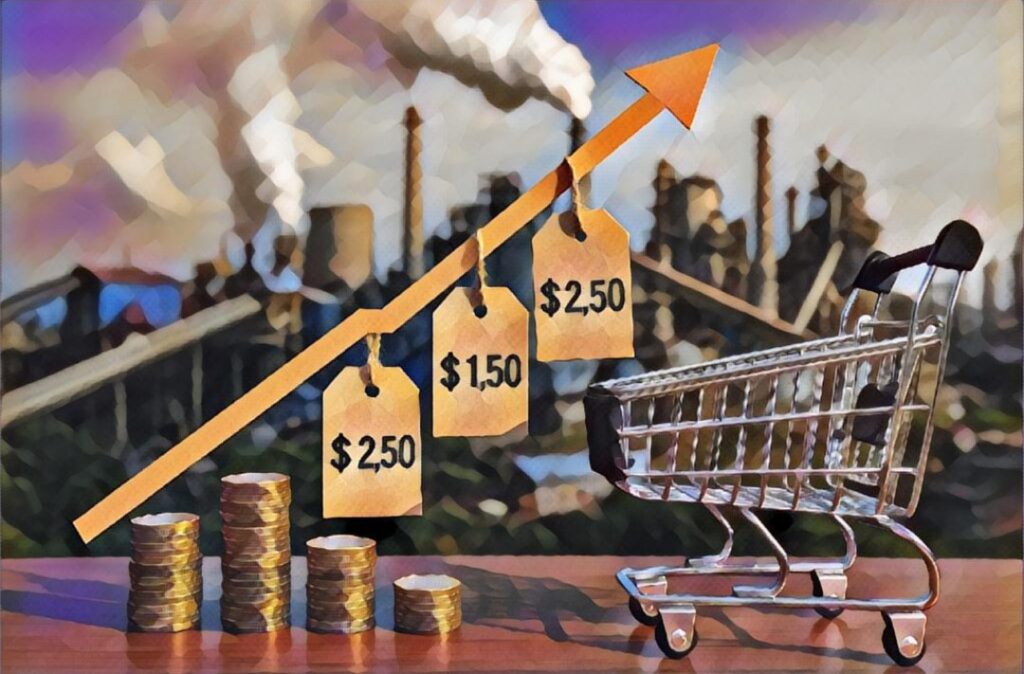
Kazakhstan’s gross domestic product (GDP) is projected to grow by 5.5% in 2025, up from an estimated 4.8% in 2024, according to the Eurasian Development Bank (EDB). The forecast suggests this growth rate will be sustained through 2026 and 2027. “We expect Kazakhstan's economic growth to accelerate to 5.5% in 2025 after 4.8% in 2024, with these rates remaining unchanged in 2026-2027,” said Aigul Berdigulova, Senior Analyst at the EDB’s Country Analysis Center, during the presentation of the bank’s macroeconomic forecast. She emphasized that government initiatives to boost investment, particularly through the national holding company Baiterek, will be pivotal. Funding volumes for the economy are expected to reach KZT 8 trillion (approximately $15.2 billion), equivalent to about 6% of GDP. “This measure will help unlock investment potential in manufacturing, transport, and construction,” Berdigulova said. According to the EDB, these investment-backed policies are expected to counterbalance external shocks. Additional growth drivers include expansion at the Tengiz oil field, projected to contribute 0.4 to 0.6 percentage points to GDP growth in 2025, and ongoing fiscal stimulus, regional development efforts, and infrastructure projects. Kazakhstan ranks fourth among the EDB’s member states in terms of projected GDP growth for 2025, following Kyrgyzstan (10.3%), Tajikistan (8.4%), and Uzbekistan (6.5%). It is on par with Armenia (5.5%) and ahead of Belarus (3%) and Russia (2%). Inflation Set to Rise in 2025 Despite the optimistic growth forecast, inflationary pressures are expected to intensify. The EDB projects Kazakhstan’s inflation rate will reach 11.9% in 2025, its highest among the bank’s member countries. “Inflation in Kazakhstan is rising this year due to the weakening of the tenge observed at the end of 2024,” Berdigulova explained. She also pointed to continued increases in utility tariffs and inflation expectations amid discussions of tax and budget reforms, including a planned VAT hike. Inflation is expected to peak in the second quarter of 2026 before declining to around 8.5% by 2027. For comparison, Armenia is forecast to have the lowest inflation among EDB members at just 3.1%. According to preliminary data from Kazakhstan’s Ministry of National Economy, the country’s GDP grew by 6% year-on-year in the January-May 2025 period. However, not all institutions are as optimistic. The European Bank for Reconstruction and Development (EBRD) recently revised its 2025 forecast for Kazakhstan’s GDP downward, from 5.2% to 4.9%.

Kazakhstan Braces for Economic Fallout from OPEC+ Output Hike

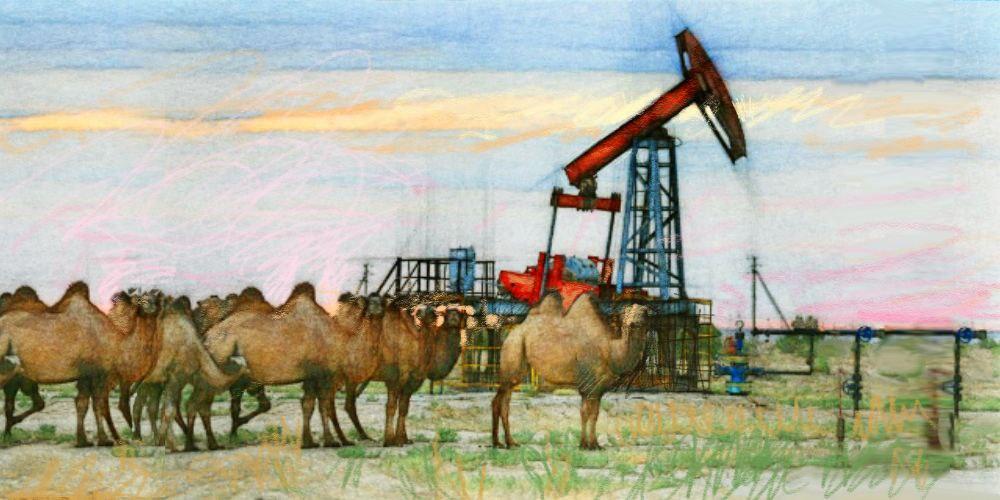
The latest OPEC+ decision to boost oil production in a strained global market threatens to push Kazakhstan closer to recession and further inflation. On May 3, OPEC+ members agreed to a significant increase in oil output for June. Leading financial outlets, including Bloomberg, suggest that the move is intended to penalize member states that have consistently breached their production quotas, most notably Kazakhstan and Iraq. The announcement triggered a sharp drop in oil prices. Production will rise by 411,000 barrels per day in June, following a tripling of output in May from the originally planned volume. Analysts attribute the shift to Riyadh’s growing frustration with non-compliant members. According to Rystad Energy analyst Jorge Leon, a former OPEC official, Saudi Arabia aims to “financially wear down” these states while aligning with U.S. President Donald Trump’s push for lower energy prices. Kazakhstan’s Overproduction at Tengiz Despite repeated assurances from Kazakhstan’s Ministry of Energy that they would honor OPEC+ agreements, the country exceeded its January quota by 32,000 barrels per day (bpd), producing 1.5 million bpd versus an allotted 1.468 million. This surge followed Tengizchevroil LLP’s launch of a new expansion phase at the Tengiz oil field in the Atyrau region, elevating output there to 870,000 barrels per day, 45% above the 2024 average. The expansion is expected to add 12 million tons annually to Tengiz’s crude production. Tengizchevroil is a joint venture comprising Chevron (50%), ExxonMobil (25%), KazMunayGas (20%), and LUKOIL (5%). Falling Prices and Criticism of OPEC’s Tactics Following the OPEC+ announcement, Brent crude futures fell to $59.30 per barrel on May 5, with U.S. WTI at $56.19. Some analysts argue Kazakhstan is being unfairly targeted. As Reuters reports, Kazakhstan contributes only 5% of OPEC+ production and under 2% of global output. Analysts at the Stankevicius Group note that larger producers such as the UAE, Russia, and Iraq have repeatedly breached quotas without facing similar scrutiny. They argue that Saudi Arabia’s surge in production undermines the cartel’s objectives more than Kazakhstan’s actions. “Saudi Arabia, which has sharply increased its oil production, is causing even greater damage to the OPEC+ agreement by encouraging lower prices," the analysts claimed. "In other words, Kazakhstan is maintaining a balance of interests and the interests of other cartel members. Meanwhile, other members are allowing themselves to disrupt the market balance.” Planning for a Downturn Oil revenues are central to Kazakhstan’s state budget, prompting government officials to prepare for a potential downturn. Deputy Prime Minister and Minister of National Economy Serik Zhumangarin stated in April that contingency plans are being developed for scenarios where oil prices fall to $55 or even $50 per barrel. However, the national budget is pegged to a $75 per barrel benchmark. According to analyst Murat Kastaev, social obligations make spending cuts politically infeasible, leaving the government reliant on increased transfers from the National Fund and a probable weakening of the tenge. While GDP growth could slow to 3-3.5% at current prices, a sustained drop to $40-50 per barrel may trigger a recession...

Kyrgyzstan Reports Strong Economic Growth in Early 2025

Kyrgyzstan’s economy continued its upward trajectory in the first quarter of 2025, with GDP expanding by 13.1%, according to Prime Minister Akylbek Japarov. He credited the surge to positive developments across all key sectors prioritized by the government. The food industry posted remarkable growth of 71%, while the construction sector expanded by 69%. Investments in fixed capital jumped by 90% during the same period. A detailed economic overview published by the Ministry of Economy and Commerce highlighted that Kyrgyz businesses are adapting rapidly to shifting external conditions. The ministry also pointed to increased domestic demand and investment activity as key drivers of growth. "From January to March 2025, about 93% of total investments were directed toward mining, processing industries, information and communications, electricity and gas supply, and the construction of housing and educational institutions," the ministry stated. The construction sector alone contributed three percentage points to GDP growth. However, services remain the backbone of Kyrgyzstan’s economy, accounting for 4.5 percentage points of overall growth. Within the sector, trade made up 27.4%, transportation services 10.3%, and financial intermediation and insurance services another 10.3%. Annual inflation stood just below 7% in the first quarter, with average prices for consumer goods rising by 3.5% during the reporting period.

Tajikistan Predicts Economic Slowdown Amid Declining Remittances

Tajikistan's economic growth is projected to decelerate to 7.5% in 2025, largely due to weakening domestic demand, according to the latest regional economic review by the Eurasian Fund for Stabilization and Development (EFSD). Migrant Remittances: A Key Factor The anticipated slowdown is primarily attributed to a decline in remittances from labor migrants, which have historically formed a substantial share of Tajikistan’s GDP. EFSD analysts forecast that from 2025 to 2027, the volume of transfers will gradually normalize after peaking between 2022 and 2024. Despite this decline, the EFSD maintains that Tajikistan’s balance of payments will remain stable, helped in part by reduced capital outflows, including foreign currency purchases. Previously, the World Bank reported that migrant remittances accounted for 45% of the country’s GDP in 2024, the highest proportion globally. By comparison, remittances made up 24% of GDP in Kyrgyzstan and 14% in Uzbekistan. The Asian Development Bank (ADB) expects this share to fall to 37% in 2025. Inflation Pressures Rise EFSD economists also warn of mounting inflationary pressures. Inflation is projected to approach the upper limit of the National Bank of Tajikistan’s target corridor, 5% with an acceptable deviation of ±2 percentage points. Over the medium term, inflation is expected to stabilize within the target range. Food prices remain the primary risk to price stability, the EFSD cautioned. Exports, External Risks, and Trade Barriers The ADB has also published a forecast supporting a more restrained outlook, highlighting falling global prices for Tajikistan’s key exports, metals and agricultural goods, including aluminum, as an added drag on growth. Additionally, regional trade barriers are posing challenges. Uzbekistan recently raised import duties on Tajik cement, a move seen by analysts as part of a broader trend of protectionist policies in neighboring countries. External conditions are also exerting pressure. Economic slowdowns in Russia and China, Tajikistan’s primary trading partners, could suppress both export revenue and remittances, the majority of which come from migrant workers in Russia. GDP Projections and Sector Breakdown According to the ADB’s baseline scenario, Tajikistan’s GDP growth is expected to slow to 7.4% in 2025 and 6.8% in 2026. In contrast, Tajik authorities aim to maintain growth at no less than 8%. In 2024, the economy grew by 8.4%, a 0.1 percentage point increase over the previous year. GDP totaled 153.4 billion somoni (approximately $14 billion). The sectoral composition of GDP included agriculture (22.8%), industry (16.9%), trade (15.2%), transportation (9.3%), construction (8.1%), taxes (9.4%), and other services (18.3%). Despite the projected slowdown, ADB experts remain cautiously optimistic. They cite sustained investment in energy and industrial sectors, expanded agricultural and service output, and continued, albeit diminished, remittance inflows as key factors that will support Tajikistan’s economic momentum.

High Food Costs and Growing Waistlines: Kazakhstan’s Struggle with Rising Obesity

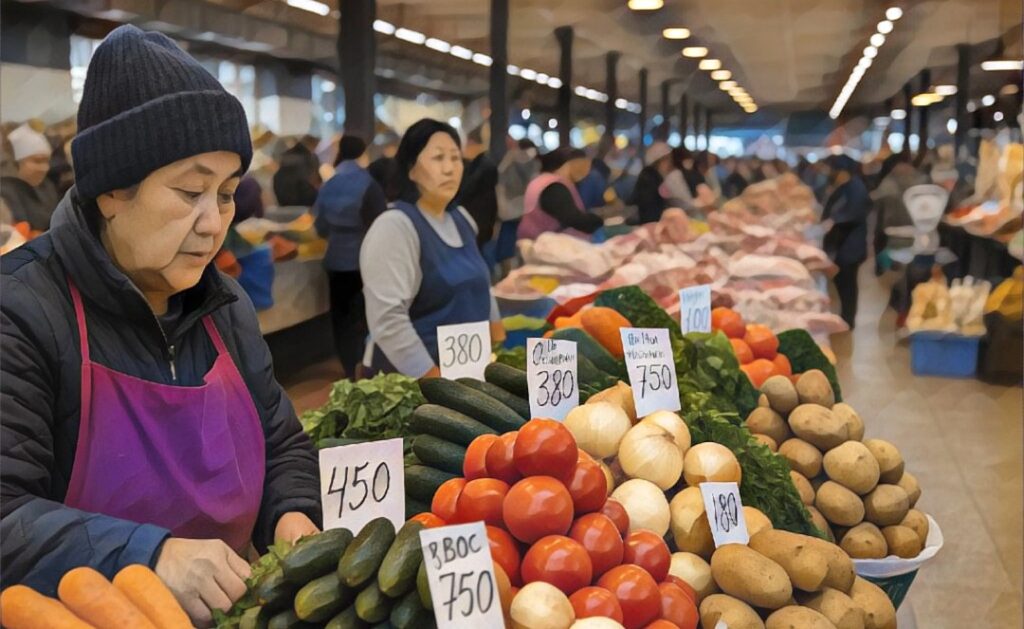
More than half of Kazakhstan’s population is overweight or obese, even as food prices in the country continue to climb. Deputy Prime Minister Serik Jumangarin recently highlighted that nearly 50% of consumer spending is allocated to food and beverages. In response, members of the Senate and the upper house of parliament are advocating for stricter regulations on food quality. Aniko Nemeth, an expert on food safety and nutrition at the Food and Agriculture Organization’s (FAO) regional office for Europe and Central Asia, pointed out the country’s obesity crisis during a Senate hearing on food security. Drawing from data from the Kazakh Academy of Nutrition, she noted that 55.5% of women and 49.2% of men in Kazakhstan are overweight or obese. At the same time, 5.6% of the population suffers from malnutrition. The paradox highlights a larger issue: the rising cost of a healthy diet. According to Nemeth, the price has increased by at least 8% over the last eight years. Urban residents are more affected than rural residents who can supplement their diets with homegrown produce. Deputy Prime Minister Jumangarin acknowledged that food prices are a major burden for the population. He outlined measures to address the issue, including constructing 92 modern fruit and vegetable storage facilities by the end of next year. With a capacity of 700,000 tons, these facilities aim to stabilize seasonal prices. Additionally, subsidies for seeds will be increased to support farmers, focusing on reducing dependency on foreign hybrids. Jumangarin also addressed the dependence on imported meat, which drives up costs. He announced plans for a commercial livestock farming project in the Turkestan region, modeled on Australia’s practices. Expected to launch in 2025, the initiative aims to lower domestic meat prices and increase sausage production. Furthermore, Kazakhstan is set to become self-sufficient in poultry production and may even begin exporting chicken meat within a few years. Kazakhstan’s cheese production currently meets only 57% of domestic demand. New production projects are underway to bridge the gap, including partnerships with global leaders like French-owned Lactalis, the world's largest dairy products group. Jumangarin revealed plans for a facility in the Akmola region and another in Kostanay to produce 2,000 tons of cheese annually. These efforts coincide with an anticipated surplus in milk production from newly established dairy farms. Despite these efforts to make food more affordable, senators believe legislative action is needed to address the obesity epidemic. Arman Utegulov, representing the agricultural ministry of Kazakhstan, proposed a law to regulate genetically modified organisms (GMOs) and foods treated with pesticides and antibiotics. He also called for stricter oversight of laboratories and trade centers to ensure food quality. “Excessive hormones in animal feed lead to chronic diseases,” Karimovich warned. He suggested amendments to existing legislation and even the potential return of veterinary laboratories to state control to tackle these issues. Kazakhstan faces a dual challenge: ensuring food affordability and combating rising obesity rates. While government initiatives aim to support domestic agriculture and stabilize food prices, balancing quality and cost remains critical....

Kyrgyzstan Reports Price Increases for Consumer Goods

According to the National Statistical Committee of Kyrgyzstan, prices for meat, alcoholic beverages, and tobacco products have risen significantly. The largest price increases were observed in Bishkek and the Issyk-Kul region. “Prices for alcoholic beverages and tobacco products, food products, and tariffs for services rendered to the population have increased. At the same time, prices for food products and non-alcoholic beverages decreased,” Deputy Chairman of the Statistical Committee Baktybek Shokenov told a press conference in Bishkek. He said prices fell for fresh fruits and vegetables, cereals, raw milk, eggs, and vegetable oil in the first eight months of 2024. On the contrary, prices for meat, fish, potatoes, salt, rice, cottage cheese, flour of the highest grade, pasteurized milk, sugar, and butter increased significantly. Kyrgyz people have recently complained about a sharp rise in meat prices. Some reports say they have risen by 100 KGS ($1.2) per kilo in six months. The main reason for the sharp rise in meat prices is increased exports; because Kyrgyz meat prices abroad are higher than domestic prices, domestic prices are also rising. Most meat products are exported to neighboring Uzbekistan. Today, a kilogram of beef costs about 650-680 KGS ($8) in the bazaar, although half a year ago, it cost 550-600 KGS ($6-6.5).