• KGS/USD = 0.01144 0%
  • KZT/USD = 0.00215 0%
  • TJS/USD = 0.10599 -0.28%
  • UZS/USD = 0.00008 0%
  • TMT/USD = 0.28571 0%
  • KGS/USD = 0.01144 0%
  • KZT/USD = 0.00215 0%
  • TJS/USD = 0.10599 -0.28%
  • UZS/USD = 0.00008 0%
  • TMT/USD = 0.28571 0%
  • KGS/USD = 0.01144 0%
  • KZT/USD = 0.00215 0%
  • TJS/USD = 0.10599 -0.28%
  • UZS/USD = 0.00008 0%
  • TMT/USD = 0.28571 0%
  • KGS/USD = 0.01144 0%
  • KZT/USD = 0.00215 0%
  • TJS/USD = 0.10599 -0.28%
  • UZS/USD = 0.00008 0%
  • TMT/USD = 0.28571 0%
  • KGS/USD = 0.01144 0%
  • KZT/USD = 0.00215 0%
  • TJS/USD = 0.10599 -0.28%
  • UZS/USD = 0.00008 0%
  • TMT/USD = 0.28571 0%
  • KGS/USD = 0.01144 0%
  • KZT/USD = 0.00215 0%
  • TJS/USD = 0.10599 -0.28%
  • UZS/USD = 0.00008 0%
  • TMT/USD = 0.28571 0%
  • KGS/USD = 0.01144 0%
  • KZT/USD = 0.00215 0%
  • TJS/USD = 0.10599 -0.28%
  • UZS/USD = 0.00008 0%
  • TMT/USD = 0.28571 0%
  • KGS/USD = 0.01144 0%
  • KZT/USD = 0.00215 0%
  • TJS/USD = 0.10599 -0.28%
  • UZS/USD = 0.00008 0%
  • TMT/USD = 0.28571 0%

Viewing results 1 - 6 of 61

ADB to Help Upgrade Strategic Road in Kazakhstan

The Asian Development Bank (ADB) has approved a sovereign-guaranteed local currency loan of up to $291.49 million for KazAvtoZhol, the company overseeing the planning, construction, operation, and maintenance of Kazakhstan's national highways. This loan will support reconstructing a 208-kilometer road connecting Kyzylorda and Zhezkazgan in central Kazakhstan. The project will upgrade the existing two-lane highway to a higher-standard, climate-resilient two-lane road, providing all-weather access and reducing travel time from 4 to 2 hours. The reconstruction will also improve domestic and regional connectivity and road safety and promote national and international trade. ADB Director General for Central and West Asia Yevgeniy Zhukov commented: “By improving the Kyzylorda–Zhezkazgan corridor, we are addressing critical infrastructure constraints that hinder Kazakhstan’s economic growth and balanced regional economic development. The project road is also crucial for leveraging Kazakhstan’s geostrategic advantage and boosting regional and global integration.” Kazakhstan, the largest economy in Central Asia, is well-positioned to become a bridge between Asia and Europe. However, due to inefficiencies and high transport and logistics costs, the country needs help leveraging its strategic position. The country has also seen a high traffic fatality rate, with 12.2 deaths per 100,000 people in 2021. The ADB project incorporates rumble strips, safer pedestrian crossings, and interchanges to improve road safety. These measures are expected to significantly reduce accidents and enhance the overall safety of the road corridor.

Uzbekistan Opens Strategic Highway Link to Europe

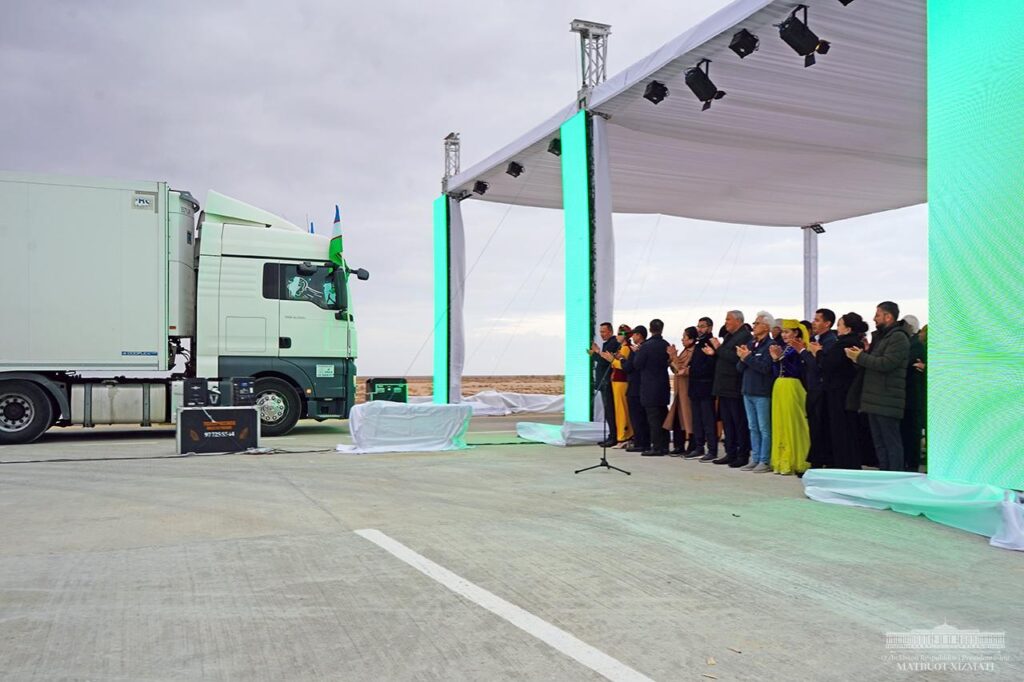
A 240km section of the Kungrad-Beineu highway in Uzbekistan has been reopened after reconstruction. The road runs through Uzbekistan’s northwestern region of Karakalpakstan to the border with Kazakhstan. It is part of a strategic highway corridor connecting Uzbekistan with European countries. Uzbekistan's President Shavkat Mirziyoyev said that the distance of international transportation through Uzbekistan will now be reduced to 1,000 kilometers, and transportation costs will be lowered by 25 percent. “This road will become part of the logistics network reliably connecting our country with European markets through the Caspian and Black Sea ports. On this section of the international corridor "A-380" that passes through Uzbekistan, the daily traffic flow will increase threefold,” Mirziyoyev noted. In recent years, double-landlocked Uzbekistan has been striving to become a key transit hub in trade turnover between the EU and Turkey and Kyrgyzstan, Tajikistan, and Afghanistan.

Chinese Investors to Build New Industrial Plants and Residential Compound in Kyrgyzstan’s Naryn

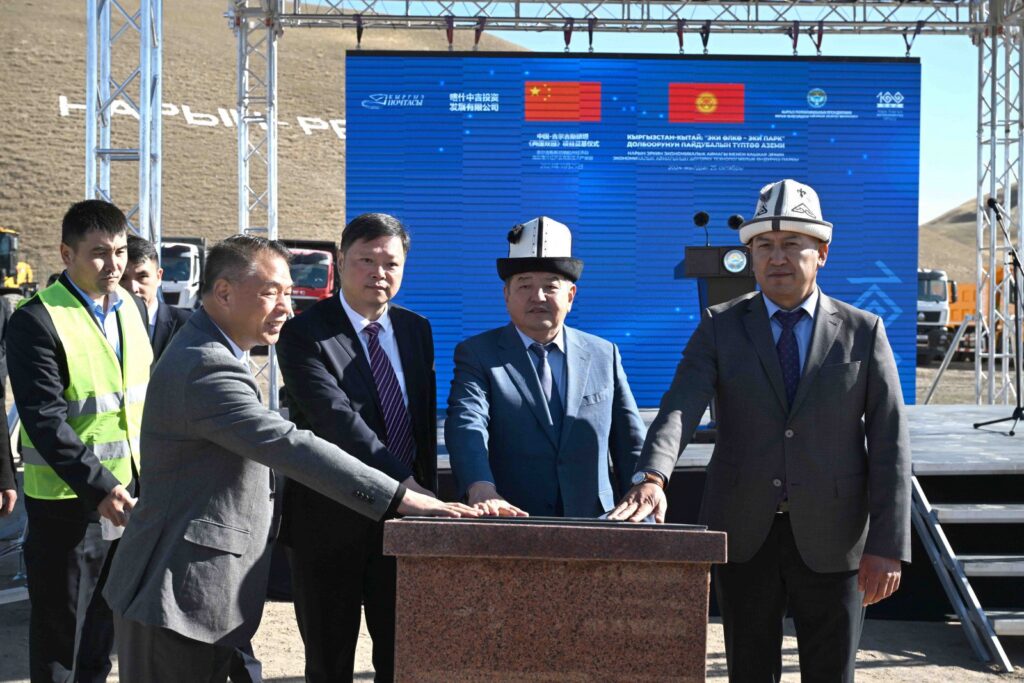
On October 25, Chinese investors launched the construction of four extensive production facilities in Kyrgyzstan's Naryn region: a car assembly plant, an LED lamp manufacturing plant, a toilet paper and napkin plant, and an agricultural drone manufacturing plant. At a capsule-laying ceremony, Akylbek Japarov, Chairman of the Cabinet of Ministers of Kyrgyzstan, emphasized that this event proves that Kyrgyzstan has reached “a new, higher level of relations” with its neighbor. Chinese partners will invest $130 million in the Naryn-Shumkar car assembly plant, which will manufacture more than 20,000 cars annually and create 1,000 jobs. $10 million will be invested in the LED lamp plant, which will produce 30 million lamps per year and create about 200 jobs. Another $10 million will be invested in the toilet paper and napkin plant, which will produce 6,000 tons of paper annually and create more than 100 jobs. On the same day, Japarov attended a ceremony to begin the construction of a new residential compound, Tien Shan City, in the town of Naryn. The residential compound will consist of six 10-storey apartment blocks. The developer, a construction company from the Chinese city of Kashgar, plans to complete high-quality modern housing construction within a year. The company will also build an administration house for all government services for the local population.

ADB Finances Road Reconstruction in Tajikistan

The Asian Development Bank (ADB) has approved a $86.67 million grant to help Tajikistan expand its degraded two-lane 49-km Dangara–Guliston highway to four lanes. Commenting on the move, ADB Director General for Central and West Asia Yevgeniy Zhukov said: “ADB, in partnership with other organizations, promotes safe, accessible, and green transport infrastructure and services in our developing member countries. The Dangara–Guliston road, constructed in the 1930s and reconstructed in the 1970s, will become the first road in Tajikistan to incorporate climate adaptation and elements specific to women's needs." The project will fund two pilot charging stations and develop investment frameworks to catalyze private sector investment in Tajikistan's national charging infrastructure rollout. Safety is a high priority and to this end,  the newly reconstructed road will include dedicated cycleways, wide sidewalks for people with children and disabilities,  improved lighting and well-marked pedestrian crossings. Special toilets and changing facilities will be provided for mothers and babies, while public transport facilities will include preferential seating for people with disabilities. In addition to the above, the fund will incorporate training programs for women living in and around the project area to open and run small businesses, and award entrepreneurship grants to selected participants. The Tajikistan government has pledged $23 million towards the realization of the project whilst subject to its Board’s approval in early 2025, the European Bank for Reconstruction and Development (EBRD, will provide a $40 million co-financing loan. Tajikistan’s Ministry of Transport plans to complete the project in 2030.

Kazakhstan Opens its Longest Bridge

The Kazakh government's press service has reported that on October 21, Prime Minister Olzhas Bektenov  attended the opening of Kazakhstan’s longest bridge. Spanning 1,316 meters across the Bukhtarma Reservoir, the new bridge which connects six districts of  Kazakhstan's eastern region, can accommodate up to 80,000 vehicles per day and reduce travelling time from hours to minutes. In his address at the launch, the president stressed that the bridge would allow for safe year-round traffic and accelerate the region's socio-economic development, stating: "For 50 years, residents of the region traveled [across the reservoir] either by ferry in the summer or directly on the ice in the winter and have been waiting for the bridge's construction for a long time." East Kazakhstan is a strategic region through which important transport corridors pass. The bridge across the Bukhtarma Reservoir will improve transport and logistics routes, ensure uninterrupted connections with bordering countries, and help unlock the region's tourism potential. The new bridge follows the opening of the country's longest automobile tunnel in September at the Shakpak Baba Pass in southern Turkestan.

Kyrgyz Government Adopts Strategic Task to Construct Eco-City

On October 14, Kyrgyzstan's President Sadyr Japarov signed a Decree to construct the eco-city "Asman" near the village of Toru-Aigyr on the northern shore of Lake Issyk-Kul, the country's  main region for tourism and recreation. Spanning 4,000 hectares, some 200km southeast of the capital Bishkek and dubbed a "smart city", Asman aims to become the country’s new economic and tourist hub and home to modern business, recreational and sports facilities, hi-tech parks, and financial institutions. It will also provide homes for around  500,000 residents. From a bird's eye view, Asman (the Kyrgyz word for "sky") will resemble a komuz, a traditional Kyrgyz string musical instrument and one of Kyrgyzstan's national symbols. According to Kyrgyz officials, the new city financed by foreign investors, will be built over the next 7-10 years but although the capsule-laying ceremony took place in June 2023, construction has yet to begin. Speaking at the ceremony, President Japarov remarked that “the city of Asman will become a financial hub connecting East and West, North and South.” As reported by the presidential press service, the construction of the eco-city is a “strategic task” for the country’s Cabinet of Ministers and local authorities of the Issyk-Kul region, with a key objective to protect the biosphere territory adjacent to the lake. According to the decree, the Cabinet of Ministers should develop and approve a concept for the construction of Asman by March 1, 2025, ensuring the preservation and protection of the environment during the city’s construction. It has also been recommended that a ban be placed in the city on hydrocarbon-fueled (gasoline, diesel, gas) transport in preference for electric transport and bicycles. For this purpose, the decree orders the creation of electric transport infrastructure and charging stations, as well as necessary conditions for the use of bicycles to ensure mobility of the city's population. In addition, the decree orders the use of energy-saving solutions and smart home technologies in the construction of buildings, and compliance with the World Health Organization's environmental standards for greening cities and introducing an environmentally safe waste management system. The realization of such a mega project has inevitably raised questions regarding finance, with construction costs currently estimated at around $20 billion. The Asman project shares similarities to the city of Arkadag in Turkmenistan. Unveiled in June 2023, the “smart” city of Arkadag was built from scratch 30 km south of Turkmenistan’s capital, Ashgabat. Designed to accommodate a population of  70,000, it cost billions of dollars to construct.