• KGS/USD = 0.01144 0%
  • KZT/USD = 0.00213 0%
  • TJS/USD = 0.10800 -0.18%
  • UZS/USD = 0.00008 0%
  • TMT/USD = 0.28571 0.28%
  • KGS/USD = 0.01144 0%
  • KZT/USD = 0.00213 0%
  • TJS/USD = 0.10800 -0.18%
  • UZS/USD = 0.00008 0%
  • TMT/USD = 0.28571 0.28%
  • KGS/USD = 0.01144 0%
  • KZT/USD = 0.00213 0%
  • TJS/USD = 0.10800 -0.18%
  • UZS/USD = 0.00008 0%
  • TMT/USD = 0.28571 0.28%
  • KGS/USD = 0.01144 0%
  • KZT/USD = 0.00213 0%
  • TJS/USD = 0.10800 -0.18%
  • UZS/USD = 0.00008 0%
  • TMT/USD = 0.28571 0.28%
  • KGS/USD = 0.01144 0%
  • KZT/USD = 0.00213 0%
  • TJS/USD = 0.10800 -0.18%
  • UZS/USD = 0.00008 0%
  • TMT/USD = 0.28571 0.28%
  • KGS/USD = 0.01144 0%
  • KZT/USD = 0.00213 0%
  • TJS/USD = 0.10800 -0.18%
  • UZS/USD = 0.00008 0%
  • TMT/USD = 0.28571 0.28%
  • KGS/USD = 0.01144 0%
  • KZT/USD = 0.00213 0%
  • TJS/USD = 0.10800 -0.18%
  • UZS/USD = 0.00008 0%
  • TMT/USD = 0.28571 0.28%
  • KGS/USD = 0.01144 0%
  • KZT/USD = 0.00213 0%
  • TJS/USD = 0.10800 -0.18%
  • UZS/USD = 0.00008 0%
  • TMT/USD = 0.28571 0.28%

Viewing results 1 - 6 of 51

Kazakhstan’s Caspian Sea Ports Increase Cargo Transportation

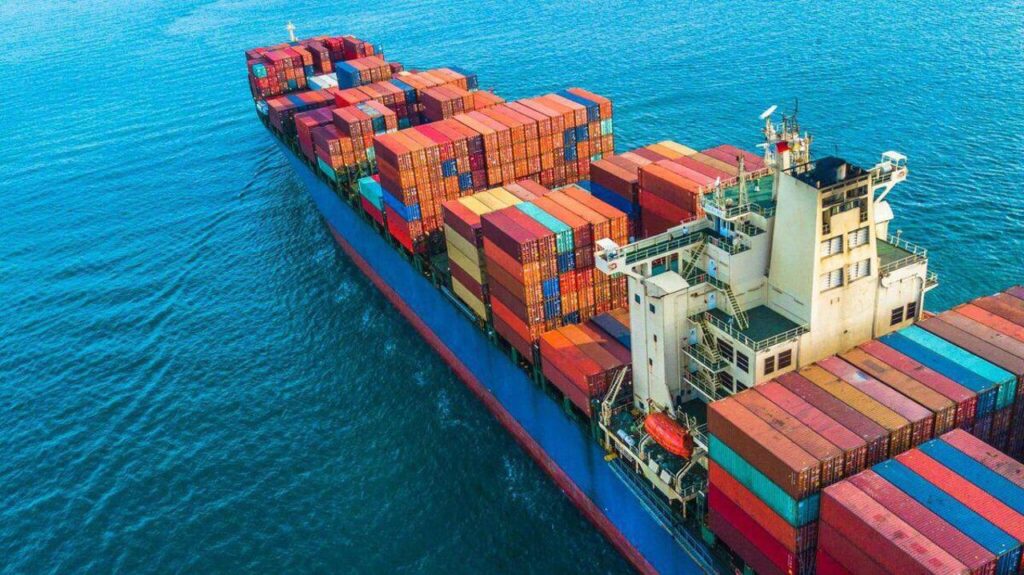
Kazakhstan’s Ministry of Transport has announced that from January to October 2024, the country’s Caspian Sea ports transported 6.2 million tons of cargo, reflecting a 3% increase compared to the same period last year. Transit cargo shipments saw even stronger growth, rising by 18%. Truck transshipment via the Kuryk port’s ferry complex increased by 22%, while container transportation through the Aktau port surged by 84%, with approximately 27,000 containers moved along the East-West transit route. During the same period, the Sarzha terminal at Kuryk port handled 55,000 tons of cargo, including non-ferrous metals, fertilizers, and barley, destined for Turkey and Iran. In October, a new grain terminal with an annual capacity of 1 million tons was inaugurated at the Kuryk port. Efforts to enhance the port’s capacity continue. The Times of Central Asia previously reported that Kazakhstan’s Ministry of Transport has undertaken dredging operations at the Kuryk port to ensure sufficient depth for ship access, bolstering the capacity of the Trans-Caspian International Transport Route (TITR). The dredging project will support further expansion of Kuryk’s terminal capacity, currently set at 6 million tons annually—4 million tons through its railway terminal and 2 million tons via its automobile terminal.

Chinese Company Builds Cotton-Textile Cluster in South Kazakhstan

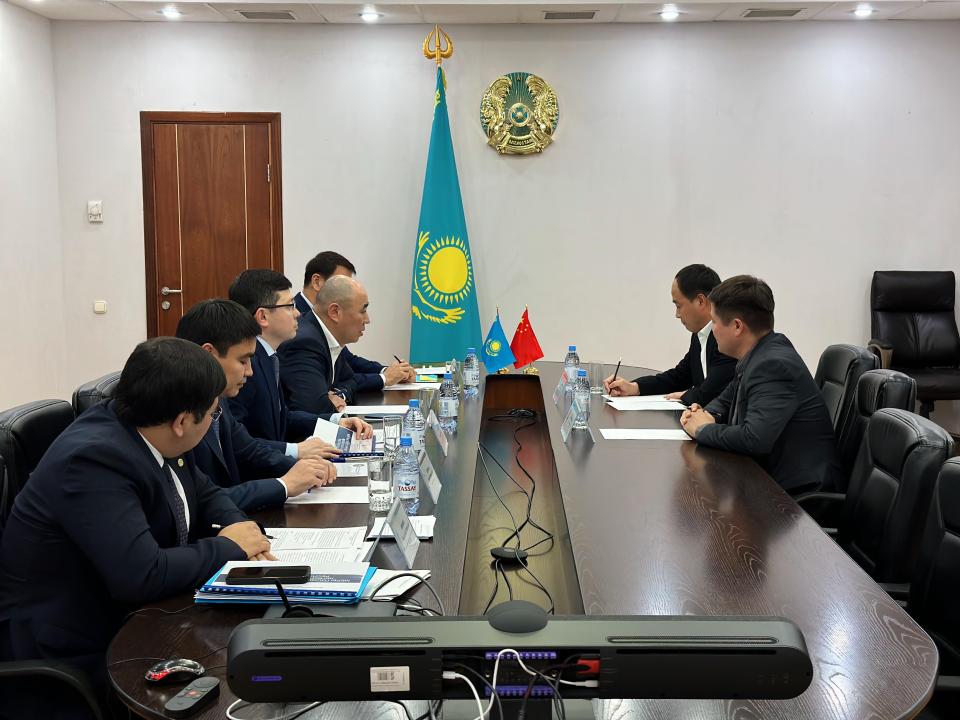
Xinjiang Lihua (Group) Co., Ltd., one of China’s largest companies specializing in the cultivation and deep processing of cotton, has commenced work on a cotton-textile cluster in Kazakhstan’s southern Turkestan region. The project’s progress was reviewed on November 14 during a meeting between Kanat Sharlapaev, Kazakhstan’s Minister of Industry and Construction, and representatives of the company. Located in the Turan Special Economic Zone, the joint venture involves the construction of facilities for PVC pipe manufacturing, drip irrigation systems, two cotton processing plants, a spinning mill, a weaving mill, a dyeing and finishing factory, and a garment factory. The project, with a total cost of 180 billion KZT (over $363 million), is expected to generate more than 4,000 jobs. This year, the initiative saw the installation of a drip irrigation system, cotton cultivation on 1,120 hectares, and the start of construction for the spinning mill. Minister Sharlapaev underscored the project’s significance for the development of Kazakhstan’s light industry, pledging comprehensive government support to ensure its success.

Kyrgyzstan Opens New Village for People Resettled from Barak Exclave

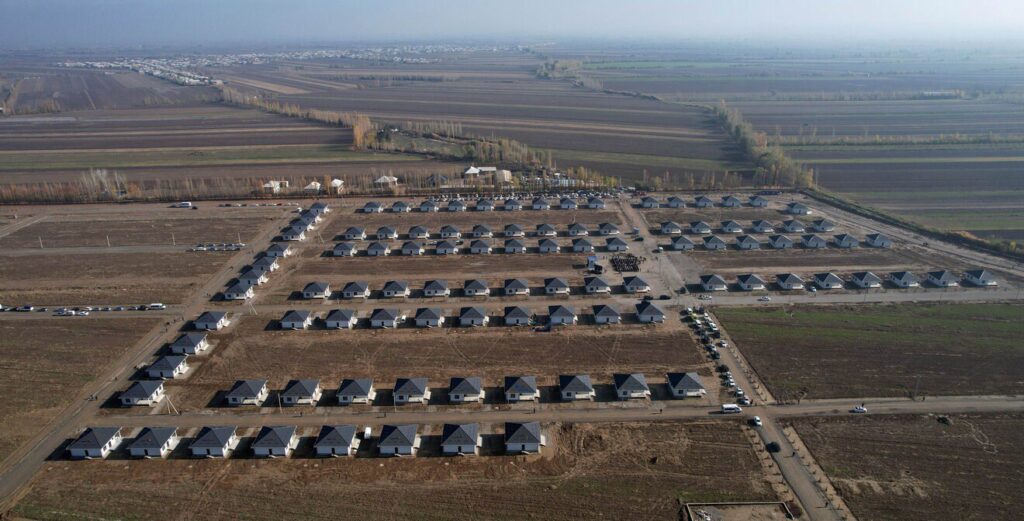
On November 15, Kyrgyzstan President Sadyr Japarov attended the opening of a new village, Jany-Barak, in the country’s southern Osh region. The village was constructed for Kyrgyz citizens resettled from the Barak exclave, previously Kyrgyzstan’s largest exclave, located in Uzbekistan’s Andijan region. For many years, the residents of the exclave experienced severe difficulties due to their partial isolation and the difficulty of traveling between the exclave and the Kyrgyz mainland. After signing a border delimitation agreement with Kyrgyzstan, Uzbekistan ceded a portion of its land to Kyrgyzstan in exchange for control of the Barak exclave. Construction of Jany-Barak (New Barak) was launched in May 2024 and is now complete. Speaking at the opening ceremony, Japarov emphasized that the construction of the new village marked a significant milestone. He highlighted that residents, who had relocated from the exclave, can now live and work in Kyrgyzstan, on their native land, in new homes, with renewed confidence in their future. Japarov highlighted the extensive work completed to establish infrastructure in the new village: 101 residential houses have been built, roads have been laid, electricity has been connected, and wells for clean drinking water have been drilled. The new village will have social amenities, including a school, a kindergarten, a park, a mosque, and a football (soccer) field. Plots have been allocated to residents for agricultural use.

New Guzor to Beinau Highway Brings Uzbekistan Closer to Europe

Uzbekistan has completed a new 240-kilometer section of the A380 highway connecting the cities of Guzor, Bukhara, Nukus, and Beineu, passing through the Kungirot district of Karakalpakstan. The road, built with a cement-concrete coating, is a strategic road connecting Uzbekistan with Europe. The Asian Development Bank allocated $274.9 million to the construction, while Uzbekistan contributed $108.5 million. Turkish and Azerbaijani companies managed the first 120 kilometers of the road, with Chinese companies managing the rest. The highway aims to boost the capacity and quality of international and national highways, cutting road maintenance costs by 2.5 times. This new road will reduce travel time by 2.2 times, double transit traffic, cut fatal accidents by half, and contribute to regional GDP growth. It will also reduce Uzbekistan's international transport distance to 1,000 kilometers, lowering shipping costs by 25%. New trade and service centers are planned alongside the highway, initially creating 2,000 jobs and an additional 5,000 expected. This development is projected to boost Karakalpakstan’s annual transit and service revenue by $200 million and exports by at least $300 million.

Ashgabat May Have a Metro System by 2035

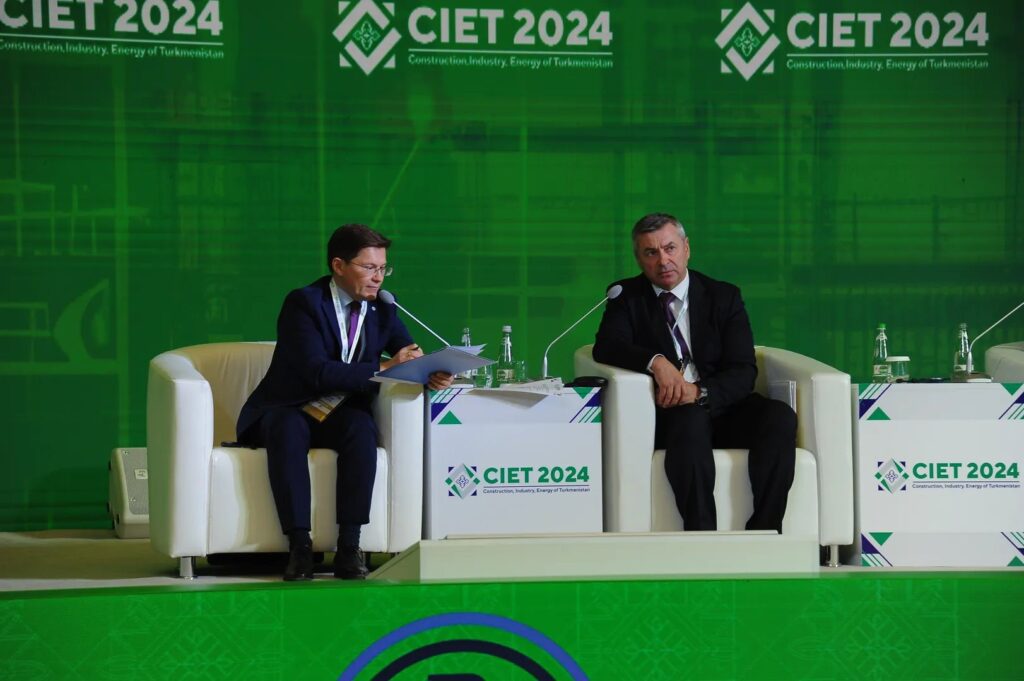
Vladimir Petruk, managing director of Interbudmontazh Company, told the CIET-2024 international conference that a metro system may be built in Turkmenistan's capital Ashgabat by 2035. Petruk said that specialists from the Japanese company Sumitomo, the Japanese Subway Association, and the German consulting group K2 have studied Ashgabat's geological and seismic conditions. The study's results confirmed the possibility of building the subway using reinforced concrete structures. The Ashgabat metro plan calls for an environmentally friendly transportation solution. In the future, it could connect the capital with the “smart city” Arkadag and the settlements of Geokdepe and Anau. According to forecasts, construction could be completed by 2035. “Given the growing wealth and the increasing number of cars, the metro will become essential to solve the city's transportation problems,” Petruk emphasized, noting the successful experience of operating metros in seismically active regions. Consultations with the Ministry of Construction and Architecture of Turkmenistan are ongoing, and the UN mission plans to cooperate with the country to support the urban infrastructure development program. Turkmenistan currently does not have a metro. The idea of building a metro in Ashgabat has been discussed since 2008 when the city mayor's office attracted companies from St. Petersburg to the project. In 2014, then-President Gurbanguly Berdymuhamedov instructed the Ukrainian construction association Interbudmontazh to consider the possibility of realizing this project. In 2020, the company presented the Ashgabat metro construction project developed jointly with Sumitomo and K2. However, specific dates for the start of construction and commissioning of the metro in Ashgabat have not yet been announced.

Kazakhstan to Construct Three New Airports

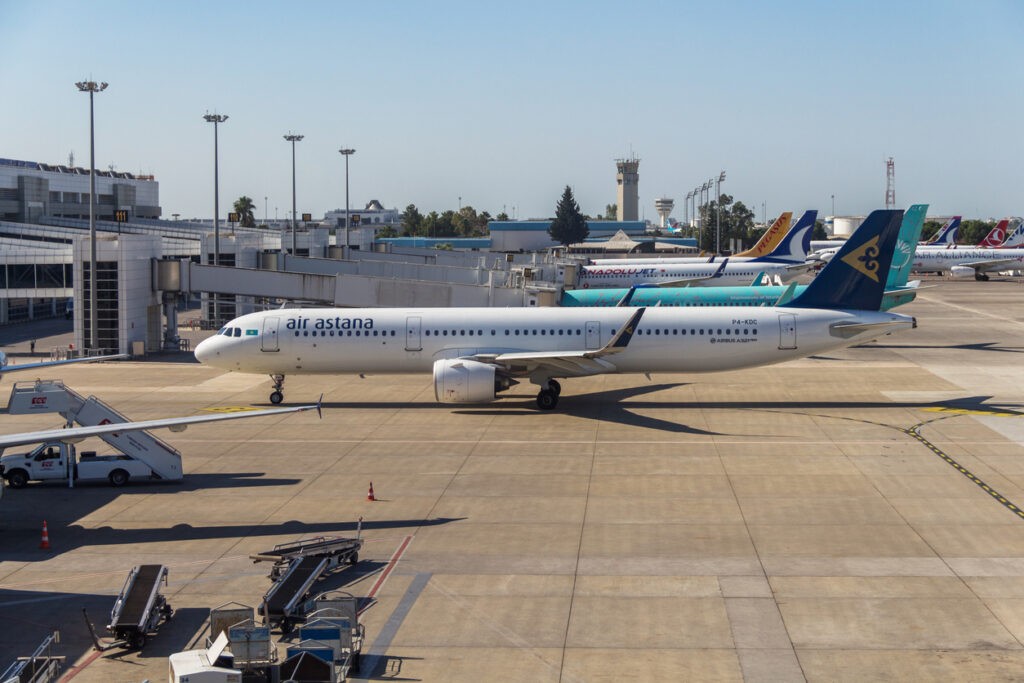
Kazakhstan has started the construction of airports in the resort zones of Katon-Karagai, Zaisan, and Kenderli, which are popular tourist destinations. The airports will link the three resort areas with Astana and Almaty. Together with other measures, this will give the tourism industry a new push. Katon-Karagai State National Nature Park is the largest national park in the country. It is located in the East Kazakhstan region and is included in UNESCO’s Man and the Biosphere Programme as a biosphere reserve. Lake Zaisan is also located in Eastern Kazakhstan. It is a beautiful freshwater lake fed by the Irtysh River and surrounded by cliffs. Kenderli is a resort in the Mangistau region located on the coast of the Caspian Sea. It is becoming increasingly popular every year. The Civil Aviation Committee (CAC) said reaching these tourist destinations will be much easier. The sites for the construction of airports have already been identified. CAC reported that “In Zaisan, the airport will be located on the territory of the former military airfield named after Satpayev. The distance from the construction site to the city of Zaisan is 25 kilometers. In Katon-Karagai district, a new air harbor will be built between the villages of Katon-Karagai and Ulken Naryn, near Soldatovo. The distance from the construction site to Katon-Karagai village is 38 kilometers”. The Kenderli airport will be built 13 kilometers from the resort area. Construction of the three airports will begin in 2025 and provide direct air routes from Astana and Almaty. In December 2023, the Ministry of Transport reported that it plans to spend 16 billion KZT to build the airport in Zaisan and an additional 23.2 billion KZT in Katon-Karagai. Other major expenditures are planned for the development of the tourism industry. According to the Ministry of Sports and Tourism budget plan, these expenditures will increase the number of foreign tourists from 2 million in 2024 to 3.5 million in 2026 (+75%). The number of domestic tourists will also grow by 15% over three years to 8.5 million in 2026. It is reported that 4.6 billion KZT will be allocated for the formation and promotion of the tourism industry, including 1.52 billion KZT in 2024. In 2023, 2.44 billion KZT  was spent on these purposes. It is further planned to allocate 11.9 billion KZT for the training and education of professionals in the industry, including 3.5 billion KZT in 2024, for this purpose. Efforts to modernize the industry are already bearing fruit. In May 2024, Kazakhstan improved its position in the tourism development index. Kazakhstan ranked 52nd among 119 countries, beating Qatar, Azerbaijan, Uzbekistan, Vietnam, Egypt, and Latvia. Kairat Sadvakasov, Chairman of the Board of Kazakh Tourism, called it a victory. He stated, "Our long-term goal is to enter the TOP-50 in this rating”. Achieving this ambitious goal will require serious efforts. In the summer, President Kassym-Jomart Tokayev listed the shortcomings of the tourism sector and outlined priority areas of work. One of the most important points was logistics, as it...