• KGS/USD = 0.01144 0%
  • KZT/USD = 0.00205 0%
  • TJS/USD = 0.10784 0%
  • UZS/USD = 0.00008 0%
  • TMT/USD = 0.28490 0%
  • KGS/USD = 0.01144 0%
  • KZT/USD = 0.00205 0%
  • TJS/USD = 0.10784 0%
  • UZS/USD = 0.00008 0%
  • TMT/USD = 0.28490 0%
  • KGS/USD = 0.01144 0%
  • KZT/USD = 0.00205 0%
  • TJS/USD = 0.10784 0%
  • UZS/USD = 0.00008 0%
  • TMT/USD = 0.28490 0%
  • KGS/USD = 0.01144 0%
  • KZT/USD = 0.00205 0%
  • TJS/USD = 0.10784 0%
  • UZS/USD = 0.00008 0%
  • TMT/USD = 0.28490 0%
  • KGS/USD = 0.01144 0%
  • KZT/USD = 0.00205 0%
  • TJS/USD = 0.10784 0%
  • UZS/USD = 0.00008 0%
  • TMT/USD = 0.28490 0%
  • KGS/USD = 0.01144 0%
  • KZT/USD = 0.00205 0%
  • TJS/USD = 0.10784 0%
  • UZS/USD = 0.00008 0%
  • TMT/USD = 0.28490 0%
  • KGS/USD = 0.01144 0%
  • KZT/USD = 0.00205 0%
  • TJS/USD = 0.10784 0%
  • UZS/USD = 0.00008 0%
  • TMT/USD = 0.28490 0%
  • KGS/USD = 0.01144 0%
  • KZT/USD = 0.00205 0%
  • TJS/USD = 0.10784 0%
  • UZS/USD = 0.00008 0%
  • TMT/USD = 0.28490 0%

Viewing results 1 - 6 of 43

Are Innovative Industries One of the Kyrgyz Republic’s Opportunities to Prosper?

The emergence of AI is considered by many to be a major tectonic shift, much like the emergence of the internet in its time. It is hard to overestimate the role innovation plays in our lives, with founders all over the world trying to pioneer our way out of the next problem. At first glance, the Kyrgyz Republic’s tech sector does not represent anything particularly meaningful. The chances of the small landlocked country - the farthest from any ocean in the world, which is the most affordable mode of shipping mode - integrating into innovative global ecosystems on its own seem wholly unrealistic. However, if we look at the dynamics of development in its tech sector, the potential is there. Is there a chance that the Kyrgyz Republic can become a part of the global tech scene? [caption id="attachment_30359" align="aligncenter" width="1440"] Image: The World in Maps[/caption] According to Ashley Vance at Bloomberg, “It’s about a landlocked nation, one with very few natural resources, hoping to gen up a tech industry on the fly.” The Kyrgyz startup ecosystem is clearly in its nascent stages, meaning that you haven’t heard about the Kyrgyz Skype. Yet. The country’s position in the Global Innovation Index in 2024 is 99th, up from 106th in 2023. The Global Startup Ecosystem Index, meanwhile, has the Kyrgyz Republic lower than 100th place in its 2024 ranking, down from 99th in 2023. “The country has maintained second position in Central Asia and seventh in the Central Asia Regional Economic Cooperation Program (CAREC) business region,” according to this index. The Kyrgyz Republic’s VC ranking of 103rd in the Venture Capital & Private Equity Country Attractiveness has barely changed over the last couple of years. When compared to peer group economies, it is obvious that the Kyrgyz Republic needs significant improvements in the depth of the capital market, social environment, entrepreneurial opportunities, and economic activity. [caption id="attachment_30358" align="aligncenter" width="1796"] Image: Venture Capital & Private Equity Country Attractiveness Index 2023[/caption] In terms of the number of venture capital deals, the Kyrgyz Republic is still lagging behind its neighbors. Out of $110+ million of venture capital funding in the region in 2023, the Kyrgyz contribution was only a fraction at $1.1 million. In 2024, this increased to $1.7 million, however, with the country's first venture capital law soon to be adopted. [caption id="attachment_30357" align="aligncenter" width="826"] Image Venture Capital in Central Asia 2024[/caption] The High Technology Park of the Kyrgyz Republic, which is a special tax regime for IT companies targeting exports, is demonstrating a steady growth, with its revenue expanding from under a million in 2013, to a more impressive $130 Million in 2024. The park’s residents are mostly companies providing IT outsourcing for developed markets, but the signs of a turn towards launching their own IT products are there. A separate world-first Creative Industries Park has also been set up to support the country's creative industries, including startups. When it comes to the largest Kyrgyz startups, they are founded by Kyrgyz nationals,...

Kazakhstan’s Largest Hackathon to Take Place Across the Country

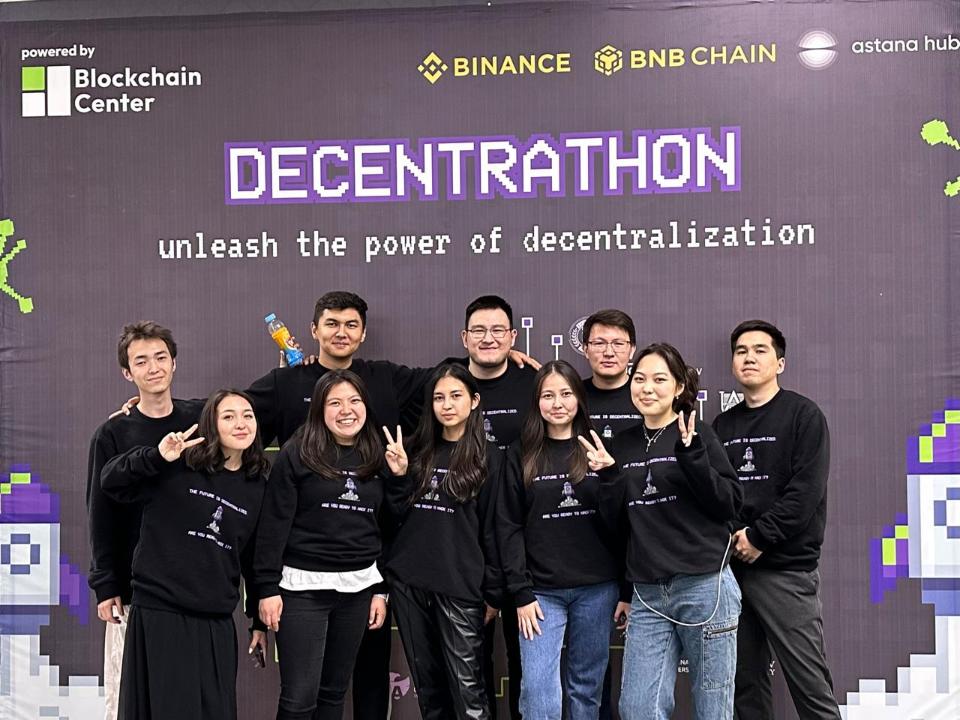
Decentrathon 2.0, Kazakhstan's largest multi-location hackathon, will be held on October 18-19 across major cities, including Astana, Almaty, Shymkent, Karaganda, and others, gathering more than 2,500 developers from the country’s 17 regions to compete for a $50,000 prize. According to the Ministry of Digital Development, Innovations, and Aerospace Industry, participants will tackle challenges related to AI, Blockchain, GameDev, and Telegram mini apps. Additionally, a virtual job fair will offer developers the chance to connect with top companies and explore local and international career opportunities. Organized by the Blockchain and AI Technology Center (BAITC) and Astana Hub, with support from the Ministry of Digital Development, Innovations, and Aerospace Industry, this year’s hackathon will be an expanded including leading universities and tech parks, making it a truly national event. The inaugural event in 2023 gathered more than 1,500 participants from nine regions. Zhaslan Madiyev, Minister of Digital Development, Innovations, and Aerospace Industry, stated that: "Decentrathon is the first large-scale IT event spanning every region of Kazakhstan and one of the key initiatives of the Generative Nation movement this year. Our goal is to drive the country's AI transformation. Initiatives like this must have a national scope, providing young talents across Kazakhstan with the opportunity to contribute to technological and AI development." Magzhan Madiyev, CEO of Astana Hub, added, "AI engineers play a pivotal role in Kazakhstan's AI transformation. The Generative Nation movement’s initiatives focus on developing human capital in AI, enabling them to work on projects that will transform our country and have a global impact."

Startups from Kazakhstan, Kyrgyzstan, and Uzbekistan to Undergo Training in Silicon Valley

During a visit to the U.S., Kazakhstan’s Minister of Digital Development, Innovation, and Aerospace Industry Zhaslan Madiyev signed four contracts with Alchemist X, Stanford Healthcare Innovation Lab, Draper University, and Silkroad Innovation Hub. Through these contracts, 50 startups from Central Asia will have the opportunity to undergo training and a residency program in Silicon Valley this year. As the Kazakh Ministry of Digital Development reported, Alchemist's five-month intensive program in Silicon Valley is designed for "mature" B2B startups. It aims to help them successfully enter the American market. Program participants will receive comprehensive support, including assistance in concluding first contracts with clients, attracting investment, studying client needs, and interacting with experienced mentors. Ten startups from Kazakhstan, Kyrgyzstan, and Uzbekistan were selected from the 81 applications submitted for the Alchemist X program. More than 20 startups will also participate in the Silicon Valley Residency Program, an online pre-acceleration program. Based on the results of this program, startups will be selected to undergo an offline program at the Silkroad Innovation Hub in California. The minister also signed a letter of intent (LOI) with Draper University to send 10 Kazakhstani startups to participate in this fall’s Hero Training program, designed for early startups. Madiyev also signed a memorandum with Stanford School of Medicine to launch a new six-week program for 10 Kazakhstani startups for technologies in healthcare. The program will be held at the Stanford Healthcare Innovation Lab and is designed for startups working in AI in healthcare, genomics, bioinformatics, biological sciences, precision medicine, neuroscience, and psychology.

Innovating in Uzbekistan: Council Aims to Nurture Young Scientists

TASHKENT, Uzbekistan - Uzbekistan has this to say to any young Uzbek citizen interested in science: Step up and collaborate. Uzbekistan’s Council of Young Scientists, or CYS, is seeking to expand the ranks of fledgling scientists, overseeing financial and other support as well as programs to attract researchers. The group, founded in 2017 under a presidential initiative, had more than 10,000 members in 2022 and the number has tripled since then, according to director, Sayyora Saidova. In an interview with The Times of Central Asia, Saidova talked about the surge of interest in science in Uzbekistan. “Even though the age limit for membership in the organization is 30, scientists under 45 are also members of our organization,” said Saidova, who has a PhD in philosophy. “We are ready to accept every young person interested in science as a member of the organization. In most cases, young scientists apply to CYS to find a scientific supervisor.” The non-governmental group has organized free online and in-person conferences, offering a platform for young people to publish articles that are checked for quality by an editorial board. Young inventors are encouraged through forums and competitions, and it helps to patent their ideas, Saidova said. The council introduced the “PhD sari qadam” (Step to PhD) project through social networks to support aspiring female scientists. In its second season, organizers selected a hundred women who were trained for two months on how to complete a PhD. Saidova spoke to The Times of Central Asia, or TCA, after the project’s closing ceremony on April 5. Dilorom Mamadjanova, a participant in the “PhD sari qadam” project, said Uzbekistan offers adequate opportunities for young researchers. “In our country, as in countries such as Germany, Finland, and the Czech Republic, doctoral students do not pay any fees,” said Mamadjanova, a PhD student at Tashkent State Pedagogical University. However, she pointed out difficulties. “In some higher education institutions, doctoral students are required to come to the university every day, [as] daily attendance is taken,” she said in written remarks to TCA. “I believe that doctoral students should spend time in research facilities for their research work - libraries and similar places useful for dissertation work.” Mamadjanova also noted that there were “small obstacles” when a doctoral student wants to use the database of another university’s library and is required to get a letter of application from his or her own university in order to do so. “I believe that this is a time-consuming, bureaucratic process,” she said. Saidova said the Council of Young Scientists cooperates with the Ministry of Innovation, helping young researchers in chemistry and physics get permission to use laboratories and access international literature. “Although CYS does not have its own fund, it participates in many state and international grants. We directly mediate between international organizations and researchers,” Saidova said. “Last year, the UNICEF organization announced a grant to fight against corruption. CYS brought together all young scientists doing scientific work in this field. The organization directly helped young...

Turkmenistan: Domestically produced computers demonstrated to president

ASHGABAT (TCA) — Turkmen Deputy Prime Minister overseeing trade Chary Gylydzhov last week briefed President Gurbanguly Berdymukhammedov that the domestic enterprise Agzybirlik tilsimaty had launched the production of Turkmen computers, Chronicles of Turkmenistan reported with reference to the state information agency TDH. Continue reading

Uzbekistan: New construction phase launched at IT Park in Tashkent

TASHKENT (TCA) — President of Uzbekistan Shavkat Mirziyoyev on November 20 visited the Technological Park of software products and information technologies in Tashkent, the president’s official website reported. Continue reading