• KGS/USD = 0.01144 0%
  • KZT/USD = 0.00212 0%
  • TJS/USD = 0.10456 0.19%
  • UZS/USD = 0.00008 0%
  • TMT/USD = 0.28490 0%
  • KGS/USD = 0.01144 0%
  • KZT/USD = 0.00212 0%
  • TJS/USD = 0.10456 0.19%
  • UZS/USD = 0.00008 0%
  • TMT/USD = 0.28490 0%
  • KGS/USD = 0.01144 0%
  • KZT/USD = 0.00212 0%
  • TJS/USD = 0.10456 0.19%
  • UZS/USD = 0.00008 0%
  • TMT/USD = 0.28490 0%
  • KGS/USD = 0.01144 0%
  • KZT/USD = 0.00212 0%
  • TJS/USD = 0.10456 0.19%
  • UZS/USD = 0.00008 0%
  • TMT/USD = 0.28490 0%
  • KGS/USD = 0.01144 0%
  • KZT/USD = 0.00212 0%
  • TJS/USD = 0.10456 0.19%
  • UZS/USD = 0.00008 0%
  • TMT/USD = 0.28490 0%
  • KGS/USD = 0.01144 0%
  • KZT/USD = 0.00212 0%
  • TJS/USD = 0.10456 0.19%
  • UZS/USD = 0.00008 0%
  • TMT/USD = 0.28490 0%
  • KGS/USD = 0.01144 0%
  • KZT/USD = 0.00212 0%
  • TJS/USD = 0.10456 0.19%
  • UZS/USD = 0.00008 0%
  • TMT/USD = 0.28490 0%
  • KGS/USD = 0.01144 0%
  • KZT/USD = 0.00212 0%
  • TJS/USD = 0.10456 0.19%
  • UZS/USD = 0.00008 0%
  • TMT/USD = 0.28490 0%

Viewing results 1 - 6 of 130

Kyrgyzstan Backs Turkish Arms Embargo Against Israel

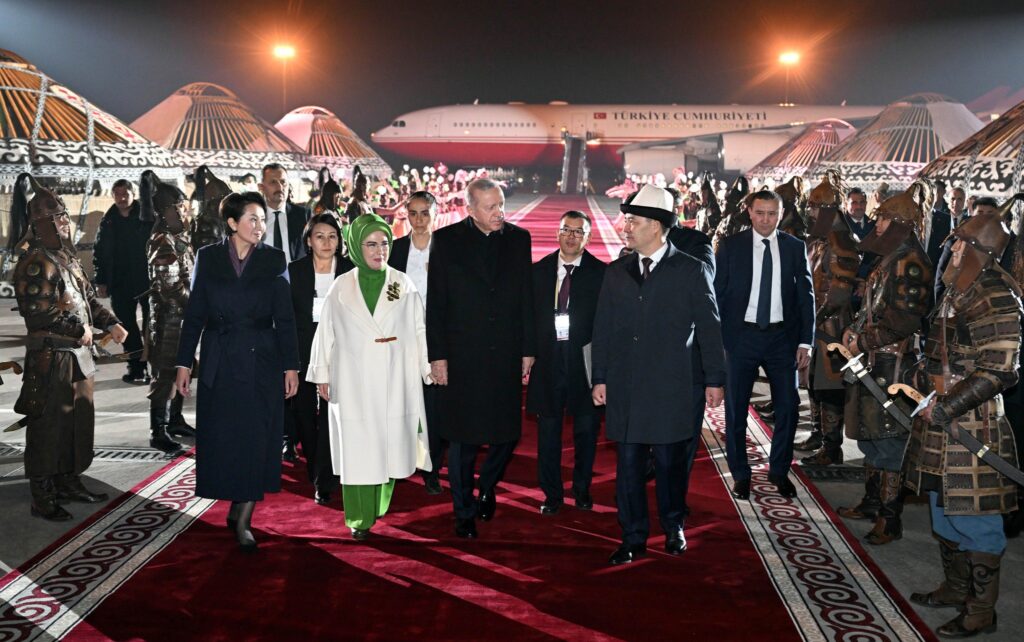
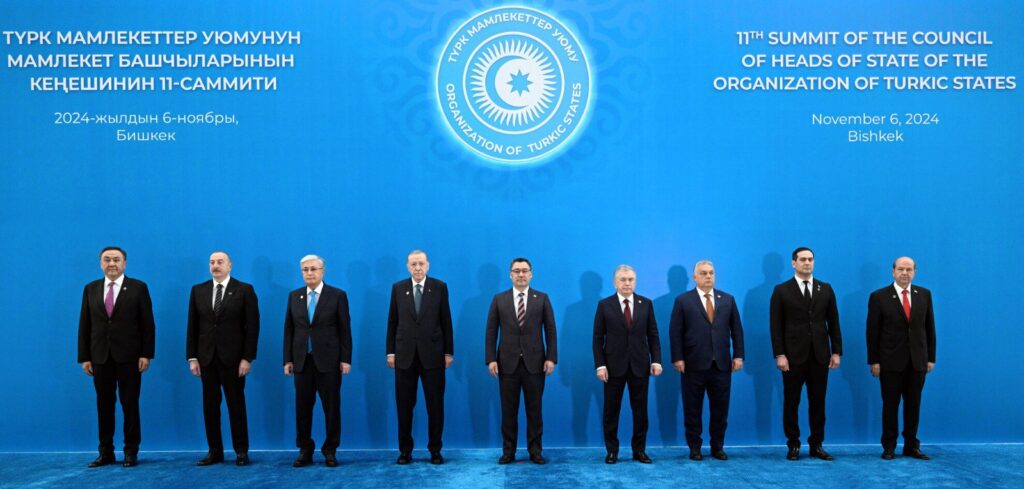
The Turkish authorities have sent a letter to the UN on behalf of 52 countries calling for an arms embargo against Israel in response to the ongoing war in Gaza and Lebanon, Turkish media has reported. In the letter, the Turkish authorities call the "staggering" civilian death toll "unconscionable and intolerable." In response to the letter, Turkish Ambassador to the UN, Danny Danon stated in uncompromising terms, "What else can be expected from a country whose actions are driven by malice in an attempt to create conflicts with the support of the 'Axis of Evil' countries?" Turkish President Recep Tayyip Erdogan arrived in Bishkek on November 4. During the visit, the Turkish leader will hold talks with the president of Kyrgyzstan and participate in the 11th Summit of the Council of Heads of State of the Organization of Turkic States. Following the summit, several bilateral documents will be signed to expand strategic cooperation between the countries. On the eve of Erdogan's visit, Kyrgyzstan backed the Turkish resolution in the UN. The authorities in Turkey have stated that with its military actions against Palestine and Lebanon, Israel has brought the entire region to the brink of a full-scale war. “This is necessary to end Israel's illegal occupation, to prevent further violations against civilians in the Gaza Strip and the rest of the occupied Palestinian territory, as well as in Lebanon, and to prevent further regional escalation,” Turkey's permanent representative to the UN, Ahmet Yildiz stated. The Turkish letter was signed by 52 states, including Russia, Kazakhstan, and China, whilst the Arab League, and the Organization of Islamic Cooperation are also signatories. Kyrgyzstan, along with other Central Asian states, usually adheres to strict diplomatic neutrality regarding the Middle East conflict.

Kazakhstan and China Begin Negotiations on Joint Use of Transboundary Rivers

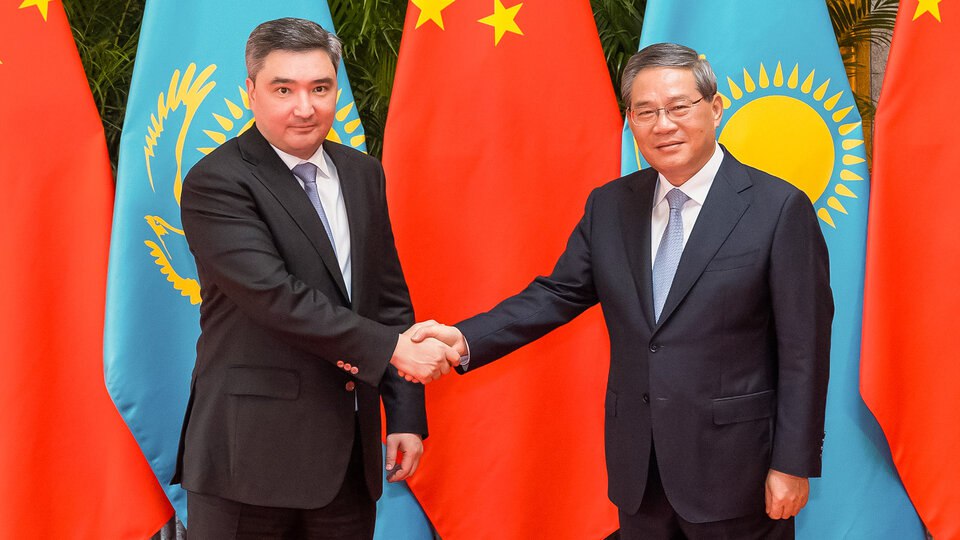
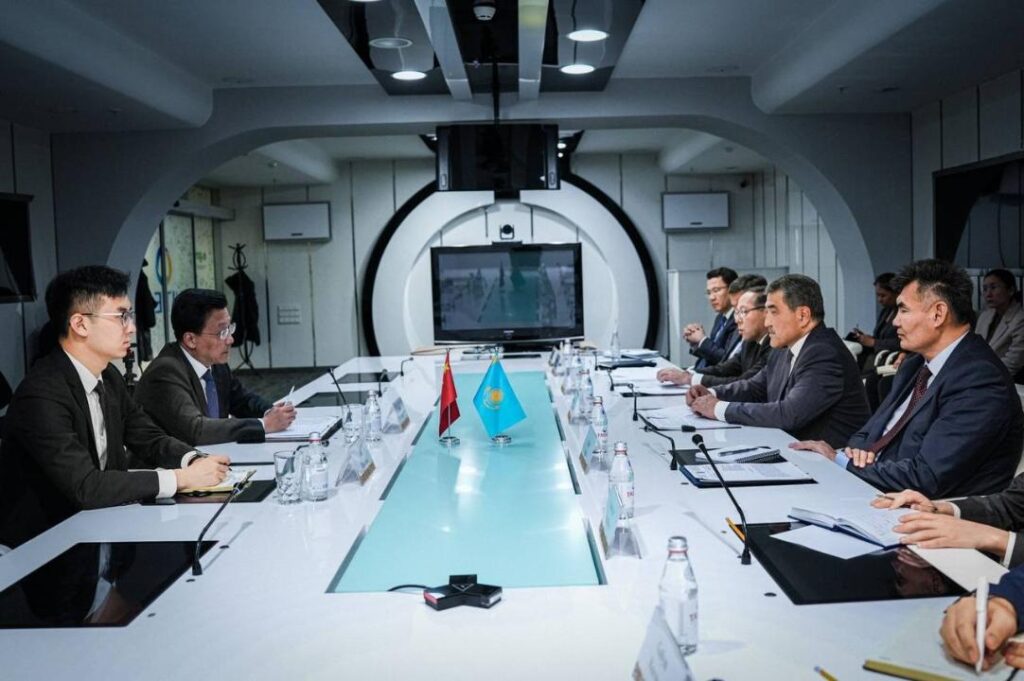
On November 1, Kazakhstan’s Minister of Water Resources and Irrigation Nurzhan Nurzhigitov met with Zhang Xiao, the Chinese Ambassador to Kazakhstan, to discuss bilateral water cooperation and the joint use and distribution of water from transboundary rivers. Three large rivers in Kazakhstan — the Ertis, the Ile, and the Emel — originate in China. The two countries established a special working group of experts to negotiate the provision of water to the Ile-Balkhash basin and develop fisheries and tourism in the region. The Ministry of Water Resources and Irrigation of Kazakhstan intends to sign a memorandum of cooperation with the Ministry of Water Resources of China shortly. The Kazakh minister and Chinese ambassador discussed joint modernization and automation of Kazakhstan's water infrastructure, production and use of water-saving technologies, and advanced training of Kazakhstani water specialists in China. Late in August, The Times of Central Asia reported that the Kapchagay reservoir outside Almaty was full for the first time in ten years. The reservoir collects water from the Ile (or Ili) River, which originates in China and is meant to regulate the river's flow on its way to Kazakhstan’s largest lake, Balkhash.

American Chamber of Commerce in Kyrgyzstan: Future Development and Investment Climate

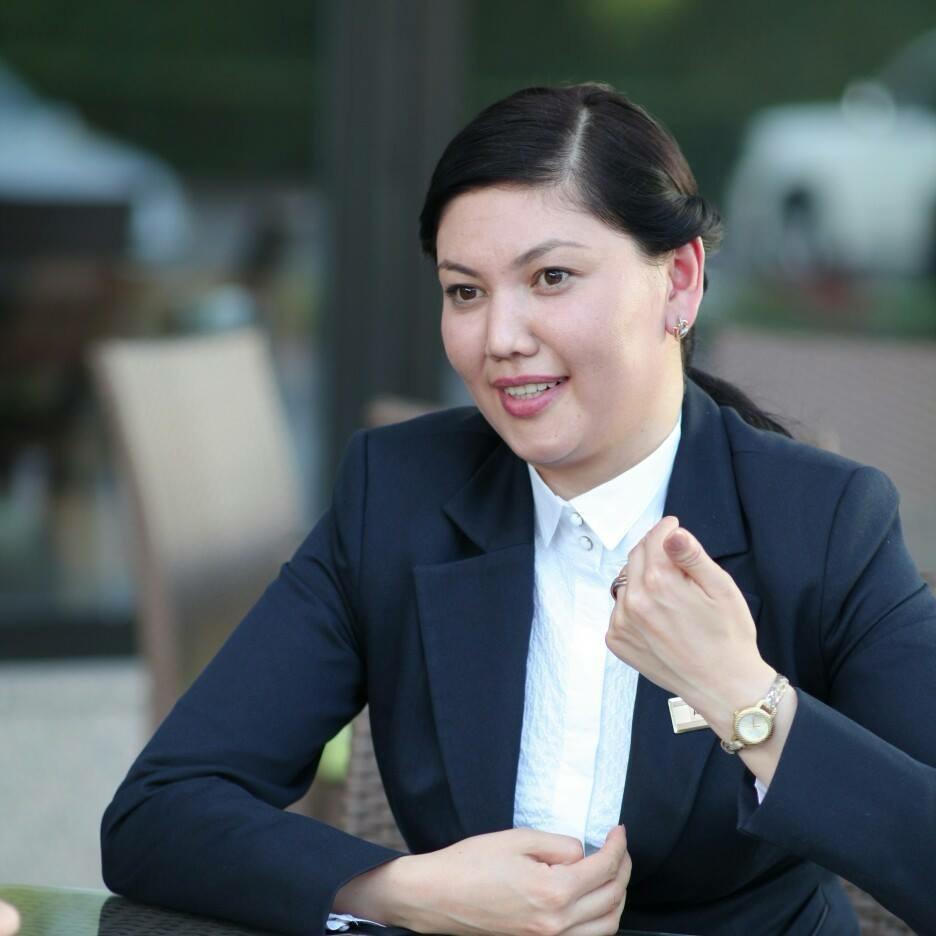
As Central Asia continues to become a regional hub for trade and innovation, The Times of Central Asia spoke with Altynai Asanova, the Executive Director of the American Chamber of Commerce in the Kyrgyz Republic, to discuss the investment climate in Kyrgyzstan, economic trends, and future development. TCA: I see that your background is primarily in hotel management and sales; how did you transition from this role to your current position? “My background includes 18 years in the hotel business. Ten years at Hyatt, starting in food and beverage and ending in the hotel sales department; then, I worked at the Orion Hotel for the pre-opening and opening stage for about three years. After this, I was hired by Sheraton, one of the Marriott chain hotels, to work on the pre-opening and opening stage for two years. I was still involved with the business audience and wanted to continue working with the stakeholders and companies who know me.” TCA: How would you describe the hospitality industry in Kyrgyzstan? Is it mainly in Bishkek or other regions? “It is developing; before, it was only the Hyatt. Now, there are three or four chain hotels in Bishkek. It is good that there are more players in the market. It is developing day by day. The development is mainly in Bishkek, but we have good perspectives for Issyk Kul as long as the roads and infrastructure are completed. The chain hotels are also becoming interested in Issyk Kul. The good thing is that enough businessmen understand and accept the market challenges in Issyk Kul. They know it will not be financially stable at launch since the busy season is only about 50 days. But if the hotels provide full service and comfort, people will travel there for the full season.” TCA: Stepping away from hospitality, what did American investment in Kyrgyzstan look like ten years ago?” “Before, there was an American base in Kyrgyzstan. During that time, the hospitality business was amazing. The rates were high considering the charter flights and pilots who needed a place to stay. Now, these rooms are listed at the lowest rates. At that time, the Hyatt was the only five-star hotel in Bishkek, so all the American guests were staying at the Hyatt. The investment climate dropped after the U.S.-Kyrgyzstan agreement ended. There is opportunity, but it goes slowly.” TCA: Since then, what has changed in the business climate? “Business-wise, if we look from the angle of the association, we do not have any purely American business; we have franchise members: KFC, Hyatt, Sheraton, and some banks. It would be nice to have purely American [businesses] here.” TCA: Who are the current major investors in the Kyrgyz market? And is competition relevant to win contracts with local companies? “China, Russia, Kazakhstan, the Netherlands, and Turkey are the main investors. Before making any contracts or tenders, we need to understand the possibilities of our market, ‘Is our country ready to accept this level of business?’ The first question...

Diplomatic Renaissance: How Tokayev’s Visit to Mongolia Went

The recent state visit by Kassym-Jomart Tokayev to Mongolia, the first by a Kazakh president in 16 years, demonstrated an excellent approach to expanding Astana's strategic ties. After all, despite 32 years of diplomatic relations and a relatively extensive Kazakh diaspora in Mongolia, under the first president of Kazakhstan, Nursultan Nazarbayev, Astana's ties with Ulaanbaatar were essentially put on hold. This pause in relations likely arose due to Mongolia's political reputation in the region. Protests often erupt in the country, sometimes becoming particularly violent. In 2008, when the Kazakh authorities justified their failures in the economy with the outbreak of the global economic crisis, a state of emergency was imposed in Mongolia for four days in July. The reason was violent opposition protests against the results of the parliamentary elections. Protesters smashed the headquarters of the ruling party and set fire to several buildings in the center of Ulaanbaatar, killing five people and injuring 300. For Mongolia, with its population of 3.4 million, this was a significant shock, as it was for its neighbors in the Eurasian region, where three leaders fell between 2003 and 2005 -- Eduard Shevardnadze in Georgia, Leonid Kuchma in Ukraine, and Askar Akayev in Kyrgyzstan. All this was declared in the region as an “export of revolutions,” building around this notion, a conspiracy theory about the machinations of the U.S. State Department and George Soros. Tokayev's state visit to Mongolia 16 years after Nursultan Nazarbayev refers to the Kazakh leader's key idea about the renaissance of Central Asia. Mongolia is no stranger to the region in one way or another. The main thing for Kazakhstan is the strong Kazakh diaspora, which exceeds 117,000 people. This is the largest national minority in Mongolia and the second largest ethnic group after the titular one. A Kazakh newspaper is published in Mongolia, some Kazakh TV channels are shown on television, and there is an hour of radio news in Kazakh. In short, the basis for strengthening relations is powerful. Tokayev and the president of Mongolia, Ukhnaagiin Khurelsukh, who received him, spoke in both narrow and extended formats about reaching the level of strategic partnership. Tokayev and Khurelsukh, even before the one-on-one meeting, had revitalized diplomatic and trade ties between Kazakhstan and Mongolia. Data from the Statistics Committee of the Ministry of National Economy of Kazakhstan provides evidence. Since 2017, there has been a steady decline in trade turnover between the countries. In 2017, its level was $74.8 million; in 2018 - $67.4 million; in 2019 - $59.9 million. In 2020, it fell to $29.3 million. COVID restrictions can explain such a sharp drop. In 2021, the turnover reached almost $61 million, but at the end of 2023, the trade volume jumped to $150 million. Therefore, when Tokayev said at a joint press briefing that he and the Mongolian president had agreed to turn over $500 million in the “foreseeable future,” this did not seem overly optimistic. The Kazakh delegation did not come empty-handed; during Tokayev's visit, the parties...

Daewoo To Invest $730 Million in Turkmenistan

South Korean company Daewoo Engineering & Construction has won a tender to build a fertilizer plant in Turkmenistan. The project is estimated to cost a trillion won (about $730 million). According to the company, the new plant will be located in Turkmenabat, 450 km east of Ashgabat. It will have an annual capacity of 350,000 tons of phosphate fertilizer and 100,000 tons of ammonium sulfate, and will include additional auxiliary facilities. After the completion of the main contract, final data on the contract's value and implementation terms will be published. The company has stated that implementing the project will allow Daewoo E&C to strengthen its presence in Central Asia and expand its activities in the petrochemical and agricultural sectors, infrastructure, and urban projects. In the future, the company intends to offer environmentally friendly technological solutions to further cooperate with Turkmenistan. Daewoo E&C noted that winning the tender was possible thanks to the support of the South Korean government, including during the official visit of President Yun Seok Yeol to Turkmenistan in June. The company's Chairman, Jeong Won-ju, also met with the Chairman of the People's Council of Turkmenistan, Gurbanguly Berdimuhamedov, in November 2022 during his visit to South Korea. The two sides signed a memorandum of understanding, cementing an agreement on close cooperation. Jeong Won-ju has visited Turkmenistan three times since then, which helped strengthen ties and successfully conclude negotiations. Daewoo E&C is aiming to become a leader in the global EPC (engineering, procurement, and construction) market. “We strive to participate in projects that contribute to a sustainable future,” a company representative stated. Turkmenistan is implementing several major projects with the participation of South Korean companies. Hyundai Engineering has agreed with state-owned Turkmengas to expand the Galkynysh gas field. This project includes the construction of a fourth gas desulfurization facility, making it the largest in the country's history. Korean companies have also been actively constructing and developing an oil refinery in Kiyanly. Projects to create “smart cities” are also being discussed.

Foreign Companies to Invest in Waste Recycling Plants across Uzbekistan

On October 21, Uzbekistan President Shavkat Mirziyoyev attended a presentation on new projects for recycling household waste into electricity. As  reported by the president’s press service, Uzbekistan produces 14 million tons of solid waste annually, but only 4-5 percent is recycled. As a consequence, over 7 million tons of greenhouse gases and 43,000 tons of toxic substances formed at waste landfills are annually emitted into the atmosphere and penetrate the soil. To resolve the problem, the Ministry of Ecology, Environmental Protection, and Climate Change has prepared several projects with foreign investors. The plan is to build waste incineration plants across Uzbekistan and process landfill gases at the Akhangaran landfill, with a total investment of about $1.3 billion. A Chinese company, CAMC Engineering, will invest $350 million in constructing two waste incineration plants in the Andijan and Tashkent regions, capable of processing 4,000 tons of waste daily and generating 630 million kilowatt-hours of electricity annually. Another Chinese company, Shanghai SUS Environment, plans to invest $310 million in building two plants in the Samarkand and Kashkadarya regions to process 3,000 tons of waste daily and generate 480 million kilowatt-hours of electricity annually. The United Arab Emirates Group is to invest $200 million in a plant in the Bukhara and Navoi regions to process 1,500 tons of waste daily and generate 363 million kilowatt-hours of electricity annually, and Sejin (Republic of Korea) will invest $55 million in the construction of a 16-megawatt electricity plant in the Akhangaran district of Tashkent to generate electricity from landfill gases. The combined projects, to be implemented between 2025-'27,  are predicted to burn over 4.7 million tons of solid municipal waste annually and generate 2.1 billion kilowatt-hours of electricity worth $97 million, saving  152 million cubic meters of natural gas and reducing greenhouse gas emissions by 2.4 million tons. Back on September 26, the President of Uzbekistan established the Agency for Waste Management and Circular Economy Development aimed to introduce modern methods of collecting, sorting, and recycling waste and producing alternative energy, raw materials, and organic fertilizers. Eco-industrial zones are also to be created on landfill sites across Uzbekistan.