• KGS/USD = 0.01144 0%
  • KZT/USD = 0.00205 0%
  • TJS/USD = 0.10785 0.09%
  • UZS/USD = 0.00008 0%
  • TMT/USD = 0.28571 0.28%
  • KGS/USD = 0.01144 0%
  • KZT/USD = 0.00205 0%
  • TJS/USD = 0.10785 0.09%
  • UZS/USD = 0.00008 0%
  • TMT/USD = 0.28571 0.28%
  • KGS/USD = 0.01144 0%
  • KZT/USD = 0.00205 0%
  • TJS/USD = 0.10785 0.09%
  • UZS/USD = 0.00008 0%
  • TMT/USD = 0.28571 0.28%
  • KGS/USD = 0.01144 0%
  • KZT/USD = 0.00205 0%
  • TJS/USD = 0.10785 0.09%
  • UZS/USD = 0.00008 0%
  • TMT/USD = 0.28571 0.28%
  • KGS/USD = 0.01144 0%
  • KZT/USD = 0.00205 0%
  • TJS/USD = 0.10785 0.09%
  • UZS/USD = 0.00008 0%
  • TMT/USD = 0.28571 0.28%
  • KGS/USD = 0.01144 0%
  • KZT/USD = 0.00205 0%
  • TJS/USD = 0.10785 0.09%
  • UZS/USD = 0.00008 0%
  • TMT/USD = 0.28571 0.28%
  • KGS/USD = 0.01144 0%
  • KZT/USD = 0.00205 0%
  • TJS/USD = 0.10785 0.09%
  • UZS/USD = 0.00008 0%
  • TMT/USD = 0.28571 0.28%
  • KGS/USD = 0.01144 0%
  • KZT/USD = 0.00205 0%
  • TJS/USD = 0.10785 0.09%
  • UZS/USD = 0.00008 0%
  • TMT/USD = 0.28571 0.28%

Viewing results 1 - 6 of 132

Organization of Turkic States Changes Its Flag

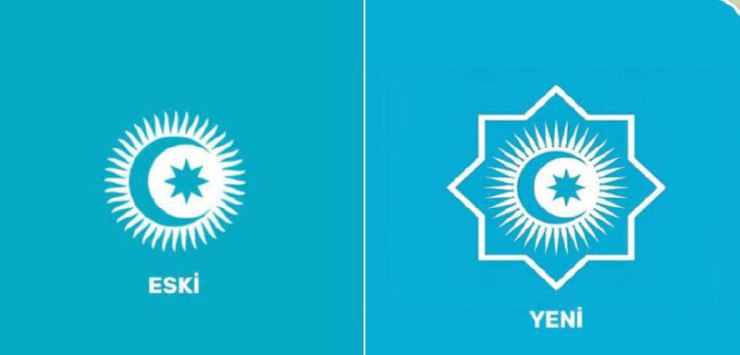
At the 11th summit of the heads of state of the Organization of Turkic States (OTS) in Bishkek, a new flag to represent the organization was adopted. The leaders of Azerbaijan, Kazakhstan, Kyrgyzstan, Turkey, and Uzbekistan—Ilham Aliyev, Kassym-Jomart Tokayev, Sadyr Japarov, Recep Tayyip Erdogan, and Shavkat Mirziyoyev—unanimously approved it as a symbol reflecting the Turkic world's shared values and cultural identity. The flag is designed on a turquoise background, symbolizing a clear sky, peace, and prosperity. In the center are a crescent moon, a star, and a sun with forty equal rays. These elements represent Turkic statehood, vitality, and aspiration for the future. The octagon, symbolizing centuries-old Turkic statehood and stability, expresses the participating countries' common cultural roots and interconnectedness. The sun's rays symbolize light and openness, and the crescent moon and star, well-known symbols of the Turkic world, emphasize the desire for development and progress based on a rich historical heritage. The Organization of Turkic States covers several countries in Eurasia and plays a vital role in their political and economic interaction. Its member countries are Azerbaijan, Kazakhstan, Kyrgyzstan, Turkey, and Uzbekistan, and its observer countries are Turkmenistan and Hungary. The OTS's headquarters are in Istanbul. Adopting the new flag was also a landmark step in strengthening the organization's international status. The first flag of the Organization of Turkic States was adopted in 2012. Earlier, Tokayev summarized the results of Kazakhstan's chairmanship of the Organization of Turkic States. The countries' leaders adopted the Charter of the Turkic World, while central banks of the OTS will create a new Council to strengthen financial cooperation.

Central Asia and South Korea Seek to Expand Cooperation

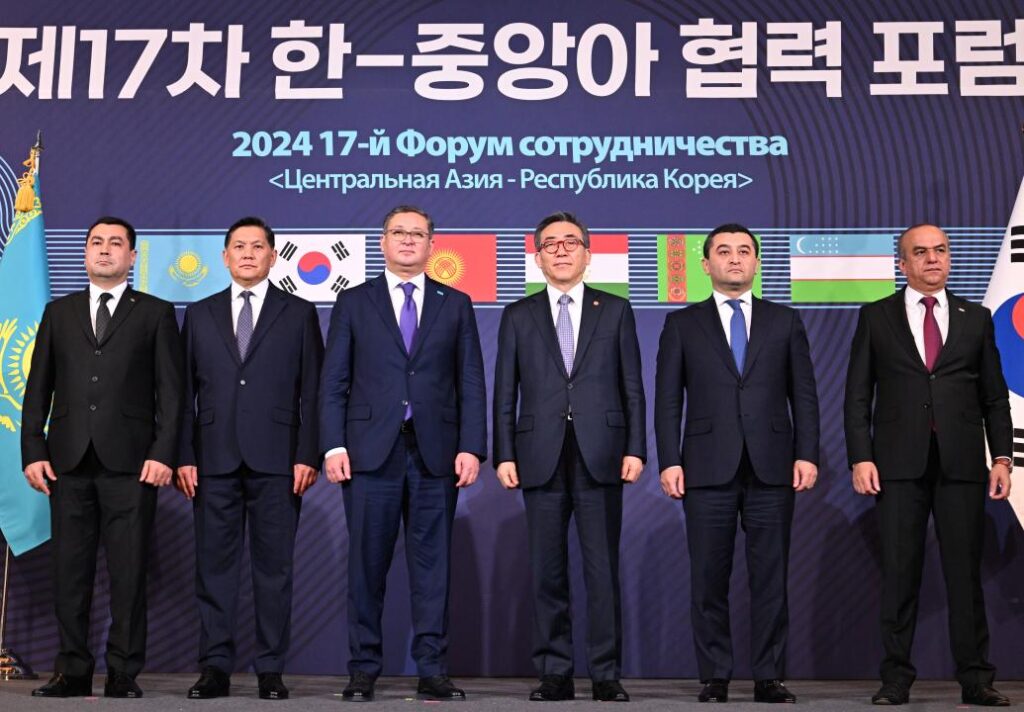
The 17th Central Asia–Republic of Korea Cooperation Forum, which took place in Seoul on November 4, addressed key areas of partnership between Central Asian countries and South Korea in sectors such as transport and logistics, energy, critical minerals, digital transformation, environmental issues, and tourism. Speaking at the forum, Kazakhstan’s Minister of Foreign Affairs, Murat Nurtleu, emphasized the importance of transport connectivity for the region’s sustainable economic growth. Kazakhstan is developing the Trans-Caspian International Transport Route to ensure safe and efficient cargo transportation from Asia to Europe. The Kazakh minister invited Korean companies to participate in major projects to expand the route’s capacity to 10 million tons of cargo annually. Addressing energy cooperation, Nurtleu highlighted Kazakhstan’s abundant natural resources, including rare earth metals and uranium. The Kazakh Foreign Minister expressed hope that Korean companies would join projects for resource extraction and processing and participate in a consortium to construct a nuclear power plant in Kazakhstan. Nurtleu stated, "Central Asian countries and the Republic of Korea are natural partners connected by a shared history, Altai heritage, and traditional trade relations dating back to the Silk Road era. The Republic of Korea is increasingly vital in the economic and technological development of the entire Central Asian region.” At the forum, Kyrgyzstan’s First Deputy Minister of Foreign Affairs, Asein Isaev, highlighted the growing role of South Korea as a high-tech nation interested in strengthening supply chains for energy resources and rare earth metals and developing transport and logistics routes with Kyrgyzstan and other Central Asian countries. As part of the forum, South Korea's President Yoon Suk Yeol met with the heads of Central Asian delegations and pointed out Korea’s interest in strengthening relations with Central Asian countries through the K-Silk Road initiative. This strategic program supports Korean infrastructure development in Central Asia in exchange for improved access to the region’s raw materials and critical minerals. During his visit to Kazakhstan in June, Yoon Suk Yeol emphasized the importance of strengthening the strategic partnership between Kazakhstan and South Korea to supply critical minerals.

Uzbekistan and EU Look to New Areas of Cooperation

On November 5, the government of Uzbekistan and the European Union held the 7th meeting of their Subcommittee for Development Cooperation in Tashkent, Uzbekistan. The parties reviewed the EU’s ongoing projects in Uzbekistan and agreed to closer cooperation in transport, critical raw materials, digitalization, and territorial planning. As reported by the EU Delegation to Uzbekistan, the parties discussed the progress of the ongoing EU-funded project, “Further Improvement of Public Services Delivery in Uzbekistan,” which has increased Uzbek citizens’ access to public services in rural areas; projects addressing corruption; and budget support and expertise worth 27 million euro for agricultural reforms. The EU and the Uzbek government also addressed potential new areas of cooperation, such as critical raw materials, transport, territorial planning of urban and rural areas, and women’s economic empowerment. As part of the Multi-annual Indicative Program for 2021-2027, the EU will allocate around 43 million euros for new bilateral programs to be launched between 2025 and 2027. An additional 30 million euros will be allocated to regional programs supporting border security, digitalization, including access to the Internet, and national migration policies. The Multi-annual Indicative Programme for 2021-2027 sets the priorities for the EU-Uzbekistan cooperation. The priority areas are effective governance, green and digital growth, and sustainable agri-food sector. In April 2024, the European Commission and Uzbekistan signed a Memorandum of Understanding for a strategic partnership on critical raw materials (CRMs), which marked a significant step towards a diversified and sustainable supply of CRMs for green and digital transitions in both the EU and Uzbekistan. Rich in copper, molybdenum, and gold, Uzbekistan has the second-largest reserves of CRMs in Central Asia (after Kazakhstan).

Kyrgyzstan Hosts Summit of Organization of Turkic States

On November 6, Bishkek hosted the 11th Summit of the Council of Heads of State of the Organization of Turkic States (OTS). Chaired by Kyrgyzstan's President Sadyr Japarov and themed “Empowering the Turkic World: Economic Integration, Sustainable Development, Digital Future, and Security for All,” the summit was attended by President of Azerbaijan Ilham Aliyev, President of Kazakhstan Kassym-Jomart Tokayev, President of Turkey Recep Tayyip Erdoğan, President of Uzbekistan Shavkat Mirziyoyev, and Viktor Orbán, the Prime Minister of Hungary (observer state of the OTS). At the summit, the OTS chairmanship passed from Kazakhstan to Kyrgyzstan. In his speech, Kazakhstan's Tokayev summarized the results of his country's chairmanship of the OTS. Tokayev noted that Kazakhstan's chairmanship of the Organization of Turkic States was held under the motto "TURKTIME!" with special attention paid to strengthening the unity of the Turkic world and expanding comprehensive cooperation. Tokayev said that over the past 10 years, economic ties between the OTS members have strengthened significantly, and their trade volume exceeded $45 billion in 2024. According to Tokayev, strengthening transport and logistics ties within the OTS is a priority task. “It is necessary to fully utilize the potential of the Middle Corridor, which is strategically important for the further economic development of the Turkic world. Therefore, it seems necessary to agree to ensure the sustainable development of cargo transportation along this route.” Addressing the summit as the new chairman of the OTS, Japarov emphasized that the Organization has the unique potential to achieve high goals, strengthen its position in the international arena, intensify mutually beneficial cooperation, and create favorable conditions for the prosperity of its people. According to Japarov, during its chairmanship of the OTS, Kyrgyzstan will make every effort to develop economic partnership, sustainable development, digital integration, and strengthening common security. To expand trade and economic cooperation, negotiations will be initiated on intergovernmental agreements in services, finance, the creation and support of common labor markets, digital and e-commerce, intellectual property, agriculture, technology, innovation, tourism, and education. Japarov supported signing the Agreement on Partnership in the Field of Digital Economy, which will facilitate digital trade between the Turkic states. Joint measures to combat the challenges associated with climate change and environmental pollution will be one key area of Kyrgyzstan's chairmanship. According to Japarov, over the past 70 years, the area of glaciers in Kyrgyzstan has decreased by 16%. These glaciers are a source of drinking water for Kyrgyzstan and the entire Central Asian region. “Considering that our region is among the most vulnerable to global warming, by 2100, we may lose more than half of the glaciers,” the Kyrgyz president warned, adding that “we will develop cooperation in the implementation of joint green projects in the field of renewable energy, forest restoration, the introduction of resource-saving and energy-efficient technologies, the protection of glaciers and biological species, as well as the fight against land degradation and desertification.” Addressing the summit, Turkey's Erdoğan said: “I wholeheartedly believe that the decisions we will make today to achieve the targets we...

Kazakhstan and France – Key Take-Aways From Tokayev’s Trip to Paris

As The Times of Central Asia has reported, President Kassym-Jomart Tokayev paid a state visit to Paris, during which he met with his French counterpart and held fruitful talks with representatives of major European companies. After the bilateral talks, Tokayev and French President Emmanuel Macron issued a joint statement. “This visit is significant for us. France is a close and reliable partner of Kazakhstan in the European Union. For 34 years, our relations have acquired a strategic character. Astana and Paris have established a political dialog based on mutual understanding at all levels. Ties in trade and economic, investment, cultural, and humanitarian spheres have been strengthened; a clear legal framework has been formed. Interaction within the framework of international organizations has expanded. I am confident that our partnership, based on unshakable friendship and mutual support, will be successful in the future,” Tokayev said. Both parties stated that they consider it necessary to develop trade and economic cooperation. “Last year, the two countries' trade turnover amounted to $4.2 billion. And this year, we reached this figure in 9 months. France ranks sixth in terms of investment in our country. French companies, including Alstom, Total Energies, Air Liquide, Orano, Vicat, Danone, and Lactalis, have invested heavily in Kazakhstan, reaching about $19.5 billion. Cooperation in the oil and gas, mining, industrial, construction, aviation, engineering, and health care sectors is being strengthened,” the Kazakh president said. In addition, Tokayev met in Paris with a potential supplier of nuclear technology for the construction of nuclear power plants, the CEO of Électricité de France (EDF), Luc Remona. According to the official website of the President of Kazakhstan, Akorda, “The French company is on the short list of potential suppliers of nuclear technology for constructing nuclear power plants. The country is considering the establishment of an international consortium as one of the potential models for the realization of this crucial project.” President Tokayev also participated in an investment roundtable attended by the heads of France's largest companies. “We are pleased to be one of France's main trade, economic, and investment partners in Central Asia. Kazakhstan now accounts for more than 80% of France's trade with the region. This year, bilateral trade volume has increased by 45%,” Tokayev said. The President also outlined promising areas of economic ties for the two countries. “Energy has always been a key sector of our cooperation. Astana is a major supplier of oil and uranium to the European Union and is ready to support France's energy sovereignty further. We expect an intensified presence of French industry in Kazakhstan, with which we associate the introduction of advanced technologies in our production sphere. Given that our country is the largest uranium producer in the world, and France has extensive experience in the nuclear industry, we could cooperate in civilian nuclear energy,” Tokayev stated. Tokayev emphasized that massive international companies are interested in implementing large-scale wind, solar, and hydropower projects in Kazakhstan. For example, Total Energies plans to invest $1.1 billion in a one-gigawatt wind...

Kazakhstan and China to Double Trade, Increase Cargo Transportation

On November 4, Kazakhstan’s Prime Minister Olzhas Bektenov arrived in Shanghai and held talks with his Chinese counterpart China Li Qiang. They discussed strengthening trade, investment, transport and logistics cooperation, agriculture, energy, and tourism. Kazakhstan and China aim to double bilateral trade turnover from last year’s historic high of $41 billion. In January-September 2024, Kazakh-Chinese trade totaled $33 billion. Bektenov stressed that Kazakhstan is ready to increase exports to China of 180 high-value-added commodity items worth $1.6 billion. Bilateral agricultural trade increased by 5.8% from January to September 2024, reflecting China’s growing demand for Kazakhstani organic and environmentally-friendly agricultural products. The sides discussed expanding the export of Kazakh grain, crops, and livestock products. Regarding the transport and logistics sector, the Kazakh and Chinese prime ministers noted that over 80% of land cargo transportation from China to Europe today passes through Kazakhstan. Therefore, Kazakhstan is interested in deepening cooperation within China’s Belt and Road Initiative framework. Bektenov noted that this globally important project, together with the Trans-Caspian International Transport Route (the Middle Corridor), running through the territory of Kazakhstan, can unlock the potential of the North-South and East-West corridors. In January-September 2024, the traffic volume along the Middle Corridor exceeded the previous year's figures by 23% and amounted to 3.4 million tons. This figure is expected to increase to 10 million tons annually by 2030. Bektenov also attended the Kazakh-Chinese investment roundtable in Shanghai, which resulted in the signing of commercial agreements with Chinese companies totaling $2.5 billion, including on energy projects and localized automotive production. Addressing the forum, Bektenov said: "Kazakhstan and China have huge potential for implementing joint investment projects. Together, we can open new horizons for interaction and increase the effectiveness of cooperation. To this end, we should actively work to expand transit opportunities, strengthen industrial cooperation, and build ties between our business communities."