• KGS/USD = 0.01144 0%
  • KZT/USD = 0.00211 0%
  • TJS/USD = 0.10803 0%
  • UZS/USD = 0.00008 0%
  • TMT/USD = 0.28490 -0.28%
  • KGS/USD = 0.01144 0%
  • KZT/USD = 0.00211 0%
  • TJS/USD = 0.10803 0%
  • UZS/USD = 0.00008 0%
  • TMT/USD = 0.28490 -0.28%
  • KGS/USD = 0.01144 0%
  • KZT/USD = 0.00211 0%
  • TJS/USD = 0.10803 0%
  • UZS/USD = 0.00008 0%
  • TMT/USD = 0.28490 -0.28%
  • KGS/USD = 0.01144 0%
  • KZT/USD = 0.00211 0%
  • TJS/USD = 0.10803 0%
  • UZS/USD = 0.00008 0%
  • TMT/USD = 0.28490 -0.28%
  • KGS/USD = 0.01144 0%
  • KZT/USD = 0.00211 0%
  • TJS/USD = 0.10803 0%
  • UZS/USD = 0.00008 0%
  • TMT/USD = 0.28490 -0.28%
  • KGS/USD = 0.01144 0%
  • KZT/USD = 0.00211 0%
  • TJS/USD = 0.10803 0%
  • UZS/USD = 0.00008 0%
  • TMT/USD = 0.28490 -0.28%
  • KGS/USD = 0.01144 0%
  • KZT/USD = 0.00211 0%
  • TJS/USD = 0.10803 0%
  • UZS/USD = 0.00008 0%
  • TMT/USD = 0.28490 -0.28%
  • KGS/USD = 0.01144 0%
  • KZT/USD = 0.00211 0%
  • TJS/USD = 0.10803 0%
  • UZS/USD = 0.00008 0%
  • TMT/USD = 0.28490 -0.28%

Viewing results 1 - 6 of 76

Kazakhstan Sees Record Water Recovery in Northern Aral Sea

Kazakhstan’s Ministry of Water Resources and Irrigation has reported a record increase in the volume of water in the Northern Aral Sea, exceeding national and international expectations. Water Returns to the Sea Since 2023, approximately 5 billion cubic meters of water have flowed into the basin, bringing the total reserve to 24.1 billion cubic meters. This figure surpasses the target set under Kazakhstan’s Water Resources Management Concept, which had aimed for only 20.6 billion cubic meters by 2025. The current level was not expected to be reached before 2029. Minister of Water Resources and Irrigation Nurzhan Nurzhigitov said that with the support of a World Bank grant, a feasibility study is underway to raise the Kokaral Dam by two meters and construct a new hydraulic facility. The project is designed to stabilize water levels in the Akshatau and Kamystybas lake systems. “The project aims to increase both the volume and quality of water in the Northern Aral Sea, restore the Syr Darya delta, reduce salt dispersion from the exposed seabed, develop the fishing industry in the Kyzylorda region, and improve living conditions for local communities,” the minister stated. International Cooperation Deputy Minister Nurlan Aldamzharov has said the second phase of the initiative envisions raising the Northern Aral’s capacity to 35 cubic kilometers. He emphasized the critical role of regional cooperation, particularly with Kyrgyzstan, Tajikistan, and Uzbekistan, as the sea’s recovery depends on sustained inflows from the Syr Darya River. Ministry spokesperson Moldir Abdualyeva attributed the recent progress to “water diplomacy, effective resource allocation, and conservation efforts.” Environmental and Social Impact The increase in water volume has led to a corresponding expansion of the sea’s surface area. As of February 2025, the Northern Aral covered 3,065 square kilometers, an increase of 111 square kilometers over the past three years. This has reduced salinity levels and enabled the return of 22 fish species to the ecosystem. The annual fish catch now totals around 8,000 tons, offering renewed economic opportunities for local communities. To further support the region, Kazakhstan has raised subsidies for farmers implementing water-saving technologies, increasing compensation rates from 50% to 80%. Officials say the measure is intended to conserve water while promoting sustainable agriculture in surrounding areas. The Small Aral Sea, or Northern Aral, was formed in 1987 during the broader desiccation of the Aral Sea and preserved following the construction of the Kokaral Dam. In 2012, it was added, alongside the Syr Darya delta, to the Ramsar List of Wetlands of International Importance. Kazakhstan assumed the rotating chairmanship of the International Fund for Saving the Aral Sea (IFAS) in 2024, further strengthening its leadership role in regional water cooperation and ecosystem restoration.

Kyrgyzstan Restores Irrigation System Amid Growing Water Demand

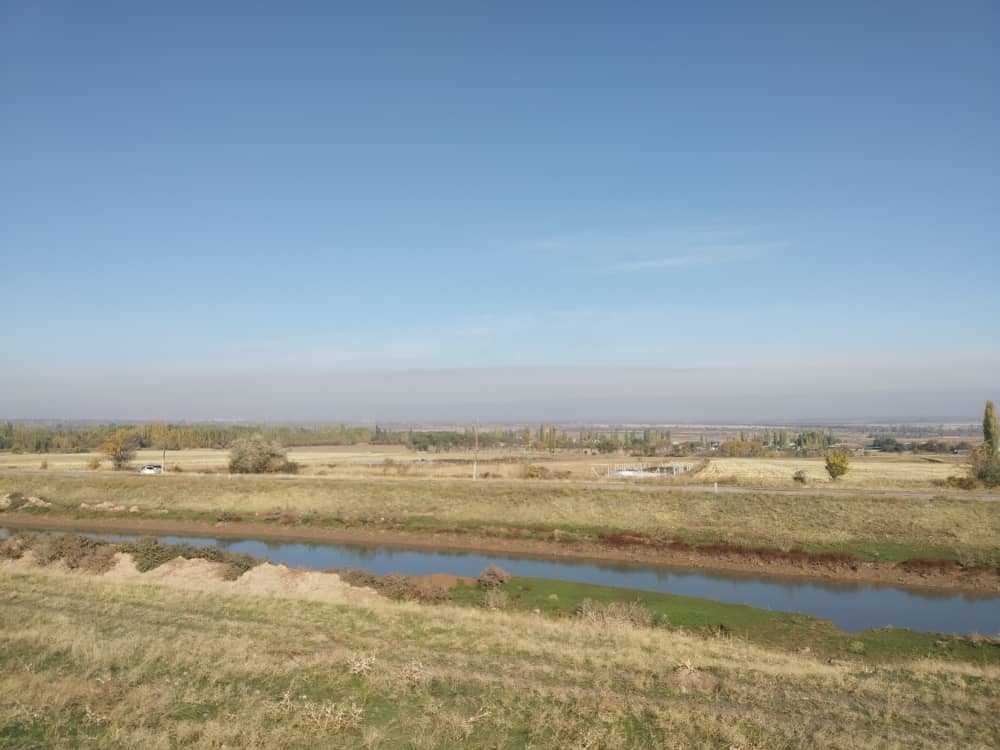
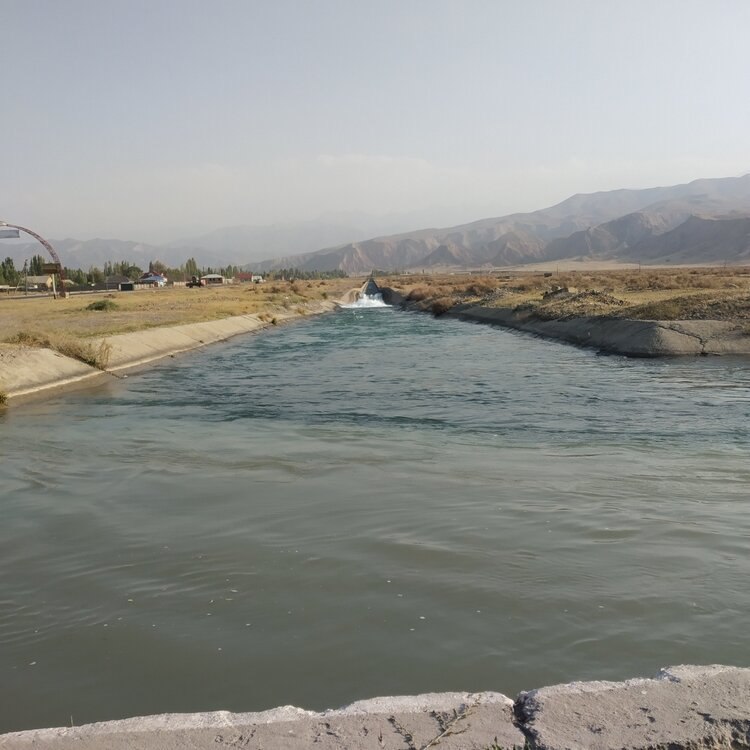
In the dry and hot year of 2025, Kyrgyz farmers received one billion cubic meters more water than in 2024, according to the Ministry of Water Resources, Agriculture, and Processing Industry. Despite the challenging weather conditions, 7 billion cubic meters of water were delivered during the growing season, enabling the irrigation of over 1.1 million hectares of agricultural land. Chronic water shortages during the irrigation season have long plagued Kyrgyzstan's agriculture, frequently sparking disputes in rural areas. The primary cause is the aging irrigation infrastructure, much of it dating back to the Soviet era. Many canals are clogged or damaged, leading to significant water losses. In 2025, the ministry reported that 429.5 kilometers of canals were repaired and cleaned, alongside the restoration of 302 hydraulic structures, 123 water gauges, 91 pumping stations, and 156 pumping units. Nine units were fully replaced, and 53.5 kilometers of collector and drainage systems were cleaned. To modernize the network, the government plans to construct 106 daily and ten-day water regulation basins by 2030. These facilities are intended to improve water storage and distribution across farms. Ten basins have already been commissioned this year, with 12 more under construction. Officials are also combining modern and traditional solutions to address irrigation challenges. Sprinkler systems, popular in the 1980s, are being revived due to their efficiency, they require 500 to 1,000 cubic meters of water per hectare, compared to two to three times more with the traditional ary system. However, most farmers continue to rely on the ary method due to the high cost of sprinkler and drip irrigation equipment. According to the ministry, drip and sprinkler systems are now in use on 8,365 hectares: 1,702 hectares on state-owned land and 6,663 hectares on private farms. Restoration of old wells and construction of new canals also continue. This year, work began on a plant to manufacture concrete linings for irrigation canals, with a target of producing 500,000 square meters of concrete canal linings in 2025.

Tajikistan’s Irrigation Plans Require Major Upgrades

Tajikistan has the potential to become the irrigation center of Central Asia but only if it undergoes extensive modernization. This conclusion comes from a joint report by the Eurasian Development Bank (EDB) and the United Nations Industrial Development Organization (UNIDO). Industrial and Economic Potential The report highlights Tajikistan’s capacity to develop into a regional production and maintenance hub for irrigation equipment. Key advantages include affordable electricity, a readily available labor force, and a strategic geographic location. These factors position the country to play a central role in an emerging regional irrigation cluster. The southern provinces of Khatlon and Sughd are identified as particularly promising for industrial development. Proposed projects include manufacturing facilities for plastic pipes and components for drip and sprinkler systems, alongside service centers for pump repair. Investment requirements for such facilities range from $3-5 million, with a projected payback period of just 2-3 years. However, the report underscores the pressing need to overhaul the existing infrastructure. Approximately 77% of Tajikistan’s irrigation systems require reconstruction. Of the country’s 720,000 hectares of irrigated farmland, nearly 60% must be restored. Additionally, 80% of pumping stations are considered outdated, and water losses due to technical inefficiencies reach 45%. Without significant upgrades, the system will likely struggle to meet growing climatic and demographic pressures. To support the irrigation sector’s long-term viability, the report calls for the annual training of at least 3,000 specialists. Training one professional to international standards costs between $1,200 and $1,800. The authors stress the importance of state investment in vocational education and greater collaboration between educational institutions and industry. Tajikistan as a Regional Logistics Bridge Tajikistan also has the potential to serve as a strategic logistics hub. Its southern regions could facilitate transport between Central Asia, Afghanistan, Iran, and Pakistan, cutting shipping costs and improving equipment access in remote areas. Realizing this vision will require a strong state role, including tax incentives, subsidies, and streamlined investment procedures. International donor participation is equally vital. Currently, nearly 90% of irrigation equipment used in the region is imported, adding up to 30% in logistics costs. While cluster-based industrial development has proven effective in other Central Asian countries, boosting enterprise productivity by 15-20% within two to three years, Tajikistan still trails behind. In contrast to Uzbekistan, which has over 90 cotton and textile clusters, much of Tajikistan’s agricultural output undergoes minimal processing. Regional Water Reform Needs $50 Billion The report concludes by emphasizing that water supply issues extend beyond Tajikistan. Across Central Asia, agriculture accounts for up to 80% of water usage. Losses from open canals reach 50%, and over 30% of irrigated land is affected by salinization. To address these challenges by 2040, the region will require $40-50 billion in investment for infrastructure upgrades, digitization, and a transition to closed irrigation systems. “Without urgent modernization of the irrigation system, the region risks facing serious water shortages, lower crop yields, and increased social instability,” the authors warn.

Artificial Glacier Technology to Support Kyrgyz Farmers Amid Climate Change

Artificial glacier technology is emerging as a promising solution to help Kyrgyz farmers adapt to the growing challenges of climate change. By enhancing irrigation efficiency and ensuring a more reliable water supply, these innovations aim to strengthen the resilience of mountain communities dependent on agriculture. The technology was the focus of a roundtable discussion held on June 17 in Bishkek, titled “Technical Solutions for Improving Water Availability in Irrigation Systems for Mountain Communities in Kyrgyzstan Under Climate Change.” At the event, Oleg Guchgeldiyev, the Food and Agriculture Organization (FAO) Representative in Kyrgyzstan, presented a new FAO initiative to develop and expand artificial glacier infrastructure in the country. The project is being implemented in partnership with the Ministry of Water Resources, Agriculture and Processing Industry of Kyrgyzstan. With natural glaciers rapidly retreating due to global warming, water scarcity during the summer months has become a critical concern for Kyrgyz farmers. Artificial glaciers, engineered ice structures formed in winter and melted during warmer periods, offer a low-cost, scalable method of ensuring water availability during the growing season. “Artificial glaciers are not just a technological solution,” Guchgeldiyev said. “These innovations serve as a pillar of resilience for rural communities in a changing climate. Such projects strengthen food security and promote long-term agricultural development.” How the Technology Works The FAO’s “Glacier - Reservoir - Farmer” system combines artificial glaciers with small water reservoirs and modern irrigation methods such as drip systems. Water is collected from mountain springs and funneled through a pipeline to a vertical outlet pipe, 10 to 15 meters high. The elevation difference generates pressure that sprays water into the air. In winter, this spray freezes, gradually forming an ice cone. In summer, the stored ice melts and is directed to nearby reservoirs, from which it is distributed to fields for irrigation and livestock use. “Location is critical for glacier construction,” noted Matraim Jusupov, an FAO expert in agriculture and water management. “On average, one artificial glacier can supply water for 300 to 500 hectares of land.” The integration of reservoirs and pipeline systems minimizes water loss and enhances distribution efficiency, improving crop yields and rural livelihoods. Early Implementation and Expansion Kyrgyzstan already has over 30 artificial glaciers, with early projects implemented in the Uzgen, Kochkor, and Aksy districts.  As previously reported by The Times of Central Asia, In autumn 2024, seven more artificial glaciers were constructed in villages across the Batken region as part of the FAO’s broader climate adaptation strategy. These initiatives are part of Kyrgyzstan’s growing efforts to modernize its water infrastructure and build resilience against the intensifying impacts of climate change on its agriculture-dependent economy.

EBRD Provides $250 Million Loan to Upgrade Uzbekistan’s Irrigation Pumps

The European Bank for Reconstruction and Development (EBRD) has approved a sovereign loan of up to $250 million (€240 million) to support the modernization of 110 irrigation pumping stations across Uzbekistan. The funding, allocated to the Ministry of Water Resources, will enable the installation of modern, energy-efficient pumps in 10 regions. According to the EBRD, the project is expected to reduce electricity consumption by approximately 251,000 megawatt-hours (MWh) annually and cut CO₂-equivalent emissions by more than 117,000 tons per year. The financing will also cover refurbishment of related infrastructure and the installation of rooftop solar panels at select stations. This initiative is a core part of Uzbekistan’s national irrigation modernization program, which aims to reduce electricity consumption across the irrigation system by 25%. The program also includes the deployment of water-saving technologies that will reach nearly half of the country’s irrigated farmland. Currently, Uzbekistan operates over 1,600 irrigation pumping stations, an energy-intensive network crucial for the country’s agricultural sector. Recognizing the need for improved efficiency, the water management sector has declared 2025 the "Year of Enhancing Pumping Station Efficiency." In recent years, the country has invested $1 billion in upgrading major stations such as Karshi, Amu-Bukhara, and Amu-Zang. However, the degradation of smaller and mid-sized stations has continued to drive up irrigation water costs. Efforts to conserve water are also underway. By concreting 550 kilometers of canals and ditches, water supply to 200,000 hectares of farmland has been stabilized, saving an estimated 450 million cubic meters of water annually. In 2025, Uzbekistan plans to concrete an additional 18,000 kilometers of main canals nationwide.

Kazakhstan and World Bank Launch Second Phase to Revive Northern Aral Sea

In partnership with the World Bank, the Ministry of Water Resources and Irrigation of Kazakhstan has launched the second phase of a long-term initiative to restore the Northern Aral Sea. This stage aims to revive the region’s ecosystem and enhance the quality of life for local communities. Feasibility Study Underway Key objectives of this phase include reconstructing the Kokaral Dam and raising the sea level to 44 meters, measured using the Baltic height system. Plans also call for constructing a water control facility near the village of Amanotkel, designed to regulate water distribution within the Akshatau and Kamystybas lake systems in Kyzylorda Region’s Aral District. A technical feasibility study is expected to be completed by December 2025. Once implemented, these measures are projected to expand the Northern Aral Sea’s surface area to 3,913 square kilometers, increasing its total water volume to 34 cubic kilometers. The full refill process is anticipated to take four to five years, based on hydrological data from the Syr Darya River basin covering the period 1913-2019. Strategic Decisions on Dam Reconstruction The current conservation strategy was finalized following consultations with local authorities and water management experts. Minister of Water Resources and Irrigation Nurzhan Nurzhigitov stated that the plan reflects the region’s actual hydrological conditions and was selected for its balance of timeliness and efficacy. “We evaluated multiple implementation options. Discussions with residents and industry veterans helped guide our decision. The final plan was deemed optimal after all relevant factors were considered,” Nurzhigitov said. Sameh Wahba, the World Bank’s Regional Director for Europe and Central Asia, underscored the project’s ecological and economic significance. He confirmed that the World Bank not only funded the feasibility study but remains committed to supporting the project through its next stages. According to Wahba, the initiative is expected to create jobs and stimulate sectors such as fisheries, agriculture, and tourism. Progress Achieved in the First Phase The first phase of the rescue effort has already delivered tangible benefits. Water volume in the Northern Aral Sea has risen by 42%, reaching 27 billion cubic meters, while salinity has dropped nearly fourfold. Annual fish yields have climbed to 8,000 tons. In 2024 alone, a record 2.6 billion cubic meters of water were channeled into the sea, with 1 billion cubic meters allocated for irrigation. Beyond water volume and quality, the project aims to revitalize the Syr Darya River delta, curb salt deposition, and bolster the fishing industry. Employment opportunities and improved living conditions for local populations are also key targets. Long-Term Threats to Water Security The sustainability of these efforts may be challenged by regional developments. During the international conference “Water Security and Transboundary Water Use: Challenges and Solutions” in Astana, Kazakhstan’s Deputy Minister of Water Resources and Irrigation, Aslan Abdraimov, warned of the potential impact of Afghanistan’s Kosh-Tepa Canal on Central Asian water systems. Despite the absence of a direct border between Kazakhstan and Afghanistan, Abdraimov stated that the canal could eventually reduce the flow of the Syr Darya River. “No sharp fluctuations...