
• KGS/USD = 0.01144 0%
  • KZT/USD = 0.00198 0%
  • TJS/USD = 0.10857 -0.18%
  • UZS/USD = 0.00008 0%
  • TMT/USD = 0.28571 0%
  • KGS/USD = 0.01144 0%
  • KZT/USD = 0.00198 0%
  • TJS/USD = 0.10857 -0.18%
  • UZS/USD = 0.00008 0%
  • TMT/USD = 0.28571 0%
  • KGS/USD = 0.01144 0%
  • KZT/USD = 0.00198 0%
  • TJS/USD = 0.10857 -0.18%
  • UZS/USD = 0.00008 0%
  • TMT/USD = 0.28571 0%
  • KGS/USD = 0.01144 0%
  • KZT/USD = 0.00198 0%
  • TJS/USD = 0.10857 -0.18%
  • UZS/USD = 0.00008 0%
  • TMT/USD = 0.28571 0%
  • KGS/USD = 0.01144 0%
  • KZT/USD = 0.00198 0%
  • TJS/USD = 0.10857 -0.18%
  • UZS/USD = 0.00008 0%
  • TMT/USD = 0.28571 0%
  • KGS/USD = 0.01144 0%
  • KZT/USD = 0.00198 0%
  • TJS/USD = 0.10857 -0.18%
  • UZS/USD = 0.00008 0%
  • TMT/USD = 0.28571 0%
  • KGS/USD = 0.01144 0%
  • KZT/USD = 0.00198 0%
  • TJS/USD = 0.10857 -0.18%
  • UZS/USD = 0.00008 0%
  • TMT/USD = 0.28571 0%
  • KGS/USD = 0.01144 0%
  • KZT/USD = 0.00198 0%
  • TJS/USD = 0.10857 -0.18%
  • UZS/USD = 0.00008 0%
  • TMT/USD = 0.28571 0%
05 December 2025

Viewing results 1 - 6 of 3

Uzbek Politician Calls for Passport Photo Rule Change Amid Headscarf Debate

Alisher Qodirov, leader of Uzbekistan’s Milliy Tiklanish (National Revival) Democratic Party, has called for an end to the practice of requiring women to remove headscarves when taking passport photographs. In a statement on his Telegram channel, Qodirov affirmed that Uzbekistan’s status as a secular state is beyond question but argued that secularism should not infringe on personal freedoms. Prosperity Without Discrimination “A secular state, governed by laws adopted by a popularly elected parliament and approved by a popularly elected president, allows citizens to live as they choose, as long as they do not violate the law,” Qodirov said. “Our priority is to ensure that citizens of all nationalities and beliefs can strive for prosperity without discrimination. Everyone is equal, and no one should be demeaned.” Drawing analogies, Qodirov said that just as one citizen may choose to drink beer and another may choose not to, without having to explain themselves, women should be free to cover their hair if it aligns with their beliefs. “Advertising alcohol is prohibited by law, but if a political force wins a parliamentary majority, it could change the law, making alcohol a ‘national value’ or same-sex marriage a free choice. You grant that right,” he added. Qodirov emphasized that all social development must rest on values. Referring to pop star Jennifer Lopez’s recent concert in Tashkent, he said: “If Jennifer Lopez wants to perform at a private, ticketed concert, as long as she doesn’t distribute drugs or promote anti-state ideas, that’s her choice. Showing her body is her decision; watching it is the decision of those who bought tickets. That’s secularism.” By the same logic, he continued, “A woman who chooses to wear a headscarf is protected by law. We accepted public nudity as secularism; we must also accept the right to cover up. Just as we don’t tell Lopez how to dress, we shouldn’t dictate how religious women wear their headscarves nor should we force women, who have lived by their faith for years, to remove them for passport photos. Identification requirements demand an open face, not uncovered hair. Let’s extend the same tolerance to devout women as we do to Lopez.” He concluded that secularism means equality for both believers and non-believers, “not the strong lecturing the weak about life.” Mixed Reactions to Lopez Concert Lopez’s August 7 performance at Tashkent’s Bunyodkor Stadium, part of her “Up All Night – Live in 2025” world tour, drew mixed reactions online. Some praised her discipline and appearance, while others criticized her revealing outfits. Psychogenetics specialist Maryam Mahmudova told her Instagram followers that Lopez’s appearance reflected years of disciplined self-care. “At 56, she maintains her figure thanks to discipline. We, on the other hand, often feel worn out before 40, with no goals or passion. We have no right to judge anyone, instead, we should learn discipline from her, because discipline is a form of self-love,” she said. Neurologist Bahtigul Holmurodova, who followed the concert via social media, commented: “Yesterday, JLo once again showed all Uzbeks what...

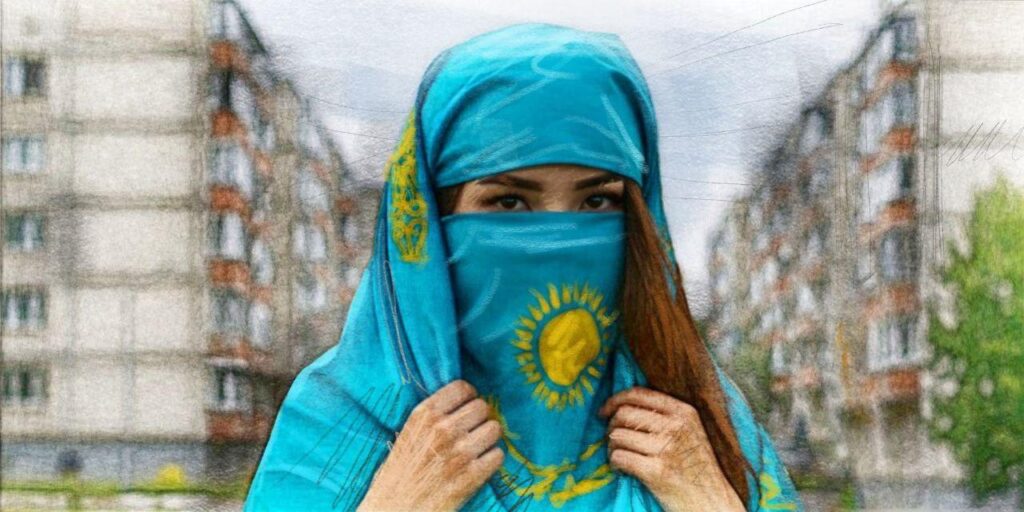
From Kyz Kuu to Niqabs: Why Kazakh Women Face a Crisis of Values

Before the 1917 revolution, Kazakh women enjoyed significant freedoms due to their nomadic lifestyle. Living in the remote steppe, women were responsible not only for managing livestock and households but also for defending their families and property, often with weapons in hand. The Soviet era formalized gender equality, enabling women to become leading producers, scientists, decorated soldiers, and politicians.  Today, however, these traditions face erosion from two opposing forces: rising consumerism and a growing Arab-influenced Islamization. According to Kazakh political scientist Zamir Karazhanov, women in Kazakhstan are struggling to find their place amid an expanding spiritual vacuum and polarized ideologies. A Reversal in Feminism A centuries-old game, Kyz Kuu (“Catch the Girl”), exemplifies the historical freedom of nomadic Kazakh women. The game, rooted in equestrian tradition, involved a female rider gaining a head start before being pursued by a young horseman. If he caught her and took her ribbon, he could propose marriage. If not, the woman would chase and whip the suitor with a kamcha (whip) in front of spectators, a demonstration of both female skill and independence. During the Soviet period, the roles of Aliya Moldovan and Manshuk Mametova both posthumously named Heroes of the Soviet Union in World War II, underscored female empowerment in Kazakhstan. In contrast, contemporary Kazakhstan is embroiled in a heated debate over the niqab, a face-covering garment not traditionally worn by Kazakhs. This shift has sparked national concern, culminating in the passage of a June 2025 law banning face coverings in public places. Declining Representation and Shifting Priorities Women’s representation in politics and governance has deteriorated, particularly in Kazakhstan’s southern and western regions. Despite officially favorable statistics, political scientist Zamira Karazhanova argues that the state practices only “artificial equality.” Party-imposed quotas for women and youth offer a superficial solution without addressing the systemic barriers to real empowerment. “To achieve gender equality, we must create genuine opportunities for women to participate in politics and civil service,” said Karazhanova. Karazhanov notes a broader cultural shift, with young women increasingly drawn to the lifestyle of tokal, unofficial second wives of wealthy men. These figures flaunt luxury and affluence on social media, eclipsing the appeal of education and career development. “The pursuit of wealthy husbands is becoming a kind of ideology,” Karazhanov said. “Many young women are growing up with no interest in professional growth. They have entirely different ideals.” The Rise of Foreign Influences “Islam in Kazakhstan is becoming Arabized,” Karazhanov stated. “This affects not only how women dress, but also how they are perceived and perceive themselves. Religion is becoming a key part of national identity, even if some believers visit the mosque on Fridays and bars on Saturdays.” Following the collapse of the USSR, Kazakhstan experienced a spiritual vacuum, filled rapidly by imported religious ideologies. Many religious leaders were educated in Arab countries or Afghanistan, bringing with them foreign dogmas that were alien to traditional Kazakh Islam. Karazhanov stressed that Arabization and radicalization are not confined to Kazakhstan, but also affect Russia, Turkey, and...

Balancing Secularism and Belief: Central Asia Grapples with Rising Islamization

Although the Central Asian republics officially uphold secular governance, they may be experiencing a subtle, creeping Islamization beneath the surface. While state-controlled media across the region maintain that religious movements are well-managed, occasional incidents suggest a growing divergence between official narratives and societal realities. One such incident recently drew attention in Kazakhstan, where a photo circulated online showing girls in burkas holding a Kazakh flag inscribed with Arabic script. The image prompted Mazhilis Deputy Yermurat Bapi to call on the government to intensify efforts against radical religious movements. “Our attention was drawn to the fact that the inscriptions on the flag in Arabic script were produced with a special printing tool. This is not just hooliganism or inappropriate behavior. It is a direct challenge to our society, our statehood, and our national traditions,” Bapi said. Citing "national interests, traditions, and culture," Bapi has previously campaigned for a ban on religious clothing, specifically hijabs and niqabs, in public places. On social media, proponents of a Central Asian caliphate have railed against national traditions, denouncing Nauryz, criticizing local costumes and instruments, and rejecting pre-Islamic cultural heritage. Since President Shavkat Mirziyoyev took office in 2016, Uzbekistan has cautiously liberalized its religious policy. However, strict state control persists. Imams must be approved by the Muftiate, unregistered religious groups are banned, and mosque inspections are routine. The state endorses the Hanafi madhhab as the “national form of Islam” and recognizes Naqshbandi Sufism as part of its cultural heritage. Salafi and extremist movements are actively suppressed, and while former “black lists” of suspected extremists are being revised, some religious prisoners are being rehabilitated. Islamic education is expanding through madrasas, Islamic colleges, and the Islamic Academy of Uzbekistan. Tajikistan has pursued an aggressive campaign to secularize public life. The Islamic Renaissance Party, once a legal political force, was banned in 2015 as “extremist.” The state restricts youth access to mosques, prohibits the hijab in schools and public offices, and has shuttered over 1,500 mosques since 2011. As previously reported by TCA, a 2024 law bans “foreign clothing” - widely interpreted as targeting Arabic attire, including the hijab - to promote national dress. Islam is framed as a cultural element within state ideology, with the Committee on Religious Affairs closely monitoring clerics. Kyrgyzstan is widely viewed as the most religiously open state in the region. Post-Soviet liberalization allowed Islam to grow organically, with little initial oversight. Today, numerous Islamic groups, including Salafis, operate within the country. Rural communities and youth increasingly identify with Islam. Private madrasas and Islamic NGOs are flourishing, and hijab adoption is on the rise. Though the government has begun tightening oversight following incidents of radicalization, Salafi influence continues to grow. By 2023, there were 130 Islamic educational institutions, including 34 madrasas for girls. In Turkmenistan, one of the world’s most closed societies, religious freedom is strictly curtailed. All religious activity is monitored, and Islamic institutions are intertwined with nationalist and presidential cult rhetoric, often referred to as “Turkmen Islam.” Unregulated Islamic movements and foreign...
