• KZT/USD = 0.00217
  • TJS/USD = 0.10830
  • UZS/USD = 0.00008
  • TMT/USD = 0.29760
  • KZT/USD = 0.00217
  • TJS/USD = 0.10830
  • UZS/USD = 0.00008
  • TMT/USD = 0.29760
  • KZT/USD = 0.00217
  • TJS/USD = 0.10830
  • UZS/USD = 0.00008
  • TMT/USD = 0.29760
  • KZT/USD = 0.00217
  • TJS/USD = 0.10830
  • UZS/USD = 0.00008
  • TMT/USD = 0.29760
  • KZT/USD = 0.00217
  • TJS/USD = 0.10830
  • UZS/USD = 0.00008
  • TMT/USD = 0.29760
  • KZT/USD = 0.00217
  • TJS/USD = 0.10830
  • UZS/USD = 0.00008
  • TMT/USD = 0.29760
  • KZT/USD = 0.00217
  • TJS/USD = 0.10830
  • UZS/USD = 0.00008
  • TMT/USD = 0.29760
  • KZT/USD = 0.00217
  • TJS/USD = 0.10830
  • UZS/USD = 0.00008
  • TMT/USD = 0.29760
24 November 2026

Viewing results 1 - 6 of 37

Central Asia and Israel, a Pragmatic Relationship That Never Truly Blossomed

The conflict between Israel and Iran is having both international and regional repercussions. The situation has been further inflamed by the U.S. bombing of several Iranian nuclear sites over the weekend, with Tehran responding by threatening retaliation on U.S. soil through the use of sleeper terrorist cells and the possible closure of the Strait of Hormuz, through which over a fifth of the world’s oil supply passes. While Israel's geographical position places it at the heart of the Middle East, Iran's location brings the Islamic Republic into close contact with Central Asia. The consequences of the conflict are therefore likely to be felt heavily in the Central Asian region. The close relations between Tehran and the capitals of Central Asia, due in part to their geographical proximity, are often highlighted. Less explored is the nature of the relationship between Tel Aviv and Central Asia and the lines along which it has developed since the dissolution of the Soviet Union. On both the Israeli and Central Asian sides, despite all the differences, relations began in the early 1990s, mainly based on certain mutual interests. From Israel's point of view, relations with Central Asia would mean expanding the circle of Muslim countries with which it had friendly ties, gaining greater influence in the region, and reducing its diplomatic isolation. From the Central Asian perspective, the appeal lay in increasing the number of its international partners, coupled with a desire to access Israeli know-how in numerous fields, and the possibility, through relations with Tel Aviv, of having a privileged channel of dialogue with the United States. More than three decades after the dissolution of the Soviet Union, relations remain good for the most part. “The positive relationship between Israel and Central Asia is driven by a combination of strategic, economic, and geopolitical factors,” Dr Zeev Levin, Coordinator of the Central Asian Research Unit at the Harry S. Truman Institute, told The Times of Central Asia. “One of the primary drivers is mutual interest in security and counterterrorism. Economically, Israel’s expertise in water management, agriculture, and technology is highly attractive to the arid, resource-seeking nations of Central Asia that aim to modernize their infrastructure and diversify their economies beyond oil and gas. Additionally, fostering ties with Israel provides a means of diversifying the foreign policy portfolios of the Central Asian republics.” This positive relationship, however, seems to have lost momentum in recent years due to several factors. Central Asian republics have increasingly oriented towards the East, moving closer to China and other players such as South Korea, Japan, and India, or towards other partners, such as the European ones, with Italy at the forefront in this regard. As Levin points out, the relation has cooled due to several factors: “Central Asian republics did look to Israel in the first decade of independence, but in the last decade to a much lesser extent, since Turkey and China are less complicated and cheaper options. For Israel, the region was never a priority or a point of...

Uzbek Nationals Arrested in UAE Over Murder of Israeli Rabbi Zvi Kagan

The Times of Central Asia has reported that three Uzbek nationals are suspected in the murder of Rabbi Zvi Kagan, an Israeli-Moldovan citizen and prominent figure in the Jewish religious movement Chabad. The UAE Ministry of Interior announced the arrest of the suspects, identified as Olimpi Toirovich (28), Makhmudjon Abdurakhim (28), and Azizbek Kamlovich (33). A ministry-released photo showed the suspects blindfolded and shackled, underscoring the seriousness of the case. Authorities have transferred the investigation to the prosecutor’s office but have yet to disclose the specific charges or motive behind the murder. Rabbi Kagan, a UAE resident, was reported missing on November 21, prompting a swift search by local authorities. His body was discovered on November 24, leading to the identification and arrest of the suspects. A respected member of the UAE’s Jewish community, Kagan assisted the country’s chief rabbi and managed a kosher supermarket, Rimon, in Dubai. His contributions were pivotal in supporting the Jewish community in the region. The case has drawn significant attention due to Kagan’s prominent role and the mystery surrounding the crime. UAE officials have stated that the investigation is ongoing, with further details expected to emerge as it progresses.

United Arab Emirates: 3 Uzbek Citizens Arrested in Rabbi Killing

Authorities in the United Arab Emirates have arrested three Uzbek citizens in the killing of an Israeli-Moldovan rabbi, the UAE’s Ministry of Interior said Monday. Israel described the killing as an act of antisemitic terrorism. The suspects in the death of Zvi Kogan were identified as Olympi Tohirovich and Makhmodjon Abdulraheem, both 28, as well as 33-year-old Azizbek Kamlovich, according to the UAE ministry. It said a murder investigation was underway and the matter will be referred to public prosecutors. The ministry commended security forces for “their efficiency in addressing attempts to undermine the safety and stability of the UAE community.” The ministry posted photos of the suspects, showing them blindfolded, handcuffed and wearing blue detention clothing. Kogan, the envoy of the ultra-Orthodox Chabad-Lubavitch movement to Abu Dhabi in the United Arab Emirates, was killed after being abducted on Thursday and his body was recovered early Sunday morning, according to Chabad.org. Kogan’s funeral was held in Israel on Monday. “The murder of Zvi Kogan, of blessed memory, is an abhorrent act of antisemitic terrorism,” Israel said in a statement. “The State of Israel will use all means and will deal with the criminals responsible for his death to the fullest extent of the law.” There were no immediate public statements from Uzbek authorities.

Mirziyoyev Calls for Independent Palestinian State with East Jerusalem as Capital

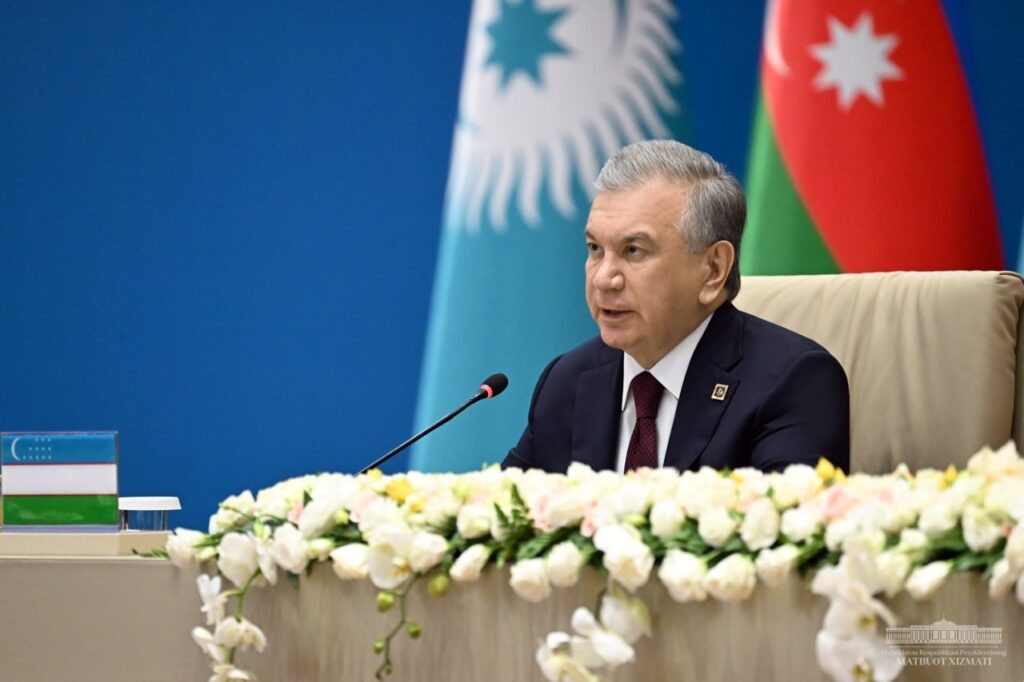
Speaking at this week's summit of the Organization of Turkic States in Bishkek, Uzbekistan's president Shavkat Mirziyoyev has once again discussed the situation in the Middle East. Mirziyoyev noted that global geopolitical processes have become increasingly complex since the start of the war in the region. The atmosphere of competition and mistrust between countries is intensifying, the hotbeds of conflict and war are increasing, and various dangers are growing. "These problems are a severe obstacle to our joint plans and big projects in trade, investment, transport, energy, agriculture, and other fields; this is the truth," Mirziyoyev said. “It is, first and foremost, about the ongoing war in the Middle East and the double standards that we see. Nothing can justify the unprecedented humanitarian tragedy in Gaza and Lebanon, the devastating attacks against civilians, especially the death of innocent children, the elderly, and women. We strongly condemn the actions aimed at restricting the activities of the United Nations Relief and Works Agency for Palestine Refugees. The only solution to this long-standing conflict is the establishment of an independent State of Palestine with East Jerusalem as its capital, based on the 1967 borders, by international regulations and resolutions,” noted Mirziyoyev. He hoped the Arab-Islamic Summit in Riyadh next week would find a clear political solution to this problem. He also highlighted the importance of Afghanistan’s stability: “When it comes to security, we believe Afghanistan should always be at the focus of our Organization. In this regard, it is crucial to establish a regular dialogue mechanism at the ministerial and expert levels. We believe that the issues of providing support to de facto authorities in addressing acute problems in Afghanistan, integrating this country into regional economic processes, and implementing social and infrastructure projects should be considered.”

Kyrgyzstan Backs Turkish Arms Embargo Against Israel

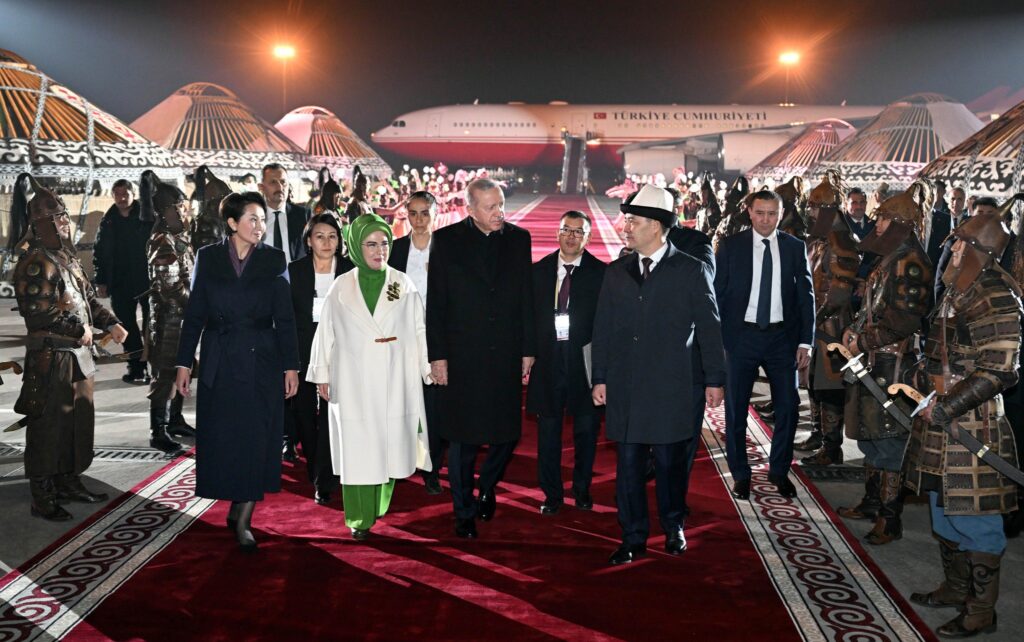
The Turkish authorities have sent a letter to the UN on behalf of 52 countries calling for an arms embargo against Israel in response to the ongoing war in Gaza and Lebanon, Turkish media has reported. In the letter, the Turkish authorities call the "staggering" civilian death toll "unconscionable and intolerable." In response to the letter, Turkish Ambassador to the UN, Danny Danon stated in uncompromising terms, "What else can be expected from a country whose actions are driven by malice in an attempt to create conflicts with the support of the 'Axis of Evil' countries?" Turkish President Recep Tayyip Erdogan arrived in Bishkek on November 4. During the visit, the Turkish leader will hold talks with the president of Kyrgyzstan and participate in the 11th Summit of the Council of Heads of State of the Organization of Turkic States. Following the summit, several bilateral documents will be signed to expand strategic cooperation between the countries. On the eve of Erdogan's visit, Kyrgyzstan backed the Turkish resolution in the UN. The authorities in Turkey have stated that with its military actions against Palestine and Lebanon, Israel has brought the entire region to the brink of a full-scale war. “This is necessary to end Israel's illegal occupation, to prevent further violations against civilians in the Gaza Strip and the rest of the occupied Palestinian territory, as well as in Lebanon, and to prevent further regional escalation,” Turkey's permanent representative to the UN, Ahmet Yildiz stated. The Turkish letter was signed by 52 states, including Russia, Kazakhstan, and China, whilst the Arab League, and the Organization of Islamic Cooperation are also signatories. Kyrgyzstan, along with other Central Asian states, usually adheres to strict diplomatic neutrality regarding the Middle East conflict.

As Conflict Rages, Kazakhstan Evacuates Citizens from Lebanon

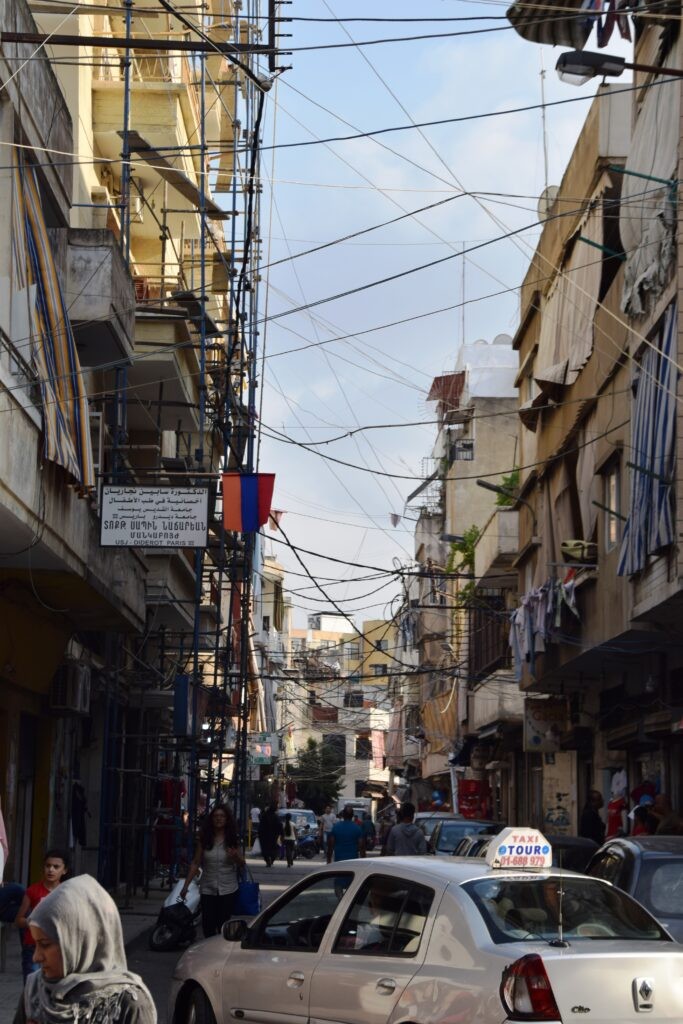
Kazakhstan has evacuated several dozen Kazakh citizens and their family members from Lebanon, the Ministry of Foreign Affairs said on Monday. It cited “escalating tensions in the Middle East,” a reference to fighting between Israel and its Iran-backed enemies, including Hezbollah in Lebanon. “This operation was organized through Istanbul and Dubai, resulting in the safe return of 41 people to Astana and Almaty from Beirut between October 17-31, 2024,” the ministry said in a statement. “The evacuation was conducted to protect the rights and interests of citizens of the Republic of Kazakhstan who were in the conflict zone,” it said. Other countries have also organized evacuations of their citizens from Lebanon. Türkiye assisted in the air evacuations of more than 2,000 people from 21 countries, including Uzbekistan, Türkiye’s state Anadolu Agency reported last month. Israeli air strikes have pounded parts of Lebanon and Israeli forces launched a ground incursion into southern Lebanon last month, a year after Hezbollah started firing rockets and other projectiles into Israel in support of Iran-backed Hamas in Gaza. The Hezbollah action was a show of solidarity with Hamas in the war that broke out after its Oct. 7, 2023 attack on Israel. Iran, meanwhile, has directly threatened Israel with retaliation for Israeli air strikes on Iranian targets last month, the latest in a series of tit-for-tat attacks between the two adversaries. The United States said it was sending more military aircraft to the region to deter Iran.